
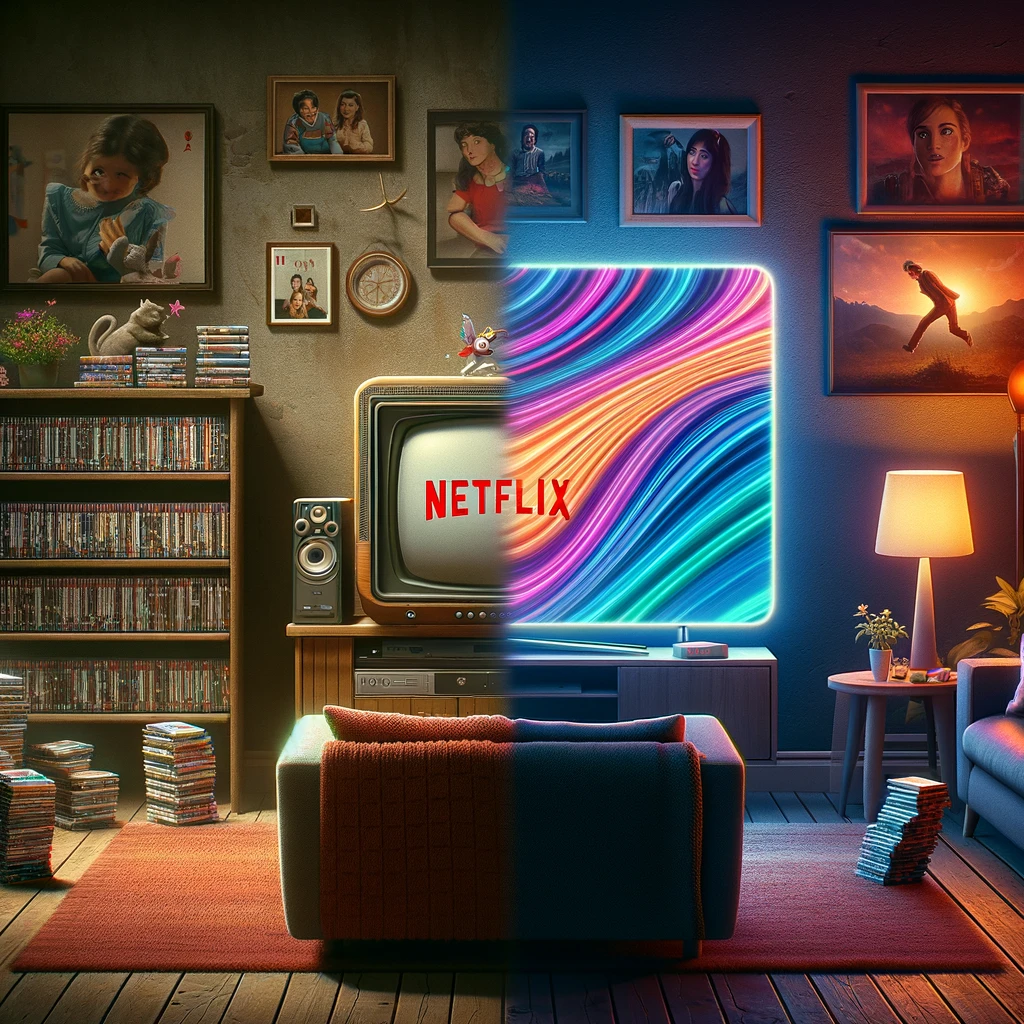
The Early Days: A Novel Idea for DVD Rentals
Founded in 1997 by Reed Hastings and Marc Randolph, Netflix started as an innovative DVD rental service. Unlike traditional video stores, Netflix operated online, mailing DVDs directly to customers who would return them after watching. The decision to focus solely on DVDs, rather than also dealing with VHS tapes, set the stage for the company’s future growth.
Membership Model: Paving the Path to Success
In 1999, Netflix introduced a groundbreaking membership model, allowing unlimited DVD rentals for a flat fee. This approach eliminated individual rental fees and late charges, significantly distinguishing Netflix from its competitors like Blockbuster. This membership model proved to be a massive hit, marking the beginning of Netflix’s ascendance in the home entertainment sector.
Tough Times and Perseverance
Despite rapid growth, Netflix faced its share of challenges. The dot-com bubble burst in 2001 and the 9/11 attacks posed significant economic hardships. However, unlike many other companies of the era, Netflix not only survived but continued to grow.
Streaming: A Visionary Shift
The mid-2000s marked a critical phase in Netflix’s evolution. Recognizing the potential of faster internet speeds, Netflix ventured into streaming. Launched in 2007 as an add-on feature to the DVD service, “Watch Now” allowed subscribers to stream content directly to their computers. This move was initially seen as catering to a niche audience of broadband users, as it required a significant internet speed at the time.
Netflix’s streaming service began modestly, offering about 1,000 titles compared to the 70,000 available in its DVD catalog. However, the launch of streaming was a strategic step, designed not only to offer additional value but also to reduce subscriber churn. In 2007, this bold move helped Netflix surpass $1 billion in revenue, a significant milestone for the company.
First-Mover Advantage in Streaming
Netflix’s slow and steady approach to developing its streaming service proved advantageous. By prioritizing a robust technical infrastructure, Netflix maintained its first-mover advantage in the streaming space.
Content and Partnerships: Building a Streaming Empire
Netflix’s early streaming days were characterized by a limited selection, but as the market evolved, so did Netflix’s strategy. The company started investing heavily in original content, which has become a cornerstone of its offerings.
The gradual shift towards original programming was a strategic move to differentiate from competitors and reduce reliance on licensed content. Netflix Originals, ranging from critically acclaimed series to blockbuster movies, have become a major draw for subscribers.
Looking to the Future
As streaming becomes the norm, Netflix faces new challenges and opportunities. The landscape is more competitive than ever, with numerous streaming services vying for viewers’ attention. Netflix’s ability to adapt and innovate will be crucial in maintaining its position as a leader in the streaming industry.

Netflix’s Transformation into a Streaming Titan
As Netflix’s streaming service took off, it wasn’t long before it began to overshadow its DVD rental business. This pivot was more than just a change in delivery method; it marked a strategic shift towards a global entertainment platform.
The Rise of Netflix Originals
Netflix’s foray into original content started as a bold experiment but quickly became a defining feature. The launch of critically acclaimed series like “House of Cards” and “Orange Is the New Black” marked the beginning of an era where Netflix was not just a platform for viewing content but also a prominent producer. This move into original content was both a response to the high cost and difficulty of licensing content and a strategy to create unique, compelling reasons for subscribers to choose Netflix over other options.
Global Expansion and Localized Content
A crucial aspect of Netflix’s strategy has been its global expansion. Understanding the diverse nature of global audiences, Netflix began investing in local content outside the U.S. This not only expanded its subscriber base but also enriched its content library with a variety of cultural narratives, appealing to a more diverse audience.
Technological Innovation and User Experience
At the heart of Netflix’s success is its commitment to technological innovation. The company has continually refined its streaming technology, ensuring a seamless viewing experience across various devices. Netflix’s use of algorithms to personalize content recommendations has set a standard in the industry, making it easier for users to find shows and movies they love.
Challenges and Adaptation
Despite its successes, Netflix has faced its share of challenges. The streaming market has become increasingly crowded, with competitors like Amazon Prime Video, Disney+, and HBO Max offering compelling alternatives. To stay ahead, Netflix has had to continually innovate, both in terms of content and technology.
The Future of Netflix
As it stands, Netflix’s future seems to involve a deeper dive into original content, further technological enhancements, and possibly new forms of content delivery. The company’s agility and willingness to innovate will likely continue to play a key role in its ability to navigate the fast-evolving landscape of digital media.
Conclusion: An Unprecedented Journey of Innovation
Netflix’s evolution from a DVD rental service to a global streaming leader is a testament to the power of innovation and adaptability. By continuously evolving and embracing change, Netflix has not only survived but thrived in the dynamic world of digital entertainment. Its journey offers valuable lessons on the importance of understanding market trends, the power of technological innovation, and the impact of strategic content creation. As Netflix continues to write its story, it remains a pivotal player in defining the future of how we consume entertainment.
Netflix’s story stands as a powerful example of how a company can reinvent itself and succeed in a constantly changing landscape. Its transition from DVD rentals to a streaming juggernaut showcases a remarkable understanding of market trends and consumer behavior, underpinned by a commitment to innovation and quality content. As the streaming world continues to evolve, Netflix’s journey will undoubtedly be a source of inspiration and lessons for businesses and entrepreneurs worldwide.