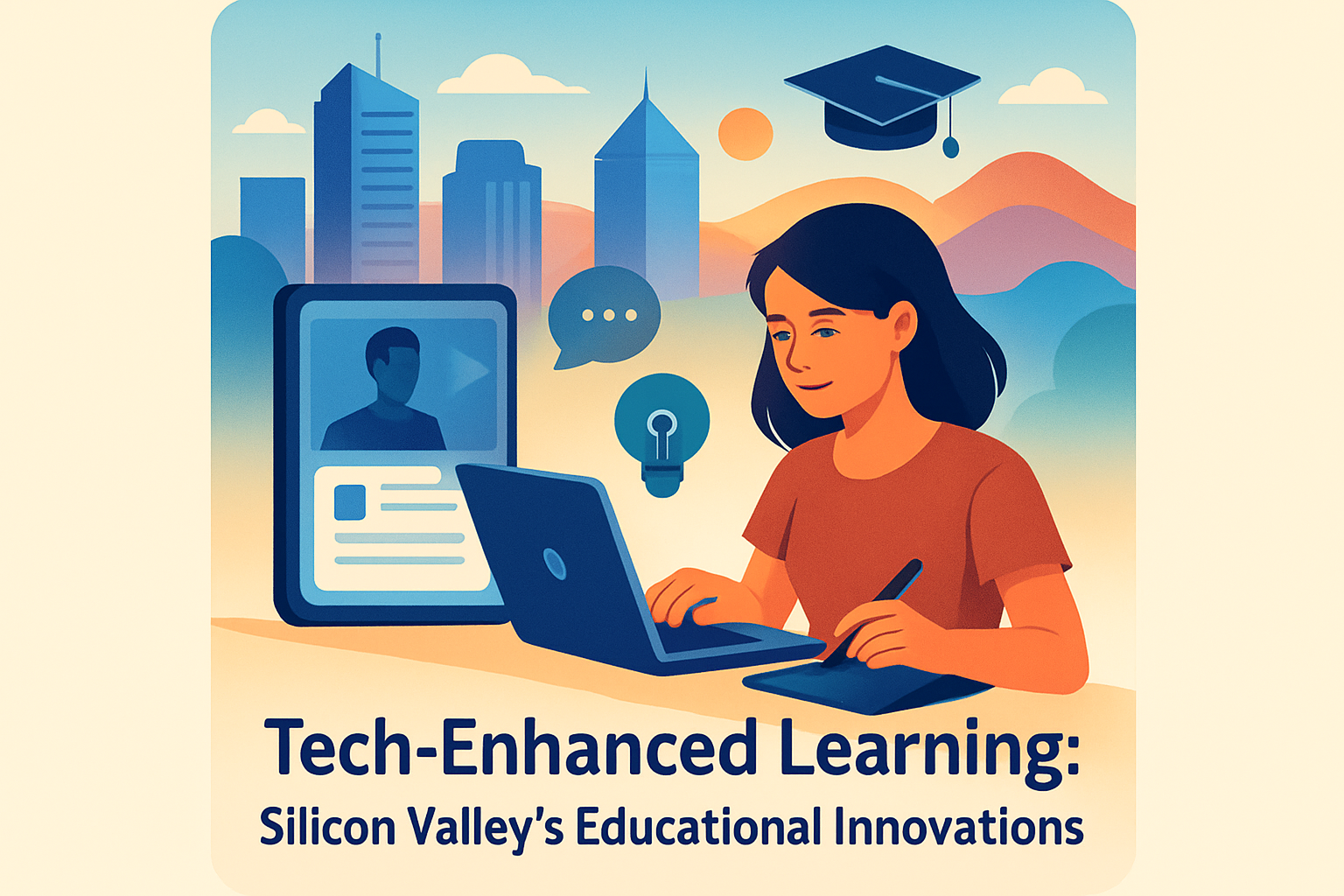
Introduction to Tech-Enhanced Learning
In recent years, the landscape of education has undergone a dramatic transformation powered by technology. Often termed as “Tech-Enhanced Learning,” this paradigm integrates modern technological tools and approaches to foster an engaging, efficient, and accessible educational experience. At the heart of this movement is Silicon Valley, the world’s premier tech hub, where innovations in technology continuously shape the future of learning. But what exactly is Tech-Enhanced Learning, and why is it significant?
Tech-Enhanced Learning refers to the use of technology to support and improve teaching and learning processes. It encompasses a range of tools and methodologies, from digital classrooms and interactive software to advanced analytics and AI-driven personalized learning. The objective is clear: to enrich learning experiences, make education accessible to a wider audience, and cater to diverse learning needs. This approach not only supplements traditional educational methods but also redefines them, often leading to revolutionary outcomes.
The importance of Tech-Enhanced Learning cannot be overstated. In a rapidly evolving digital world, literacy in technology is as crucial as fundamental reading and writing skills. Equally, the ability to adapt to new educational environments is invaluable. As educational demands continue to rise globally, Silicon Valley’s innovations in this field play a pivotal role in addressing these challenges, ensuring that learning is not just a privilege but a right available to all.
Digital Classrooms: The New Normal
The concept of a classroom has evolved substantially with the advent of digital tools. Digital classrooms leverage video conferencing, smart boards, and learning management systems to create an interactive and versatile learning environment. Platforms like Google Classroom and Zoom have become integral to education, especially highlighted during the global pandemic, where they facilitated uninterrupted learning from home.
For instance, in California, many educational institutions adopted digital classrooms to ensure continuity in education during lockdowns. Teachers could engage with students through video lectures, real-time discussions, and assignments posted online. The flexibility of accessing classroom materials from anywhere and the ability to replay lectures as needed provided a significant advantage.
Digital classrooms empower educators to create diverse and rich learning experiences. They allow for more personalized teaching approaches, cater to different learning paces, and include multimedia content, enhancing understanding and retention. This integration has redefined education, making it more inclusive, engaging, and adaptable to varying student needs.
AI-Driven Personalized Learning
Artificial Intelligence (AI) in education is one of the most promising advancements to come out of Silicon Valley. AI-driven personalized learning systems analyze a student’s learning pattern, pace, and comprehension levels to tailor educational content to meet their unique needs. This method ensures that students are neither overwhelmed with information nor left unchallenged.
A prime example is the use of AI in platforms such as DreamBox Learning, which offers adaptive learning solutions for mathematics. This technology gauges students’ responses in real-time and adjusts the difficulty and type of lessons accordingly. This kind of personalization wasn’t possible in traditional settings, where teachers had to address 30 or more students simultaneously.
AI-driven personalized learning not only aids in managing educational disparities but also encourages students to take ownership of their learning path. This empowerment leads to more effective learning outcomes and prepares students to be proactive learners beyond traditional school environments.
EdTech Startups: Transforming Education Models
Silicon Valley is home to numerous startups that are transforming traditional educational models through innovative methodologies and digital tools. For example, companies like Coursera, Khan Academy, and Duolingo have democratized learning by providing free or affordable access to high-quality educational resources worldwide.
These platforms offer courses ranging from computer science to liberal arts, taught by industry experts and professors from top universities. This approach not only brings global expertise to learners’ fingertips but also adapts to various learning styles, making education more accessible and varied.
The proliferation of EdTech startups underscores a shift in how education is perceived and consumed. Students are no longer confined to conventional classroom settings or limited by geographic boundaries. Instead, they can explore a vast array of subjects at their own pace, fostering a lifelong love for learning.
Data Analytics in Education: Making Informed Decisions
Data analytics is another critical component of Tech-Enhanced Learning. By collecting and analyzing educational data, schools and educators can make informed decisions to improve teaching methods and learning outcomes. Educational data analytics involves gathering data on students’ performances, behaviors, retention rates, and more to tailor educational strategies effectively.
A shining example is Summit Public Schools, which uses data analytics to track students’ progress and identify areas needing attention. This approach allows for timely interventions, ensuring that students receive the necessary support promptly. Such data-driven insights enable schools to personalize learning experiences and effectively allocate resources.
| Educational Tools | Function | Impact |
|---|---|---|
| Google Classroom | LMS for assignment management and communication | Streamlines learning process |
| Zoom | Video conferencing tool | Facilitates virtual learning environments |
| DreamBox Learning | Adaptive math learning platform | Personalizes student learning paths |
Implementing data analytics in education ensures a higher degree of transparency and accountability. This approach facilitates continual improvement by providing educators with the necessary tools and insights to adapt to each student’s unique needs, thereby enhancing the overall educational experience.
Conclusion: The Revolutionary Impact of Silicon Valley’s Innovations
As we summarize the developments ushered in by Silicon Valley’s innovations in Tech-Enhanced Learning, it becomes clear that technology’s role in education extends beyond mere convenience. The transition to digital classrooms, the introduction of AI-driven learning, the rise of EdTech startups, and the application of data analytics, each signifies a shift towards a more inclusive, personalized, and adaptive learning environment.
These advancements offer unprecedented opportunities for students worldwide, breaking down traditional barriers to education and fostering an engaging, diverse, and dynamic learning landscape. With these tools, education is not only accessible but also transformative, preparing students for a future that prioritizes adaptability and continuous growth.
Recognizing the power and potential of Tech-Enhanced Learning is the first step in harnessing its full benefits. As students, educators, and institutions embrace these innovations, the call to action is to continue exploring and integrating technology wisely, with a focus on inclusivity, accessibility, and personalization in education.
In conclusion, the future of education lies in the hands of those who innovate and adapt, and with Silicon Valley leading the way, the possibilities are limitless. Embrace Tech-Enhanced Learning today and be a part of this educational revolution that redefines what it means to learn.
Frequently Asked Questions
1. What is Tech-Enhanced Learning, and how is it transforming education?
Tech-Enhanced Learning refers to the integration of technology into educational environments to create more engaging, efficient, and accessible learning experiences. This transformation is not just about digitizing books or using computers in the classroom; it’s a comprehensive approach that involves utilizing advanced technologies like artificial intelligence, virtual reality, and data analytics to enhance teaching methodologies and learning outcomes.
In today’s education landscape, Tech-Enhanced Learning provides opportunities for personalized learning, where instruction is tailored to an individual’s needs, pace, and learning style. It also facilitates hybrid or blended learning models, which combine online educational materials and opportunities for interaction online with traditional place-based classroom methods. As a result, students can learn anytime and anywhere, breaking the traditional classroom boundaries. This flexibility is especially beneficial for lifelong learners or those with scheduling constraints.
Silicon Valley, being a hub for technological innovation, has been pivotal in driving these changes. Companies and educational institutions within this region are constantly developing new technologies and methodologies that contribute to evolving educational landscapes globally. For example, they are creating platforms that apply machine learning to adaptively assess student performance, provide interactive content that makes learning more fascinating, and enhance teacher productivity through effective classroom management tools.
2. What role does Silicon Valley play in the development of Tech-Enhanced Learning?
Silicon Valley has been at the forefront of technological innovations and plays a crucial role in the development of Tech-Enhanced Learning. This region hosts some of the world’s leading tech companies and startups that concentrate on educational technologies (EdTech). These entities are creating innovative tools and platforms that redefine how educators teach and how students learn.
The influence of Silicon Valley on Tech-Enhanced Learning can be observed in several key areas:
- Development of cutting-edge educational platforms: Companies in Silicon Valley are pioneering platforms that incorporate AI and machine learning to adapt to student learning styles and predict educational outcomes.
- Promotion of STEM (Science, Technology, Engineering, Mathematics) education: By funding STEM initiatives and collaborating with educational institutions, Silicon Valley firms ensure that the education system aligns with the current and future job market needs.
- Investment in virtual and augmented reality: These technologies offer immersive learning experiences, enabling students to explore scenarios and conduct experiments in a simulated environment, which enhances understanding and retention.
- Formation of partnerships between tech companies and educational institutions: Such collaborations help integrate the latest technologies in curricula and address challenges in scale and accessibility.
Overall, Silicon Valley’s commitment to technological advancement and innovation fuels the continuous development and refinement of Tech-Enhanced Learning, making education more adaptable and forward-looking.
3. How do technologies like AI and VR enhance the learning experience?
Artificial Intelligence (AI) and Virtual Reality (VR) are two of the most transformative technologies contributing to Tech-Enhanced Learning. Each offers distinctive enhancements to the learning experience.
Artificial Intelligence:
AI powers intelligent tutoring systems and learning analytics that personalize learning by analyzing student data and providing insights into their strengths and weaknesses. AI can adapt the difficulty of tasks and present personalized assignments to students, thus catering to individual learning needs. Moreover, AI can automate administrative tasks, allowing educators to focus more on student interaction and providing support rather than getting bogged down with routine duties.
Virtual Reality:
VR creates immersive and interactive learning environments that mimic real-life scenarios. This kind of experiential learning is particularly valuable in areas such as medicine, where students can simulate surgeries, or history, where learners can ‘visit’ ancient civilizations. VR enables a depth of understanding that is harder to achieve through traditional learning methods, making abstract concepts more tangible and accessible.
Together, AI and VR make learning more interactive, engaging, and tailored to individual learners, ultimately supporting varied learning styles and enhancing educational outcomes.
4. How are educators adapting to Tech-Enhanced Learning, and what challenges do they face?
Educators are embracing Tech-Enhanced Learning by integrating new tools and methodologies into their teaching practices. They are increasingly leveraging digital platforms to conduct classes, manage coursework, and engage with students beyond traditional physical boundaries.
However, there are significant challenges as well:
- Lack of Training: Many educators are not adequately prepared to use new technologies effectively. Professional development and training are vital to ensuring these tools are used to their fullest potential.
- Resource Constraints: Some schools, especially in underfunded areas, may lack the infrastructure to support advanced technological tools, resulting in a digital divide.
- Changing Pedagogies: Moving from traditional teaching methods to tech-enhanced strategies requires a major pedagogical shift. Educators must change their mindset and approach to teaching, aligning with the learning styles and expectations of digital-native students.
Despite these challenges, many educators are actively seeking professional development opportunities and participating in collaborative networks to better understand and implement Tech-Enhanced Learning effectively.
5. What is the future of Tech-Enhanced Learning?
The future of Tech-Enhanced Learning looks promising and expansive, with continued technological advances opening up new possibilities for all educational stakeholders. Here are some trends that are expected to shape its future:
- Increased Personalization: The use of advanced data analytics and AI will further enhance personalized learning experiences, accommodating each student’s unique learning path and optimizing educational benefits.
- Global Access: With technology breaking geographical barriers, students from remote and underserved regions will gain access to quality education and resources, promoting greater equity in education.
- Gamification and Engagement: Future educational tools will likely incorporate game-like elements to motivate and engage students, making learning fun and interactive.
- Integration of Emerging Technologies: Innovations such as blockchain for secure credentialing, IoT for connected learning environments, and 3D printing for practical skills development, will become more integral to the learning process.
- Lifelong Learning: As the job market continues to evolve rapidly, continuous upskilling will be essential, leading to an increased focus on lifelong learning facilitated by technology.
In summary, Tech-Enhanced Learning is poised to become even more impactful, reshaping education to be more adaptive, inclusive, and aligned with the needs of a rapidly changing world.