Silicon Valley is full of loud success stories, but Roku became one of the region’s most important technology companies by doing something rarer: winning quietly in a brutally competitive market. In streaming tech, Roku sits at the intersection of hardware, software, advertising, operating systems, and connected television, which makes it a useful case study for anyone exploring corporate giants and how modern media platforms scale. Roku is not just a maker of streaming sticks. It is a platform business built around a television operating system, a distribution layer for subscription apps, an ad-supported video ecosystem, and a growing data and commerce engine tied to connected TV viewing. That mix matters because streaming has reshaped how households access entertainment, how advertisers buy reach, and how media companies distribute content. I have worked on platform strategy and audience acquisition in digital media, and Roku repeatedly stands out because its market position is easier to underestimate than to copy. This Company Spotlights hub page examines Roku’s rise, its business model, its role in the streaming economy, and the lessons it offers for understanding larger corporate players across technology, media, and advertising.
Why Roku Matters in the Streaming Technology Landscape
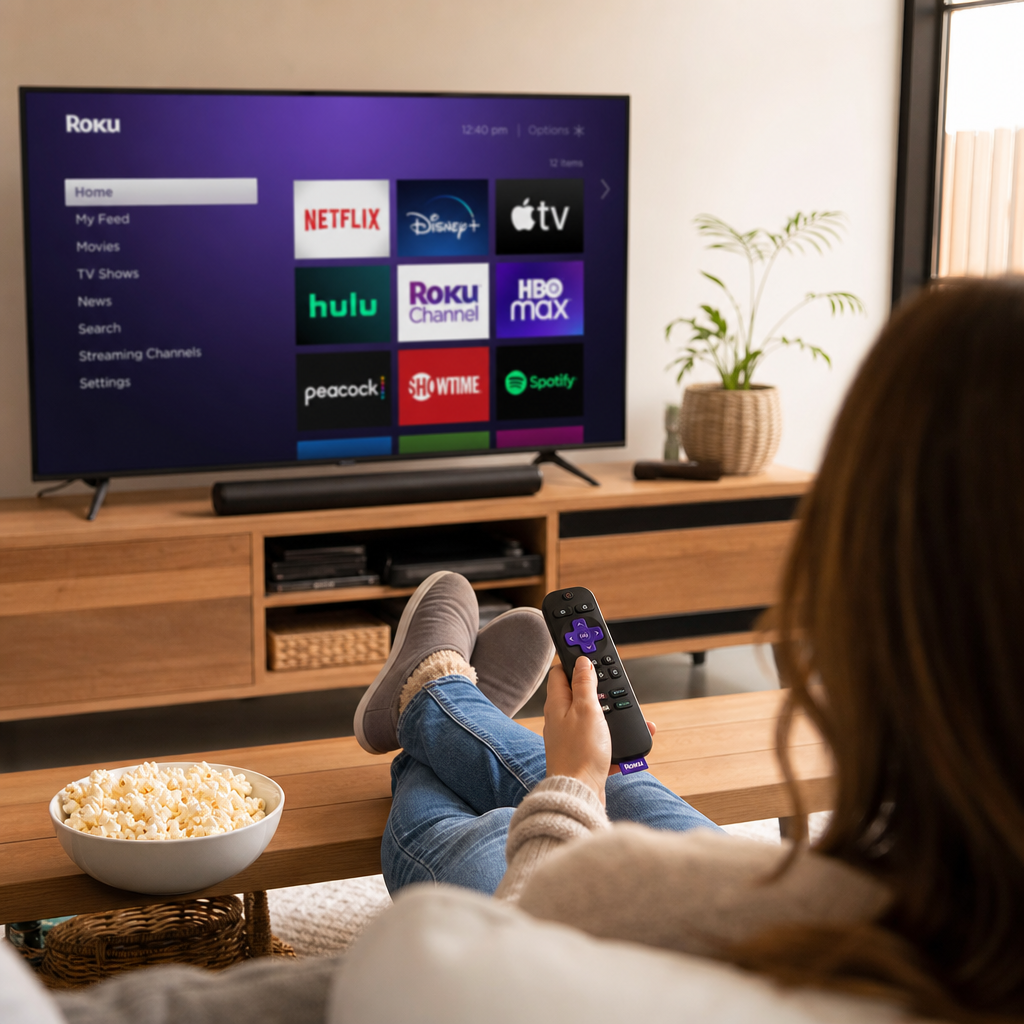
Roku matters because it solved a practical consumer problem before many rivals treated that problem seriously: streaming was fragmented, confusing, and device-dependent. When viewers first moved from cable boxes and DVD players toward internet video, they needed simple hardware and a clean interface that could bring Netflix, Hulu, YouTube, and later Disney+, Max, and hundreds of niche channels into one environment. Roku delivered that experience with low-cost devices, easy setup, and a neutral platform position. Unlike Apple, it did not require a premium hardware ecosystem. Unlike Amazon, it was not primarily using the television interface to drive broader retail subscriptions. Unlike smart TV manufacturers with inconsistent software support, Roku focused obsessively on user experience and distribution scale.
Its importance also comes from timing. Streaming adoption accelerated throughout the 2010s, then surged again during the pandemic era as households spent more time at home and advertisers shifted budgets toward measurable digital video. Roku was ready with an installed base, direct relationships with users, and software embedded in smart TVs through licensing partnerships. That last point is critical. Roku did not need to win only through dongles and set-top boxes. By powering televisions made by TCL, Hisense, Sharp, and other manufacturers, it became part of the default experience in millions of living rooms. In the United States, Roku has consistently ranked among the leading connected TV operating systems, a position that gives it leverage with publishers, advertisers, and device partners alike.
From Streaming Box to Platform Company
Roku’s corporate story is strongest when viewed as a platform evolution rather than a hardware tale. The company launched its first player in 2008, initially tied to Netflix, then expanded into a broader streaming gateway. The key strategic shift was recognizing that hardware margins are thin, while platform economics are durable. That meant using devices to acquire households, then monetizing engagement through advertising, revenue-sharing agreements, content distribution, and operating system licensing. In practical terms, Roku earns relatively modest returns on many devices but can generate meaningful lifetime value when a household uses the Roku interface regularly and streams ad-supported content.
I have seen similar transitions in other technology sectors: a company begins with a product, but the lasting value comes from owning the layer where user behavior, partner distribution, and monetization converge. For Roku, that layer is the home screen, search environment, ad stack, and account relationship. The company’s platform segment has therefore become more strategically significant than its player segment. Investors and industry analysts watch average revenue per user, platform revenue growth, active accounts, streaming hours, and ad demand far more closely than they watch device unit sales alone. That is the hallmark of a platform business maturing beyond its original gadget identity.
How Roku Makes Money
Roku’s revenue model is best understood as a blend of distribution tolls and connected TV advertising. The company monetizes through several channels: sales of streaming devices, licensing its operating system to television manufacturers, selling video and display advertising, taking a share of subscription sign-ups billed through the Roku platform, sharing in ad inventory from channels distributed on Roku, and operating its own ad-supported destination, The Roku Channel. The Roku Channel is strategically important because it gives Roku first-party inventory, more direct viewer data, and more control over programming economics than relying only on third-party apps.
Advertising is the centerpiece. As marketers move money away from linear television toward streaming, Roku offers targeted reach in a format that still resembles premium TV. Brands can buy campaigns using Roku’s ad products, audience segments, and measurement tools, while publishers can access demand through Roku’s ecosystem. This creates a feedback loop: more viewers attract more publishers, more publishers attract more advertisers, and stronger ad demand increases the value of Roku’s platform. There are limits, of course. Advertising markets are cyclical, content costs can rise, and competition from Amazon, Google, Samsung, and Vizio pressures every part of the stack. Even so, Roku’s model is rational, diversified, and aligned with how television economics are changing.
Competitive Position: Roku Versus Big Tech and TV Manufacturers
Roku’s rise is especially notable because it happened alongside far larger competitors. Apple TV offers polished hardware and tight integration with Apple services, but its higher price narrows mass-market appeal. Amazon Fire TV benefits from Prime, Alexa, and aggressive retail distribution, yet Amazon’s broader ecosystem priorities can create a busier interface. Google TV and Android TV bring search and app scale, but implementation quality varies by manufacturer. Smart TV makers such as Samsung and LG control their own operating systems in many premium sets, but those systems historically faced challenges around app support consistency and software simplicity.
| Platform | Primary Strength | Main Limitation | Roku Advantage |
|---|---|---|---|
| Apple TV | Premium performance and ecosystem integration | Higher device cost | Lower price and broader mainstream reach |
| Amazon Fire TV | Retail scale and Prime ecosystem | Heavier commercial interface | Cleaner, more neutral user experience |
| Google TV | Search and app depth | Inconsistent device execution | More standardized software experience |
| TV maker systems | Built into the screen by default | Mixed app support and updates | Licensing model with focused platform support |
What Roku did well was stay focused on ease, affordability, and neutrality. That neutrality was never perfect, because every platform makes ranking and merchandising decisions, but Roku generally presented itself as the Switzerland of streaming. Media companies often prefer that kind of partner when they do not want one distributor using content access to advance a larger hardware, commerce, or cloud agenda. That positioning helped Roku build trust with both consumers and publishers at a critical stage in streaming adoption.
The Strategic Importance of The Roku Channel and Advertising Technology
The Roku Channel turned Roku from a gatekeeper into a publisher. Originally, Roku’s value came from organizing other companies’ apps. With its own ad-supported service, it gained direct inventory and a clearer path into free streaming television. That matters because free ad-supported streaming television, often called FAST, has become one of the most important growth areas in connected TV. Viewers facing subscription fatigue are increasingly willing to watch curated free channels and on-demand libraries in exchange for ads. Roku recognized that trend early and used acquisitions, licensing deals, and content partnerships to strengthen its position.
On the technology side, Roku has invested in ad decisioning, audience tools, and measurement capabilities that make its inventory useful to brand marketers. Connected TV is valuable partly because it combines the sight, sound, and motion of television with digital targeting and attribution. A campaign can be managed with more precision than linear TV, then evaluated against household exposure, completion rates, or downstream outcomes. Measurement remains imperfect across the industry because identity resolution, co-viewing, and platform fragmentation are real issues, but Roku still benefits from controlling the operating system layer and the account relationship. That gives it data advantages many publishers lack.
Roku as a Corporate Giant Case Study
For a sub-pillar hub on diving deeper into corporate giants, Roku offers a sharp lens into how modern giants are built. First, scale no longer requires owning the most glamorous consumer brand in a category. Roku became powerful by controlling access, discovery, and monetization in the living room. Second, strategic partnerships can be as important as direct manufacturing. Licensing Roku OS into televisions expanded distribution faster than hardware sales alone could have done. Third, recurring revenue tied to engagement is usually more resilient than one-time product revenue. That is why platform metrics matter so much.
Roku also shows the constraints corporate giants face. Platform power creates negotiation conflicts with app developers and media companies. Advertising dependence exposes the business to macroeconomic slowdowns. International expansion is harder than domestic leadership because television markets differ in content rights, device preferences, retail channels, and ad infrastructure. These tradeoffs make Roku more instructive, not less. It is a clear example of how a company can be influential without dominating every layer of the market, and how focused execution can outperform raw size in the right window.
What Readers Should Explore Next in Company Spotlights
As the hub for this subtopic, this page should anchor deeper analysis of companies that shape digital markets from different strategic positions. Roku connects naturally to profiles of Netflix as a content and subscription powerhouse, Amazon as an ecosystem-driven platform operator, Apple as a premium hardware and services integrator, Google as a search and operating system force, Disney as an intellectual property giant adapting to streaming, and Samsung as a device manufacturer with increasing platform ambitions. Studying Roku alongside those companies clarifies a core pattern: winners in modern media do not compete on one axis alone. They combine distribution, data, interface control, monetization, and partnerships in distinct ways.
Roku’s sleeper-hit status is exactly why it deserves close attention. It demonstrates that the biggest shifts in technology often come from companies that master infrastructure the average consumer barely notices. If you are building a deeper understanding of corporate giants, start with the firms that shape behavior at the point of use. Roku does that every time a household turns on a television and chooses what to watch. Explore the related Company Spotlights pages next, compare business models across the sector, and use Roku as a benchmark for evaluating who really holds power in the streaming economy.
Frequently Asked Questions
Why is Roku considered more than just a maker of streaming sticks?
Roku is often associated with affordable streaming devices, but that description only captures a small part of what the company actually does. Its larger significance comes from the fact that it operates as a platform business sitting across several important layers of the streaming ecosystem. Roku makes consumer hardware, but it also runs an operating system used in smart TVs, manages a large-scale software interface that shapes how viewers discover content, and operates an advertising business tied to connected television viewing. That combination gives Roku influence far beyond the sale of a single device.
What makes this especially important is that platforms tend to become more valuable as more users, content providers, and advertisers participate. Roku’s software appears on dedicated devices and on Roku-powered TVs made by manufacturing partners, which expands its reach into living rooms without requiring Roku to build every television itself. Once users are inside the Roku environment, the company can help them subscribe to services, surface content, collect viewing data in privacy-governed ways, and sell ad inventory across streaming channels. In practical terms, Roku functions less like a gadget company and more like a gatekeeper and operating layer for modern television distribution.
That is why Roku is a useful case study in Silicon Valley. It quietly built a position at the crossroads of hardware, software, operating systems, media distribution, and advertising technology. Instead of relying on one blockbuster product, it created a system that benefits from recurring platform activity. That strategic position helps explain why Roku matters in streaming tech far more than its simple image as a “streaming stick” brand might suggest.
How did Roku become a major player in streaming despite intense competition from much larger companies?
Roku’s rise is notable precisely because it happened in a market filled with giants. It competed against companies with enormous cash reserves, global ecosystems, and powerful consumer brands, including Amazon, Apple, and Google. Roku did not win by trying to outspend those rivals or by locking its business to one premium hardware category. Instead, it focused on being easy to use, broadly accessible, and relatively neutral in a fragmented streaming landscape. That strategy made Roku appealing to consumers who wanted a straightforward way to access many services without feeling pushed too aggressively into one company’s larger ecosystem.
Price and simplicity played a major role. Roku devices were often affordable, setup was relatively painless, and the interface was designed for mainstream users rather than only for tech enthusiasts. At the same time, Roku expanded through licensing its operating system to television manufacturers. That move was critical because it let Roku grow distribution quickly and turn the smart TV itself into a platform entry point. Consumers did not always need to buy a separate box or stick; they could simply buy a TV with Roku built in. That widened the company’s footprint and made Roku software familiar in millions of homes.
Equally important, Roku benefited from the broader shift from linear television to streaming. As audiences moved toward on-demand viewing and advertisers followed them into connected TV, Roku was positioned to capture value from both sides. It could serve consumers with content discovery and service access while also helping advertisers reach streaming audiences. In other words, Roku did not need to dominate every category outright. It needed to own a meaningful layer of the television experience, and it did that with discipline, distribution partnerships, and a business model built around platform scale rather than hardware prestige alone.
What role does advertising play in Roku’s business model?
Advertising is central to understanding why Roku became such an important company in streaming technology. While hardware helps Roku acquire users and establish presence in the home, advertising is one of the key ways the company monetizes its platform over time. As more viewing shifts from traditional cable and broadcast television to streaming, marketers need new ways to reach audiences on connected TVs. Roku sits in a strong position because it controls a user interface, collects platform-level signals, and can offer ad opportunities tied to real streaming behavior across its ecosystem.
This matters because connected TV advertising is not just a digital version of old television commercials. It offers more precise targeting, better measurement, and more flexible campaign management than traditional TV has historically provided. Roku can help advertisers reach households that have become harder to find through linear television alone. It can also support content providers that want to monetize free or ad-supported streaming channels. That gives Roku a role in the economics of streaming even when the company is not the creator of the content itself.
The advertising side also reinforces Roku’s platform logic. A larger user base attracts more content partners and advertisers, and a broader set of content options helps keep users engaged. That engagement creates more opportunities for ad delivery and measurement. In addition, Roku’s own media properties and channel ecosystem can contribute inventory and audience reach. This is why analysts and industry observers often pay closer attention to Roku’s platform revenue and ad business than to device margins alone. The hardware gets Roku into the home, but advertising helps turn that presence into a scalable long-term business.
Why is Roku important in the broader evolution of connected TV and modern media platforms?
Roku matters because it helps illustrate how television has evolved from a closed hardware-and-broadcast system into a software-driven, data-informed platform economy. In the traditional model, TV manufacturers, cable operators, and broadcasters occupied relatively fixed roles. In the streaming era, those boundaries have blurred. The company controlling the operating system, home screen, content discovery, and ad infrastructure can exercise enormous influence over what viewers watch and how media companies reach them. Roku became important by securing exactly that kind of strategic position.
Connected TV is now one of the most valuable battlegrounds in media because it combines the scale of television with the flexibility of digital distribution. Roku’s role in this shift is significant because it provides the infrastructure layer that helps organize the streaming experience. It connects users to subscription apps, free ad-supported channels, live streaming options, and recommendation pathways through a single interface. That makes Roku part technology platform, part distribution hub, and part advertising intermediary.
For media companies, Roku offers access to audience reach and monetization tools. For consumers, it offers convenience and aggregation in an otherwise fragmented market. For advertisers, it offers a pathway into a fast-growing segment where viewing habits are increasingly moving. This ability to serve all three sides of the market is what makes Roku especially relevant when discussing how modern media platforms scale. It shows that in today’s entertainment economy, the company that organizes access and monetization can become just as important as the companies producing the content.
What can other technology and media companies learn from Roku’s rise in Silicon Valley?
One of the clearest lessons from Roku is that not every major technology winner emerges through noise, hype, or total category domination. Roku’s success came from identifying an important structural position in a growing market and executing with consistency. It did not need to be the flashiest brand in Silicon Valley to become valuable. Instead, it focused on solving a real user problem, building distribution patiently, and creating a business model that expanded as the market matured. That is a powerful reminder that durable advantage often comes from infrastructure and platform control rather than headline-grabbing product launches alone.
Another lesson is the value of strategic neutrality. In a streaming landscape filled with competing services, consumers often prefer platforms that feel open and relatively unbiased. Roku benefited from being seen as a practical gateway to many services rather than simply a tool to privilege one company’s content bundle. That positioning helped it become a preferred partner for device buyers, TV manufacturers, app publishers, and advertisers. Companies in similarly fragmented markets can learn from that approach: sometimes the greatest opportunity is not to own every piece of the stack, but to become the layer everyone else needs to access customers efficiently.
Finally, Roku demonstrates the power of combining modest hardware economics with stronger recurring platform revenue. Many tech companies chase device sales without building the software, data, or monetization systems needed to create long-term leverage. Roku approached the market differently. It used hardware as an entry point, then built value through operating system adoption, audience scale, ad technology, and content distribution. For business leaders studying modern media or platform strategy, Roku is a strong example of how quiet execution in a brutally competitive market can produce an outsized impact.