Twitch has become one of the defining company spotlights in Silicon Valley because it transformed live streaming entertainment from a niche activity into a mainstream digital habit. In simple terms, live streaming entertainment is real-time video broadcasting built around interaction, community, and recurring creator-led programming rather than one-way distribution. Twitch matters within Silicon Valley company spotlights because its growth shows how platform design, creator economics, cloud infrastructure, and internet culture can combine into a durable media business. I have worked on content and platform strategy around creator ecosystems, and Twitch is the example I return to when explaining why some consumer technology companies become cultural infrastructure instead of just popular apps. For readers exploring company spotlights in Silicon Valley, Twitch is essential because it sits at the intersection of gaming, advertising, subscriptions, social media, and cloud computing. Its emergence also provides a useful hub for related analysis of Amazon, YouTube, Discord, Nvidia, Unity, and startup ecosystems around creator tools.
Founded as a spinout of Justin.tv, Twitch launched in 2011 with a clearer focus on gaming broadcasts and quickly captured an audience that wanted more than uploaded clips. The key distinction was liveness. Viewers were not only watching game play; they were participating through chat, emotes, subscriptions, moderation, and event-driven communities. That format turned streamers into hosts, chat into co-performers, and viewers into members of persistent micro-communities. In Silicon Valley terms, Twitch demonstrated product-market fit through engagement density rather than passive reach. It benefited from improving broadband, cheaper webcams, maturing game culture, and a generation accustomed to online identity. As a company spotlight, Twitch deserves close attention because its rise reveals how category leadership often comes from narrowing focus first, then expanding outward. What began as gaming live streams became music performances, esports broadcasts, “just chatting” shows, educational content, and brand activations. Understanding Twitch helps explain broader company spotlights in Silicon Valley, where platform businesses often win by owning behavior, not just technology.
This hub article covers how Twitch emerged, why its model worked, how it monetized creator attention, what role Amazon played after acquisition, and where the company fits in the wider Silicon Valley landscape. It also points readers toward the most relevant adjacent company spotlights in Silicon Valley by showing the operational links between Twitch and cloud services, creator monetization tools, moderation systems, ad technology, and digital communities. If you want one example that ties together product design, network effects, and internet-native entertainment, Twitch is the case study to start with.
How Twitch Emerged From Justin.tv and Focused the Category
Twitch did not appear out of nowhere. Its predecessor, Justin.tv, launched in 2007 as a broad live video platform, but the team learned a hard lesson common in Silicon Valley company spotlights: broad platforms struggle until one use case becomes undeniably stronger than the rest. Gaming streams generated the most consistent engagement, repeat viewing, and social interaction, so the company separated that behavior into Twitch. That decision was strategically important. Instead of treating gaming as one content vertical among many, Twitch treated it as the organizing principle for product development, community norms, and monetization. The focus sharpened recommendations, streamer discovery, sponsorship relevance, and event programming.
In practical terms, Twitch aligned its product around what gamers and fans needed. Stream latency improved. Stream pages highlighted chat and channel identity. Moderation tools helped creators manage fast-moving communities. Integrations with broadcasting software such as OBS Studio and XSplit lowered the barrier to entry. Competitive titles including League of Legends, Counter-Strike, Dota 2, and later Fortnite created recurring appointment viewing. Esports amplified the pattern because fans wanted to watch tournaments live, react in chat, and follow personalities between events. This gave Twitch a self-reinforcing flywheel: game launches drove viewers, viewers attracted streamers, streamers attracted sponsors, and those sponsors validated the ecosystem for more creators.
Why Twitch Changed Live Streaming Entertainment
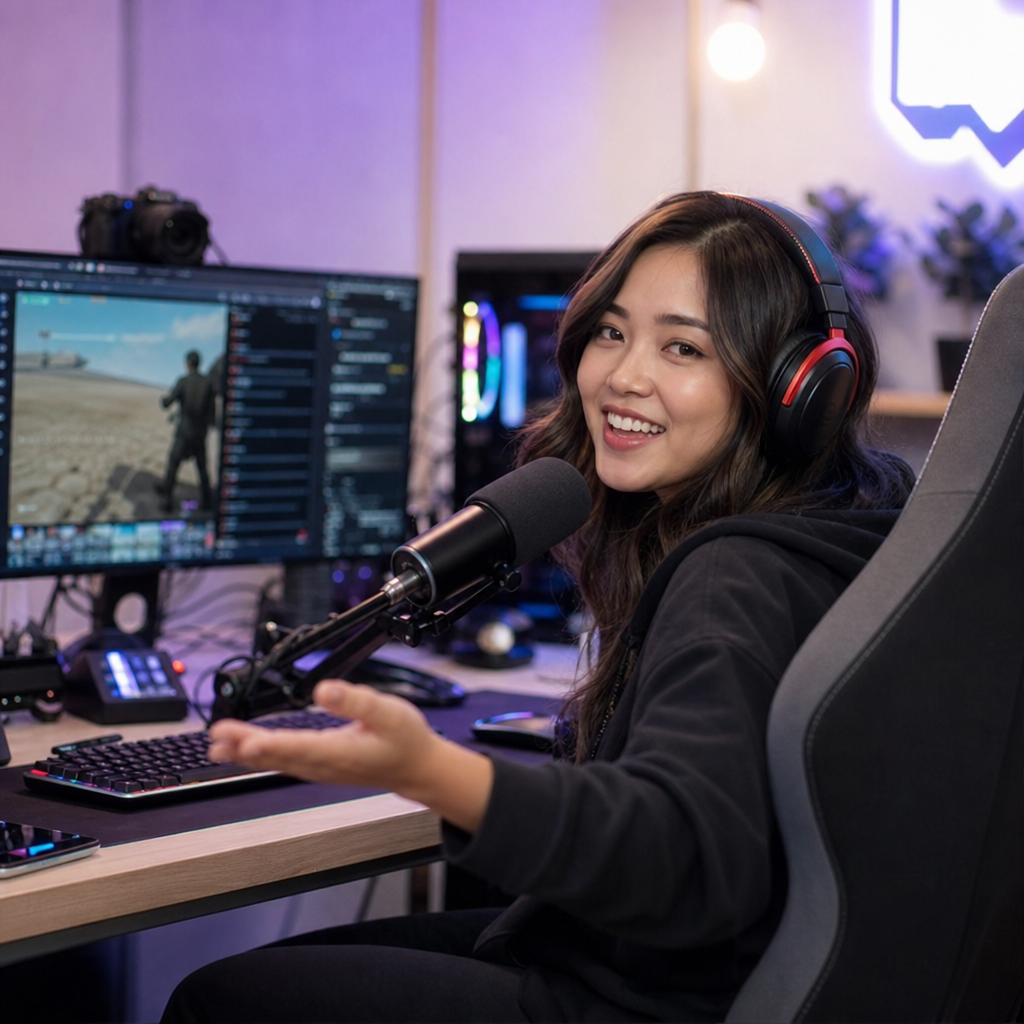
Twitch changed live streaming entertainment because it made interaction the product, not a feature. Traditional online video had comments, likes, and shares, but Twitch centered the live chat alongside the video itself. That design choice altered viewer expectations. People visited not only to see a game or creator, but to experience the social layer around them. A speedrunner attempting a record, a variety streamer reacting to news, or an esports commentator breaking down a match all became more compelling because audiences could respond instantly. The feedback loop shaped the show in real time.
This was a major shift in digital entertainment economics. Pre-recorded video scales through archives and search, while live streaming scales through habit, loyalty, and participation. Twitch proved that hours watched could become a more powerful metric than raw views when the platform was built around recurring sessions. Streamers developed scheduled programming like television hosts, but with stronger audience intimacy. Viewers learned channel-specific emotes, inside jokes, moderation rules, and rituals such as raids, hype trains, and subscriber goals. Those mechanisms may look small, yet they are central to retention. They turn consumption into belonging.
Twitch also normalized the idea that watching someone else play a game could be entertainment in its own right. Before Twitch, that behavior existed in forums and smaller communities, but it lacked a mainstream platform. Twitch gave it legitimacy and infrastructure. This influenced game marketing, esports rights, and even game design. Developers began designing titles with spectator experiences, creator integrations, and category visibility in mind. In that sense, Twitch was not simply a media platform; it became a market-making platform.
The Business Model: Subscriptions, Ads, Bits, and Creator Income
Twitch’s business model succeeded because it diversified revenue around both audience attention and audience participation. Advertising mattered, especially for large events and major channels, but advertising alone rarely creates a resilient creator platform. Twitch added channel subscriptions, virtual goods through Bits, and a partner and affiliate system that gave creators direct financial upside. That mix reflected a reality I have seen across creator businesses: viewers will tolerate some ads, but devoted fans prefer direct support mechanisms that feel personal and visible.
| Revenue stream | How it works | Why it matters |
|---|---|---|
| Advertising | Pre-roll, mid-roll, sponsorship placements, event campaigns | Scales with large audiences and premium broadcasts |
| Subscriptions | Monthly paid channel support with perks such as emotes and badges | Creates predictable recurring revenue for creators |
| Bits | Viewers buy virtual currency to cheer in chat | Turns engagement into microtransactions and social signaling |
| Partnerships | Brands sponsor creators, tournaments, or category activations | Extends platform economics beyond native tools |
The most important feature of this model was alignment. A small creator with a loyal audience could earn meaningful income without needing millions of monthly viewers, while top creators could combine subscriptions, ads, sponsorships, merchandise, and off-platform revenue. There were limitations, of course. Revenue splits have long been a point of tension, and ad load decisions can affect viewer experience. Still, Twitch established the operating template for modern live creator monetization. Many competing platforms later borrowed the same logic.
Amazon’s Acquisition and the Infrastructure Advantage
Amazon acquired Twitch in 2014 for roughly $970 million, a deal that immediately changed how analysts viewed the platform. The acquisition mattered for two reasons. First, it validated live streaming as a serious media and commerce category. Second, it gave Twitch access to infrastructure, distribution leverage, and corporate durability that few independent live video companies could match. Running global live video at scale is expensive. Bandwidth, transcoding, storage, trust and safety systems, and peak-event reliability all require deep technical investment. Amazon Web Services gave Twitch an operational backbone.
The strategic fit went beyond servers. Amazon used Twitch to deepen its relationship with gamers and younger digital audiences, while Twitch benefited from Prime Gaming integrations and broader ecosystem support. Prime perks helped user acquisition and retention. Brand relationships became easier to expand. At the same time, Amazon ownership introduced familiar tradeoffs seen in Silicon Valley company spotlights: more resources often come with more pressure around monetization, policy consistency, and financial performance. Twitch gained scale, but it also entered a more complex governance environment where creator expectations and corporate priorities did not always align.
Twitch in the Silicon Valley Company Landscape
Within company spotlights in Silicon Valley, Twitch should be read as a hub, not an isolated story. Its emergence connects directly to other major companies and categories. Amazon represents cloud infrastructure and platform ownership. YouTube represents asynchronous creator video and later live competition. Discord represents community persistence outside the stream itself. Nvidia connects through GPUs, game streaming technology, and the hardware culture that made PC broadcasting accessible. Unity and Epic Games matter because game engines increasingly shape spectator-ready experiences and creator economies. StreamElements, Streamlabs, and OBS show how a platform can generate an entire tooling layer around overlays, alerts, analytics, and monetization.
For a sub-pillar hub on company spotlights in Silicon Valley, Twitch is useful because it illustrates how firms become ecosystem anchors. A successful platform does not just attract users; it enables adjacent companies, service providers, agencies, tournament organizers, and independent developers. That pattern is common across Silicon Valley, but Twitch makes it unusually visible because creator workflows are public. When a streamer goes live, you can see the stack: capture software, moderation bots, payment layers, brand campaigns, community tools, clip distribution, and cloud delivery all working together.
This also explains why Twitch remains important even as competition intensifies. The company is not only a destination site. It is a coordination layer for creators, fans, advertisers, and developers who all depend on synchronized live interaction. That is hard to replace quickly, even when rivals offer stronger economics or cross-platform distribution.
Challenges, Competition, and What Comes Next
Twitch’s emergence does not mean permanent dominance. The company faces ongoing pressure from YouTube Live, Kick, TikTok Live, and platform fragmentation more broadly. Top creators now think like media businesses. They evaluate revenue splits, exclusivity, discoverability, shorts distribution, moderation quality, and multistreaming flexibility. Viewers also move fluidly across platforms depending on content type. Long-form gaming streams may still thrive on Twitch, while short discovery clips perform better elsewhere.
Trust and safety remains another decisive challenge. Real-time interaction creates loyalty, but it also creates moderation risk at scale. Harassment, hate speech, copyright disputes, gambling controversies, and inconsistent enforcement can damage both creators and advertisers. Twitch has invested in safety systems, reporting tools, and policy frameworks, yet live environments are inherently harder to govern than uploaded video libraries. The company’s long-term position depends on balancing openness with clear enforcement and better creator support.
Even with those constraints, Twitch’s core contribution is secure: it proved that live streaming entertainment could become a mainstream internet format with durable business value. For anyone studying company spotlights in Silicon Valley, the key lesson is that category-defining companies often win by understanding behavior at a granular level, building tools around that behavior, and then scaling the surrounding ecosystem. Twitch did exactly that. Explore the related company spotlights connected to this hub, from Amazon and YouTube to Discord and creator-tool startups, to see how one platform helped redraw the map of digital entertainment.
Frequently Asked Questions
1. Why is Twitch considered such an important company in the rise of live streaming entertainment?
Twitch is widely seen as a pivotal company because it helped turn live streaming from a relatively niche online behavior into a mainstream form of digital entertainment. Before platforms like Twitch gained traction, most online video experiences were built around on-demand viewing, where audiences watched polished content after it had already been produced and uploaded. Twitch introduced a different model centered on real-time participation, where the audience was not just consuming content but actively shaping it through chat, subscriptions, shared jokes, donations, and community rituals. That shift changed what people expected from online media.
What makes Twitch especially significant in Silicon Valley discussions is that it demonstrated the power of platform design combined with creator-led programming. Instead of functioning like a traditional broadcaster, Twitch created an ecosystem where streamers could build recurring shows, communities, and identities around live interaction. Viewers returned not only for a game, event, or topic, but for the creator’s personality and the culture that formed around that channel. This helped establish live streaming as a habit rather than a novelty.
Twitch also matters because it showed how infrastructure, monetization, and social engagement could work together at scale. Real-time video demands strong cloud and delivery systems, but technical performance alone would not have made the platform influential. Twitch succeeded because it paired streaming technology with built-in community features and a creator economy that gave streamers reasons to keep producing on a regular basis. In that sense, Twitch became more than a website for gameplay broadcasts; it became a blueprint for interactive entertainment platforms across the broader digital media industry.
2. How did Twitch change live streaming from a niche activity into a mainstream digital habit?
Twitch changed live streaming by making it consistent, interactive, and socially rewarding. Earlier forms of live broadcasting online often felt sporadic or technical, serving narrow communities without a clear mainstream identity. Twitch created a more accessible and repeatable experience where users could easily discover streams, follow creators, join chat conversations, and return day after day for familiar programming. That regularity mattered. It transformed live video from an occasional event into something audiences integrated into their daily routines.
A major part of that transition came from the platform’s emphasis on participation. On Twitch, viewers do not simply watch from a distance. They react in real time, influence the atmosphere of the stream, and often affect the flow of the content itself. Streamers respond to comments, answer questions, celebrate subscriber milestones, and develop inside jokes with their audiences. This creates a sense of immediacy and belonging that on-demand video often cannot match. The entertainment value comes not just from what is being streamed, but from the feeling of being there as it happens with a community.
Twitch also benefited from the rise of creator culture and the appeal of recurring online personalities. Rather than relying only on one-off viral moments, the platform encouraged streamers to build schedules, formats, and communities. That allowed viewers to form habits around specific creators much like they might around television hosts, radio personalities, or sports commentators. Over time, Twitch expanded beyond gaming into music, talk content, lifestyle streams, esports, and special events, which widened its audience and reinforced the idea that live streaming could support many kinds of entertainment. The result was a new mainstream media behavior: tuning in not just for content, but for live connection.
3. What role did community and interactivity play in Twitch’s success?
Community and interactivity were not side features on Twitch; they were central to the platform’s identity and growth. Twitch succeeded because it made the audience feel visible and involved. The live chat experience created a shared digital room where viewers could react simultaneously, develop a common language, and influence the energy of a stream in real time. That made watching live content feel collective rather than solitary, which was a major departure from traditional online video.
This sense of community helped creators build deep loyalty. On Twitch, successful streamers often function more like community leaders than distant entertainers. They greet returning viewers, recognize subscribers, respond to comments, and create rituals that make fans feel personally connected to the channel. Over time, that repeated interaction can produce strong bonds between creator and audience, as well as among audience members themselves. These bonds increase retention because people are not just returning for content; they are returning for a social environment that feels familiar and participatory.
Interactivity also improved the entertainment format itself. Streamers can adjust what they are doing based on audience input, whether that means responding to strategy suggestions during gameplay, taking live questions during a discussion, or changing the pace and tone of a broadcast according to chat response. This feedback loop gives live streaming a flexibility that pre-recorded content does not have. For Silicon Valley observers, Twitch became an important example of how product design can create durable engagement by making users part of the experience rather than passive endpoints of distribution.
4. How did Twitch influence creator economics and the business model of live streaming?
Twitch had a major impact on creator economics because it helped establish live streaming as a viable profession rather than just a hobby or promotional tool. The platform introduced and normalized multiple revenue streams that rewarded not only large-scale celebrity creators but also mid-sized and emerging streamers with loyal communities. Subscriptions, donations, bits, sponsorships, ads, and affiliate-style monetization created a diversified economic model that reflected the ongoing, relationship-based nature of live content.
This was important because the Twitch model aligned incentives around consistency and community engagement. On many digital platforms, creators are heavily dependent on algorithmic reach or one-time viral performance. Twitch, by contrast, encouraged recurring revenue from people who returned regularly and wanted to support a creator directly. That changed how creators approached their work. Instead of focusing only on polished uploads, many built long-form schedules, community management habits, and programming strategies designed to deepen audience loyalty over time.
From a broader business perspective, Twitch showed that a platform could capture value by enabling creators to earn within a shared ecosystem. The platform benefited when creators grew, communities became more active, and viewers spent more time participating. This created a mutually reinforcing structure: creator success increased platform engagement, and platform tools increased creator opportunity. Silicon Valley paid attention because Twitch illustrated how digital entertainment businesses could be built around creator relationships, recurring interaction, and monetization mechanisms integrated directly into the viewing experience. That framework has since influenced many other social, video, and live commerce platforms.
5. Why does Twitch remain relevant in conversations about the future of digital entertainment and Silicon Valley innovation?
Twitch remains relevant because it represents a broader shift in how entertainment is created, distributed, and experienced online. It showed that audiences increasingly value immediacy, authenticity, and participation alongside production quality. In a media environment once dominated by one-way broadcasting and professionally packaged content, Twitch helped prove that creator-led, interactive, community-driven programming could attract massive attention and sustain long-term engagement. That has implications far beyond gaming.
For Silicon Valley, Twitch is an important case study in platform innovation because its success sits at the intersection of several major technology trends: cloud infrastructure, creator monetization, real-time social interaction, network effects, and digital community building. Its growth demonstrated that strong infrastructure alone is not enough to define a category. The winning product also needs culture, incentives, and features that encourage repeated use. Twitch managed to combine technical performance with emotional and social stickiness, which is a difficult balance for platforms to achieve.
It also remains relevant because many of today’s emerging digital experiences echo principles that Twitch helped popularize. Whether the conversation is about live shopping, virtual events, creator subscriptions, real-time fan engagement, or interactive media formats, the underlying idea is similar: people want entertainment that feels alive and participatory. Twitch’s rise helped validate that model at scale. As a result, the company continues to be discussed not just as a streaming platform, but as a landmark example of how internet platforms can reshape media habits and redefine what mainstream entertainment looks like in the digital era.