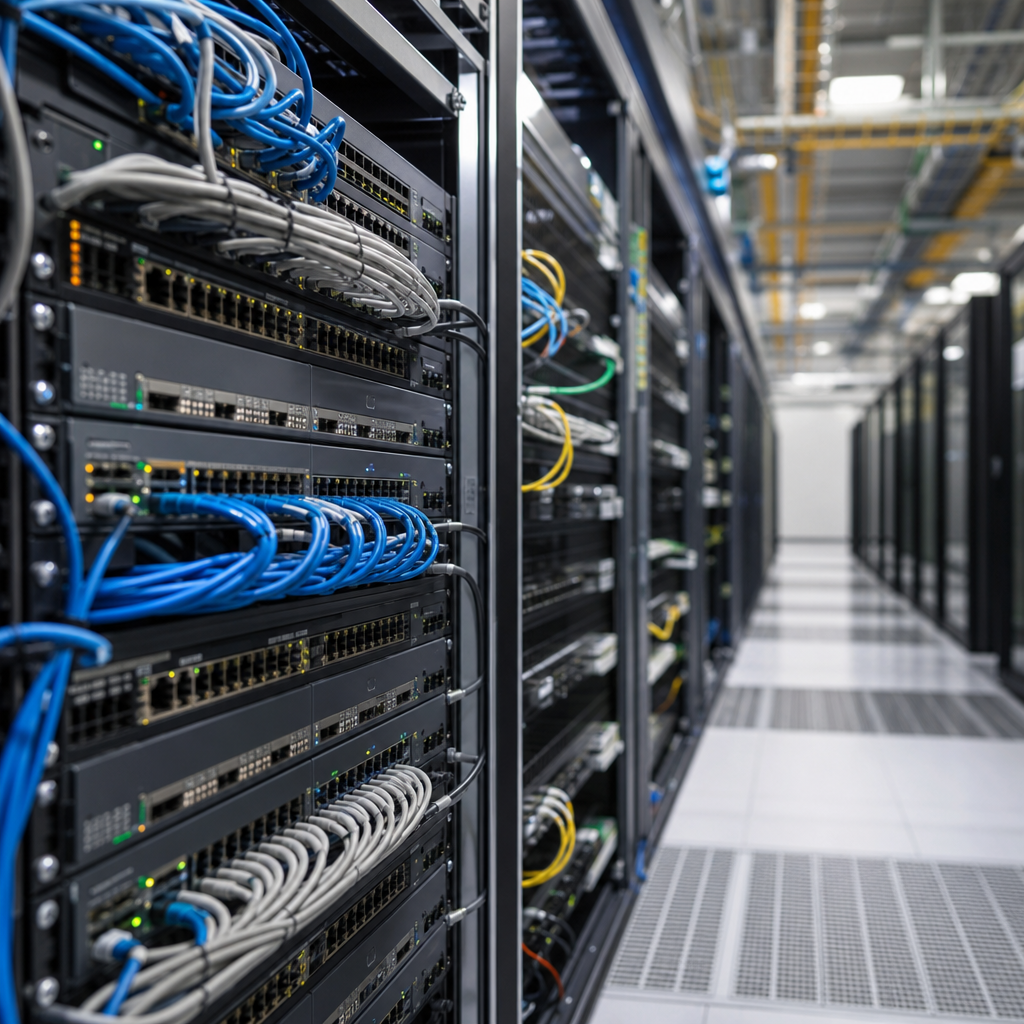
Cisco Systems sits at the center of modern networking, and few companies have shaped the internet’s infrastructure as deeply or as consistently. Founded in 1984 by Leonard Bosack and Sandy Lerner, Cisco built its reputation on routers and switches that move data between computers, offices, cities, cloud platforms, and entire continents. In practical terms, Cisco makes much of the equipment and software that allows packets to travel reliably from a user’s device to a website, a video call, a bank, or a hospital system. When people ask what keeps the internet running beyond fiber lines and data centers, Cisco is one of the clearest answers.
Understanding Cisco matters because internet infrastructure is no longer a niche technical subject. Businesses depend on secure connectivity for sales, logistics, and customer service. Governments use networks for emergency response and public administration. Schools, hospitals, factories, and financial institutions need low-latency, resilient systems that can survive outages and cyberattacks. I have worked on enterprise network projects where Cisco gear was the default choice not because of brand familiarity alone, but because it delivered a mature ecosystem: hardware, operating systems, centralized management, security controls, training, and support. That breadth is why Cisco belongs in any serious discussion of movers and shakers in technology.
This hub article examines Cisco Systems as a company spotlight and as a gateway to broader coverage of the networking leaders that influence digital infrastructure. It explains what Cisco does, why its products became foundational, how its business evolved from hardware into software and services, and where it fits in a market now shaped by cloud computing, automation, and artificial intelligence. It also addresses a basic question many readers have: is Cisco still important in an era dominated by hyperscalers and software-defined platforms? The short answer is yes. The fuller answer is that Cisco remains essential because infrastructure depends on interoperability, visibility, security, and operational trust, not just raw bandwidth.
How Cisco Built the Internet’s Core Plumbing
Cisco’s original breakthrough was commercializing multiprotocol routers at a time when networks were fragmented and often incompatible. Early enterprise environments ran combinations of IP, IPX, AppleTalk, and proprietary systems, and Cisco gained traction by helping different network segments talk to each other. As TCP/IP became the standard foundation of the internet, Cisco was positioned to scale with it. Its routers helped organizations connect branch offices, internet service providers aggregate traffic, and universities link research networks. That role made Cisco less a consumer brand than a structural one: users might not see the logo, but they depended on the traffic flowing through its equipment.
The company’s rise through the 1990s and early 2000s mirrored the internet’s commercial expansion. Cisco’s Catalyst switching line became common in campus networks, while enterprise routers and service provider systems handled wide-area traffic. In network operations, Cisco equipment became associated with predictable command-line interfaces, extensive documentation, and certifications such as CCNA and CCNP that created a global talent pipeline. That talent ecosystem mattered. A networking platform becomes more valuable when thousands of administrators know how to deploy, troubleshoot, and secure it under pressure.
Cisco also expanded through acquisitions with unusual discipline. Deals such as Cerent strengthened optical networking, Sourcefire expanded cybersecurity, Meraki opened the cloud-managed networking market, AppDynamics added application performance monitoring, and Splunk brought log analytics and security visibility into the portfolio. These were not random purchases. They reflected a long-term strategy to move from boxes in racks to full-stack infrastructure operations. In real deployments, that means an IT team can connect a site, enforce policy, monitor performance, detect threats, and investigate incidents with fewer disconnected tools.
What Cisco Systems Actually Sells Today
Cisco is often described as a networking company, but that label is now too narrow. Its business spans campus switching, enterprise routing, Wi-Fi, data center fabrics, cloud-managed networks, firewalls, secure access, observability, collaboration, and support services. The best way to understand Cisco today is as an infrastructure platform provider. It sells the devices that move traffic, the software that manages those devices, and the security and analytics tools that help operators maintain uptime.
Several product families define the company’s current role. Catalyst switches remain core to enterprise LAN deployments. Nexus switches are important in data center environments where low latency, automation, and spine-leaf designs matter. Meraki serves organizations that want centralized, cloud-based management across wireless, switching, SD-WAN, cameras, and mobile device management. Cisco Secure products, including Secure Firewall, support network segmentation, threat detection, and policy enforcement. ThousandEyes gives end-to-end visibility into internet and cloud path performance, which is critical when users blame “the network” but the issue sits with a provider, SaaS platform, DNS service, or peering connection.
One reason Cisco remains influential is that it solves operational problems, not just transport problems. A branch rollout is not merely about installing an access switch. It requires identity controls, wireless coverage, remote management, redundancy, software patching, and troubleshooting workflows. Cisco packages these functions in ways that large organizations can standardize. That standardization reduces mean time to repair and simplifies governance, especially across hundreds or thousands of locations.
Where Cisco Fits Across Modern Infrastructure
Cisco’s reach becomes clearer when viewed by environment rather than by product catalog. In a corporate campus, Cisco may provide access switches, Wi-Fi 6 or Wi-Fi 6E access points, identity services, and segmentation. In a branch network, it may deliver SD-WAN, security inspection, and cloud-managed operations through Meraki or Catalyst platforms. In a data center, Nexus switching and automation tools support east-west traffic, virtualization, and policy-driven fabrics. In hybrid cloud designs, observability tools such as ThousandEyes and AppDynamics help teams trace user experience across internal systems and external providers.
| Infrastructure area | Common Cisco role | Why it matters |
|---|---|---|
| Campus network | Switching, wireless, identity, segmentation | Supports secure user access and consistent policy |
| Branch office | SD-WAN, cloud management, security | Connects distributed sites with lower operational overhead |
| Data center | Nexus fabrics, automation, high-speed switching | Handles application workloads and east-west traffic efficiently |
| Internet visibility | ThousandEyes monitoring | Shows where performance fails across providers and SaaS paths |
| Security operations | Firewall, detection, analytics, Splunk integration | Improves threat response and compliance reporting |
These categories show why Cisco continues to appear in enterprise architecture standards. Infrastructure teams want fewer blind spots between networking and security, and Cisco has spent years closing those gaps. In one multinational environment I supported, ThousandEyes data settled recurring disputes between an internal network team and a SaaS vendor by identifying packet loss at a third-party transit point. That kind of evidence changes how quickly problems get fixed, and it demonstrates Cisco’s value beyond physical hardware.
Cisco’s Competitive Strengths, Limits, and Market Influence
Cisco’s biggest advantage is installed base combined with operational familiarity. Large organizations often have decades of Cisco equipment, trained staff, approved procurement channels, and existing automation built around Cisco operating systems. Replacing that environment is expensive and risky, so Cisco benefits from inertia. But it also earns continued adoption because it generally offers strong interoperability, long product support cycles, and enterprise-grade lifecycle management. For regulated industries, those qualities are often more important than the lowest upfront price.
The company also influences the labor market. Cisco certifications have trained generations of network engineers, and that educational footprint reinforces product adoption. Tools that organizations can staff confidently are more likely to survive procurement scrutiny. In that sense, Cisco’s market power comes not only from technology but from the surrounding ecosystem of partners, trainers, integrators, and managed service providers.
Still, Cisco is not unchallenged. Arista has become formidable in cloud and data center switching. Juniper remains strong in routing, service provider environments, and AI-driven operations through Mist. Palo Alto Networks competes aggressively in security. HPE Aruba is influential in campus networking and wireless. White-box switching and open networking have also pressured traditional hardware margins. Cisco’s response has been to emphasize software subscriptions, platform integration, and full-lifecycle operations rather than isolated devices.
That strategy has tradeoffs. Some customers dislike licensing complexity and recurring costs. Others prefer vendors with simpler product lines or stronger specialization in a single domain. Cisco’s portfolio breadth can be a strength or a burden depending on how well products integrate in practice. A balanced assessment is that Cisco remains a backbone company because the internet and enterprise connectivity reward reliability and coverage, but buyers should evaluate architecture fit, not assume the largest vendor is automatically the best choice.
Why Cisco Matters in the Future of Digital Infrastructure
Cisco’s relevance now depends on how well it serves a world defined by hybrid work, zero-trust security, automation, and AI-driven operations. These trends all increase the importance of network visibility and policy control. Users connect from homes, branch sites, and mobile devices. Applications run across private data centers and multiple clouds. Security decisions must follow identity and context, not just physical location. Networks therefore need to be programmable, observable, and tightly connected to security analytics.
Cisco has aligned itself with that future by investing in secure access service edge, extended detection and response, automation, telemetry, and unified operations. Its 2024 acquisition of Splunk was especially significant because machine data is now central to resilience. Logs, flow records, events, and application traces determine how quickly organizations understand outages and attacks. If Cisco successfully fuses network infrastructure with security analytics and observability, it strengthens its role from transport vendor to digital operations platform.
For readers exploring movers and shakers under the Company Spotlights umbrella, Cisco is a foundational hub topic because it connects to nearly every other major infrastructure story: cloud networking, cybersecurity, enterprise Wi-Fi, collaboration, semiconductor demand, data center expansion, and AI workload growth. The key takeaway is simple: Cisco Systems remains one of the backbone companies of the internet because it combines networking depth, operational tooling, and enterprise trust at global scale. If you are building out your understanding of technology power players, use Cisco as a starting point, then follow the linked company spotlights that intersect with routing, cloud, security, and observability.
Frequently Asked Questions
1. Why is Cisco Systems often described as the backbone of the internet’s infrastructure?
Cisco is often described this way because its technology has been foundational to how data moves across modern networks. At the core of the internet are devices that direct traffic, connect networks, prioritize applications, and keep communications flowing even when demand is high. Cisco built much of its global reputation on routers and switches, which are the essential systems that forward data packets from one point to another. Whether information is traveling between computers inside a company, between branch offices in different countries, or from a user’s device to a cloud application, Cisco equipment has historically played a central role in making that journey possible.
What makes Cisco especially important is not just the hardware itself, but the scale and reliability it brought to enterprise and service-provider networking. Internet infrastructure depends on devices that can handle enormous amounts of traffic with speed, consistency, and security. Cisco became a trusted choice for businesses, telecom providers, government institutions, universities, and data centers because its systems were designed for uptime, performance, and manageability. In other words, Cisco helped create the dependable networking layer that people rarely see but use every time they browse a website, join a video call, stream content, or process an online payment.
Cisco’s influence also extends beyond the early internet era. As networking evolved, the company expanded into wireless networking, cybersecurity, software-defined networking, collaboration tools, and cloud-connected infrastructure. That broader portfolio means Cisco has remained deeply embedded in the systems that support digital communication today. Calling Cisco the backbone of internet infrastructure is therefore not an exaggeration; it reflects the company’s long-standing role in connecting networks at scale and helping the internet operate as a stable, usable global platform.
2. What exactly do Cisco routers and switches do, and why are they so important?
Routers and switches are two of the most important building blocks in any network, and Cisco became one of the best-known providers of both. A switch primarily connects devices within the same local network, such as computers, printers, servers, phones, and wireless access points inside an office, school, hospital, or data center. It ensures that traffic gets delivered to the correct destination within that environment efficiently and with minimal delay. A router, by contrast, connects different networks to one another. It decides the best path for data to take when moving between local networks, branch offices, internet service providers, cloud platforms, and the broader internet.
These functions are critical because the internet is not a single machine or a single unified system. It is a massive interconnection of many different networks. For that ecosystem to work, data packets must be inspected, directed, prioritized, and delivered continuously. Cisco routers became especially important because they were trusted to perform that job reliably in high-volume environments. Cisco switches also became standard in enterprises because they could support growing numbers of devices, maintain strong performance, and offer advanced management features for IT teams.
The importance of these devices increases even more in modern digital environments. Businesses now rely on real-time communications, cloud applications, remote work, connected devices, and secure access for distributed teams. That means the network has to be fast, resilient, and intelligent. Cisco systems often include tools for traffic segmentation, quality of service, redundancy, remote management, and integration with security policies. So while routers and switches may sound like simple hardware categories, in practice they are central to productivity, connectivity, and business continuity. Cisco’s success came from turning these core network functions into reliable enterprise-grade systems that organizations could build around for years.
3. How has Cisco influenced the growth of the internet and enterprise networking over time?
Cisco’s influence can be traced to the period when computer networks were expanding from isolated systems into interconnected environments. In the 1980s and 1990s, organizations needed practical ways to connect multiple computers, offices, and campuses, and eventually connect those systems to the wider internet. Cisco emerged at exactly the right moment with products designed to solve this challenge. By making routers that could efficiently move traffic between networks using internet protocols, Cisco helped accelerate the adoption of standardized networking and made large-scale connectivity more achievable for businesses and institutions.
As the internet commercialized and digital transformation expanded, Cisco grew alongside it. The company did not simply sell boxes; it helped shape how enterprise networking was designed, managed, and scaled. Cisco equipment became common in offices, universities, government agencies, service-provider networks, and data centers. Its technologies supported local area networks, wide area networks, campus networks, internet peering, and later cloud-connected architectures. This broad adoption gave Cisco enormous influence over operational best practices, certification standards, network administration, and the skills required in the IT workforce.
Cisco also adapted to major shifts in technology. As organizations moved from wired-only environments to wireless mobility, from on-premises applications to cloud services, and from perimeter-based security to more distributed security models, Cisco expanded its offerings accordingly. It invested in network management software, unified communications, cybersecurity, data center solutions, and automation. That matters because the internet’s infrastructure is not static; it evolves with business needs and usage patterns. Cisco’s long-term impact comes from repeatedly helping organizations navigate those changes while maintaining reliable connectivity at scale.
4. Is Cisco still relevant in the age of cloud computing, remote work, and software-defined networks?
Yes, Cisco remains highly relevant, though its role has evolved. In earlier decades, the company was most closely associated with physical networking hardware. Today, networking is broader and more software-driven, but the need for secure, reliable, high-performance infrastructure has only increased. Cloud computing still depends on underlying network connectivity. Remote work still requires secure access, traffic management, identity controls, collaboration platforms, and consistent user experiences. Software-defined networking still relies on physical infrastructure that can be centrally managed, automated, and secured. Cisco continues to operate in all of these areas.
One reason Cisco remains important is that enterprises rarely function in a purely cloud-only or software-only way. Most organizations operate hybrid environments that combine offices, data centers, branch sites, cloud platforms, remote employees, and third-party services. Managing all of that requires integrated networking and security solutions, not just isolated hardware products. Cisco has responded by expanding into cloud-managed networking, network automation, observability, zero-trust security approaches, secure access service edge capabilities, and collaboration technologies such as enterprise communications and video conferencing.
Its relevance also comes from trust and installed base. Large organizations often depend on infrastructure that must run continuously, support compliance requirements, and integrate with existing tools and teams. Cisco’s long presence in enterprise IT means many companies already have operational familiarity with its platforms, training programs, and support ecosystems. While competition is strong and the market has changed significantly, Cisco remains a major force because the problems it helps solve—connectivity, scale, uptime, control, and security—are still central to how modern digital businesses operate.
5. Beyond networking hardware, what other technologies and services does Cisco provide?
Although Cisco is best known for routers and switches, the company now offers a much broader technology portfolio. One major area is cybersecurity. Cisco provides tools for network security, endpoint protection, threat detection, secure access, identity-aware controls, email security, and cloud security. This expansion reflects the reality that networking and security are no longer separate concerns. Every connection point, user session, application flow, and device interaction creates potential risk, so Cisco has positioned itself as both a networking company and a security provider.
Cisco also offers wireless infrastructure, including enterprise Wi-Fi systems and cloud-managed networking platforms that help organizations connect employees, guests, and devices across campuses and branch locations. In addition, it has a substantial presence in collaboration technology, with products and services for meetings, messaging, calling, and video conferencing. These tools became especially important as hybrid work models increased demand for secure, high-quality digital communication across distributed teams.
Another important area is software and network management. Modern IT teams need visibility into application performance, user experience, device health, and overall network behavior. Cisco provides software for analytics, automation, observability, and centralized control, helping organizations manage increasingly complex environments. It also serves data centers and service providers with technologies for high-capacity networking, virtualization support, and cloud integration. Taken together, these offerings show that Cisco is no longer just a company that sells network hardware. It is a broad infrastructure and digital operations provider whose technologies support how businesses connect, communicate, secure data, and run critical services at scale.