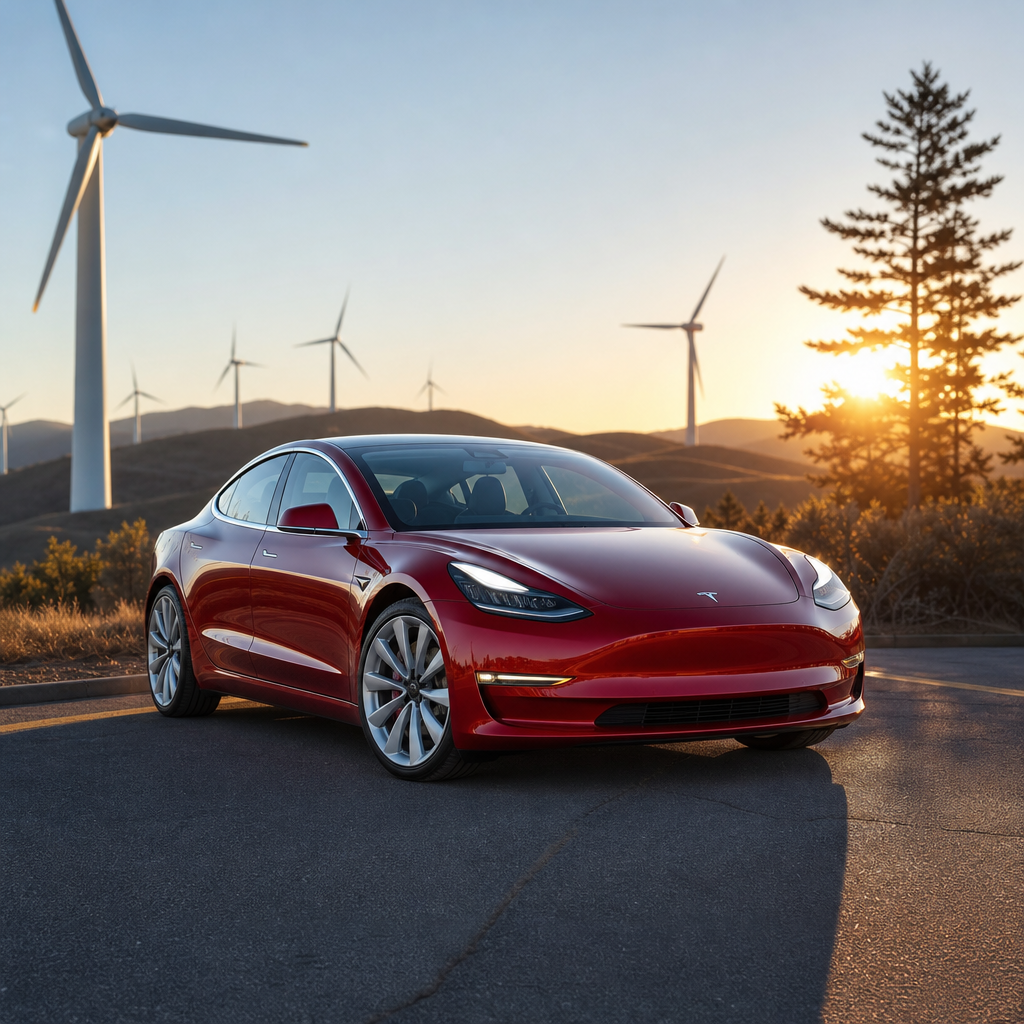
Tesla’s Vision: Leading the Charge in Electric Vehicles captures more than a product story; it explains how one company helped shift the global auto industry toward battery-powered transport, software-defined vehicles, and energy ecosystems. In this sub-pillar hub for Company Spotlights, the focus is Tech Innovators and Market Leaders: businesses that do not simply compete in existing categories, but redefine them through engineering, branding, and execution. Tesla is central to that discussion because it turned electric vehicles from a niche environmental choice into an aspirational mainstream purchase, while forcing legacy manufacturers to accelerate their own transition plans.
In practical terms, Tesla’s vision combines several ideas: replacing internal combustion engines with electric drivetrains, using vertically integrated manufacturing to control costs and quality, treating the car as a software platform that improves over time, and connecting vehicles to a broader clean-energy strategy that includes batteries, charging networks, and grid products. I have worked with EV market analyses and charging adoption data for years, and Tesla appears repeatedly as the benchmark against which rivals are measured. Whether the topic is range, over-the-air updates, direct sales, or charging reliability, Tesla usually defines the reference point.
This matters because transportation is one of the largest contributors to greenhouse gas emissions, and vehicle electrification is now a core industrial, regulatory, and consumer issue. Buyers want answers to straightforward questions: Are EVs practical, affordable, and reliable? Investors ask whether growth can continue as competition rises. Policymakers ask how charging infrastructure, supply chains, and domestic manufacturing should evolve. A useful hub article must answer those questions directly while showing how Tesla fits into the wider landscape of tech innovators and market leaders shaping mobility, energy, and advanced manufacturing.
How Tesla reshaped the electric vehicle market
Tesla reshaped the market by proving that an electric vehicle could deliver long range, strong performance, and premium design at the same time. Before Tesla gained scale, many EVs were compliance cars with limited range and conservative styling. The 2008 Roadster demonstrated that lithium-ion battery packs could power a desirable performance car. The bigger breakthrough came with the Model S in 2012, which combined sedan practicality with acceleration that rivaled sports cars and a range profile that changed public expectations. That product did more than sell units; it changed the mental model of what an EV could be.
Tesla also changed how vehicles are developed and sold. Traditional automakers often rely on dealership networks and slower model-year update cycles. Tesla built a direct-to-consumer sales approach, leaned into online ordering, and normalized frequent software updates that improve navigation, efficiency, driver assistance, and interface features after purchase. In plain terms, Tesla made the car feel closer to a smartphone or connected device. That software-centered approach influenced the broader market, with manufacturers such as Ford, General Motors, Hyundai, and Mercedes-Benz investing heavily in digital vehicle platforms, battery management systems, and recurring software capabilities.
Its impact extends beyond sales numbers. Tesla created pressure across the value chain: battery suppliers expanded capacity, mining and refining became strategic concerns, governments increased EV incentives, and charging providers had to improve reliability and speed. In the United States, Tesla’s Supercharger network set a clear standard for uptime, site placement, and user experience. Many automakers eventually adopted Tesla’s North American Charging Standard, a major acknowledgment that convenience and interoperability matter as much as vehicle specifications. Market leadership, in this context, means changing industry behavior, not merely leading a quarterly ranking.
The business model behind Tesla’s advantage
Tesla’s advantage comes from combining hardware, software, manufacturing, and infrastructure into a tightly linked system. Vertical integration is the core principle. Tesla designs battery packs, power electronics, thermal systems, software architecture, and increasingly its own manufacturing processes. That control can shorten feedback loops between engineering and production. When a problem appears on the factory floor, software teams and manufacturing engineers can respond quickly because the systems are connected. From my experience reviewing automotive operations, that kind of integration is difficult to replicate inside organizations built around outsourced components and long supplier hierarchies.
Gigafactories are another major element. Tesla’s factories in Nevada, Shanghai, Berlin, Texas, and elsewhere were designed around scale, localization, and process optimization. The objective is not simply to build more cars, but to reduce unit costs through battery production efficiency, casting innovations, logistics savings, and simplified assembly. The company’s use of large castings, battery structural design, and standardized platforms reflects a manufacturing philosophy centered on fewer parts and faster throughput. These methods carry risks, including capital intensity and execution complexity, but they can create durable cost advantages when demand remains strong.
Brand positioning matters too. Tesla sells technology leadership as much as transportation. Customers are often buying into a promise of future capability: smarter driver assistance, lower operating costs, integrated charging, and participation in a cleaner energy system. That promise has supported pricing power at key points in the company’s growth. At the same time, Tesla’s business model is not immune to pressure. Price cuts can stimulate volume but compress margins, and scaling globally introduces regulatory, service, labor, and geopolitical challenges. Market leadership requires balancing speed with operational discipline.
Products, infrastructure, and technology ecosystems
Tesla’s product line shows how ecosystem thinking creates strategic leverage. The Model 3 and Model Y expanded the company beyond early adopters into higher-volume segments, especially compact and midsize categories where mainstream demand is concentrated. The Cybertruck targets a distinctly American pickup market, while energy products such as Powerwall, Megapack, and solar offerings broaden Tesla’s role from automaker to energy technology provider. This diversification matters because the strongest tech innovators usually win by connecting products into systems that reinforce one another.
The Supercharger network is one of Tesla’s most defensible assets. EV buyers consistently rank charging availability and reliability among their top concerns. Tesla addressed that barrier directly by building its own network with streamlined payment, route planning integration, and predictable performance. In practical use, this reduces “range anxiety” because the car and charger are part of a single experience. Opening parts of the network to non-Tesla vehicles adds another strategic layer: it can generate revenue, influence industry standards, and strengthen Tesla’s position in the wider charging economy.
Software remains equally important. Tesla vehicles receive over-the-air updates that can adjust efficiency, user interface behavior, security features, and certain performance characteristics without a dealership visit. The company’s driver-assistance stack, marketed through Autopilot and Full Self-Driving packages, has been a major source of consumer interest and controversy. The key point is that Tesla treats software as a continuing product, not a fixed feature set delivered once at sale. That model has pushed competitors to adopt centralized computing, better telemetry, and remote diagnostics to stay relevant.
| Area | Tesla approach | Why it matters |
|---|---|---|
| Battery strategy | Pack design, cell partnerships, in-house optimization | Improves cost, range, and supply resilience |
| Sales model | Direct ordering and company-controlled retail | Simplifies buying and data ownership |
| Charging | Supercharger network with integrated routing | Reduces friction for long-distance travel |
| Software | Frequent over-the-air updates | Keeps vehicles improving after purchase |
| Manufacturing | Gigafactories, large castings, process integration | Lowers cost at scale when execution is strong |
Competition, risks, and Tesla’s place among market leaders
Tesla remains influential, but the market is no longer uncontested. BYD has become a major global force, especially through battery expertise, broad pricing coverage, and strong execution in China. Hyundai Motor Group has earned recognition for EV design and platform quality. Ford, General Motors, Volkswagen, BMW, and Mercedes-Benz are committing billions to battery plants, software platforms, and model launches. In China, competition is especially intense, with companies such as NIO, XPeng, and Li Auto advancing rapidly in user interface design, assisted driving, and localized digital features.
That competitive environment highlights Tesla’s key risks. First, growth becomes harder as the addressable market broadens from enthusiasts to price-sensitive mainstream buyers. Second, autonomy claims face regulatory scrutiny, legal exposure, and reputational risk if marketing outpaces real-world system capability. Third, battery materials and global trade policies can disrupt costs and production plans. Fourth, service capacity and repair times affect customer satisfaction just as much as vehicle performance. I have seen brand strength weakened quickly when ownership experience lags behind product expectations, and Tesla has faced that tension in several markets.
Even with those challenges, Tesla’s role within Tech Innovators and Market Leaders remains secure because its influence reaches beyond automotive sales. It accelerated investment in batteries, normalized software-defined vehicles, reshaped charging standards, and made factory design a strategic differentiator. Few companies alter product expectations, industrial policy discussions, and capital allocation across an entire sector. Tesla did. That is why this hub article belongs within Company Spotlights: it provides a framework for understanding not only Tesla, but also the broader class of companies that drive technological change by combining engineering ambition with market-making execution.
Tesla’s vision matters because it demonstrates how innovation becomes industry leadership when technology, infrastructure, manufacturing, and brand strategy reinforce one another. The company did not invent the electric car, but it made the modern EV market commercially urgent for competitors, governments, suppliers, and consumers. Its success shows that adoption rises when products solve real-world pain points: range, charging access, software usability, and total ownership experience. For readers exploring Tech Innovators and Market Leaders, Tesla is a reference case in how a company can turn a mission into an operating system for growth.
The clearest takeaway is balance. Tesla’s strengths are concrete: strong EV brand recognition, deep charging advantages, software-led product development, and manufacturing ambition at global scale. Its limitations are equally real: competition is rising, regulatory and safety scrutiny remain intense, and execution missteps can affect margins and trust. Serious analysis should hold both truths at once. That balanced view is what makes Tesla useful as a hub topic under Company Spotlights. It is not just a success story; it is a live case study in how market leaders defend position while the market they created becomes more crowded.
If you are building a deeper understanding of this subtopic, use Tesla as the starting point, then compare its model with other innovators in batteries, autonomous systems, semiconductors, mobility platforms, and clean energy infrastructure. That comparison reveals the bigger pattern: leading companies win when they connect technical excellence to scalable execution and customer adoption. Explore the related Company Spotlights in this hub to see how other market leaders are following, challenging, or redefining the path Tesla helped open worldwide.
Frequently Asked Questions
Why is Tesla considered such a transformative company in the electric vehicle industry?
Tesla is widely seen as transformative because it did more than launch popular electric cars; it changed expectations for what an automaker could be. Before Tesla became a major force, electric vehicles were often viewed as niche products with limited range, modest performance, and little mainstream appeal. Tesla challenged that perception by building vehicles that combined long-range battery technology, striking design, fast acceleration, advanced software, and a premium brand identity. In doing so, it helped move electric vehicles from the margins of the market into the center of global automotive strategy.
Its impact also extends beyond the cars themselves. Tesla pushed the industry toward over-the-air software updates, deeper vehicle connectivity, direct-to-consumer sales models in many markets, and an ecosystem approach that links transportation with charging infrastructure and energy storage. The company’s success forced established automakers to accelerate their own electric vehicle programs and rethink long-term investment priorities. That is why Tesla is often discussed not simply as an automaker, but as a company that helped redefine mobility, consumer expectations, and the competitive direction of the modern auto industry.
How has Tesla influenced the broader shift toward software-defined vehicles?
Tesla played a major role in showing that vehicles could function more like connected technology platforms than purely mechanical products. Traditionally, car ownership meant buying a fixed set of features at the time of purchase, with improvements arriving only in the next model year. Tesla helped popularize a different model by enabling over-the-air updates that could improve performance, add features, refine interfaces, and adjust vehicle behavior after delivery. This changed how many consumers and competitors think about the relationship between hardware and software in the automotive experience.
The significance of this shift is substantial. A software-defined vehicle can evolve over time, allowing manufacturers to enhance navigation, safety systems, energy management, and user experience without requiring a physical recall or dealership visit in many cases. Tesla’s large touchscreen interfaces, integrated app ecosystem, and data-driven product iteration also influenced how the industry approaches design and ownership. While many legacy automakers are now investing heavily in vehicle software architectures, Tesla helped set the benchmark by making software central to the value proposition rather than a supporting feature. That influence is one reason Tesla is frequently highlighted in conversations about the future of transportation technology.
What role does Tesla’s charging and energy ecosystem play in its overall vision?
Tesla’s vision has always extended beyond selling individual electric vehicles. A major part of its strategy has been to build an ecosystem that makes electric mobility more practical, reliable, and appealing. The company’s charging network has been especially important because one of the biggest barriers to electric vehicle adoption has historically been range anxiety and uncertainty around public charging access. By investing in a broad, recognizable charging infrastructure, Tesla helped make long-distance electric travel more credible for mainstream buyers and strengthened confidence in EV ownership.
That ecosystem approach also includes Tesla’s broader energy business, such as battery storage and solar-related offerings. These pieces support a larger narrative in which transportation, electricity generation, and energy storage are interconnected. In that sense, Tesla is not only selling cars; it is promoting a model where cleaner energy can power homes, businesses, and vehicles in a more integrated way. This broader vision has helped distinguish Tesla from companies focused only on manufacturing automobiles and has reinforced its position as a technology and energy brand, not just a car company.
Why is Tesla often featured in discussions about market leadership and innovation rather than just car sales?
Tesla is frequently featured in discussions of market leadership and innovation because its influence cannot be measured by vehicle deliveries alone. The company has consistently shaped industry narratives, investor expectations, consumer perceptions, and strategic planning across the automotive and energy sectors. It has shown how branding, engineering ambition, manufacturing scale, and software integration can come together to create an outsized impact. Even when competitors are larger by traditional production metrics, Tesla often remains central to the conversation because it helped define the direction others are now following.
In the context of Company Spotlights focused on tech innovators and market leaders, Tesla stands out because it fits the profile of a business that redefined its category rather than merely competing within it. It combined performance-oriented electric vehicles with a bold mission, high-visibility leadership, advanced battery strategy, and a direct relationship with customers. That combination turned Tesla into both an industrial company and a cultural symbol of technological change. As a result, Tesla is often analyzed as a case study in disruption, execution, and category creation, not simply as one brand among many in the global auto market.
What challenges and criticisms are important to understand when evaluating Tesla’s long-term vision?
Understanding Tesla’s long-term vision requires acknowledging that the company’s influence has been significant, but not without challenges and criticism. Tesla operates in highly complex industries where scale, regulation, safety, quality control, and supply chain resilience all matter. As the company has grown, it has faced scrutiny around manufacturing consistency, service capacity, pricing volatility, workplace concerns, and the real-world performance and communication of driver-assistance technologies. These issues are important because they shape how sustainable Tesla’s leadership may be over time.
At the same time, criticism does not erase the company’s role as a market shaper. Instead, it adds necessary balance to the conversation. Tesla’s long-term success will depend not only on innovation, but also on operational discipline, global competition, policy environments, battery supply, and its ability to maintain trust with consumers and regulators. In many ways, that is what makes Tesla such a compelling company spotlight: it represents both the promise and the pressure of leading a major industrial transition. Evaluating Tesla seriously means recognizing its extraordinary impact while also paying attention to the execution risks that come with trying to lead the future of electric vehicles and energy systems.