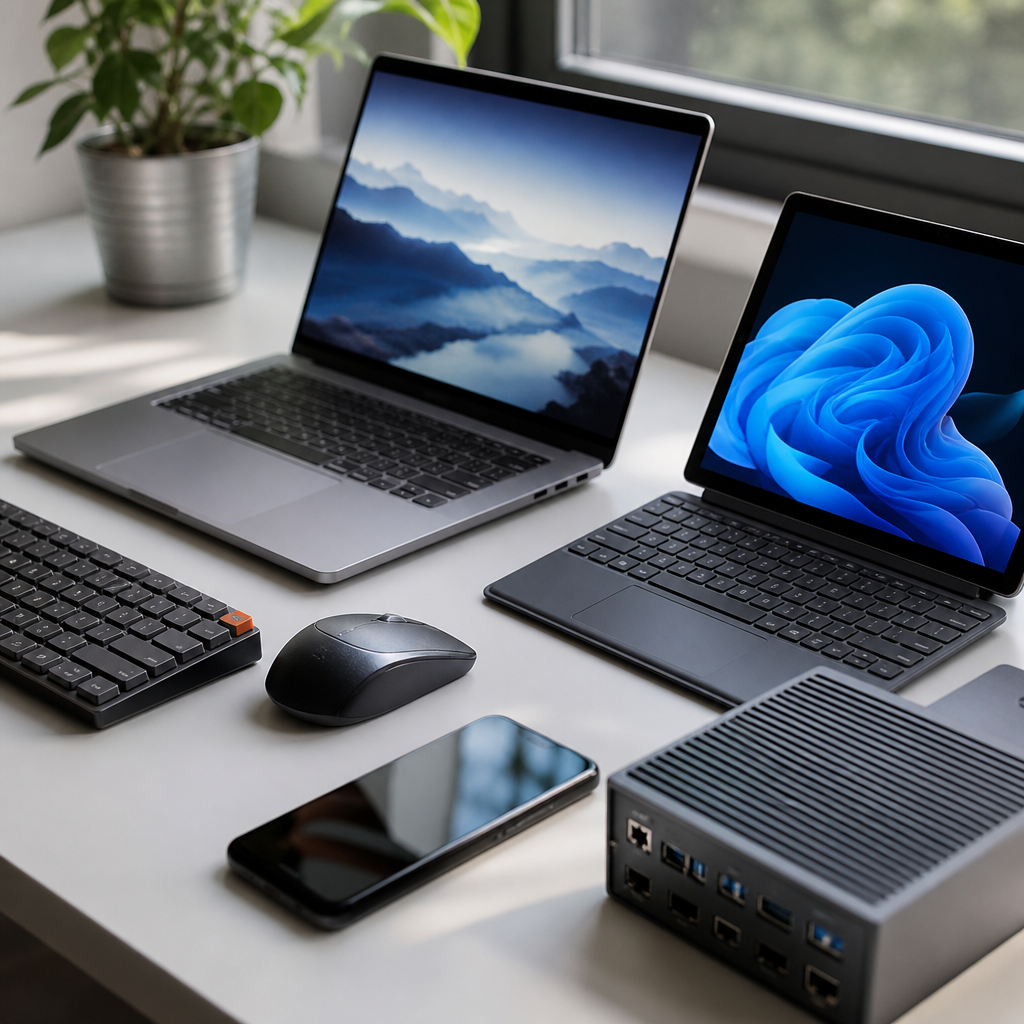
Intel sits at the center of modern computing, powering everything from office laptops and cloud servers to factory robots and edge devices that analyze data in real time. In the broad conversation about tech innovators and market leaders, Intel matters because it has shaped the architecture, manufacturing methods, and business models that define the digital economy. Founded in 1968 by Robert Noyce and Gordon Moore, Intel helped move the semiconductor industry from memory chips toward microprocessors, then built an ecosystem around x86 computing that became the default standard for personal and enterprise systems. When people refer to Intel inside the world’s computing devices, they are usually talking about more than a chip brand. They are talking about a company whose processor designs, fabrication strategy, software tooling, and platform partnerships influence how devices are built, sold, and used.
As a hub within Company Spotlights, this article examines Intel through the lens of tech innovators and market leaders. That means looking at the company’s historical role, its current product lines, its manufacturing and supply chain choices, and the competitive pressures reshaping its future. It also means answering practical questions readers often have: What does Intel actually make today? Why is its position in PCs still important? How does it compete in data centers, artificial intelligence, and foundry services? I have worked with Intel-based fleets in corporate environments, and the company’s reach is obvious at every layer, from BIOS management and vPro policies to server procurement and software optimization. Intel is not just a component supplier. It is a platform company whose decisions ripple across device makers, developers, IT teams, and global markets.
How Intel Became a Defining Force in Computing
Intel’s rise started with semiconductor innovation but accelerated when the company bet on microprocessors as the foundation of general-purpose computing. The 4004, released in 1971, is widely recognized as the first commercially available microprocessor. Later families such as the 8086 and 8088 laid the groundwork for the x86 instruction set that still underpins most desktops, laptops, and many servers. Intel’s long partnership with PC manufacturers, especially during the rise of IBM-compatible systems, created a durable standard. Software developers wrote for x86 because businesses used it at scale, and businesses bought x86 systems because the software base was rich and stable. That flywheel became one of the strongest platform effects in technology.
The company also mastered branding in a way few semiconductor firms had done before. “Intel Inside” turned an invisible component into a consumer buying signal. That shift mattered because it influenced procurement beyond enthusiasts. Retail buyers, enterprise IT departments, and OEMs all started treating the CPU vendor as a marker of quality, compatibility, and expected performance. Over time, Intel expanded from chips into reference designs, networking, graphics, software libraries, and management technologies, strengthening its role across the device stack. This is why Intel remains central in any discussion of market leaders: it did not just participate in computing growth; it helped define the standards by which the market expanded.
Intel’s Product Portfolio Across Computing Devices
Today, Intel’s portfolio spans client computing, data center infrastructure, networking, edge systems, and enabling services for third-party chip production. In consumer and business PCs, Intel Core processors remain the flagship line, while Intel Processor and related entry tiers serve mainstream value systems. For commercial fleets, Intel vPro adds remote management, hardware-based security controls, and platform stability features that matter in large deployments. In data centers, Intel Xeon processors support virtual machines, databases, analytics workloads, and many enterprise applications that still depend on mature x86 software compatibility. Intel also sells Ethernet products, Wi-Fi technologies, FPGAs through the Altera business, and discrete graphics under the Arc brand.
What makes this portfolio important is not merely breadth, but the way each category maps to specific device needs. A thin-and-light laptop requires a different balance of thermal design power, integrated graphics, battery efficiency, and AI acceleration than a rack server or an industrial edge gateway. Intel addresses those differences through segmented product families and platform tuning. In practice, that means OEMs can build everything from fanless mini PCs for digital signage to high-core-count servers for enterprise virtualization while staying within one architectural ecosystem. For buyers, the advantage is predictable software support, broad motherboard availability, and a mature channel. For Intel, the advantage is scale across multiple device classes, which reinforces the company’s market presence even as competition intensifies.
Where Intel Wins in PCs, Workstations, and Enterprise Fleets
Intel’s strongest position remains the personal computer market, especially in business notebooks, desktops, and workstations purchased in volume. In enterprise rollouts, consistency often matters more than peak benchmark scores. IT teams need standardized drivers, long support windows, predictable image management, and tools that work across thousands of devices. Intel has spent decades building around those needs. Features such as Intel Active Management Technology, hardware telemetry, stable platform programs, and broad OEM certification help explain why major vendors like Dell, HP, and Lenovo continue to ship extensive Intel-based commercial lines.
Workstations provide another example of Intel’s practical influence. Engineering firms, media studios, and architects often rely on certified software stacks for CAD, simulation, rendering, and content production. In those environments, compatibility with applications and GPUs can be as important as raw CPU speed. Intel’s workstation-class offerings, paired with ecosystem certification from software vendors, make the purchasing decision less risky. The same pattern appears in education, healthcare, and government deployments, where security policy, manageability, and supply continuity weigh heavily. Intel does not win every benchmark in every category, but in managed device environments, its combination of ecosystem maturity and operational predictability remains a major competitive asset.
Intel in Data Centers, AI, and the Edge
Intel’s role in data centers is more contested than it was a decade ago, yet it remains substantial because enterprise infrastructure changes slowly and software dependencies are deep. Xeon processors still run large shares of virtualization clusters, ERP systems, private clouds, and storage platforms. Many organizations prioritize workload certification, procurement relationships, and existing operational expertise over switching costs. Intel has leaned into this installed base with accelerators, security extensions, and software optimization through oneAPI, OpenVINO, and tuned libraries for widely used frameworks. In real deployments, those software layers can close meaningful performance gaps without requiring wholesale application rewrites.
At the edge, Intel is particularly relevant because many deployments need local processing, long life cycles, and compatibility with industrial software. Retail analytics cameras, smart factory controllers, transportation systems, and medical devices often cannot depend entirely on cloud latency. Intel edge platforms combine CPU performance, integrated graphics, AI inference support, and ruggedized ecosystem options that fit these constraints. Artificial intelligence is now the decisive battleground, and Intel’s challenge is clear: it must compete not only with general-purpose CPUs from AMD and Arm-based vendors, but also with specialized AI accelerators from companies such as NVIDIA. Intel’s answer has been a mix of Xeon enhancements, Gaudi accelerators, FPGA flexibility, and software tooling that aims to simplify deployment across heterogeneous hardware.
Manufacturing, Competition, and What Comes Next
Intel’s competitive story cannot be understood without its manufacturing model. For years, Intel’s identity rested on being an integrated device manufacturer that designed and fabricated its own chips. That approach delivered tight process control and strong margins when execution was strong, but it also created risk when process transitions slipped. Over the last several years, Taiwan Semiconductor Manufacturing Company set the pace in advanced-node production, enabling rivals such as AMD, Apple, and NVIDIA to move quickly with foundry-backed designs. Intel responded with an aggressive roadmap, including process naming updates, advanced packaging such as Foveros and EMIB, and a major push into foundry services for external customers.
| Area | Intel Strength | Key Pressure |
|---|---|---|
| PCs | OEM relationships, manageability, x86 scale | Efficiency gains from rivals and Arm-based designs |
| Data center | Installed base, software compatibility, enterprise trust | Cloud customization and accelerator-heavy workloads |
| Manufacturing | In-house fabs, packaging expertise, geographic diversification | Execution risk and capital intensity |
| AI and edge | Broad deployment footprint, tooling, hybrid compute options | Specialized competitors with stronger mindshare |
This transition matters far beyond Intel itself. Governments in the United States and Europe view semiconductor capacity as strategic infrastructure, and Intel’s fab investments in Arizona, Ohio, Ireland, and Germany align with broader efforts to diversify supply chains. For device makers, more foundry competition could improve resilience. For customers, the real question is whether Intel can translate manufacturing investment into consistent product execution. My view, based on years of watching procurement cycles and platform transitions, is that Intel’s future will depend less on nostalgia for past dominance and more on reliability: shipping competitive products on time, proving foundry credibility, and meeting the practical needs of enterprises that still value stability over headline drama.
Intel remains one of the most important companies in computing because its influence stretches across architectures, devices, software ecosystems, and global semiconductor supply chains. As a hub for tech innovators and market leaders, Intel is a useful case study in how industry leadership is built, challenged, and renewed. The company pioneered core ideas of the modern processor market, built enduring standards around x86 computing, and still anchors huge portions of the PC, workstation, edge, and server landscape. Even where it faces stronger competition, it retains advantages in compatibility, manageability, channel depth, and enterprise trust.
The key takeaway is simple: understanding Intel helps explain how computing devices reach the market and why certain platforms persist. Intel’s story is not static. It is evolving through AI demands, foundry expansion, packaging innovation, and sharper rivalry from AMD, Arm-based vendors, and accelerator specialists. That makes Intel especially relevant in any broader study of company spotlights. If you are building out research on tech innovators and market leaders, use this article as your starting point, then explore related profiles on chip designers, cloud platforms, device makers, and manufacturing leaders to see how the competitive map connects.
Frequently Asked Questions
What is Intel best known for in the world of computing devices?
Intel is best known for designing and manufacturing the processors that have powered generations of computing devices, from personal computers and business laptops to data center servers and embedded industrial systems. Its name became closely associated with the central processing unit, or CPU, which acts as the brain of a computer by executing instructions, managing workloads, and coordinating system performance. For decades, Intel chips have been a standard choice in desktops and notebooks, helping define what mainstream computing looks like in homes, schools, and workplaces.
Beyond processors, Intel is also recognized for shaping the broader technology ecosystem around computing. The company has influenced motherboard standards, chipsets, manufacturing techniques, server platforms, and performance benchmarks that affect how devices are built and sold worldwide. Its role goes far beyond supplying components; Intel has helped establish the architecture and production models that made modern digital infrastructure scalable, reliable, and commercially viable. That is why Intel remains central to any serious discussion about the evolution of computing devices.
Why is Intel considered so important to the development of the digital economy?
Intel is considered important to the digital economy because it helped create the hardware foundation on which modern software, internet services, enterprise systems, and cloud platforms run. When businesses digitized operations, consumers adopted personal computers, and organizations began relying on connected systems, processors became essential to every layer of that transformation. Intel supplied many of the chips that enabled those shifts, making it a key force behind productivity tools, e-commerce, communications, and data-driven decision-making.
Its importance also comes from the way it influenced the business structure of the semiconductor and computing industries. Intel did not simply produce chips; it advanced manufacturing at scale, invested heavily in research and development, and helped create predictable upgrade cycles that pushed the whole market forward. As a result, device makers, software developers, and enterprise customers could plan around steadily improving performance. That consistency supported the growth of everything from office computing and enterprise IT to cloud services and industrial automation, all of which are pillars of the modern digital economy.
How did Intel evolve from its founding into a leader in microprocessors?
Intel was founded in 1968 by Robert Noyce and Gordon Moore, two major figures in semiconductor innovation, at a time when the electronics industry was still defining its future. In its early years, the company focused on semiconductor memory products, which were a major commercial opportunity. However, Intel’s long-term impact came from recognizing the potential of the microprocessor: a compact chip that could perform the core functions of a computer’s processing unit. This shift helped transform computing from large, specialized machines into smaller, more affordable, and more widely deployable systems.
As Intel invested in microprocessor development, it established itself at the center of the personal computer revolution and later the enterprise computing boom. Its processor families became foundational to PC compatibility, software development, and performance scaling. Over time, the company combined chip design expertise with advanced manufacturing capabilities, giving it significant influence over both innovation and production. That combination allowed Intel to grow from a semiconductor startup into one of the most recognized and strategically important companies in global technology.
Where are Intel technologies used beyond traditional PCs and laptops?
Although Intel is widely associated with personal computers, its technologies are used across a much broader range of computing environments. In cloud and enterprise data centers, Intel processors have long powered servers that handle web hosting, business applications, databases, virtualization, and large-scale analytics. In industrial settings, Intel-based systems are used in factory equipment, robotics, process control, and edge computing devices that analyze data close to where it is generated. These applications are especially important in environments where low latency, reliability, and real-time responsiveness matter.
Intel technologies also appear in networking infrastructure, embedded systems, healthcare equipment, retail systems, transportation platforms, and smart devices that support automation and monitoring. In many of these use cases, the value comes from Intel’s ability to deliver a mix of compute power, platform compatibility, and ecosystem support. That broad deployment helps explain why Intel remains relevant even as computing becomes more distributed and specialized. Its reach extends well beyond the consumer PC, touching nearly every part of the connected technology landscape.
How has Intel shaped the architecture and manufacturing methods behind modern computing devices?
Intel has shaped modern computing devices in two major ways: through architecture and through manufacturing. On the architecture side, the company played a central role in popularizing processor designs and platform standards that became deeply embedded in personal computing and enterprise systems. These standards influenced how software was written, how hardware components interacted, and how device makers approached performance, compatibility, and upgrades. When a company helps define the technical framework others build around, its influence extends far beyond any single product generation.
On the manufacturing side, Intel became known for pushing semiconductor fabrication forward through process improvements, scale, and precision. Producing advanced chips requires extraordinary control over materials, design implementation, and fabrication technologies, and Intel spent decades building expertise in those areas. Its manufacturing model helped set expectations for performance gains, efficiency improvements, and product consistency across the industry. Even as the semiconductor landscape has become more competitive and complex, Intel’s historic role in advancing chip production remains one of the clearest reasons it is viewed as a cornerstone of modern computing.