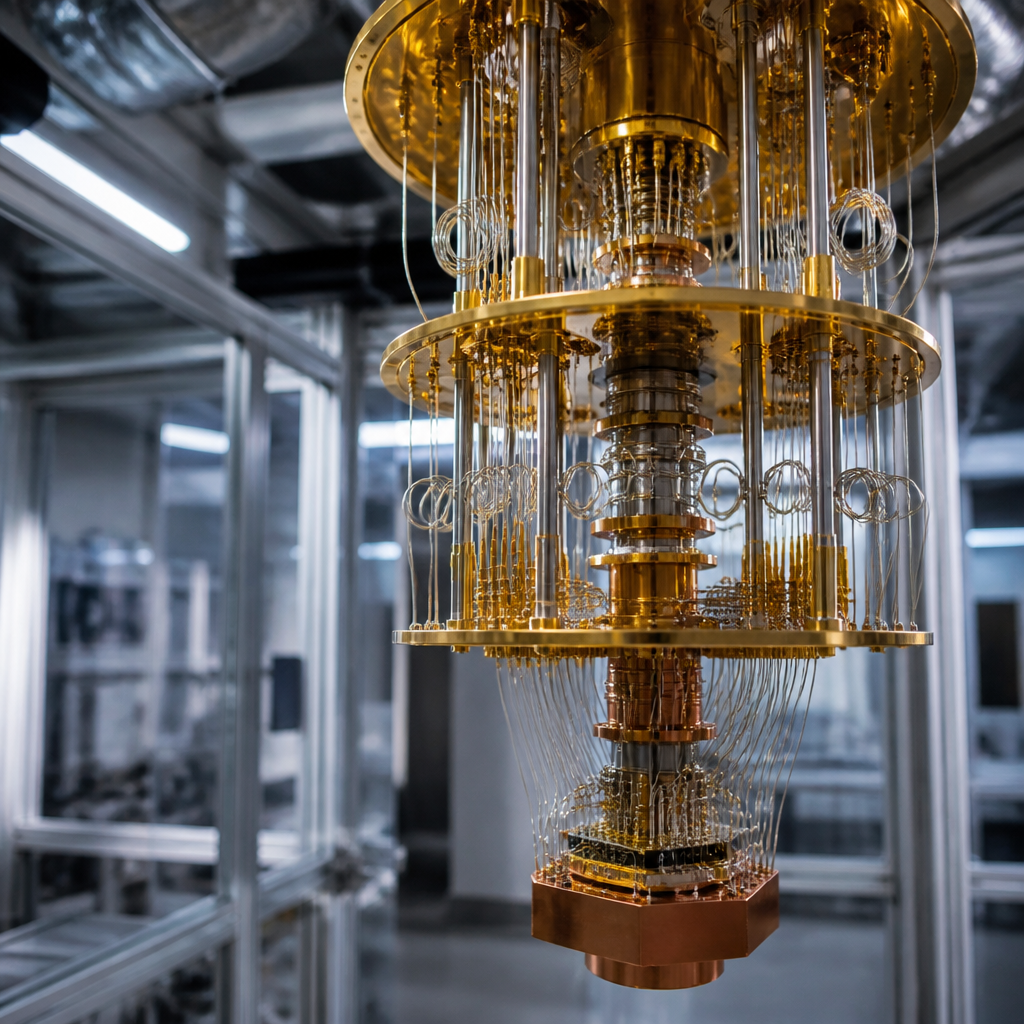
Deep tech startups are drawing venture capital back into laboratories, factories, and hard science because breakthroughs in computing, materials, energy, robotics, and biotech now solve urgent commercial problems that software alone cannot. In practice, deep tech refers to companies built on defensible scientific discovery or advanced engineering, usually with longer development cycles, higher capital needs, and stronger intellectual property than a typical app startup. Quantum computing, fusion, synthetic biology, advanced semiconductors, space systems, industrial automation, and climate hardware all sit under this umbrella. I have worked with founders pitching both software and hardware businesses, and the difference is immediate: deep tech investors ask about technical milestones, manufacturability, regulatory paths, and unit economics years before revenue scales. That scrutiny is exactly why the category matters. When a deep tech company succeeds, it can create durable market power through patents, specialized know-how, data from physical systems, and infrastructure that competitors cannot quickly copy.
The renewed interest is not a passing cycle. Rising demand for resilient supply chains, clean energy, defense capability, AI compute, and advanced healthcare has changed the risk-reward equation for venture firms, sovereign funds, and corporate investors. Governments are also shaping the market through the U.S. CHIPS and Science Act, the Inflation Reduction Act, the European Chips Act, and defense procurement programs that de-risk early demand. At the same time, enabling tools have improved. Cloud-based simulation, open-source design software, rapid prototyping, automation, and contract manufacturing let startups validate technical assumptions faster than a decade ago. For founders and investors in Tech Innovations & Startups, this hub explains why hardware and science are attracting venture capital again, which sectors matter most, how funding works, and what separates promising deep tech startups from expensive science projects.
What counts as deep tech and why it is different from software
Deep tech startups commercialize advances rooted in scientific research or complex engineering rather than convenience features or pure distribution advantages. The core asset is usually a technical breakthrough: a novel battery chemistry, a photonic interconnect, a quantum error correction method, a reusable launch component, or a lab automation platform that radically improves throughput. These companies often emerge from universities, national labs, or founder research backgrounds. Their progress is measured by technology readiness levels, yield, reliability, safety validation, and regulatory milestones as much as customer growth. That makes due diligence more technical and timelines less forgiving.
Hardware and science businesses differ from software in five practical ways. First, they require capital expenditures for equipment, prototyping, testing, and manufacturing. Second, they face physical constraints like heat, materials fatigue, contamination, latency, and power consumption. Third, they must prove repeatability outside the lab. Fourth, they often depend on certifications, export controls, or clinical approvals. Fifth, supply chain execution can determine success as much as invention. A machine learning startup can deploy updates weekly; a semiconductor or medical device company may spend months on design verification and validation. Investors re-entering the category understand that these constraints, while real, create barriers to entry that software rarely sustains.
Why venture capital is returning to hardware and science
Venture capital is returning because several macro forces now favor deep tech. The first is strategic necessity. Nations and corporations want domestic capability in chips, energy storage, aerospace, cybersecurity hardware, and defense systems after years of supply disruption and geopolitical tension. The second is market pull. Data centers need more efficient cooling, power electronics, and optical networking; manufacturers need robotics because labor is constrained; drug development needs automation and computational biology to reduce cost and time. The third is better commercialization infrastructure. Startups can access foundries, shared labs, cloud simulation tools, and manufacturing partners without building everything from scratch.
The fourth driver is that software investing became crowded and, in many categories, commoditized. Investors are looking again at businesses where intellectual property, regulatory complexity, and physical deployment create stronger moats. The fifth is public support. Non-dilutive funding from agencies such as DARPA, ARPA-E, the Department of Energy, the National Science Foundation, Innovate UK, and the European Innovation Council gives startups early validation and runway. SpaceX benefited from NASA contracts, Anduril scaled through defense demand, and Commonwealth Fusion Systems attracted capital by pairing scientific ambition with named technical milestones and strategic partnerships. These examples matter because they show the current model: venture money works best when paired with customer-backed development and policy tailwinds.
Quantum and deep tech sectors leading the current cycle
Quantum computing captures attention, but it is only one part of the Quantum & Deep Tech landscape. Investors are spreading capital across quantum hardware, quantum software, sensing, and communications because each has different commercialization horizons. Quantum sensing is often nearer term than fault-tolerant quantum computing, with applications in navigation, materials analysis, and defense. Photonic and neutral-atom systems compete with superconducting and trapped-ion architectures, and serious investors assess coherence times, gate fidelity, error rates, control stack complexity, and cryogenic requirements rather than relying on headlines.
Beyond quantum, the strongest venture activity is flowing into semiconductors, industrial automation, climate hardware, advanced materials, space technology, and computational biology. Semiconductor startups are building chiplets, specialized AI accelerators, design automation tools, and packaging innovations because demand for compute and energy efficiency is relentless. Robotics companies are attacking warehouse picking, agricultural autonomy, and inspection in sectors where labor shortages and safety issues create clear return on investment. Climate hardware includes long-duration storage, geothermal systems, grid software tied to physical assets, carbon management, and heat pumps. Space startups are launching Earth observation constellations, in-space logistics platforms, and propulsion systems that support both commercial and defense use cases. In biotech-adjacent deep tech, lab robotics, synthetic biology tools, and precision diagnostics keep attracting investors because they shorten R&D cycles for entire industries.
| Sector | What investors look for | Typical early proof point |
|---|---|---|
| Quantum | Fidelity, error rates, architecture scalability | Peer-reviewed results or customer pilots |
| Semiconductors | Performance per watt, manufacturability, design wins | Tape-out success or foundry partnership |
| Robotics | Reliable autonomy, safety, payback period | Paid pilot in a real operating environment |
| Climate hardware | Levelized cost, deployment speed, incentives | Field test with measured efficiency gains |
| Space | Mission reliability, launch economics, government demand | Successful demonstration mission |
How deep tech startups get funded from lab to scale
Funding deep tech is staged more carefully than funding software. At pre-seed, investors back founders, scientific credibility, and the size of the problem. The goal is not revenue growth; it is technical de-risking. That may mean proving a material property, demonstrating a prototype, or validating a simulation against real-world data. Grants and university spinout programs are especially valuable here because they extend runway without dilution. Seed rounds then support engineering hires, design for manufacturability, pilot production, and first customer trials. At Series A, investors expect evidence that the technology works outside controlled conditions and that customers will pay for deployment.
Later rounds often blend venture with project finance, equipment leasing, government contracts, strategic corporate capital, and offtake agreements. This is one of the most misunderstood parts of deep tech investing. A battery company, launch startup, or industrial hardware business can look unattractive if judged with software metrics alone. Gross margin may be low early, development timelines may be milestone-based, and sales may start with a few large contracts rather than thousands of self-serve users. Experienced investors instead track burn multiple against technical progress, qualification timelines, supply risk, and the path to repeatable manufacturing. The best founders communicate this clearly, usually through a milestone map that ties each financing event to a specific reduction in technical or commercial risk.
What separates winners from expensive science projects
Not every brilliant invention becomes a venture-scale company. The strongest deep tech startups share several traits. They target a painful market where technical performance directly affects customer economics, not a nice-to-have improvement. They know their system bottlenecks early, whether that means thermal management, wafer yield, contamination control, or field maintenance. They build interdisciplinary teams that combine research talent with product, operations, regulatory, and manufacturing experience. They also protect focus. Founders who try to serve too many markets often spend years customizing rather than scaling.
I have seen investors gain confidence fastest when founders present three things plainly: a benchmark against existing alternatives, a plan for manufacturing at quality, and a credible first market. For example, a robotics startup should show not just a clever perception stack but mean time between failures, safety compliance, and a customer payback period. A quantum company should explain why its architecture can improve error correction economics, not just qubit count. A materials startup should show how it integrates into current production lines, because adoption often fails at the process step, not the science step. In deep tech, commercial realism is a technical advantage. Companies win when they pair frontier science with deployment discipline.
Risks, timelines, and what founders should do next
Deep tech is attractive again, but it remains hard. Development cycles are longer, capital intensity is higher, and external dependencies can slow even excellent teams. Export controls may limit market access, certification can delay revenue, and scaling from prototype to production can expose hidden flaws. Quantum computing, for example, may take years to reach broad fault-tolerant utility, while climate hardware can be constrained by permitting and infrastructure interconnection. Investors know this, which is why honest milestone planning matters more than optimistic storytelling.
The opportunity is still exceptional. Deep tech startups now sit at the intersection of scientific progress, industrial demand, and public policy support. That combination is why hardware and science are attracting venture capital again, and why this Quantum & Deep Tech hub matters inside the wider Tech Innovations & Startups landscape. Founders should map a wedge market, define technical milestones in business terms, pursue non-dilutive capital early, and build partnerships that reduce manufacturing or regulatory risk. Investors should underwrite teams that can translate research into operations, not just publish breakthrough results. If you are exploring this space, use this hub as your starting point, then go deeper into quantum, robotics, semiconductors, climate tech, space, and biotech tools to identify where durable value will be built next.
Frequently Asked Questions
What is a deep tech startup, and how is it different from a traditional software startup?
A deep tech startup is a company built around a meaningful scientific breakthrough or a hard engineering advance rather than just a new digital interface, marketplace, or software workflow. These businesses typically emerge from research in fields such as advanced materials, robotics, semiconductors, energy systems, biotech, aerospace, photonics, or quantum computing. What makes them distinct is that the core value usually comes from proprietary intellectual property, technical know-how, laboratory validation, manufacturing capability, or a novel physical system that is difficult for competitors to copy quickly.
By contrast, many traditional software startups can develop and distribute products relatively fast, iterate with users at low cost, and scale through cloud infrastructure without needing physical production. Deep tech companies often face a very different path. They may spend years in R&D, require specialized talent such as physicists, chemists, or mechanical engineers, and need expensive infrastructure like clean rooms, pilot plants, testing facilities, or regulatory pathways before they reach commercial scale. That means the capital profile, timeline, and risk structure are fundamentally different.
Investors are attracted to deep tech because, while the journey can be slower and more capital intensive, the payoff can be unusually durable. If a startup owns critical patents, solves a hard scientific problem, and proves it can manufacture or deploy its solution, it may build a competitive moat that is much stronger than what is common in crowded software markets. In other words, deep tech is less about moving fast with a lightweight product and more about turning breakthrough science into real-world industry-changing businesses.
Why are venture capital firms becoming more interested in deep tech again?
Venture capital is returning to deep tech because the market conditions have changed in ways that make science-driven companies more investable and more necessary. For years, software dominated venture funding because it offered fast product cycles, lower upfront costs, and the potential for rapid user growth. But many of the world’s most urgent and valuable problems are now physical problems, not just digital ones. Energy resilience, supply chain security, industrial automation, climate adaptation, advanced manufacturing, healthcare innovation, and computational limits all require breakthroughs in hardware, materials, biology, and infrastructure.
At the same time, the underlying tools have improved dramatically. Founders today can build on cheaper compute, better simulation software, improved lab automation, more sophisticated AI-assisted research, and a stronger ecosystem of university spinouts, government grants, corporate partners, and specialized investors. These improvements reduce some early technical uncertainty and help startups move from scientific discovery to commercial validation more efficiently than in past decades. In many sectors, what used to be purely theoretical is now approaching practical deployment.
There is also a strategic and geopolitical dimension. Governments and large corporations increasingly care about domestic production capacity, semiconductor independence, energy systems, aerospace capability, and biotech leadership. That creates demand, funding support, and procurement opportunities for startups working in critical technologies. For venture capital firms, deep tech now looks less like a niche bet and more like a way to access the next generation of foundational companies. The renewed interest is not simply a trend; it reflects the growing realization that major economic value will come from businesses that can translate hard science into scalable solutions.
Which deep tech sectors are attracting the most attention from investors right now?
Several deep tech sectors are drawing strong investor interest, especially those with large markets, urgent demand, and clear technical inflection points. Advanced computing is one major category, including quantum computing, photonic chips, specialized semiconductors, and AI infrastructure hardware. Investors see these areas as increasingly important because the growth of artificial intelligence, cybersecurity demands, and data-intensive workloads is exposing the limitations of existing computing architectures. Startups that can improve speed, efficiency, or security at the hardware level are highly relevant to both commercial and national priorities.
Energy is another major magnet for capital. That includes fusion, next-generation batteries, grid optimization hardware, geothermal systems, carbon capture technologies, and materials that improve power generation or storage. Rising global electricity demand, pressure to decarbonize, and concerns about energy security are making these technologies economically and politically significant. Venture investors are especially interested when a company can show not just scientific novelty, but a credible path to industrial deployment and lower total system cost.
Robotics, automation, and industrial technology are also seeing renewed momentum. Labor shortages, reindustrialization, warehouse modernization, defense applications, and manufacturing efficiency all create strong demand for intelligent machines and advanced sensing systems. In biotech and health, investors continue to back platform technologies that accelerate drug discovery, diagnostics, synthetic biology, and precision medicine. Advanced materials is another important area because a single materials breakthrough can unlock better batteries, lighter vehicles, cleaner manufacturing, or stronger supply chains. In short, investors are focusing on sectors where deep technical innovation directly addresses real bottlenecks in the economy.
What makes deep tech startups more challenging to fund and scale than other venture-backed companies?
Deep tech startups are often harder to fund and scale because they must solve scientific, engineering, operational, and commercial challenges all at once. In a software startup, a team can often launch a minimum viable product quickly, collect customer feedback, and iterate in weeks or months. In deep tech, the company may need to prove that a technology works in the lab, then prove it works outside the lab, then prove it can be manufactured reliably, then prove customers will adopt it at an acceptable price. Each of those steps can take significant time and money.
The capital intensity is another major hurdle. Deep tech businesses may require specialized equipment, prototyping facilities, certifications, supply chain development, clinical studies, or pilot installations before they generate meaningful revenue. That means founders often need more financing earlier, and they need investors who understand technical risk rather than just market adoption risk. There is also a talent challenge: these companies need teams that can bridge frontier science with product development, operations, regulation, and go-to-market execution. That combination is rare and difficult to assemble.
Scaling can be especially complex because success depends on more than customer acquisition. A startup may need to secure raw materials, build manufacturing capacity, qualify with enterprise buyers, navigate safety standards, or work through long procurement cycles with governments and industrial customers. Even when the technology is excellent, commercialization can lag if any one part of the system is immature. That is why the best deep tech investors tend to look beyond the science itself. They evaluate whether the startup has a realistic roadmap for production, partnerships, regulatory navigation, and market entry. Deep tech can create enormous value, but it usually does so through disciplined execution over a longer timeline.
How do investors evaluate whether a deep tech startup is actually a strong venture opportunity?
Investors typically evaluate deep tech opportunities through a broader lens than they use for standard software deals. The first question is whether the technology represents a genuine breakthrough or a meaningful improvement over existing alternatives. That means looking closely at the underlying science, the reproducibility of results, the quality of the patents, and whether the startup has a defensible technical advantage that will matter in the market. Strong investors often rely on domain experts, technical advisors, and independent validation to determine whether the claimed innovation is real and commercially significant.
But great science alone is not enough. Venture capital firms also want to understand the path from innovation to adoption. They assess whether the startup is solving an urgent problem for a large market, whether customers are actively seeking better solutions, and whether the product can be deployed within a reasonable time frame. They examine unit economics, manufacturing feasibility, regulatory complexity, supply chain requirements, and the amount of capital needed to hit the next critical milestones. In deep tech, timing matters enormously. A company can be scientifically brilliant and still be too early for the market or too expensive to scale.
The founding team is another decisive factor. Investors look for leaders who can translate technical complexity into business progress, recruit world-class talent, communicate with customers and policymakers, and make smart tradeoffs as the company evolves. They also pay attention to milestones such as pilot programs, strategic partnerships, government grants, letters of intent, or early revenue from industrial customers. The most compelling deep tech startups are the ones that combine breakthrough science with execution credibility. In other words, investors want evidence that the company is not just inventing something impressive, but building a business that can shape an entire industry.