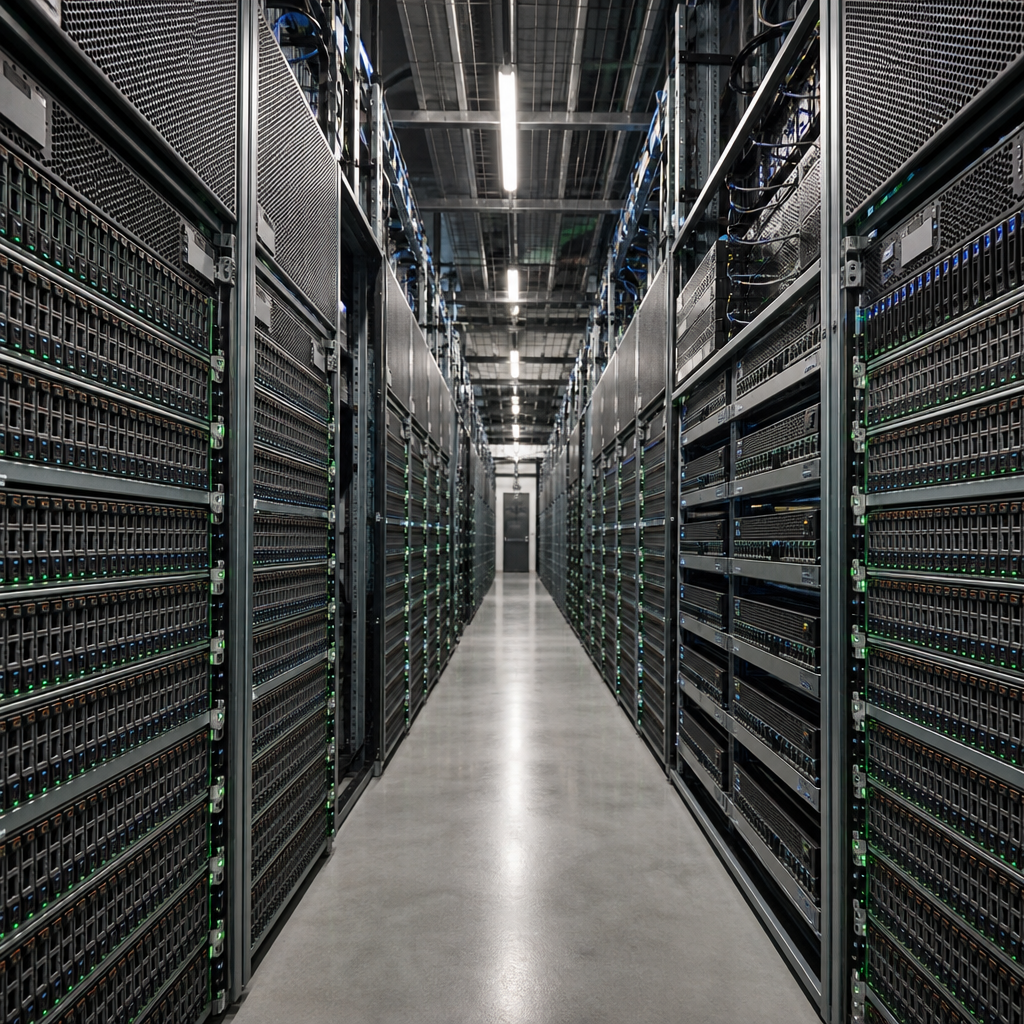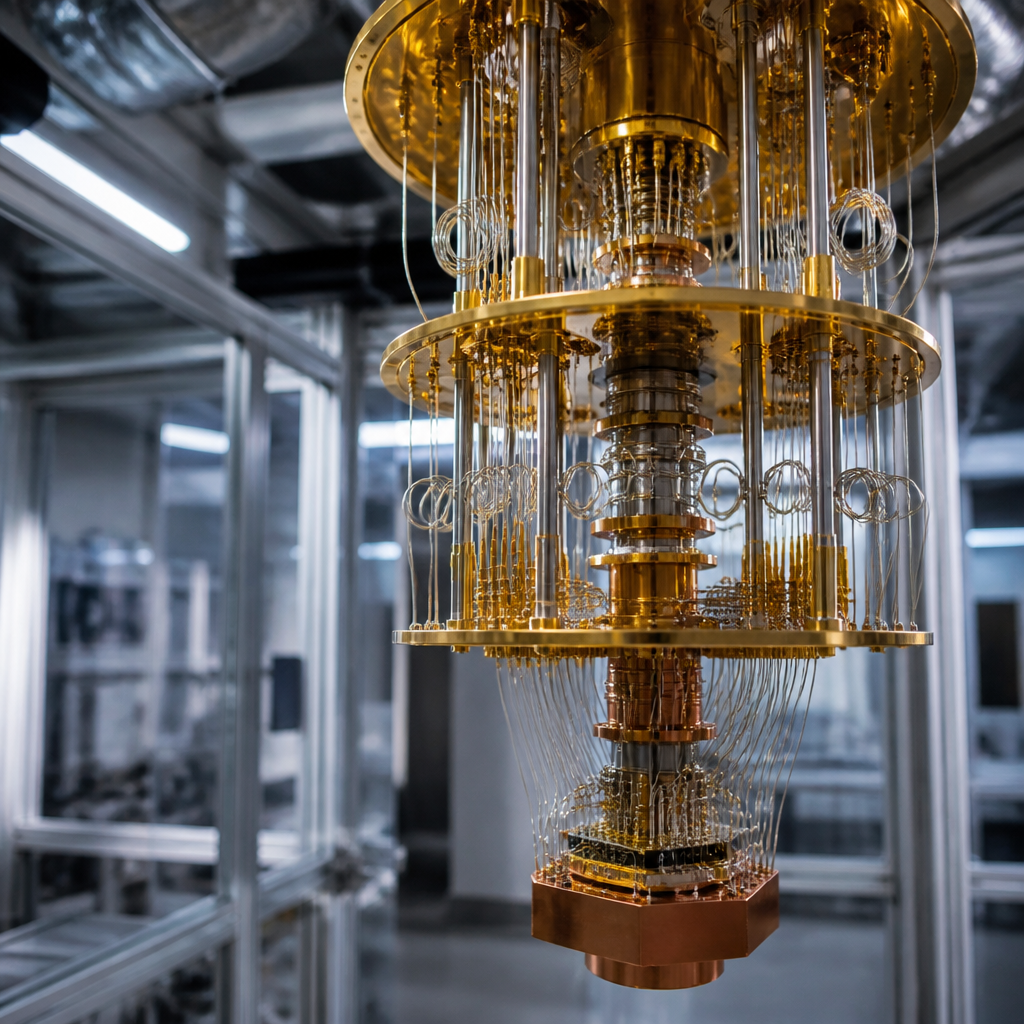
Post-quantum computing hardware sits at the intersection of cybersecurity, semiconductor design, and long-horizon infrastructure planning. The phrase refers to the servers, secure elements, network appliances, accelerators, embedded chips, and device architectures that must adapt as cryptography moves from today’s public-key standards to algorithms designed to resist attacks from large-scale quantum computers. In practice, the change is not about replacing every processor with a “quantum-safe” chip overnight. It is about understanding how new algorithms alter performance, memory use, key storage, bandwidth, firmware design, and the lifecycle management of hardware across data centers, telecom networks, industrial systems, and consumer devices.
This matters now because cryptographic transitions are slow, while hardware refresh cycles are slower. A laptop may be replaced in four years, but smart meters, medical devices, cars, satellites, industrial controllers, and network switches often remain in service for a decade or more. At the same time, the risk model has changed. Attackers can capture encrypted traffic today and store it for later decryption if a cryptographically relevant quantum computer emerges. That “harvest now, decrypt later” problem makes long-lived secrets especially exposed. Governments and standards bodies have responded. In 2024, the U.S. National Institute of Standards and Technology finalized core post-quantum standards, including ML-KEM for key establishment and ML-DSA for digital signatures, giving hardware teams concrete targets instead of abstract research problems.
From my work reviewing secure appliance roadmaps and embedded design constraints, the key lesson is consistent: when cryptography changes, hardware assumptions change with it. The impact is rarely visible to end users at first. A web handshake still looks like a web handshake. A software update still arrives as a signed package. Yet beneath that familiar behavior, packet sizes increase, signature verification paths shift, entropy requirements remain strict, and trusted execution flows may need redesign. For companies building in quantum and deep tech, this is not a niche concern. It is a hub issue touching chips, systems, compliance, procurement, and product strategy.
Why post-quantum algorithms reshape hardware requirements
Post-quantum cryptography changes hardware because the candidate algorithms do not behave like RSA or elliptic-curve cryptography. Traditional public-key systems rely on mathematical problems such as integer factorization or discrete logarithms. Quantum algorithms, especially Shor’s algorithm, threaten those foundations. The replacement schemes selected by standards bodies are mostly lattice-based and hash-based constructions with very different computational profiles. They often trade smaller arithmetic over large integers for structured polynomial operations, matrix sampling, rejection sampling, and larger public keys or signatures.
That difference affects silicon and systems design directly. Compute paths may become more memory-sensitive. Cache behavior matters. Constant-time implementation remains mandatory, but the places where timing leakage appears can differ from classical schemes. Network devices and secure gateways may need more bandwidth headroom because certificate chains or handshakes become larger. Embedded devices with tight flash limits can struggle to fit multiple algorithm implementations during migration periods, especially when vendors need classical and post-quantum support in parallel. In secure boot chains, a larger signature can mean a larger immutable ROM parser, and ROM space is expensive because mistakes cannot be patched after fabrication.
The operational burden also shifts. Hardware security modules, smartcards, and trusted platform modules were optimized over years for RSA and ECC workflows. Some can be updated in firmware; others cannot. A module that stores keys securely but lacks enough processing throughput for high-volume post-quantum signing may become a bottleneck long before it reaches end of life. This is why the hardware question is not whether quantum-safe algorithms exist. It is whether the deployed platform can run them efficiently, safely, and at scale.
What changes in chips, accelerators, and secure devices
At the chip level, post-quantum migration is less about exotic new transistor physics and more about practical architecture decisions. General-purpose CPUs can run standardized algorithms today, but performance varies sharply by instruction set, memory hierarchy, and implementation quality. Vendors are already tuning libraries to use vector instructions and constant-time arithmetic paths. On servers, that optimization may be enough. On microcontrollers, it often is not. A battery-powered sensor handling authenticated firmware updates may need hardware assistance to verify signatures within energy and latency budgets.
Secure elements and hardware security modules face a deeper redesign challenge. They are expected to protect keys against extraction, fault injection, side-channel leakage, and unauthorized use. Adding ML-KEM or ML-DSA support is not just a software port. Designers must validate random number generation, key encapsulation flow, zeroization behavior, tamper response, and throughput under concurrent demand. In payment, identity, and telecom environments, certification regimes such as FIPS 140-3 or Common Criteria shape what can ship. That creates a timing issue: standards may be available before certified hardware is widely deployable.
For high-throughput environments, acceleration becomes attractive. Hyperscalers, content delivery networks, and VPN vendors already use cryptographic acceleration for TLS and IPsec workloads. The same logic applies to post-quantum handshakes, especially during periods when hybrid key exchange combines classical and post-quantum methods. Acceleration may arrive as CPU instruction support, FPGA-based offload cards, smartNIC functions, or dedicated blocks inside security processors. The best design choice depends on where the bottleneck lives: compute, memory movement, latency, or power. In edge systems, power is often the decisive constraint.
| Hardware domain | Main post-quantum impact | Typical design response |
|---|---|---|
| Web and application servers | Higher handshake overhead and certificate processing | Optimized libraries, hybrid TLS, CPU vectorization |
| HSMs and secure elements | New key types, certification updates, throughput limits | Firmware support, new secure silicon, staged recertification |
| IoT and embedded devices | Flash, RAM, energy, and OTA update constraints | Algorithm selection, compact implementations, hardware assist |
| Network appliances | Session scale, packet growth, latency sensitivity | SmartNICs, FPGA offload, capacity planning |
| Automotive and industrial systems | Long service life and difficult field replacement | Crypto agility, larger secure storage, signed update redesign |
Where the migration pressure appears first
The earliest pressure points are systems with long-lived confidentiality requirements and systems that are expensive to replace. Think government records, healthcare archives, legal communications, backbone network links, semiconductor intellectual property, and source code repositories. If the information must stay secret for ten years or more, organizations cannot wait for a perfect future state. They start by inventorying where public-key cryptography is used: TLS termination, VPNs, code signing, firmware signing, device identity, secure boot, PKI hierarchies, document signing, and machine-to-machine authentication.
In hardware terms, code signing and firmware validation are especially important. A product that cannot verify updated signatures cannot accept secure updates, and a product that cannot be updated becomes a stranded asset. I have seen teams discover late in the process that their boot ROM accepted only a fixed signature format, leaving no path to support stronger algorithms without a board respin. That is why crypto agility matters. It means designing hardware and firmware so algorithms, key sizes, and certificate formats can evolve without replacing the platform. Agility is not abstract policy language; it is an engineering requirement affecting parser design, key storage layouts, update packaging, and rollback controls.
Enterprise infrastructure also feels pressure through compliance and procurement. Large buyers now ask whether products support NIST-standardized post-quantum algorithms, whether they can operate in hybrid modes, and whether vendors have migration timelines. Startups in deep tech should pay attention. A strong architecture can win design-ins if it proves future readiness, while a rigid design can lose contracts even if current performance is excellent.
Practical strategies for hardware teams and startups
The most effective strategy is to treat post-quantum readiness as a platform program, not a one-time feature. Start with a cryptographic bill of materials: list every algorithm, library, certificate dependency, secure element, hardware root of trust, and external service involved in trust decisions. Then classify by replaceability. Some software components can be swapped quickly; mask ROM, field devices, and certified modules cannot. This immediately reveals where hardware redesign is justified.
Next, benchmark real workloads instead of relying on headline numbers. Measure handshake latency on your actual CPUs, secure boot verification time on your microcontrollers, certificate size effects on constrained links, and memory pressure under concurrent sessions. Named tools help here: OpenSSL with post-quantum provider integrations, wolfSSL and mbedTLS for embedded tests, liboqs for algorithm experimentation, and vendor evaluation kits for secure enclaves or HSMs. Use these to determine whether optimization is enough or whether acceleration is needed.
Third, design for hybrid deployment. For the next several years, many systems will use classical and post-quantum mechanisms together to hedge implementation risk and preserve interoperability. Hardware must accommodate that overlap. Plan extra nonvolatile storage for certificates and keys, reserve firmware space for multiple verification paths, and ensure remote management tools can report which algorithms are active. Finally, align with standards and procurement signals early. NIST standards are the baseline, but sector guidance from ETSI, the Cloud Security Alliance, automotive cybersecurity frameworks, and national agencies will shape buying decisions. Teams that prepare now avoid emergency redesign later.
What this means for the broader quantum and deep tech landscape
Post-quantum computing hardware is not only a cybersecurity story; it is a market signal for the entire quantum and deep tech ecosystem. It connects semiconductor startups, secure silicon vendors, test equipment makers, cloud infrastructure providers, and industrial OEMs. As cryptography changes, differentiation shifts toward verifiable implementation quality, side-channel resistance, update flexibility, and lifecycle support. That creates room for new products: post-quantum-ready HSMs, crypto-agile microcontrollers, secure boot toolchains, certificate management platforms, and network accelerators tuned for hybrid handshakes.
The main takeaway is straightforward. Quantum risk does not arrive as a single dramatic hardware replacement event. It arrives as a chain of engineering decisions across chips, firmware, networks, and procurement. Organizations that map those dependencies early can modernize on their schedule, protect long-lived data, and avoid locking fragile assumptions into devices that must survive for years. If you build or buy deep tech systems, audit your hardware trust stack now, identify non-upgradable components, and turn post-quantum readiness into a concrete roadmap rather than a future concern.
Frequently Asked Questions
What does “post-quantum computing hardware” actually mean?
Post-quantum computing hardware refers to the physical systems that must support cryptographic algorithms designed to remain secure even if large-scale quantum computers eventually become practical. That includes far more than CPUs. It covers servers in data centers, hardware security modules, smart cards, TPMs, secure enclaves, routers, VPN appliances, industrial controllers, IoT devices, embedded microcontrollers, storage controllers, and custom accelerators used for encryption, key management, and authentication. The key point is that the hardware itself is not becoming “quantum.” Instead, it must be able to implement a new generation of cryptographic primitives efficiently, safely, and at scale.
In practical terms, the shift matters because post-quantum algorithms behave differently from the public-key systems most hardware platforms were optimized around. They may use larger public keys, larger signatures, different mathematical operations, more memory bandwidth, or different side-channel protections. That means existing hardware assumptions around performance, silicon area, firmware storage, power consumption, protocol handling, and secure key lifecycle management may no longer be sufficient. So when people talk about post-quantum hardware, they are usually talking about the architectural and implementation changes needed to run quantum-resistant cryptography reliably across real devices and infrastructure.
Will organizations need to replace all their existing hardware when cryptography changes?
No, not all hardware will need to be replaced, and that is one of the most important realities to understand. The transition to post-quantum cryptography is expected to be selective, staged, and heavily dependent on upgradeability. Many modern systems can adopt new cryptographic algorithms through software updates, firmware revisions, microcode changes, or reconfiguration of existing cryptographic libraries. General-purpose servers, cloud infrastructure, and many enterprise endpoints may be able to support new algorithms without requiring entirely new processors.
Where replacement becomes more likely is in constrained or specialized environments. Devices with fixed-function cryptographic engines, limited memory, strict latency budgets, or hardcoded protocol support may struggle to accommodate larger keys and signatures or the computational profile of post-quantum schemes. This is especially relevant for long-lived hardware such as industrial systems, automotive electronics, telecom gear, secure elements, identity tokens, and embedded devices deployed in the field for a decade or more. In those cases, the deciding factors are often whether the hardware can be updated securely, whether it has enough performance headroom, and whether compliance or certification requirements allow substantial cryptographic changes after deployment. So the real challenge is not universal replacement, but careful hardware inventory, crypto-agility planning, and targeted modernization of systems that cannot adapt gracefully.
What kinds of hardware changes are most likely as post-quantum cryptography is adopted?
The most likely changes are architectural rather than dramatic. Hardware designers will focus on supporting larger cryptographic artifacts, different compute patterns, and stronger implementation defenses. That can mean more memory allocated for key material and intermediate values, increased bandwidth for handshake-heavy workloads, larger nonvolatile storage for certificates and firmware, and enhanced instruction support or dedicated accelerators for the mathematical operations used in selected post-quantum algorithms. In some systems, network appliances and authentication infrastructure may also need larger packet handling buffers because certificate chains, signatures, or key exchange messages can grow compared with current standards.
Security-focused hardware will also evolve. Secure elements, TPM-like devices, HSMs, and enclave technologies may need revised key storage formats, updated attestation flows, and support for hybrid cryptography, where classical and post-quantum mechanisms run together during a transition period. Side-channel resistance will remain a major issue because adopting a mathematically secure algorithm is not enough if the implementation leaks secrets through timing, power, electromagnetic emissions, or fault injection. As a result, hardware changes may include better constant-time support, masking techniques, hardened randomness generation, secure update paths, and more flexible cryptographic coprocessors. In short, the transition is likely to push hardware toward greater crypto-agility, not just more raw performance.
Why is crypto-agility so important for post-quantum hardware planning?
Crypto-agility is the ability of a system to change cryptographic algorithms, parameters, certificates, and protocol configurations without requiring a full platform redesign. It matters enormously in the post-quantum era because the transition will not happen in a single step, and no organization wants hardware that becomes strategically obsolete the moment standards evolve. Enterprises and governments are likely to move through hybrid deployments, interoperability phases, policy updates, and algorithm migrations over many years. Hardware that assumes one fixed cryptographic future is risky; hardware that can support multiple algorithms and be updated securely is far more resilient.
From a hardware standpoint, crypto-agility means building in flexibility at several levels. There should be room in firmware and secure storage for new key formats and certificate structures. Cryptographic engines should not be so rigid that they only support a narrow set of legacy operations. Boot processes, remote attestation systems, secure provisioning workflows, and management interfaces should be able to accommodate revised trust anchors and signature schemes. Even procurement strategy matters: organizations increasingly want assurances that devices can receive authenticated updates, maintain compliance as standards mature, and participate in hybrid classical-plus-post-quantum deployments. In effect, crypto-agility turns post-quantum readiness from a one-time product feature into a long-term hardware lifecycle capability.
Which industries and device categories will feel the biggest impact first?
The earliest and strongest impact is likely to be felt in sectors where sensitive data has a long confidentiality lifetime, hardware remains deployed for many years, or cryptography is deeply embedded into operations. Government systems, defense networks, financial infrastructure, telecom backbones, cloud platforms, and critical infrastructure operators are all high-priority candidates because they handle valuable communications and rely heavily on authentication, key exchange, secure routing, and trusted device identity. Data center and network hardware may see change early because those environments terminate huge numbers of cryptographic sessions and must preserve both security and performance under scale.
At the device level, hardware security modules, secure elements, smart cards, VPN gateways, routers, firewalls, embedded controllers, automotive ECUs, medical devices, and industrial IoT equipment are especially important. These categories often combine long service lives with strict security requirements and limited tolerance for disruptive field replacement. Consumer devices may also be affected, but often through operating system and platform-level updates rather than immediate hardware redesign. The broad lesson is that impact arrives fastest where cryptography is mission-critical, hardware refresh cycles are slow, and “deploy now, protect for years” is the operational reality. Those are exactly the environments where post-quantum hardware planning stops being theoretical and becomes an engineering and procurement priority.