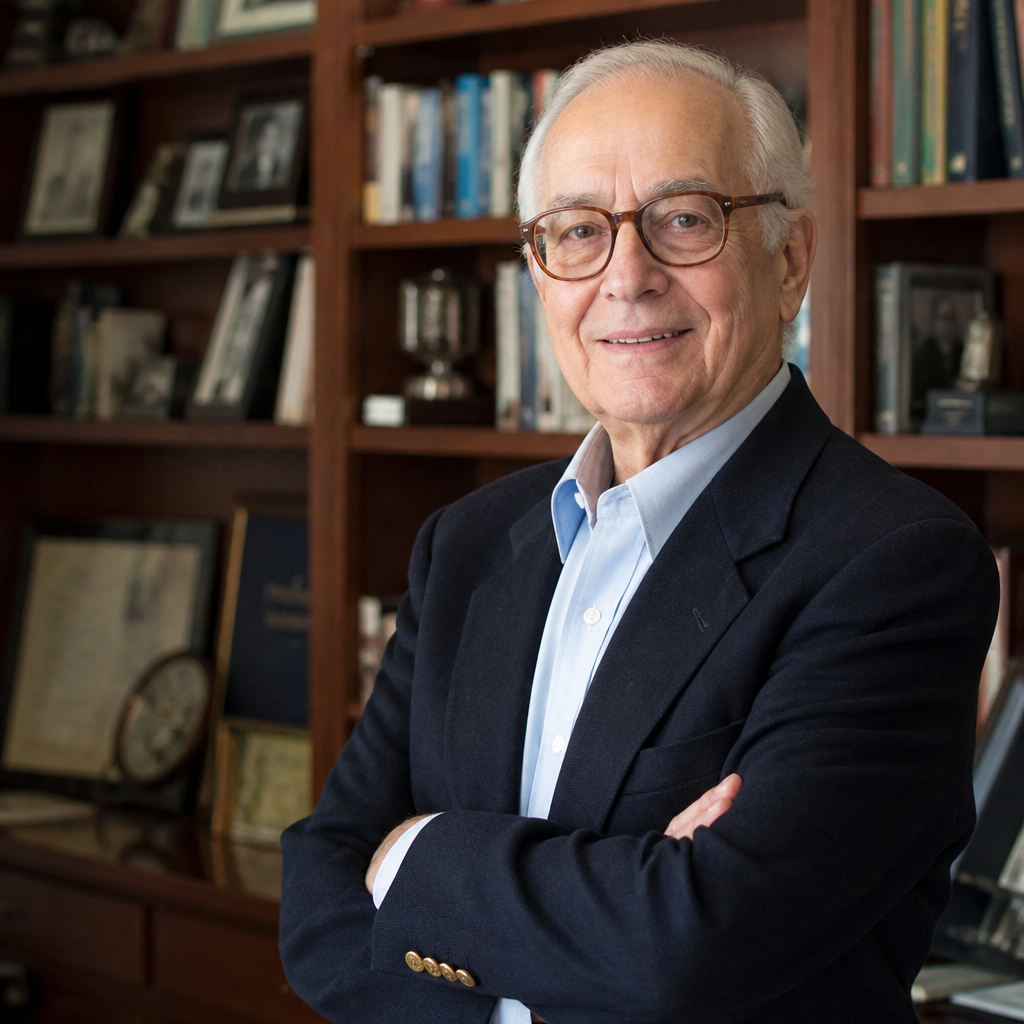
Eugene Kleiner helped define two industries that shaped the modern economy: semiconductors and venture capital. Best known as one of the “traitorous eight” who left Shockley Semiconductor in 1957 to found Fairchild Semiconductor, Kleiner later co-founded Kleiner Perkins, the Silicon Valley investment firm that backed generations of technology companies. His career matters because it connects the engineering breakthroughs of the transistor era to the financing model that accelerated personal computing, networking, and the internet. For anyone studying historical perspectives on innovation, Kleiner offers a precise case of how technical talent, manufacturing discipline, and risk capital combined to create the Valley’s distinctive culture.
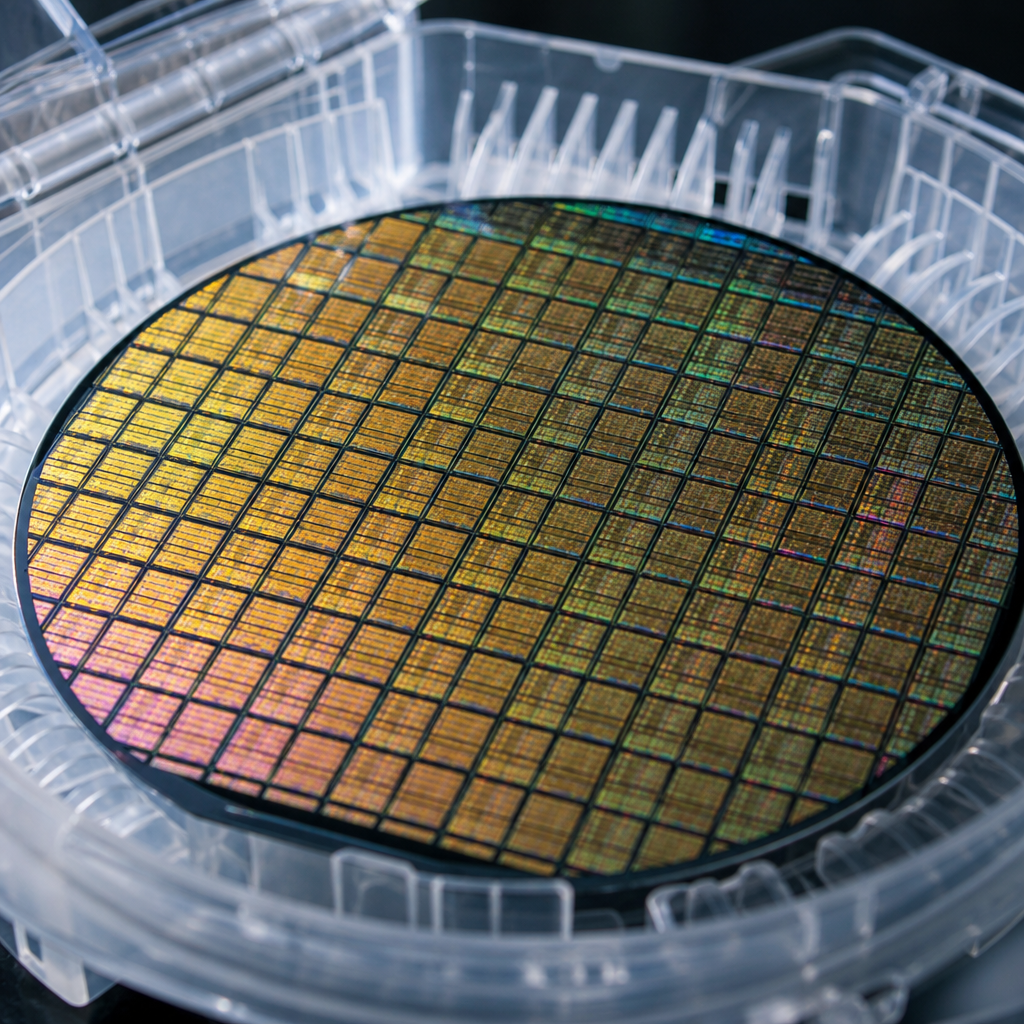
To understand Eugene Kleiner, it helps to define three key terms. A semiconductor is a material, usually silicon, whose electrical conductivity can be controlled, making it the foundation of transistors and integrated circuits. Fairchild Semiconductor was the California company that turned advanced transistor design into a scalable business and became the training ground for dozens of future founders. Venture capital is professional investment in young, high-growth companies, usually in exchange for equity and strategic guidance. Kleiner stood at the center of all three. In my work analyzing early technology firms, his path repeatedly appears as a hinge point: without Fairchild’s manufacturing model and alumni network, later Silicon Valley financing would have looked very different.
This article serves as a hub for the semiconductor roots of Kleiner’s legacy. That means looking beyond the familiar anecdote of a famous founder and examining the industrial context that shaped him: postwar electronics demand, the migration of scientific talent to California, the commercialization of silicon devices, and the managerial lessons exported from Fairchild into the broader startup ecosystem. Kleiner was not the loudest public voice of his era, but he was one of its most consequential builders. His significance lies in execution. He understood process control, recruiting, incentives, and technical credibility, then carried those lessons from the clean room to the boardroom. That combination explains why his story remains essential to the history of modern technology.
Early life, technical training, and the road to Shockley
Eugene Kleiner was born in Vienna in 1923 and fled Nazi-occupied Europe as a teenager, eventually settling in the United States. Like many émigré scientists and engineers of the period, he brought urgency, discipline, and gratitude for opportunity into his work. He studied mechanical engineering at the Polytechnic Institute of New York, then built practical experience in industrial settings before entering the emerging electronics world. That background matters. Kleiner was not merely a theorist interested in elegant devices; he was trained to think in systems, tolerances, manufacturability, and yield. Those instincts later proved vital inside Fairchild, where turning laboratory promise into repeatable production became the central challenge.
In the mid-1950s, William Shockley, co-inventor of the transistor and Nobel laureate, returned to his hometown of Palo Alto and launched Shockley Semiconductor Laboratory. The firm promised to commercialize advanced semiconductor devices and attracted an exceptional group of young scientists and engineers. Kleiner joined this group because the opportunity seemed unmatched: direct access to top-tier talent, a frontier technology, and a chance to build something transformative outside the East Coast industrial establishment. Yet Shockley’s managerial style quickly became corrosive. He pursued shifting technical priorities, distrusted subordinates, and damaged morale. Accounts from the period repeatedly show a pattern familiar in high-technology history: scientific genius at the top did not translate into operational leadership.
Fairchild Semiconductor and the semiconductor roots of Silicon Valley
In 1957, Kleiner and seven colleagues left Shockley and secured backing from Fairchild Camera and Instrument, forming Fairchild Semiconductor in Mountain View. The group included Robert Noyce, Gordon Moore, Jean Hoerni, Jay Last, Victor Grinich, Julius Blank, Sheldon Roberts, and Kleiner. Their departure became legendary because it did more than create one successful company; it established the spinout pattern that came to define Silicon Valley. Fairchild gave talented engineers equity-linked upside, technical autonomy, and a mission grounded in production reality. Kleiner’s role fit that environment well. He worked across manufacturing and operations, helping turn deep technical ideas into products customers could actually buy in volume.
Fairchild’s early success rested on silicon planar technology, a process associated especially with Jean Hoerni that allowed transistor surfaces to be protected by oxide layers, improving reliability and enabling mass production. Robert Noyce then saw how the planar process could support monolithic integrated circuits, a decisive leap beyond discrete components. These advances were not abstract laboratory wins. They solved military and aerospace reliability problems at a moment when U.S. defense demand, especially from missile and space programs, rewarded compact, rugged electronics. Fairchild became a critical supplier because it could pair invention with fabrication discipline. Kleiner’s semiconductor roots lie exactly here: in the hard work of making advanced devices manufacturable, testable, and commercially dependable.
The phrase “semiconductor roots” also points to a broader historical fact. Silicon Valley was not born as a software cluster. It emerged from semiconductor process innovation, defense procurement, precision manufacturing, and close ties among Stanford, local suppliers, and entrepreneurial engineers. Fairchild functioned as the central nursery. Its alumni later founded or influenced Intel, National Semiconductor, Advanced Micro Devices, and dozens of other firms. Kleiner saw firsthand how talent compounds when experienced operators leave a successful company carrying technical know-how, customer contacts, and a practical sense of what good management looks like. That lesson later informed his investment philosophy: back exceptional people early, but insist on strong teams, clear milestones, and a large market.
What Kleiner learned inside Fairchild
Fairchild taught Kleiner several principles that remained visible throughout his later career. First, technology leadership is fragile unless manufacturing can scale. Many semiconductor firms of the era produced impressive prototypes but struggled with yield, contamination control, packaging, or quality assurance. Fairchild built advantage by improving process consistency. Second, speed matters when a market is forming. Military buyers, computer manufacturers, and instrument makers were all searching for smaller, faster, more reliable components. Companies that could move from lab result to qualified product fastest captured design wins that often lasted years. Third, compensation shapes culture. Equity and meaningful responsibility encouraged engineers to think like owners rather than employees.
| Fairchild lesson | Semiconductor meaning | Later venture capital effect |
|---|---|---|
| Process discipline | Higher yields and reliable production | Preference for founders who can execute, not just invent |
| Talent density | Small elite teams solved hard technical problems faster | Backing specialized founders in large emerging markets |
| Equity incentives | Engineers shared upside from commercial success | Stock ownership became standard in startups |
| Spinout networks | Experienced alumni launched new chip companies | Warm referrals and founder networks became core deal flow |
Another underappreciated lesson involved governance. Fairchild’s parent company, based on the East Coast, did not always align with the pace and needs of its California semiconductor division. Over time, bureaucratic distance and strategic ambiguity frustrated key people. I have seen this same pattern in later technology companies: when decision rights sit too far from technical reality, innovation slows and retention suffers. For Kleiner, this was not a theoretical concern. Watching Fairchild’s top talent disperse helped demonstrate why startups with focused leadership and aligned investors often outperform larger organizations. The famous Fairchild diaspora was, in part, a governance event as much as a technical one.
From engineer to venture capital pioneer
After Fairchild, Kleiner moved through operating and entrepreneurial roles before co-founding Kleiner Perkins in 1972 with Tom Perkins. The firm emerged when venture investing was becoming more professional but was still far from institutionalized at today’s scale. Kleiner brought something unusual to the partnership: direct experience inside the company that had arguably created Silicon Valley’s most productive founder network. He could evaluate technical teams not only by charisma or business plans but by whether they understood engineering tradeoffs, manufacturing bottlenecks, and market timing. That perspective gave him unusual credibility with founders, especially in hardware and infrastructure businesses where optimism alone cannot overcome physics or supply-chain constraints.
Kleiner Perkins became one of the Valley’s defining firms, eventually backing companies such as Genentech, Tandem Computers, Sun Microsystems, Compaq, Netscape, Amazon, and Google. Not every investment traced directly to semiconductors, but the operating logic often did. The firm favored category-defining technologies, strong technical founders, and markets where scale could produce durable advantages. Kleiner’s Fairchild experience also made him attentive to board composition and executive recruitment. Early-stage companies rarely fail only because the original idea was weak; they more often fail because a promising product never matures into an organization that can hire, ship, support customers, and raise follow-on capital. He had watched that transformation at close range.
Why Kleiner’s semiconductor roots still matter
Eugene Kleiner’s legacy is not simply that he moved from chips to finance. It is that he carried a semiconductor worldview into venture capital and, through that lens, helped shape how innovation gets funded. Semiconductors reward rigor. Device physics does not bend for marketing, contamination ruins batches, and poor process control destroys margins. Investors formed in that environment tend to ask sharper questions about technical risk, unit economics, supply chains, and hiring quality. Those habits remain relevant in fields from artificial intelligence infrastructure to climate hardware and advanced manufacturing. Whenever investors evaluate a frontier technology company, they are still dealing with Fairchild-era questions about timing, reliability, scale, and team quality.
For readers exploring historical perspectives, Kleiner is a hub figure because his story links the laboratory, the factory, and the partnership meeting. Start with Shockley to understand why talent rebelled against bad management. Move to Fairchild to see how silicon planar manufacturing created a repeatable business. Follow the Fairchild diaspora to grasp why Silicon Valley became a self-reinforcing network rather than a single company town. Then study Kleiner Perkins to see how those industrial lessons were encoded into venture practice. The main takeaway is clear: breakthrough regions are built when technical excellence, operational discipline, and aligned capital work together. If you are mapping semiconductor history, use Kleiner as a guidepost and continue into the wider Fairchild lineage.
Frequently Asked Questions
Who was Eugene Kleiner, and why is he important in the history of technology?
Eugene Kleiner was a pioneering engineer, entrepreneur, and venture capitalist whose career helped shape both the semiconductor industry and the modern startup funding system. He is best known first as one of the “traitorous eight,” the group of talented young engineers who left William Shockley’s troubled Shockley Semiconductor Laboratory in 1957 to start Fairchild Semiconductor. That move was a turning point in Silicon Valley history because Fairchild became one of the most influential companies in electronics, producing breakthroughs in transistor and integrated circuit manufacturing and spinning out generations of future founders and executives.
Kleiner’s importance did not end with engineering. After helping build Fairchild, he later co-founded Kleiner Perkins, one of Silicon Valley’s most influential venture capital firms. Through that role, he helped define how high-growth technology companies were financed, mentored, and scaled. His life is especially significant because it creates a direct link between the transistor era and the venture capital era. In other words, Kleiner was not simply present at two major moments in business history; he actively helped build the structures that allowed innovation to move from laboratory research into world-changing companies.
What was the significance of the “traitorous eight,” and what role did Eugene Kleiner play in that story?
The “traitorous eight” were a group of engineers who left Shockley Semiconductor because they believed William Shockley’s management style was undermining the company’s potential. Their departure was controversial enough at the time to earn that dramatic nickname, but in retrospect it was one of the most productive breakaways in corporate history. The group went on to found Fairchild Semiconductor, which became a cornerstone of Silicon Valley’s rise and a training ground for many future technology leaders. The decision demonstrated that talented technical people could leave a dysfunctional environment, secure financial backing, and build a company around innovation and execution.
Eugene Kleiner was a key member of this group and part of the technical and entrepreneurial talent that made Fairchild viable from the beginning. His contribution matters because the founding of Fairchild was not just a business event; it was a cultural one. It helped establish the Silicon Valley pattern of employee mobility, startup formation, equity participation, and reinvestment into new ventures. The “traitorous eight” story is often told as an act of rebellion, but it is more accurately remembered as the beginning of a new model for technological progress. Kleiner’s role in that model gave him a foundational place in the history of innovation.
How did Fairchild Semiconductor influence Silicon Valley, and where does Eugene Kleiner fit into that legacy?
Fairchild Semiconductor is often described as the company that made Silicon Valley possible, and that description is not exaggerated. Fairchild helped commercialize semiconductor technology at a moment when reliable transistors and integrated circuits were becoming essential to defense systems, computing, and consumer electronics. Beyond its products, Fairchild’s true influence came from its people. The company became known as the source of countless “Fairchildren,” the startups founded by former employees who carried its expertise, ambition, and culture into new ventures across the valley.
Eugene Kleiner was part of the founding team that established Fairchild’s technical credibility and entrepreneurial momentum. His place in that legacy matters because Fairchild was not merely a successful manufacturer; it was the prototype for the modern technology ecosystem. Engineers became founders, founders became investors, and successful companies became launching pads for the next generation. Kleiner later embodied that full cycle when he moved from building semiconductor companies to financing new innovators. His career shows how Fairchild’s influence extended far beyond chips themselves and into the wider systems of mentorship, capital, and company creation that define Silicon Valley today.
Why is Eugene Kleiner considered a pioneer of venture capital?
Eugene Kleiner is considered a venture capital pioneer because he helped transform startup investing from a relatively informal practice into a disciplined and highly influential engine for technological growth. When he co-founded Kleiner Perkins, he brought something unusual to the investment world: firsthand experience as an engineer and company builder from the earliest days of Silicon Valley. That technical background gave him credibility with founders and helped him evaluate emerging technologies with unusual depth. Rather than viewing investment purely as finance, Kleiner understood it as a partnership with innovators trying to turn ambitious ideas into scalable businesses.
Kleiner Perkins became one of the defining venture firms in the industry, backing major technology companies and helping shape the expectations surrounding startup growth, governance, recruiting, and strategy. Kleiner’s role in that evolution matters because venture capital was becoming more than a source of money; it was becoming an institutional framework for accelerating innovation. Firms like Kleiner Perkins offered capital, but they also offered networks, advice, market understanding, and long-term support. Kleiner helped establish the idea that experienced investors could play a constructive role in company building, especially in sectors where technology and timing were critical. That model became central to how Silicon Valley operated and spread around the world.
What is Eugene Kleiner’s lasting legacy for entrepreneurs, engineers, and investors today?
Eugene Kleiner’s lasting legacy is the bridge he built between invention and scale. For engineers, he represents the idea that technical excellence can be the foundation for world-changing enterprises. For entrepreneurs, he stands as an example of how bold decisions, such as leaving an established employer to build something new, can redefine an industry. For investors, he demonstrates that the best capital often comes from people who understand both technology and the practical realities of building companies. His career suggests that innovation thrives when technical talent, entrepreneurial risk-taking, and patient financial backing work together.
That legacy remains highly relevant in today’s economy. Modern startup ecosystems still follow patterns that Kleiner helped normalize: founder-led companies, venture-backed growth, close collaboration between technical and financial talent, and a culture of reinvestment from one generation of innovators to the next. He is remembered not only for what he built directly, but for the systems he helped create around invention, commercialization, and long-term technological progress. In that sense, Eugene Kleiner’s influence extends far beyond Fairchild Semiconductor or Kleiner Perkins. It lives on in the structure of Silicon Valley itself and in the global innovation economy that followed.