Silicon Valley, synonymous with innovation and technological prowess, wasn’t always the bustling hub of creativity and entrepreneurship it is known for today. Let’s take a walk down memory lane to uncover the roots of this transformative region.
The Early Foundations
Silicon Valley’s story begins with a blend of entrepreneurial spirit and academic brilliance. Leland Stanford, a former U.S. Senator and entrepreneur, set the foundation for the Valley’s development. He moved to California after a fire destroyed his law office in Wisconsin, where he joined the burgeoning business landscape fueled by the Gold Rush. His vision was realized through the founding of Stanford University in 1891, a significant milestone that laid the groundwork for the region’s transformation from agriculture to technology.
Stanford University: A Catalyst for Change
Stanford University played a pivotal role in Silicon Valley’s evolution. Not just a center of higher learning, it became an incubator for technological advancements and entrepreneurial ventures. The university’s emphasis on practical knowledge over classical education made it a breeding ground for innovation. The seeds for Silicon Valley were sown in its classrooms and laboratories.
Key Personalities and Pioneering Ventures
Fred Terman, a Stanford professor, was instrumental in encouraging his students to embark on entrepreneurial ventures. Among his notable students were Bill Hewlett and Dave Packard, who founded HP in a Palo Alto garage. Their first major product was an audio oscillator, which found an early customer in Disney for the film “Fantasia.”
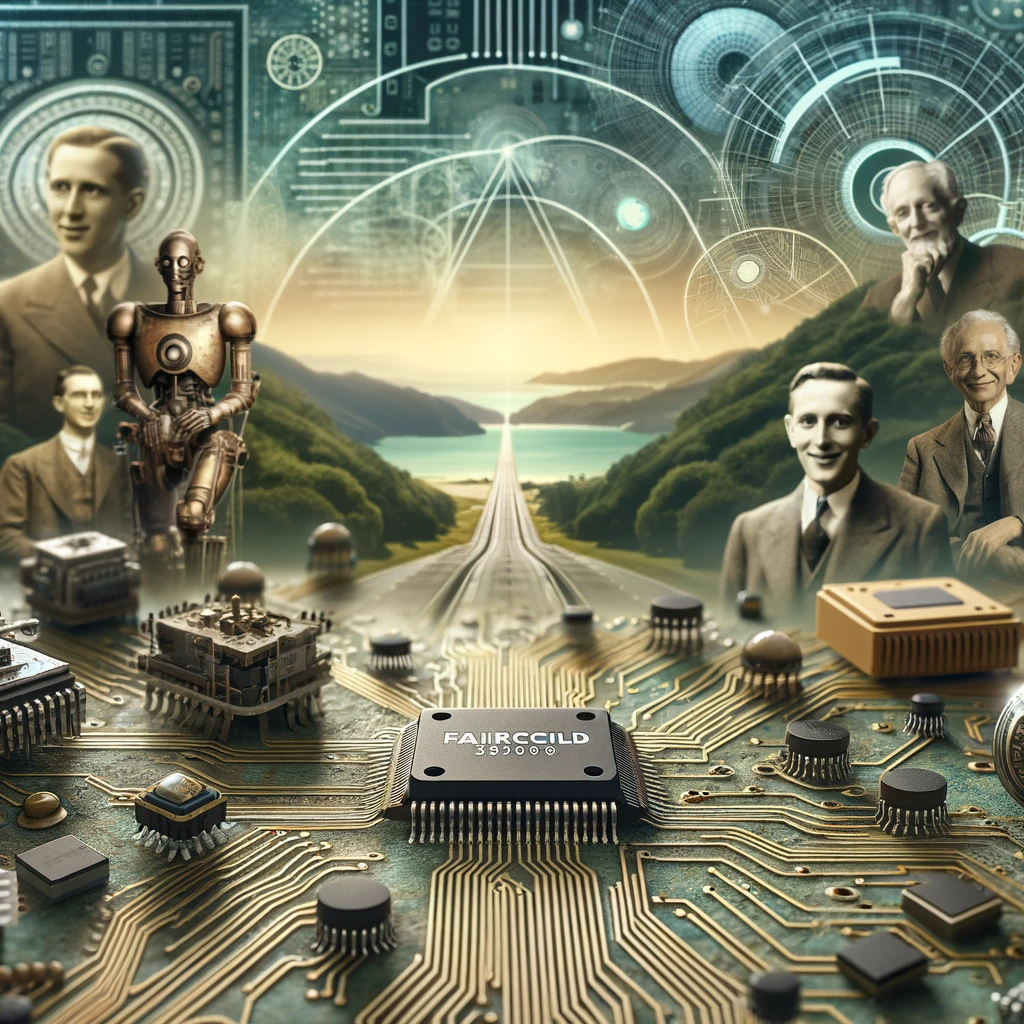
William Shockley, Nobel Prize winner and inventor of the transistor, established Shockley Semiconductor in the Santa Clara Valley, attracting some of the brightest minds in the country. However, his authoritarian style led to the departure of key employees, who went on to form Fairchild Semiconductor. This company became a cornerstone of Silicon Valley, paving the way for the region’s dominance in tech and spawning over 30 spin-off companies, including Intel.
The Rise of Venture Capital
The success of these tech ventures attracted venture capital, further fueling the region’s growth. Eugene Kleiner, a former Fairchild employee, founded Kleiner Perkins, one of the first venture capital firms in the area. This set the scene for Silicon Valley to become the world’s venture capital epicenter.
The Apple Revolution
In the 1970s, Steve Jobs, a high school student who worked at HP, co-founded Apple Computers. Apple’s IPO in 1980 created a wave of wealth, highlighting the potential of tech startups to achieve staggering success.
The Internet and Beyond
The 1990s saw the emergence of the internet as a dominant force, changing the business landscape. Netscape, one of the earliest internet companies, went public with a valuation of nearly $3 billion, underscoring the immense potential of the internet era.
The Culture of Silicon Valley
The culture of Silicon Valley is unique, where failure is often seen as a stepping stone to success. This ethos of risk-taking and innovation is deeply ingrained in the region’s DNA.

Fairchild Semiconductor: The Progenitor of the Tech Boom
Fairchild Semiconductor’s influence in Silicon Valley is profound. Founded by the ‘Traitorous Eight,’ who left William Shockley’s lab, it became the breeding ground for future tech giants. Fairchild’s breakthroughs in semiconductor technology revolutionized electronics, paving the way for the microprocessor and microcomputer. By the late 1960s, Fairchild had spawned over 30 startup companies, like Intel and AMD, deeply embedding the semiconductor industry in the Valley’s identity.
Venture Capital: Fueling Growth and Innovation
The rise of venture capital in Silicon Valley cannot be overstated. Eugene Kleiner, a Fairchild alumnus, founded Kleiner Perkins, one of the first venture capital firms on Sand Hill Road. This move marked the beginning of Silicon Valley as the world’s venture capital hub. Kleiner Perkins and other VC firms like Sequoia Capital played a crucial role in funding and nurturing tech startups, including giants like Google and Amazon.
The Apple Effect: A New Era of Personal Computing
Apple’s story is central to Silicon Valley’s lore. Founded by Steve Jobs and Steve Wozniak, Apple revolutionized personal computing. The company’s initial public offering in 1980 was historic, creating more instant millionaires than any other company at that time. Apple’s success story exemplified Silicon Valley’s potential to turn bold ideas into global phenomena.
Internet: A Gateway to Global Connectivity
Marc Andreessen’s development of a user-friendly interface for the internet, leading to the creation of Netscape, marked a pivotal moment in Silicon Valley’s history. This innovation democratized internet access, spurring a wave of new tech companies and reshaping the global economy. The rise of internet companies in the Valley signaled a new era of interconnectedness and digital innovation.
The Unique Business Culture of Silicon Valley
What sets Silicon Valley apart is its distinctive business culture. Inspired by Hewlett-Packard’s management style, companies in the Valley emphasized flat organizational structures and encouraged direct interaction among employees. This culture fostered innovation and agility, allowing for rapid development and adaptation of new ideas. The acceptance and even celebration of failure as a part of the learning process became a hallmark of the Valley’s entrepreneurial spirit.
Silicon Valley Today: A Global Tech Epicenter
Silicon Valley has become a global symbol of innovation and entrepreneurial success. It continues to attract the brightest minds and biggest ideas, constantly evolving in the face of new technological challenges and opportunities. The region’s impact extends far beyond its geographical boundaries, influencing technological trends and business practices worldwide.
Conclusion
The story of Silicon Valley is a testament to human ambition and ingenuity. From its early days as a center for academic excellence and groundbreaking research to its current status as the world’s tech hub, Silicon Valley embodies the spirit of innovation. Its history is a mosaic of visionary entrepreneurs, groundbreaking technologies, and transformative ideas. As we look to the future, Silicon Valley continues to stand at the forefront of technological advancement, shaping the way we interact with the world and each other. This journey from a quiet valley to a global tech epicenter is not just a chronicle of economic triumph; it is a narrative of relentless pursuit of progress and a testament to the power of human creativity and resilience.
Sources:
- History Cooperative – The History of Silicon Valley
- Wikipedia – Silicon Valley
- Silicon Valley Historical Association – History of Silicon Valley
- CHM – Fairchild & the Family Tree of Silicon Valley
- PBS – Early Silicon Valley