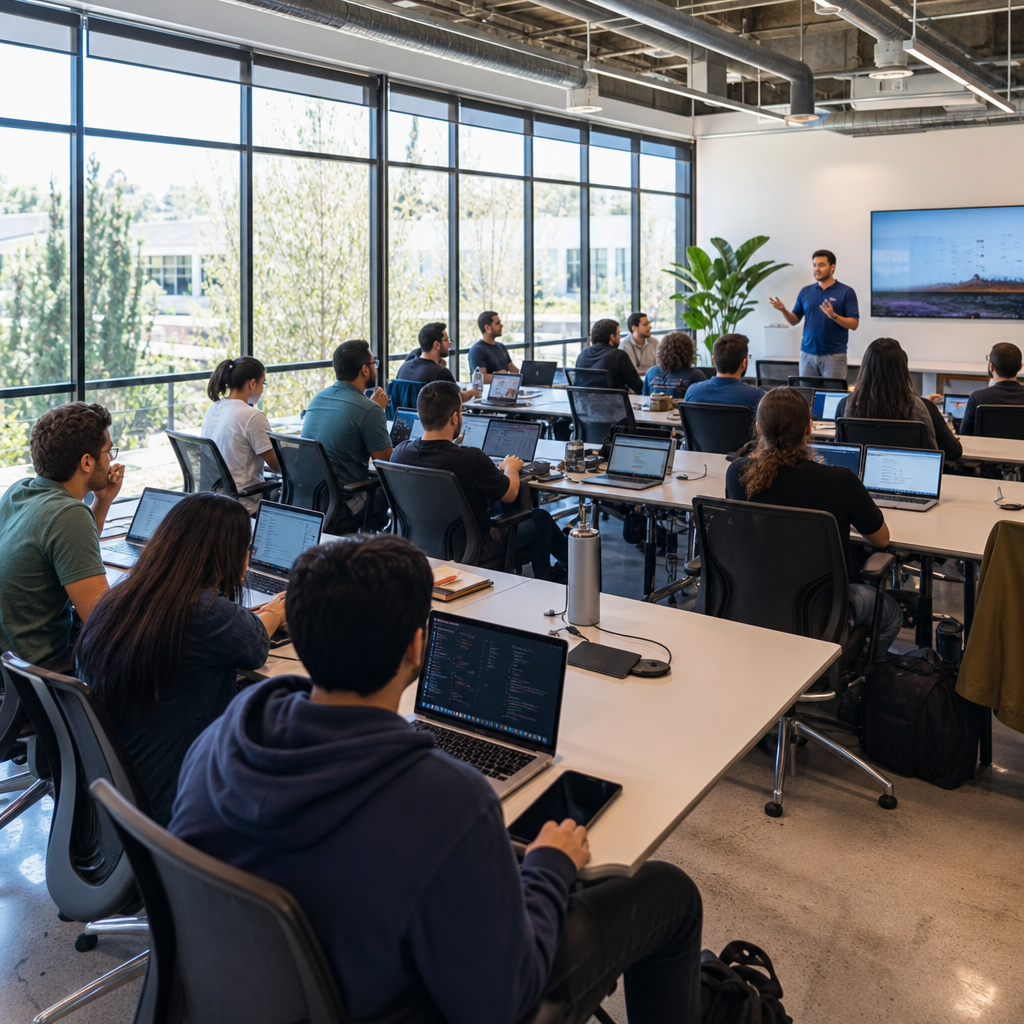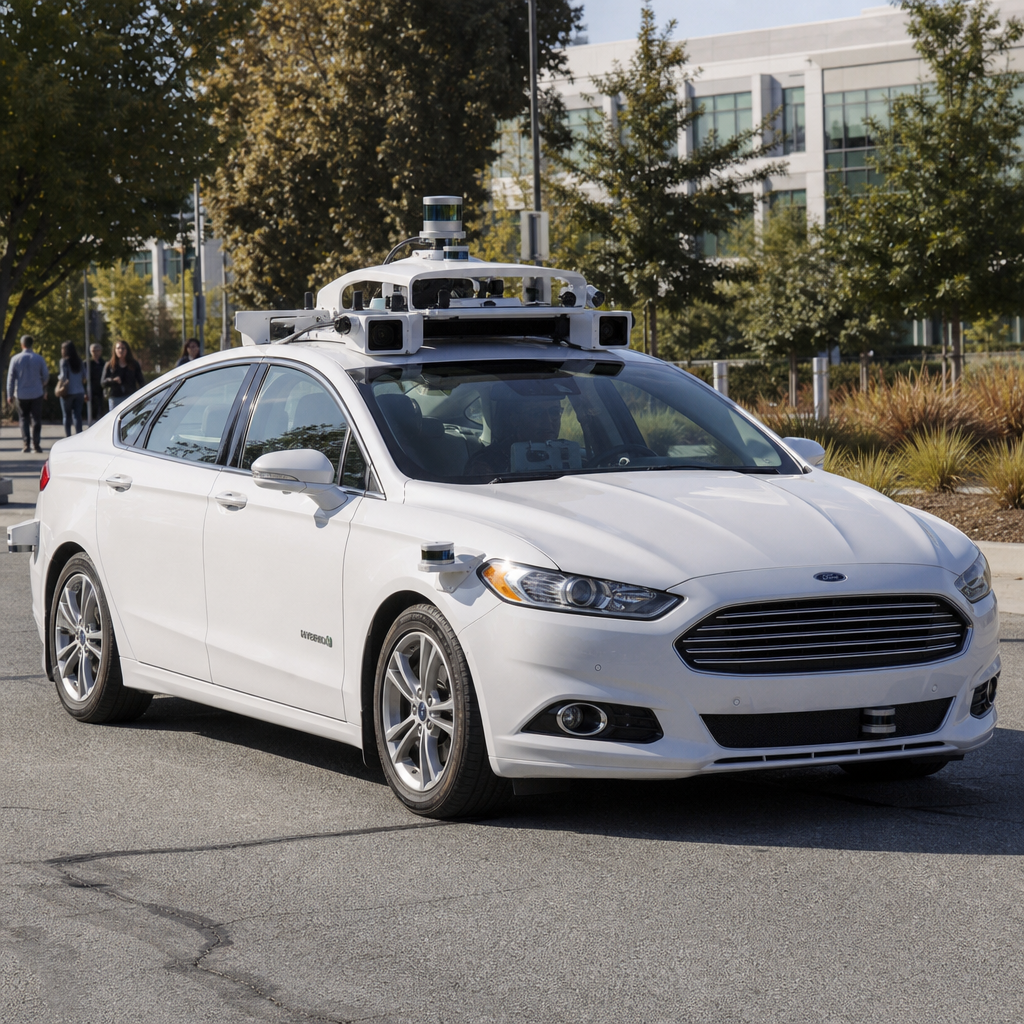
Autonomous vehicle technology is no longer confined to research labs or pilot programs; it is a fast-moving industry that demands specialized education, cross-disciplinary fluency, and continuous hands-on practice. In Silicon Valley, training programs for autonomous vehicle technology have become a critical bridge between academic theory and production-ready skills. These programs teach the foundations of self-driving systems, including perception, planning, control, simulation, safety validation, and machine learning operations. They also prepare engineers, product managers, technicians, and policy professionals to work in a field shaped by software, hardware, regulation, and real-world uncertainty. I have seen teams hire brilliant candidates who understood computer vision or robotics in isolation but struggled when asked to connect sensor calibration, high-definition mapping, safety cases, and fleet data pipelines into one operational system. That gap is exactly why structured training matters.
For readers exploring educational resources, this hub explains how Silicon Valley’s autonomous vehicle training programs expand knowledge and skills across the entire talent pipeline. Some programs are university-based, such as Stanford continuing studies, Berkeley extension offerings, and specialized robotics coursework. Others come from private bootcamps, corporate academies, supplier certifications, and in-house training at companies building robotaxis, delivery bots, or advanced driver assistance systems. The best programs do more than teach buzzwords. They show how lidar point clouds are fused with radar tracks and camera detections, how ISO 26262 and UL 4600 influence development workflows, why simulation is essential but insufficient on its own, and how safety drivers, test engineers, and machine learning teams coordinate during on-road deployment. Understanding that training ecosystem helps learners choose the right path and helps employers identify practical, job-ready competence.
What Silicon Valley training programs actually teach
The strongest autonomous vehicle technology programs in Silicon Valley are built around system thinking. A self-driving stack is usually divided into perception, localization, prediction, planning, control, and platform operations, but no real team works in those boxes alone. Training therefore starts with the architecture of an autonomous system and then moves into the interfaces between components. Students learn how cameras, radar, lidar, ultrasonic sensors, inertial measurement units, and GNSS contribute different strengths and failure modes. They study synchronized timestamps, extrinsic calibration, coordinate frames, sensor fusion, and data annotation quality because poor inputs propagate downstream into unsafe decisions.
Coursework then expands into software and robotics fundamentals. Common subjects include Python and C++, ROS or ROS 2 messaging, Linux, GPU computing, deep learning frameworks such as PyTorch or TensorFlow, and simulation tools including CARLA, LGSVL, or NVIDIA DRIVE Sim. In programs I have evaluated, the most valuable assignments are not generic coding exercises but scenario-based tasks: detecting vulnerable road users in adverse weather, tuning a lane-keeping controller, validating emergency braking in simulation, or tracing a disengagement to a map version mismatch. These projects mirror what learners will face in testing and deployment.
Safety and validation are also core topics. Reputable programs teach operational design domain definition, hazard analysis, redundancy, fail-operational behavior, disengagement review, and safety case documentation. They explain the difference between demonstration miles and statistically meaningful evidence. That matters because autonomous vehicle education should never imply that more machine learning alone solves safety. Real competence comes from understanding edge cases, verification coverage, human factors, and disciplined change management.
Types of programs and who they serve
Silicon Valley offers several training formats, each suited to a different learner profile. University and extension programs are often best for people who want strong theoretical grounding with recognized credentials. They work well for graduate students, transitioning engineers, and professionals who need structured instruction in robotics, AI, embedded systems, or transportation policy. Bootcamps and short courses are more targeted. They usually focus on practical tools, portfolio projects, and rapid upskilling for software engineers entering mobility roles. Corporate training is different again. It is usually proprietary, tied to a company’s stack, and designed to reduce errors in development, testing, safety operations, and fleet support.
Technicians and vehicle operators also need specialized pathways. A calibration technician may train on sensor mounting tolerances, diagnostic tools, clean-room handling, and field verification procedures. A safety operator may learn route familiarization, test protocols, intervention thresholds, and incident reporting. Product managers and legal teams need enough technical literacy to evaluate readiness claims, vendor capabilities, and regulatory obligations. Good educational resources acknowledge that autonomous vehicle technology is not only for machine learning engineers; it is an ecosystem profession.
| Program type | Primary audience | Main strengths | Typical limitation |
|---|---|---|---|
| University or extension courses | Students, career changers, engineers | Theory, faculty depth, recognized credential | Slower pace, less stack-specific practice |
| Bootcamps and workshops | Software professionals seeking entry | Fast upskilling, portfolio projects, applied tools | Variable rigor and uneven safety coverage |
| Corporate academies | Employees and partner teams | Real workflows, production data, role-specific training | Skills may not transfer cleanly outside the company |
| Supplier certifications | Technicians, integration teams | Hands-on hardware, diagnostics, calibration | Narrow scope focused on vendor platforms |
Core skills that expand knowledge and skills fastest
If the goal is expanding knowledge and skills efficiently, some competencies create outsized value across nearly every autonomous vehicle role. The first is data literacy. Learners should know how training, validation, and test datasets are collected, labeled, versioned, and audited. They should understand class imbalance, long-tail events, sensor dropout, and annotation disagreement. Teams make better decisions when they can inspect the data behind a model rather than treating performance metrics as magic.
The second high-value skill is simulation literacy. Simulation is indispensable for rare-event testing, regression checks, and controller tuning. However, every credible program emphasizes the sim-to-real gap. A student who can explain why a planner succeeds in CARLA but fails on an urban street with glare, construction cones, and unusual cyclist behavior is far more useful than someone who only reports perfect benchmark scores. Simulation should be paired with closed-course testing, shadow mode analysis, and structured on-road review.
Third, learners need safety and systems engineering habits. That includes requirements traceability, root-cause analysis, fault injection, log review, and documentation discipline. In practice, hiring managers often trust candidates who can write a clear test plan and explain residual risk more than candidates who only showcase model architecture diagrams. Autonomous vehicle technology rewards professionals who combine software depth with operational judgment.
Finally, communication is a technical skill in this field. Perception engineers need to explain false positives to planning teams. Test operators must write precise incident summaries. Compliance staff need technically accurate evidence for regulators and insurers. Training programs that include design reviews, postmortems, and cross-functional presentations produce graduates who contribute faster in real organizations.
How leading programs connect training to real jobs
The best Silicon Valley programs map directly to workforce demand. Companies building autonomous trucking, robotaxis, warehouse vehicles, and delivery robots need overlapping but distinct capabilities. For example, an urban robotaxi team may prioritize dense-scene perception, rider operations, and remote assistance workflows. An autonomous trucking company may focus more on highway planning, redundancy for long-haul reliability, and hub-to-hub operational design domains. A strong hub-level educational resource should therefore help learners connect curricula to target roles rather than treating all autonomous vehicle jobs as interchangeable.
Portfolio design matters here. A perception candidate should show projects involving multi-sensor fusion, object tracking, or semantic segmentation with error analysis. A controls candidate should demonstrate path tracking, model predictive control, and actuator constraints. A validation candidate should present scenario coverage strategy, requirements mapping, and reproducible bug triage. In my experience, programs that require capstone projects with logs, metrics, assumptions, and limitations create much stronger hiring signals than courses built around quizzes alone.
Networking and industry exposure also shape outcomes. Silicon Valley training programs often benefit from guest lectures by engineers from NVIDIA, Applied Intuition, Aurora, Zoox, Waymo, or semiconductor suppliers. The value is not just prestige. Learners hear how production teams handle dataset drift, compute limits, cyberphysical failure modes, and release gates. Those operational details help students move beyond academic prototypes and understand what deployable autonomy requires.
How to choose the right autonomous vehicle training path
Choosing the right path starts with role clarity. If you want to become a machine learning engineer, prioritize programs with strong statistics, computer vision, and MLOps components. If your goal is robotics software, look for coursework in localization, motion planning, control, ROS, and real-time systems. If you come from automotive service or manufacturing, supplier certifications and hardware-focused labs may offer a better return than abstract AI courses. The right program is the one that closes your most important skill gaps while producing artifacts you can show employers.
Evaluate curriculum depth carefully. A credible autonomous vehicle technology program should cover sensor fusion, mapping or localization, safety validation, and real-world testing constraints. Be cautious if a course promises to teach self-driving systems almost entirely through generic neural network tutorials. Also check whether instructors have shipped products, run road tests, managed validation, or built tooling for fleet operations. Industry experience changes the quality of examples, tradeoff discussions, and debugging instruction.
Cost, time, and access matter too. Some learners need a twelve-week intensive; others need part-time evening study while working. Remote programs increase access, but in-person labs remain valuable for calibration, hardware integration, and vehicle testing. For most professionals, the ideal route is layered: foundations through academic study, practical reinforcement through projects and simulation, then specialization through internships, corporate training, or open-source contribution.
Silicon Valley’s autonomous vehicle training programs matter because the industry is too complex for fragmented learning. People entering this space need a clear hub that explains the landscape, defines the skills, and points them toward practical next steps. The most effective programs expand knowledge and skills by combining rigorous technical foundations with safety thinking, system integration, and role-specific practice. They teach not just how autonomous systems are built, but how they are tested, limited, documented, and improved over time.
As a hub within educational resources, this topic should guide readers toward deeper articles on perception, simulation, validation, safety standards, robotics software, technician pathways, and career transitions. The central lesson is simple: strong training shortens the distance between curiosity and competence. Whether you are an engineer, operator, manager, or career changer, invest in programs that emphasize real-world constraints, measurable projects, and cross-functional communication. Start by identifying your target role, auditing your current skills, and choosing one structured program that gives you both technical depth and credible evidence of readiness.
Frequently Asked Questions
What do Silicon Valley autonomous vehicle training programs typically cover?
Most autonomous vehicle training programs in Silicon Valley are designed to mirror the real technical stack used in self-driving development, not just the theory behind it. That means students are usually introduced to the core pillars of autonomous systems: perception, localization, mapping, prediction, planning, control, simulation, and safety validation. Perception training often focuses on how vehicles interpret sensor data from cameras, lidar, radar, and ultrasonic systems, including object detection, lane recognition, semantic segmentation, and sensor fusion. Localization and mapping modules teach how vehicles determine their position in complex environments using GPS, inertial systems, HD maps, and simultaneous localization and mapping techniques.
Beyond sensing and positioning, these programs usually spend significant time on decision-making. Students learn how planning systems generate safe trajectories, how control systems translate those trajectories into steering, braking, and acceleration commands, and how prediction models estimate the behavior of pedestrians, cyclists, and surrounding vehicles. Many programs also emphasize simulation, since testing autonomous systems entirely on public roads is expensive and risky. Learners often work with simulation environments to evaluate edge cases, stress-test software, and validate performance under thousands of scenarios.
What makes Silicon Valley programs especially valuable is their practical orientation. Instead of stopping at lectures, they often include project-based learning with robotics middleware, machine learning pipelines, ROS, Python, C++, computer vision frameworks, and cloud-based data workflows. Safety and regulatory awareness are also increasingly central. Strong programs teach students how validation, redundancy, system reliability, and real-world deployment standards fit into the engineering process. In short, the best programs do not teach isolated topics; they train students to understand how the full autonomous vehicle stack operates as an integrated system.
Who should enroll in an autonomous vehicle technology training program?
These programs are well suited for a wide range of learners, but they are especially valuable for people who want to work at the intersection of software, robotics, artificial intelligence, and transportation. Engineers with backgrounds in computer science, electrical engineering, mechanical engineering, robotics, or data science are often strong candidates because autonomous vehicle systems demand cross-disciplinary fluency. However, enrollment is not limited to traditional engineering professionals. Career changers with solid quantitative skills, embedded systems experience, machine learning exposure, or automotive knowledge can also benefit, particularly if they want to transition into mobility technology roles.
In practice, Silicon Valley training programs often attract several different groups. One group includes university students and recent graduates who want to build job-ready skills that go beyond academic coursework. Another includes working professionals in adjacent fields such as ADAS, robotics, aerospace, logistics automation, or industrial AI who want to specialize in self-driving technology. There are also product managers, technical founders, and systems engineers who enroll to better understand the architecture, risks, and development lifecycle of autonomous systems so they can lead teams more effectively.
The ideal learner is usually someone comfortable with technical problem-solving and willing to engage in hands-on experimentation. Since autonomous vehicle development involves messy real-world data, uncertain environments, and safety-critical tradeoffs, the field rewards people who can think both analytically and practically. Some programs are beginner-friendly, while others assume familiarity with linear algebra, machine learning, control systems, or programming in Python and C++. The best way to choose is to match your current skill level with the program’s prerequisites and outcomes. If your goal is to move from theory into applied autonomous systems work, a strong training program can provide that bridge.
How are Silicon Valley training programs different from traditional academic courses?
The biggest difference is immediacy. Traditional academic courses often provide strong foundations in mathematics, robotics, AI, and systems theory, but Silicon Valley training programs tend to focus more directly on production-relevant workflows and current industry tools. In a university setting, students may study perception algorithms, control theory, or probabilistic robotics in depth, which is essential. In a Silicon Valley training environment, those concepts are usually paired with implementation tasks that resemble real engineering work: building sensor processing pipelines, testing decision logic in simulation, tuning performance constraints, handling imperfect data, and evaluating safety metrics.
Another major difference is the pace of curriculum updates. Autonomous vehicle technology evolves quickly, and industry-oriented programs are often better positioned to adapt to changes in software frameworks, simulation practices, machine learning techniques, and deployment expectations. This matters because employers are often looking for candidates who can contribute to current workflows, not just discuss concepts abstractly. Training providers in Silicon Valley frequently incorporate case studies, capstone projects, tooling used in self-driving startups and major mobility companies, and instruction from practitioners who have worked on live AV systems.
There is also a cultural difference. Academic programs are often structured around semesters, theory mastery, and broad foundational development. Silicon Valley programs are usually narrower, faster, and more applied. They often emphasize iteration, portfolio building, collaborative debugging, and the ability to explain engineering decisions under real-world constraints. For many learners, this practical framing is what makes the material stick. The strongest pathway is not choosing one over the other, but combining both: academic fundamentals provide depth, while focused AV training provides the translational experience needed to operate in a commercial development environment.
What skills do employers look for after completing an autonomous vehicle training program?
Employers usually look for a combination of technical depth, systems thinking, and proof that a candidate can work on real autonomous vehicle problems rather than only discuss them conceptually. On the technical side, strong programming ability is essential, especially in Python and C++. Companies also value experience with robotics software stacks, sensor processing, machine learning frameworks, computer vision methods, and simulation tools. Depending on the role, employers may prioritize knowledge of perception pipelines, trajectory planning, controls, embedded systems, mapping, or data infrastructure. Familiarity with ROS, Linux-based development environments, version control, testing workflows, and debugging distributed systems can also make a candidate much more competitive.
Just as important is the ability to think at the system level. Autonomous vehicles are not built by isolated specialists working in a vacuum. Employers want people who understand how components interact, how upstream errors propagate through the stack, and how safety, latency, computational efficiency, and validation influence design choices. A candidate who can explain the tradeoffs between sensor modalities, discuss edge-case failure modes, or show how simulation and on-road testing complement each other often stands out more than someone who has memorized terminology.
Portfolio evidence matters a great deal. Hiring teams are often persuaded by completed projects: a perception demo, a path-planning implementation, a sensor fusion experiment, a simulation-based validation study, or a capstone that integrates multiple modules into a working prototype. Employers also value communication skills because AV development is highly collaborative and safety-critical. Engineers need to document assumptions, present results clearly, and work across software, hardware, operations, and product teams. In many cases, the most successful graduates are not simply the ones with course certificates, but the ones who can demonstrate competence through code, projects, and thoughtful problem-solving.
Why is hands-on practice so important in autonomous vehicle education?
Hands-on practice is essential because autonomous vehicle technology behaves very differently in the real world than it does in a clean theoretical example. A learner can understand the math behind sensor fusion or motion planning and still struggle when faced with noisy lidar returns, inconsistent camera inputs, changing weather, occlusions, timing delays, or incomplete map data. Practical training forces students to confront exactly those kinds of realities. It teaches not only how algorithms should work, but how they fail, how to diagnose those failures, and how to improve system robustness.
In Silicon Valley, this practical emphasis is particularly important because the industry expects engineers to contribute in environments where safety, speed, and complexity coexist. Hands-on exercises with simulation platforms, recorded sensor datasets, robotics middleware, and integrated software stacks help students develop intuition that cannot be gained from reading alone. They learn how to validate assumptions, tune parameters, evaluate model performance, compare approaches, and identify weak points in a system before those weaknesses become expensive or dangerous. This kind of repetition builds engineering judgment, which is one of the most valuable skills in autonomous systems work.
Practical work also improves employability because it creates tangible evidence of capability. A candidate who has built, tested, and iterated on AV-related projects can speak much more credibly about design decisions, tradeoffs, and lessons learned. That matters in interviews and on the job. Autonomous vehicle development is ultimately an applied discipline: vehicles must interpret the world, make decisions, and act safely under uncertainty. Hands-on practice turns abstract knowledge into usable skill, and that is exactly why training programs in Silicon Valley place such a strong emphasis on labs, simulations, capstones, and real-world engineering exercises.