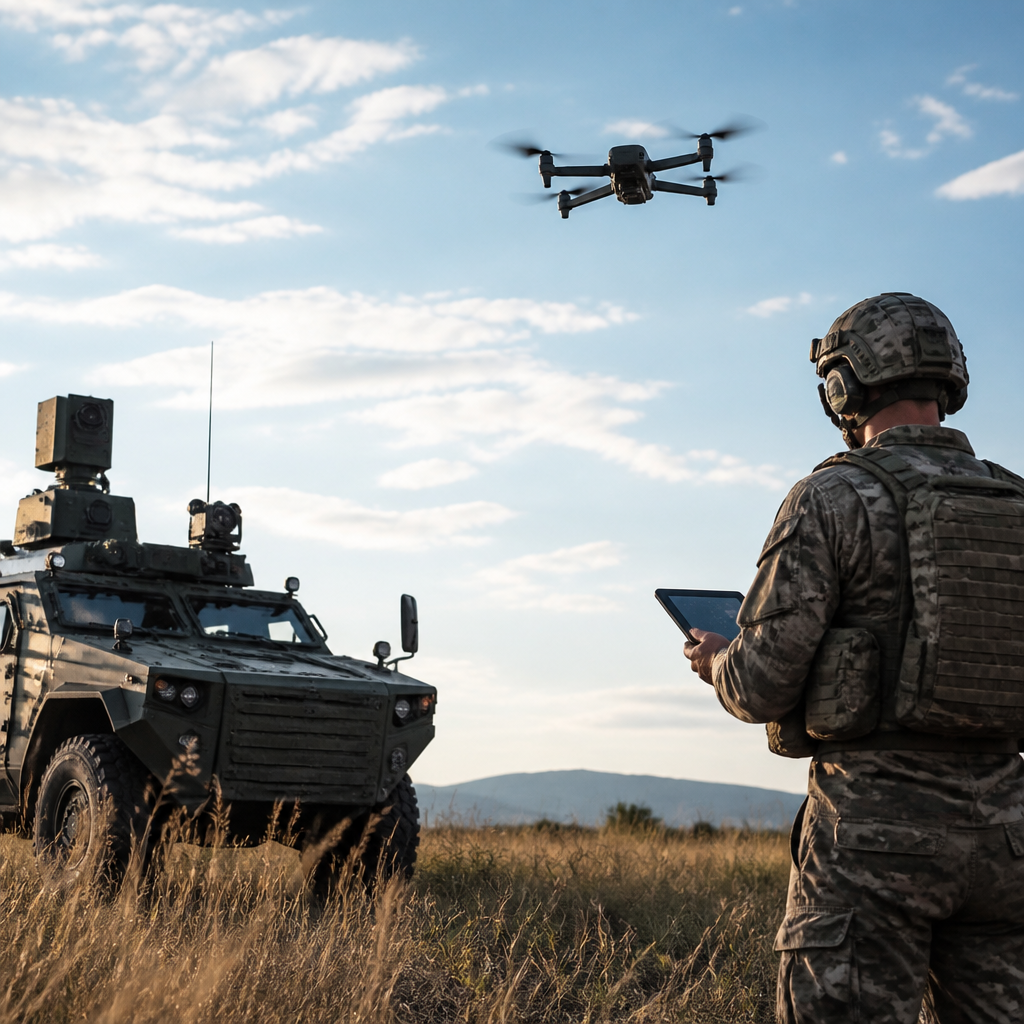
Defense tech venture capital has moved from a specialist corner of investing into a recognized pillar of the venture capital landscape, reshaping how founders, limited partners, and policymakers think about innovation, risk, and national capability. In practical terms, defense tech refers to startups building technologies for military, intelligence, dual-use, and national security customers, while venture capital describes equity financing aimed at scaling high-growth private companies. For years, many generalist funds avoided the category because government procurement cycles were slow, public perception was mixed, and software investors preferred cleaner business models. That posture has changed decisively. Today, defense tech sits alongside fintech, climate, and enterprise software in mainstream portfolio discussions because geopolitical pressure, commercial technology spillover, and procurement reform created a market large enough for venture returns.
I have watched this shift firsthand in venture meetings where defense was once treated as off-limits, then slowly reclassified as a serious allocation thesis after repeated evidence that software, autonomy, cyber, and space companies could win both government and commercial revenue. The change matters beyond one vertical. It illuminates the broader venture capital landscape: how capital flows follow strategic demand, how category creation happens, and how a once-dismissed customer segment becomes investable when founders solve adoption friction. As a hub topic within entrepreneurship and venture capital, defense tech provides a useful lens for understanding sector specialization, fund construction, diligence, exit pathways, and the growing importance of dual-use business models.
To understand why the sector became mainstream, start with a simple answer: modern defense problems now depend on venture-scale technologies. Artificial intelligence, drones, resilient communications, satellites, cybersecurity platforms, advanced manufacturing, and autonomy are no longer peripheral tools; they are core infrastructure for deterrence and battlefield effectiveness. At the same time, startups can build these systems faster than many traditional contractors because they use commercial components, iterative software releases, and modern engineering talent. Investors noticed that the historical barrier was not technical feasibility but go-to-market execution inside a regulated buyer environment. Once a handful of companies proved contracts could scale into meaningful recurring revenue, skepticism gave way to competition.
Why Defense Tech Broke Out of Its Niche
The mainstreaming of defense tech venture capital is best explained by converging demand and supply. On the demand side, heightened tensions involving Ukraine, the Indo-Pacific, cyber conflict, and space security made national security a board-level issue for governments and corporations alike. On the supply side, startup tools improved dramatically. Cloud infrastructure reduced computing costs, SpaceX normalized private-sector space economics, Anduril demonstrated that venture-backed defense companies could become category leaders, and Palantir showed that government software contracts could support massive enterprise value. Those examples changed pattern recognition for investors. What once looked like an exotic exception began to look like a repeatable company-building playbook.
Procurement also evolved, even if unevenly. In the United States, vehicles such as SBIR, Other Transaction Authority, the Defense Innovation Unit, and AFWERX gave startups more entry points than the old prime-contractor gatekeeping model. None of these mechanisms eliminate friction, and founders still face accreditation, export controls, testing requirements, and long sales cycles. But they do create a bridge from pilot to production. In venture terms, that bridge is crucial because investors do not fund technology alone; they fund a path to scalable revenue. Once enough startups crossed that bridge, mainstream funds could underwrite the sector with more confidence.
Another reason the category expanded is that “defense tech” now includes dual-use companies with broader total addressable markets. A drone navigation startup may sell to defense agencies, energy infrastructure operators, and industrial inspection teams. A cybersecurity company may serve intelligence customers and Fortune 500 enterprises. A satellite imaging business may support military planning, insurance modeling, agriculture, and logistics. This dual-use structure matters because it mitigates concentration risk and shortens feedback loops. In my experience, investors become far more comfortable when a startup can prove product-market fit in commercial channels while building a compliance roadmap for government sales.
What Mainstream Investors Now Look For
Generalist venture firms entering defense tech do not abandon traditional underwriting standards; they adapt them. The first screen is technical advantage. Investors want a defensible capability, not a thin reseller model. That may mean proprietary perception software for autonomous systems, hardened edge computing, differentiated RF sensing, secure mission-planning tools, or manufacturing methods that lower unit cost at scale. The second screen is mission relevance. A product must solve an urgent, budgeted problem rather than a vague future requirement. The third screen is procurement realism. Founders need a credible strategy for navigating program offices, integrators, classified environments, and test cycles.
Team quality is especially important in this sector because execution requires bilingual leadership: people who understand both startup speed and government process. The strongest founding teams often combine former operators, engineers from elite commercial companies, and executives who have worked with defense acquisition or regulated enterprise sales. Investors also look closely at gross margin structure, hardware-software mix, deployment support burden, and dependence on one agency sponsor. A company that sells elegant hardware at low margin without a software or services layer will often struggle to fit venture economics. By contrast, a business that couples hardware with recurring data, analytics, or command software is easier to finance.
| Investor Question | What a Strong Defense Tech Startup Shows |
|---|---|
| Is the problem urgent? | Documented mission need tied to budgets, doctrine shifts, or operational gaps |
| Is the technology differentiated? | Proprietary models, sensor fusion, manufacturing process, or system integration advantage |
| Can procurement scale? | Clear path from pilot, OTA, or SBIR into programmatic production contracts |
| Is there dual-use potential? | Commercial customers that validate demand and diversify revenue concentration |
| Do unit economics support venture returns? | Healthy margins, repeatable deployments, and software or data revenue expansion |
Valuation discipline remains important. During peak market cycles, some defense and space startups raised on narratives that outran procurement evidence. Sophisticated funds now push deeper diligence on test results, integration complexity, security requirements, and production readiness. They speak with former acquisition officials, military end users, and technical experts, not just founders and friendly design partners. That is one reason the sector appears more mature today: better companies are being funded, but better questions are also being asked.
How Defense Tech Fits the Wider Venture Capital Landscape
As a hub within the venture capital landscape, defense tech connects to nearly every major investing theme. It overlaps with deep tech because many companies commercialize difficult science or engineering. It intersects with enterprise software because workflow, analytics, and secure collaboration products are core to modern defense operations. It sits next to climate and industrial technology through batteries, grid resilience, advanced materials, and manufacturing. It also touches space investing, which has become a gateway for many mainstream funds to learn government markets through launch, remote sensing, and orbital infrastructure.
Fund strategy has adapted accordingly. Some specialist firms focus almost entirely on national security. Others are broad sector funds with dedicated defense partners. Corporate venture arms and prime contractors participate when technology fills gaps in autonomy, cyber, or electronics. University-linked funds, sovereign capital, and crossover investors also appear more often, especially in later rounds where manufacturing scale or international expansion requires larger checks. For entrepreneurs, that means the financing map is far broader than it was a decade ago. Founders no longer need to rely solely on a tiny circle of niche investors who already know the procurement maze.
The mainstreaming of the category has also changed exits. Acquisition by a prime contractor remains common, but it is no longer the only credible outcome. Larger software platforms, aerospace companies, and public-market investors have shown appetite for high-growth defense-adjacent businesses with recurring revenue and durable government contracts. Still, exits in this sector require timing. Government validation can create strong moats, yet overdependence on one program can limit acquirer interest. The best outcomes usually come from companies that pair defense credibility with adjacent commercial demand, making them strategically valuable in multiple directions.
Opportunities, Risks, and What Founders Should Do Next
The biggest opportunity in defense tech venture capital is not simply selling to governments; it is building enduring companies around critical capabilities that governments cannot afford to ignore. Areas with sustained investor interest include counter-drone systems, cyber defense, AI-enabled intelligence analysis, secure communications, space domain awareness, maritime autonomy, electronic warfare, and logistics software. Advanced manufacturing is another growing field because supply-chain resilience has become a strategic issue. Investors increasingly ask whether a startup can shorten lead times, reduce dependence on fragile foreign components, or support distributed production under stress.
The risks are equally real. Sales cycles can still stretch well beyond commercial norms. Program priorities can shift after elections, budget negotiations, or leadership changes. Export control rules such as ITAR can complicate hiring, partnerships, and overseas sales. Hardware businesses face certification and production bottlenecks. Ethical scrutiny is intense, and founders need a clear view of the missions they will support. In my experience, the most resilient startups address these risks early by hiring compliance talent, documenting testing rigorously, and choosing customers with discipline rather than chasing every available contract vehicle.
For founders, the practical playbook is straightforward. Build around a pressing operational need, not a generic patriotism pitch. Design for procurement from the beginning by understanding authority pathways, security requirements, and who actually owns the budget. Prove reliability in the field because referenceability matters enormously in defense markets. Preserve optionality through dual-use applications when they are authentic, not forced. And communicate in plain language with investors: explain the mission, the buyer, the contract path, and the margin profile without assuming specialist knowledge. Defense tech became mainstream because outstanding companies made the market legible. Founders who do the same will keep attracting capital. For investors and entrepreneurs studying the venture capital landscape, this sector is no longer a side note. It is a durable, strategically important arena worth understanding in depth. Explore the adjacent themes across this hub, from fund strategy to due diligence and exits, then map where your company or capital fits next.
Frequently Asked Questions
1. What is defense tech venture capital, and how is it different from traditional venture investing?
Defense tech venture capital is the practice of investing in startup companies that build products and infrastructure for military, intelligence, homeland security, and broader national security applications. These companies may develop software, autonomy systems, cybersecurity tools, aerospace platforms, advanced manufacturing capabilities, sensing systems, communications infrastructure, or other technologies that can serve government customers as well as commercial markets. The “dual-use” model is especially important here because many of the most investable companies can sell into both public-sector and private-sector buyers, which helps them scale faster and diversify revenue.
What makes defense tech venture capital different from more traditional venture categories is not just the customer base, but the operating environment. Startups in this sector often deal with longer procurement cycles, more complex compliance requirements, export controls, security clearances, classified work, and the need to prove reliability under mission-critical conditions. Investors evaluating these companies must understand far more than product-market fit and growth metrics. They also need to assess whether a team can navigate government acquisition pathways, survive extended sales timelines, meet regulatory requirements, and build trust with agencies that operate under very different rules than enterprise software buyers.
At the same time, defense tech venture capital still follows core venture principles. Investors are backing high-growth private companies with the expectation that a small number of outliers will generate substantial returns. The difference is that success in this category may depend on a company’s ability to bridge Silicon Valley speed with government-grade durability. That combination is exactly why the sector has become so strategically important and so attractive to investors who believe national security and innovation are increasingly inseparable.
2. Why did defense tech venture capital move from a niche strategy to a mainstream investment category?
Defense tech became mainstream because several long-building forces converged at once. First, geopolitical competition intensified. Rising tensions among major powers, more visible cyber threats, contested supply chains, and real-world battlefield lessons reminded governments and investors alike that technological superiority is not optional. National capability now depends heavily on software, autonomy, AI, sensors, resilient communications, and manufacturing depth, all areas where startups can often move faster than traditional prime contractors.
Second, the venture ecosystem itself matured. For years, many generalist investors stayed away from defense because they viewed it as politically sensitive, operationally difficult, or too dependent on slow government procurement. That perception began to change as successful defense and dual-use startups demonstrated that venture-backed companies could build large outcomes in aerospace, cybersecurity, autonomy, and infrastructure. As more founders entered the market and more specialized funds emerged, the category became easier to understand, underwrite, and explain to limited partners.
Third, government demand evolved. Public agencies increasingly recognized that relying only on legacy contractors could limit innovation speed. New procurement mechanisms, pilot programs, and innovation units created more ways for startups to engage with defense customers earlier in their lifecycle. While the system is still far from frictionless, there is now a clearer path from prototype to scaled adoption than there was a decade ago. That increased investor confidence.
Finally, the cultural narrative changed. Defense tech is no longer seen only as a narrow weapons category. It is increasingly understood as a broad innovation domain covering logistics, cyber defense, space systems, maritime technologies, data infrastructure, robotics, energy resilience, and industrial capabilities essential to national security. In other words, the market expanded conceptually as well as financially. Once investors began viewing defense tech as a core layer of strategic infrastructure rather than a peripheral theme, the shift from niche to mainstream accelerated.
3. What types of startups are attracting the most attention from defense tech venture capital firms?
Investors are most interested in startups building technologies that solve urgent, high-value problems for both government and commercial customers. Cybersecurity remains a major focus because digital infrastructure is now central to both national defense and economic resilience. Founders building tools for threat detection, secure communications, zero-trust architecture, data protection, and cyber operations are often well positioned, especially when their products can serve enterprise markets alongside public-sector missions.
Autonomy and robotics are also attracting strong investor interest. This includes autonomous aerial systems, maritime platforms, ground robotics, navigation technologies, command-and-control software, and the underlying AI that helps machines operate in complex environments. These technologies matter because they can improve speed, scale, and operational effectiveness while reducing risk to human personnel. Space and aerospace startups are another major category, particularly companies working on launch, satellite systems, Earth observation, orbital infrastructure, and technologies that support resilient communications and intelligence gathering.
Beyond headline sectors, there is rising enthusiasm for startups modernizing the defense industrial base itself. Advanced manufacturing, resilient supply chain tools, secure semiconductors, novel materials, energy systems, and logistics platforms are increasingly viewed as national security technologies. Investors have become more willing to back companies that strengthen production capacity and infrastructure, not just software layers. This reflects a broader understanding that deterrence and readiness depend on physical capability as much as digital capability.
What ties the strongest opportunities together is not simply technical sophistication. The most compelling startups usually have a clear mission need, a realistic path through procurement or partnership channels, and a product that can become indispensable over time. Investors look closely at whether a company is solving a painful problem, whether adoption can expand beyond a pilot, and whether the business has enough flexibility to serve multiple markets while still delivering mission-critical value to defense and national security customers.
4. What are the biggest challenges founders and investors face in defense tech venture capital?
The biggest challenge is usually the mismatch between venture timelines and government buying processes. Venture capital expects fast learning, rapid scaling, and visible commercial traction, while defense procurement can involve pilots, testing, budgeting cycles, contracting complexity, and long delays before meaningful deployment. A startup may have a strong product and clear mission relevance but still struggle if it cannot bridge the time between early validation and sustained revenue. This creates financing pressure and forces founders to be disciplined about cash management, customer sequencing, and go-to-market design.
Regulatory and operational complexity is another major barrier. Defense tech companies may encounter export controls, classification issues, cybersecurity certification requirements, supply chain scrutiny, and limits on foreign ownership or foreign influence. These factors can affect hiring, product architecture, fundraising strategy, and international expansion. For investors, this means diligence must go beyond standard market sizing and team analysis. They need to understand legal constraints, program dependencies, and the operational realities of selling into sensitive environments.
There is also the challenge of customer concentration and adoption risk. Some startups become overly dependent on a small number of programs, agencies, or budget lines. If priorities shift or contracts slip, growth can stall. That is why many of the best defense tech businesses build dual-use revenue streams or serve adjacent markets that provide commercial cash flow while government demand matures. Diversification is not always easy, but it can significantly improve resilience.
Finally, founders must navigate trust and credibility. In defense and national security, reliability matters as much as innovation. Customers need confidence that a startup can deliver in high-stakes environments, support deployments over time, and protect sensitive information. Investors evaluating management teams therefore care deeply about execution discipline, domain understanding, and the ability to work across both startup culture and institutional procurement systems. The opportunity is enormous, but the companies that win are usually the ones that pair technical ambition with exceptional operational maturity.
5. Why does the rise of defense tech venture capital matter beyond investors and startups?
The mainstreaming of defense tech venture capital matters because it changes how societies build strategic capability. When more capital flows into companies solving national security problems, governments gain access to a broader and more dynamic innovation base. That can improve readiness, shorten the path from technological breakthrough to fielded capability, and reduce dependence on a small set of incumbent suppliers. In an era defined by cyber conflict, autonomous systems, contested infrastructure, and rapid technological change, that flexibility is strategically important.
It also matters for economic and industrial policy. Defense tech investment supports advanced manufacturing, engineering talent, supply chain modernization, and frontier research that often has spillover benefits across the civilian economy. Many technologies initially developed for national security uses go on to shape commercial markets, from communications and navigation to software and materials. As a result, the growth of this sector is not just about military outcomes. It also affects competitiveness, workforce development, and the long-term health of critical industries.
For limited partners and institutional allocators, the category represents a shift in how venture risk and opportunity are understood. Defense tech was once viewed as too specialized or too difficult for mainstream capital. Today, it is increasingly seen as a sector where strong teams can build durable companies around urgent demand and structural government commitment. That reframes the conversation from “Why invest here?” to “How do we evaluate this well?”
For policymakers, the rise of defense tech venture capital is a signal that private markets are willing to support strategically important innovation at scale. That opens the door to stronger public-private collaboration, but it also raises important questions around procurement reform, ethical use of technology, alliance coordination, and the balance between openness and security. In that sense, the sector’s growth is bigger than a funding trend. It is part of a broader realignment in how innovation, capital, and national capability connect in the modern economy.