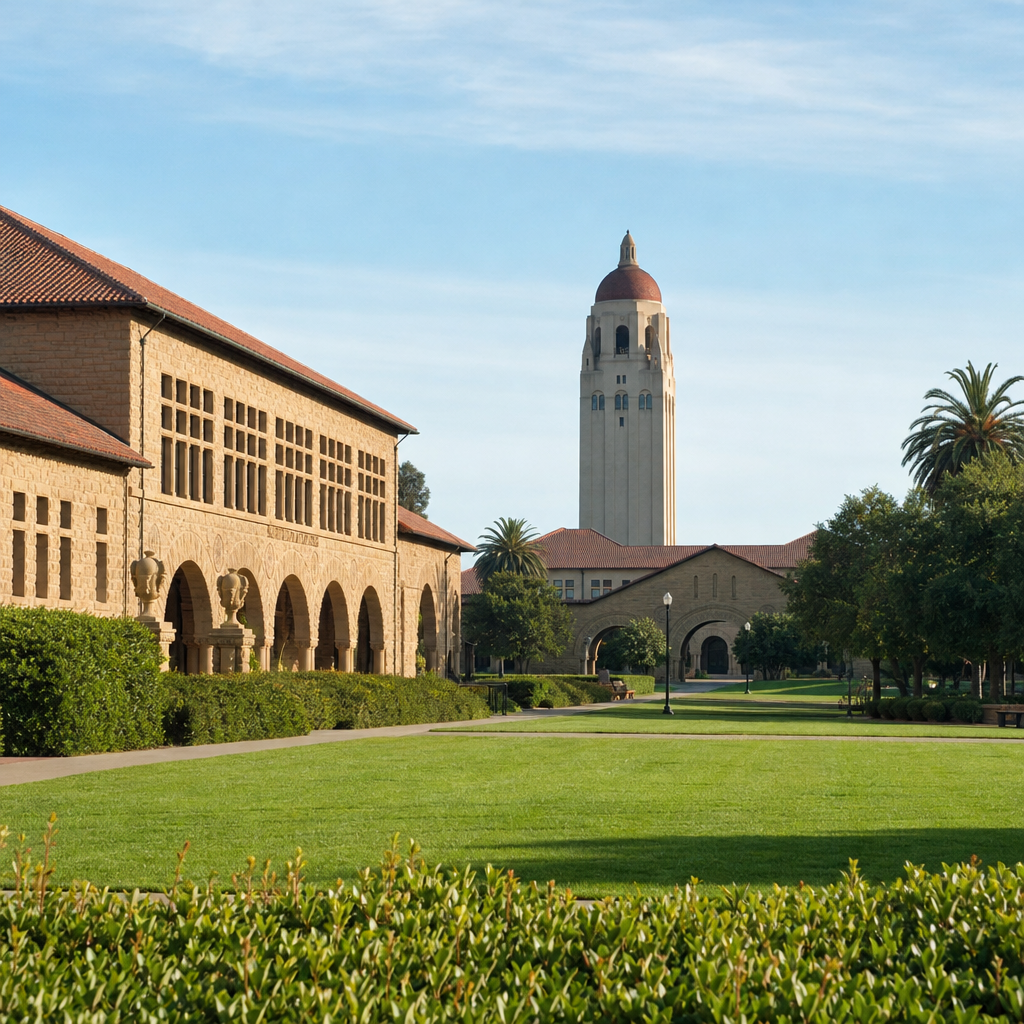
Stanford University became essential to Silicon Valley’s growth because it linked land, talent, research, and capital in one place long before the region was globally famous. To understand why Stanford University became so important to Silicon Valley’s growth, it helps to define the two core ideas at the center of the story: geography and origins. Geography refers not only to Stanford’s physical location between San Francisco and San Jose, but also to its access to rail lines, military facilities, orchards, suburban land, and later major highways. Origins refers to the institutional choices made from the university’s founding in 1885 through the postwar decades, especially decisions about engineering education, industry collaboration, and land use. I have worked through this history repeatedly when mapping how regional innovation clusters form, and Stanford stands out because its influence was never accidental. The university supplied trained engineers, encouraged faculty entrepreneurship, hosted research tied to national defense, and leased land that gave early technology firms a stable home. Silicon Valley did not emerge from a single invention or company. It grew from a durable local system, and Stanford was one of the few institutions able to shape every part of that system at once.
Stanford’s location turned a rural peninsula into an innovation corridor
Stanford’s importance begins with place. The university was founded on former Rancho San Francisquito land in Santa Clara County, at a time when the surrounding area was better known for fruit orchards than electronics. That setting mattered. Stanford sat close enough to San Francisco to access finance, shipping, and elite networks, yet far enough south to offer large tracts of affordable land for laboratories, factories, and housing. The Southern Pacific Railroad connected the peninsula to regional markets, and later U.S. Route 101 and Interstate 280 made commuting and freight movement easier. Those transportation links helped transform an agricultural region into a research and production zone.
Geography also gave Stanford room to act. Unlike many urban universities boxed into dense neighborhoods, Stanford controlled a vast campus and adjacent lands. That land became a strategic asset in the twentieth century. When technology firms needed office, laboratory, and light manufacturing space near faculty expertise and graduate talent, Stanford could provide it. This was not a minor convenience. In the early years of electronics, being close to experimental equipment, machine shops, and university researchers saved time and reduced risk. The region’s mild climate also supported year-round construction and commuting, while the peninsula’s suburban development pattern made it easier to build low-rise industrial parks suited to fast-growing engineering firms.
The Bay Area’s broader geography reinforced Stanford’s role. To the north were financiers, lawyers, and established businesses in San Francisco. To the south and east were open lands where new employers could expand. Nearby military sites, including Moffett Field and later defense laboratories across the region, generated technical demand and federal contracts. Stanford sat near all of this without being dominated by any single city government or industrial hierarchy. That gave the university unusual freedom to help shape a regional economy from the middle rather than from the margins.
The university’s founding mission favored practical education and regional development
Leland and Jane Stanford founded the university in 1885, and it opened in 1891 with a mission that mixed broad education with practical usefulness. Leland Stanford had built wealth through railroads, agriculture, and politics, and the institution reflected a western belief that education should serve real economic and civic needs. While Stanford was never merely a trade school, it developed a culture more open to applied science and engineering than many older elite universities of the era. That cultural orientation later mattered enormously.
In the early twentieth century, Stanford invested in electrical engineering, physics, and related technical fields at a time when those disciplines were becoming central to communications and industry. Frederick Terman, often called the father of Silicon Valley, did not create Stanford’s practical ethos from nothing; he intensified and organized it. As a professor and later dean and provost, Terman pushed students and faculty to commercialize research, start companies, and maintain close ties with industry. He understood a simple truth that many universities ignored: if talented graduates leave, the region loses compounding advantages. His strategy aimed to keep them local.
That strategy changed careers and companies. Terman mentored William Hewlett and David Packard, who founded Hewlett-Packard in a Palo Alto garage in 1939 after Stanford training and encouragement. The story matters not because garages are magical, but because it shows how a university can convert teaching relationships into durable local firms. Hewlett-Packard stayed near Stanford, hired Stanford graduates, collaborated with faculty, and became a model employer and technical anchor. This pattern repeated across later semiconductor, instrumentation, and computing companies. Stanford’s mission was not abstract regional uplift; it was an operating system for producing and retaining technical talent.
Research, defense funding, and the rise of electronics created a self-reinforcing cluster
Silicon Valley grew quickly after World War II because Stanford was positioned to capture and deploy federal research money, especially in electronics, radar, communications, and later computing. The war had demonstrated the strategic value of scientific research, and the Cold War expanded that logic dramatically. Universities with strong engineering departments became gateways to defense contracts from agencies and military branches that needed advanced technical work. Stanford benefited from this shift and helped the surrounding region benefit with it.
Frederick Terman’s wartime experience directing the Radio Research Laboratory at Harvard gave him a deep understanding of how federal research systems worked. When he returned to Stanford, he applied that knowledge aggressively. He recruited top faculty, expanded laboratories, and built ties with government sponsors. Stanford’s engineering and applied physics programs gained prestige, and students trained in those labs entered local firms already familiar with cutting-edge problems. That relationship between sponsored research and nearby employers is one of the clearest reasons Stanford mattered so much.
Real companies emerged directly from this environment. Varian Associates, founded in 1948 by Russell and Sigurd Varian with Stanford connections, commercialized microwave technology such as the klystron, a major advance for radar and communications. Hewlett-Packard supplied precision instruments used in laboratories and industry. Shockley Semiconductor Laboratory, founded in Mountain View in 1956 by Nobel laureate William Shockley, drew on the region’s technical base, even though Shockley himself was difficult to work with. The “traitorous eight” who left Shockley to create Fairchild Semiconductor in 1957 helped establish the semiconductor lineage that led to Intel and many others.
| Factor | Stanford’s role | Regional effect |
|---|---|---|
| Land | Leased space for research and industry near campus | Kept firms close to talent and laboratories |
| Talent | Trained engineers, physicists, and managers | Created a steady technical labor pool |
| Research | Won defense and applied science funding | Accelerated new products and spinouts |
| Networks | Connected faculty, alumni, investors, and firms | Lowered the cost of starting companies |
The cluster became self-reinforcing because each success attracted more of the same ingredients. Skilled graduates wanted to stay where the best jobs were. Firms wanted to locate where suppliers, labs, and recruitable engineers were concentrated. Investors preferred regions where technical due diligence and management recruitment were easier. Stanford did not control every variable, but it reliably improved all of them. That is how a university stops being just a campus and becomes core infrastructure for an industry cluster.
Stanford Industrial Park showed how land policy can shape an economy
One of the most decisive institutional moves was the creation of Stanford Industrial Park in 1951, later renamed Stanford Research Park. Because the university’s founding grant restricted outright land sales, leasing became the practical solution. Stanford used long-term ground leases to attract selected companies that would benefit from proximity to campus and contribute to the region’s technical ecosystem. This choice turned a legal constraint into a development model.
The park was not a generic real estate project. It was curated to bring research-intensive firms close to university resources. Early tenants included Varian Associates, Eastman Kodak, General Electric, and Lockheed. Their presence validated the area as a serious technology location and created jobs for graduates who otherwise might have moved to the East Coast. It also normalized regular movement between academia and industry. Engineers could attend university seminars, firms could recruit directly from departments, and collaborative problem-solving became part of local business culture.
From a regional development perspective, the park solved a coordination problem. New firms need space, legitimacy, and access to labor at the same time. Older industrial cities usually developed these elements over generations. Stanford compressed that process by offering land next to a respected research university. I have seen many regions try to copy this model with office parks alone, but the physical park worked because Stanford paired property strategy with talent production and scientific credibility. Without those other assets, real estate remains only real estate.
The park also signaled that university-industry relations could be productive without collapsing academic independence. There were tensions, of course, around secrecy, research priorities, and commercialization. Yet Stanford generally managed these tradeoffs better than institutions that either resisted industry entirely or pursued partnerships without a coherent academic center. The result was a durable middle path: serious research, serious teaching, and serious company formation in one localized system.
Stanford anchored a culture of entrepreneurship that outlasted any single technology wave
Silicon Valley is often described as a semiconductor story, an internet story, or a venture capital story. Stanford’s deeper contribution was cultural continuity across all of those phases. The university normalized the idea that professors could advise companies, students could found startups, and failure in one venture could lead to a better second attempt. That mindset became one of the valley’s strongest competitive advantages because it encouraged rapid circulation of knowledge.
Venture capital later amplified this culture, especially along Sand Hill Road near campus, where firms such as Kleiner Perkins and Sequoia Capital became influential. Their location was not random. Investors wanted direct access to Stanford researchers, alumni founders, and nearby companies generating new ideas. This proximity sped up introductions, diligence, hiring, and partnership formation. In plain terms, being able to drive a few minutes to meet a professor, a founder, and a potential customer in one afternoon made the region more efficient than dispersed alternatives.
Stanford also helped Silicon Valley survive technological transitions. When defense electronics matured, computing expanded. When hardware margins tightened, software and internet businesses rose. Through each shift, the university continued producing adaptable talent in computer science, engineering, business, and design-adjacent fields. Companies changed, but the regional engine remained. That is why Stanford’s importance cannot be reduced to one invention, one dean, or one decade.
For readers exploring the broader Historical Perspectives hub, the key lesson is clear: Silicon Valley grew where it did because geography and institutional choices reinforced each other over time. Stanford transformed rural land into strategic territory, linked research to industry, retained talent, and gave emerging firms room to scale. If you want to understand the valley’s origins, start with the map and the campus at its center, then follow the networks that spread outward. From orchards to microchips to software, Stanford was the hinge that connected place to possibility. Explore the related articles in this subtopic to see how transportation, defense, migration, and land use completed the story.
Frequently Asked Questions
Why was Stanford University’s location so important to Silicon Valley’s rise?
Stanford’s location mattered because it placed the university at the center of several advantages that later became essential to Silicon Valley’s development. Geographically, Stanford sat between San Francisco and San Jose, giving it access to both an established commercial city and a growing agricultural and industrial region. That meant it was close enough to trade networks, transportation routes, and expanding population centers to support business formation long before the area was known as a global technology hub.
Its position also connected it to rail lines, military facilities, and later to defense-related research opportunities that shaped the early electronics industry in Northern California. During the twentieth century, military contracts and federally funded research became major drivers of technological advancement, and Stanford was well placed to benefit from that system. Companies and researchers working near the university could collaborate more easily, recruit talent locally, and move ideas into practical use faster than if they had been scattered across distant regions.
Just as important, Stanford had land. Unlike many urban universities constrained by dense city environments, it controlled a large amount of nearby property. That gave it the unusual ability to influence regional development directly, including the creation of spaces where emerging technology firms could operate close to campus. In practical terms, Stanford’s geography was not just about where it sat on a map. It was about how location, access, and land ownership combined to make the university a powerful anchor for innovation.
How did Stanford help connect research and industry in ways that accelerated Silicon Valley’s growth?
Stanford became a critical bridge between academic research and private industry by creating a culture in which scientific work was expected to have real-world application. Rather than treating the university as isolated from business, Stanford encouraged collaboration between faculty, students, engineers, and entrepreneurs. This was especially influential in fields like electrical engineering, electronics, communications, and later computer science, where discoveries could move relatively quickly from laboratory experiments to marketable technologies.
A key part of this process was Stanford’s willingness to support close ties with local companies. Faculty members often advised firms, students moved into industry jobs, and businesses looked to the university as a source of both ideas and highly trained workers. This created a feedback loop: industry needs shaped research priorities, while university research generated new technologies and new companies. That kind of relationship helped the region develop not simply as a place with factories or offices, but as an innovation ecosystem.
Stanford’s role became even more important because it helped normalize the idea that entrepreneurship could grow out of university life. Instead of viewing business creation as separate from scholarship, the institution became known for producing graduates and faculty who founded companies, licensed inventions, and built technical ventures nearby. This reduced the distance between invention and commercialization. In Silicon Valley’s formative years, that connection between knowledge creation and company formation was one of the university’s most valuable contributions.
What role did Stanford Industrial Park play in the growth of Silicon Valley?
Stanford Industrial Park, later known as Stanford Research Park, was one of the university’s most influential contributions to the region’s economic transformation. The park was significant because it turned Stanford’s land ownership into a direct tool for regional development. By leasing university land to carefully selected technology and research-oriented companies, Stanford created an environment where businesses could cluster near academic talent, laboratories, and engineering expertise.
This was a major innovation at the time. Instead of waiting for industry to grow randomly, Stanford helped shape where and how it developed. The park attracted companies working in electronics, instrumentation, aerospace, and related technical fields. Their proximity to campus made collaboration easier and strengthened the relationship between the university and the private sector. Engineers could move between academic and corporate settings, companies could recruit Stanford graduates efficiently, and research ideas could circulate in a concentrated local network.
The park also helped establish one of Silicon Valley’s defining characteristics: density of expertise. When firms in similar and complementary industries are located near each other, they exchange information more rapidly, compete more intensely, and create more opportunities for workers and founders. Stanford Industrial Park provided a physical foundation for that clustering effect. It showed that the university was not just educating future innovators; it was actively designing the conditions in which a regional technology economy could flourish.
Why were Stanford’s talent pipeline and academic strengths so influential in Silicon Valley’s early development?
Stanford’s talent pipeline was crucial because fast-growing technology regions need more than ideas; they need a steady supply of people capable of turning those ideas into products, companies, and entire industries. Stanford provided that supply through strong programs in engineering, science, and applied research. Students trained there entered the workforce with advanced technical knowledge, but they also entered a local environment that rewarded experimentation, risk-taking, and interdisciplinary problem-solving.
The university’s academic strengths mattered especially in electrical engineering, a field central to early Silicon Valley. As radio, electronics, semiconductors, and computing became more important, Stanford was producing graduates and supporting faculty whose expertise aligned with the industries taking shape nearby. That alignment gave local firms a major advantage. Instead of recruiting talent from far away and hoping it would relocate, companies could hire from a nearby institution already tuned to the technical demands of the moment.
Stanford also helped shape the region’s culture by training people who did not see a sharp divide between research, engineering, and entrepreneurship. Many graduates were willing to join startups, launch companies, or work on emerging technologies that carried uncertainty but also great potential. Over time, this contributed to the Valley’s reputation for mobility and innovation, where employees, founders, investors, and researchers often moved through the same networks. Stanford did not create talent in isolation; it cultivated talent in a local ecosystem where that expertise could be deployed immediately and repeatedly.
How did Stanford help bring together land, capital, talent, and institutional support before Silicon Valley became famous?
Stanford was uniquely important because it connected several ingredients of innovation in one place well before “Silicon Valley” became a globally recognized term. First, it had land, which allowed the university to shape physical development rather than simply react to it. Second, it had talent, in the form of faculty, researchers, and students trained in technical fields. Third, it had research capacity, which generated new knowledge and practical discoveries. Fourth, it had growing access to capital through relationships with business leaders, government funding, and eventually investors interested in commercializing technology.
What made Stanford so influential was not just possession of these assets, but the way it linked them. A researcher could develop an idea on campus, a nearby company could help refine or apply it, graduates could staff the effort, and institutional support could provide space and credibility. Over time, outside funding and investment were drawn into this network because the probability of useful innovation was high. That concentration reduced friction. People did not have to build every connection from scratch because Stanford’s presence had already brought many of the necessary pieces into alignment.
In historical terms, this helps explain why Stanford became essential to Silicon Valley’s growth rather than simply participating in it. The university served as an organizer, convener, and catalyst. It gave the region continuity in its early stages, when the future of the local technology economy was far from certain. By tying geography, origins, research, and enterprise together, Stanford helped create the durable framework from which Silicon Valley expanded into one of the world’s most important centers of innovation.