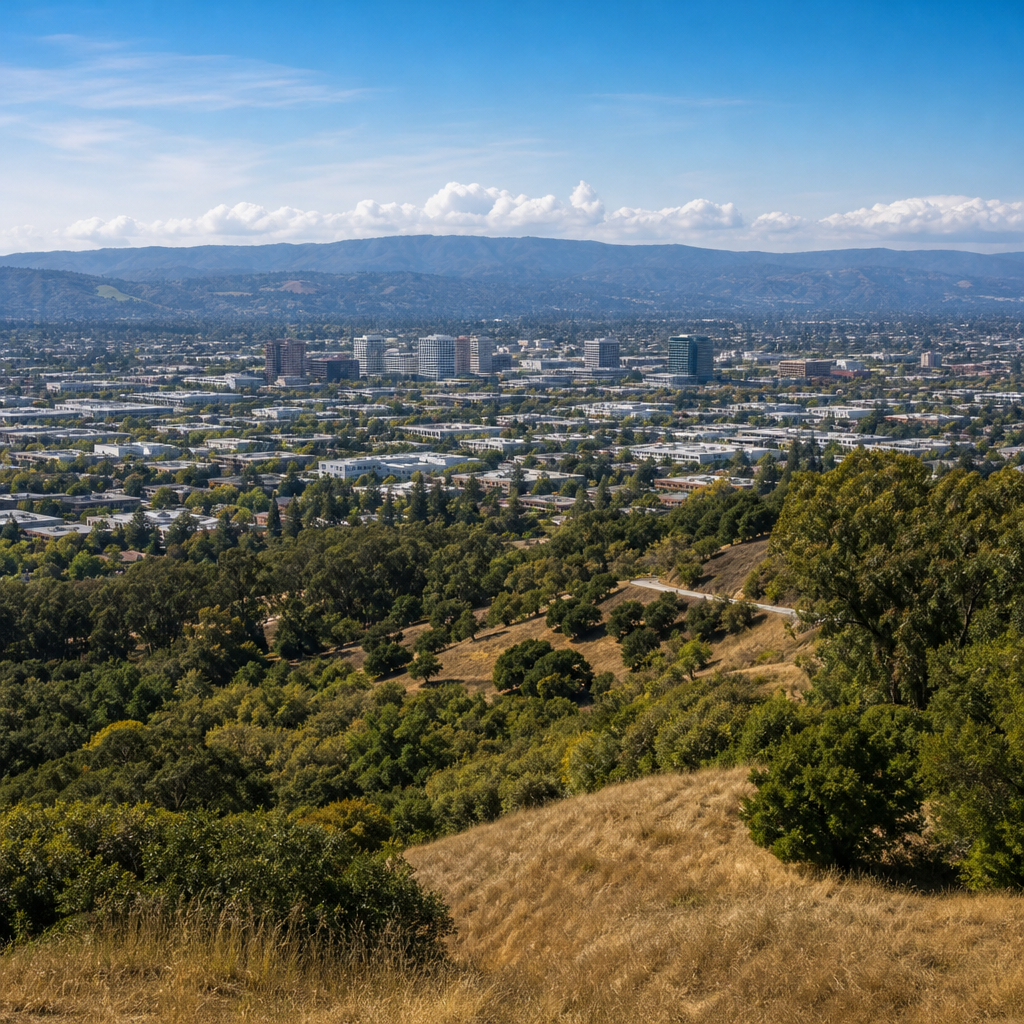
Silicon Valley is not a single city but a historically defined region in the southern San Francisco Bay Area, centered on Santa Clara Valley and shaped by universities, defense contracts, semiconductor firms, and suburban expansion. People often ask what cities are in Silicon Valley because the answer changes depending on whether the question is geographic, economic, cultural, or historical. In practical use, the core includes San Jose, Santa Clara, Sunnyvale, Mountain View, Palo Alto, Cupertino, Menlo Park, Campbell, Milpitas, Los Altos, Los Altos Hills, Saratoga, Los Gatos, and parts of Fremont and Redwood City, with nearby communities sometimes included because major employers or research campuses blur municipal lines. Historically, the phrase matters because it connects place to innovation: orchards became industrial parks, garages became startup mythology, and a once agricultural valley became the world’s best known technology cluster. Understanding which cities belong to Silicon Valley requires looking at boundaries, transportation corridors, institutional anchors, and the timeline that turned “the Valley of Heart’s Delight” into a global shorthand for computing and venture capital.
I have worked on regional content and location strategy for Bay Area businesses, and one lesson always repeats: local identity in Silicon Valley is precise. Residents distinguish between the Peninsula, South Bay, and East Bay; historians distinguish between early radio, wartime electronics, semiconductors, and internet eras; companies choose addresses based on talent access, zoning, and proximity to Stanford University or major freeways. That is why a historical guide should start with definitions. Geographically, Silicon Valley follows the floor and western edge of Santa Clara Valley and extends northward along the Peninsula. Economically, it maps to a labor market linked by U.S. 101, Interstate 280, State Route 85, and Caltrain. Culturally, it includes places associated with Apple, Intel, Google, Hewlett-Packard, Fairchild Semiconductor, and venture capital on Sand Hill Road. The region matters because its city network explains how innovation ecosystems form: through infrastructure, educational institutions, land use, immigration, military spending, and local governments that made room for labs, offices, and later vast corporate campuses.
The Core Cities of Silicon Valley
If someone asks for the clearest answer to what cities are in Silicon Valley, start with the core group in Santa Clara County and the adjacent Peninsula. San Jose is the largest city and the region’s population and employment center. Santa Clara is central historically because it hosted early semiconductor manufacturing and later major firms including Intel and Nvidia. Sunnyvale grew through defense and electronics, with Lockheed and other contractors helping establish the engineering workforce that fed chipmaking and computing. Mountain View became a software and internet powerhouse, now closely identified with Google, but its roots also run through defense research and aerospace.
Palo Alto occupies an outsized place in Silicon Valley history because of Stanford University, Stanford Research Park, and early technology firms including Hewlett-Packard. Menlo Park is often included because of Sand Hill Road venture capital and because Meta’s nearby campus in Menlo Park strongly influences how people define the Valley today. Cupertino is inseparable from Apple, while Los Altos and Los Altos Hills matter through early residential patterns, engineering talent, and startup lore, including Steve Jobs’s childhood home in Los Altos. Campbell, Saratoga, Los Gatos, and Milpitas are also part of the Valley’s fabric, though they are mentioned less often in national coverage. Each city contributed land, housing, industrial space, or transportation access that supported the larger system.
Where the Boundaries Blur
Silicon Valley has no official municipal border, which is why lists vary. Some definitions follow Santa Clara County almost entirely. Others extend into southern San Mateo County to include Palo Alto, Menlo Park, East Palo Alto, Redwood City, Belmont, San Carlos, and sometimes Burlingame because technology firms, investors, and commuters are deeply integrated along the Peninsula corridor. Fremont in Alameda County is often included, especially after Tesla’s factory and the city’s role in advanced manufacturing, but historically Fremont sat more at the edge of the Valley than at its center. Morgan Hill and Gilroy are usually viewed as southern extensions of the greater regional economy rather than core Silicon Valley cities.
The simplest way to understand the boundary question is to separate core, adjacent, and peripheral areas. Core cities hosted foundational institutions, early semiconductor firms, and dense concentrations of technology employment. Adjacent cities became part of Silicon Valley through commuting patterns, venture capital, and corporate expansion. Peripheral areas connect economically but do not define the region’s origin story. This distinction helps readers avoid the common mistake of treating Silicon Valley as either a marketing label for the whole Bay Area or a tiny strip of office parks between Palo Alto and San Jose. Historically, it is broader than one downtown and narrower than the nine-county region.
How Geography Shaped the Region
Silicon Valley emerged where geography made growth practical. Santa Clara Valley offered flat land for orchards, later for subdivisions, research parks, and low-rise industrial campuses. The Santa Cruz Mountains formed a western boundary, while the bay constrained eastward development and channeled transportation routes along the valley floor. Before technology defined it, the area was famous for prunes, apricots, cherries, and canneries. That agricultural base mattered because large tracts could be assembled and converted during the postwar building boom.
Transportation reinforced this geography. El Camino Real linked Peninsula towns long before expressways. Later, U.S. 101 and Interstate 280 created parallel north-south spines, while routes such as 237, 85, and 17 connected job centers across the Valley. Rail also mattered: Southern Pacific shaped early town growth, and Caltrain later tied San Francisco to Peninsula and South Bay employment centers. In my experience mapping business footprints, companies repeatedly cluster near these corridors because they reduce friction in commuting, shipping, and partnership meetings. Geography did not automatically create Silicon Valley, but it gave the region a physical form suited to rapid suburban-industrial expansion in the mid twentieth century.
The Historical Origins of “Silicon Valley”
The name “Silicon Valley” was popularized in 1971 by journalist Don Hoefler, who used it in a series of articles about semiconductor companies in Santa Clara Valley. The term stuck because silicon chips were the defining industrial product of the era. But the roots go earlier. In the 1930s and 1940s, Stanford engineering programs and radio technology firms were already building technical capacity. Frederick Terman, often called a key architect of the region, encouraged university-industry ties and supported graduates who founded companies locally rather than leaving.
After World War II, federal defense spending accelerated electronics research. Hewlett-Packard expanded, Varian Associates advanced microwave technology, and Stanford Industrial Park, later Stanford Research Park, offered a model for linking academic research with private industry. The decisive turn came with semiconductors. William Shockley moved to Mountain View in 1956 to start Shockley Semiconductor Laboratory. Though his management was notoriously poor, the company’s employees included the future “traitorous eight,” who left to found Fairchild Semiconductor in 1957. Fairchild became the fountainhead company for dozens of spinouts, including Intel in Santa Clara. This chain of firms, people, and expertise explains why certain cities became central to Silicon Valley’s identity while others remained peripheral.
Cities, Institutions, and Signature Roles
| City | Historical role | Institution or company examples |
|---|---|---|
| Palo Alto | University anchor and early research commercialization | Stanford University, Stanford Research Park, Hewlett-Packard |
| Mountain View | Semiconductor, aerospace, then internet platform growth | Shockley Semiconductor, NASA Ames, Google |
| Santa Clara | Chip manufacturing and corporate expansion | Intel, Nvidia, Santa Clara University |
| Sunnyvale | Defense electronics and engineering workforce development | Lockheed, AMD |
| San Jose | Metropolitan labor market, logistics, and later software growth | IBM campus, Adobe, Cisco in nearby corridor |
| Cupertino | Consumer technology brand identity | Apple |
| Menlo Park | Capital formation and platform-era headquarters | Sand Hill Road, Meta |
This city-by-city view shows that Silicon Valley was never built by one municipality alone. It developed as a network in which universities generated talent, suburbs supplied land, financiers backed risk, and neighboring cities specialized in complementary ways. That pattern remains visible today in everything from office leasing to municipal tax bases.
Why This Geography Still Matters Today
Modern readers may wonder whether remote work and distributed teams have made the question obsolete. They have not. Geography still shapes Silicon Valley through talent density, investor access, airport connections, zoning, and brand association. A startup in Palo Alto signals something different from one in downtown San Jose or Fremont because each address carries historical and strategic meaning. Municipal rules on housing, office development, and transportation also influence which cities attract founders and which struggle with affordability and congestion.
For historical research, these local differences are even more important. If you are studying origins, focus on Palo Alto, Mountain View, Santa Clara, Sunnyvale, and San Jose first. If you are tracing venture capital, Menlo Park belongs near the center. If you are exploring suburbanization, add Cupertino, Los Altos, Campbell, Saratoga, and Los Gatos. If you are examining the Valley’s spread, then bring in Redwood City, Fremont, Morgan Hill, and Gilroy as outer nodes. Using the right geographic frame makes every other historical question clearer, from labor migration to semiconductor spinouts to the rise of giant platform companies.
Silicon Valley is best understood as a historical region anchored by a core set of cities rather than a place with fixed legal borders. The most consistently included cities are San Jose, Santa Clara, Sunnyvale, Mountain View, Palo Alto, Cupertino, Menlo Park, Los Altos, and nearby communities that grew with them. Their importance comes from geography, transportation, Stanford’s influence, defense spending, and the semiconductor industry that gave the Valley its name. Once you see those forces together, the region stops looking like a vague tech label and starts reading as a specific landscape with a clear origin story.
For anyone building a deeper understanding of Silicon Valley’s past, start with the map before moving to the companies. Learn which cities formed the core, which joined later, and how institutions tied them together. That geographic lens will make every article in this historical topic easier to place and far more meaningful. Continue with the next piece in this series to trace how orchards, labs, and venture capital transformed the Valley decade by decade.
Frequently Asked Questions
What cities are generally considered part of Silicon Valley?
In most practical and historical discussions, the core of Silicon Valley includes San Jose, Santa Clara, Sunnyvale, Mountain View, Palo Alto, and Cupertino. These cities sit within or near the historic Santa Clara Valley and played central roles in the region’s development as a center for electronics, semiconductor manufacturing, and later software and internet firms. If someone is asking for the “main” Silicon Valley cities, this is usually the most accurate short answer.
That said, the boundaries are not fixed in the way a county or state boundary is fixed. Depending on the context, many people also include places such as Menlo Park, Los Altos, Los Altos Hills, Milpitas, Campbell, Saratoga, Los Gatos, and sometimes parts of Redwood City or Fremont. The reason for this flexibility is simple: Silicon Valley is a regional identity shaped by industry, transportation, housing growth, venture capital, and institutional history, not by a single legal definition. So while there is a widely recognized core, the full list can expand or contract depending on whether the question is historical, economic, cultural, or geographic.
Is Silicon Valley a city, a county, or an officially defined region?
Silicon Valley is not a city, and it is not a formal county-level government unit. It is best understood as a historically defined region in the southern San Francisco Bay Area. Its identity grew out of a combination of factors: Stanford University’s influence, postwar defense research, the rise of semiconductor companies, suburban land development, and the concentration of technical talent and investment capital. Over time, the name “Silicon Valley” became shorthand for a larger innovation ecosystem rather than a place with exact legal borders.
Most of Silicon Valley lies in Santa Clara County, which is why cities there are so often treated as the region’s core. However, the term regularly extends into neighboring San Mateo County when discussing cities like Palo Alto, Menlo Park, or Mountain View’s broader business networks and historical ties. In everyday speech, people use “Silicon Valley” to describe a regional economy and culture as much as a map location. That is why the answer can feel a little fluid: it is a real place, but not one defined by a single official line on a government map.
Why does the list of Silicon Valley cities vary depending on who you ask?
The list changes because “Silicon Valley” can mean different things in different conversations. If the question is geographic, people may focus on the Santa Clara Valley and nearby communities that physically form the historic heart of the region. If the question is economic, they may include cities where major technology employers, venture capital firms, research labs, or startup clusters operate. If the question is cultural, the region may stretch even further to include communities that share the same commuting patterns, housing market pressures, and professional networks tied to the tech industry.
There is also a historical reason for the variation. Silicon Valley did not emerge all at once; it developed over decades through defense contracting, university research, industrial parks, semiconductor fabrication, and suburban expansion. As those forces spread, the region’s perceived boundaries spread too. A historian might emphasize the older semiconductor corridor running through places like Santa Clara, Sunnyvale, and Mountain View. A business writer might include cities associated with later internet and software growth. A local resident might define the region based on everyday experience rather than industry history. None of these answers is necessarily wrong; they are simply using different lenses to describe the same evolving regional identity.
Why are San Jose, Santa Clara, Sunnyvale, Mountain View, Palo Alto, and Cupertino so often named as the core cities?
These cities appear again and again because they represent the most widely recognized historic and functional center of Silicon Valley. San Jose anchors the southern Bay Area as the region’s largest city and a major employment and population center. Santa Clara and Sunnyvale were deeply important in the rise of electronics and semiconductor firms. Mountain View became a major technology hub through both hardware and software eras. Palo Alto has long been associated with Stanford University, research culture, entrepreneurship, and early technology firms. Cupertino gained global recognition through the growth of major consumer technology companies and its place within the valley’s suburban corporate landscape.
Together, these cities capture the story people usually mean when they refer to Silicon Valley: orchards giving way to industrial campuses, research institutions feeding private innovation, and suburban municipalities becoming globally known through the companies based there. They also form a connected corridor of employment centers, office parks, residential neighborhoods, and transportation routes that helped define the region’s development. In other words, they are not just famous names on a map; they are the places most consistently linked to Silicon Valley’s origin, expansion, and modern identity.
How should I answer if someone asks what cities are in Silicon Valley?
The best answer depends on how precise you want to be. For a quick and reliable response, say that Silicon Valley is a region rather than a single city, and that its core usually includes San Jose, Santa Clara, Sunnyvale, Mountain View, Palo Alto, and Cupertino. That gives people a solid understanding without oversimplifying the history. It also reflects the most commonly accepted practical definition of the valley’s center.
If you want to be more complete, you can add that the exact list varies by context. Historically, the region grew around the Santa Clara Valley and was shaped by Stanford, defense research, semiconductor companies, and suburban expansion. Because of that history, some people also include nearby cities such as Menlo Park, Los Altos, Milpitas, Campbell, and Los Gatos, among others. A strong, balanced way to phrase it is this: Silicon Valley is a historically defined region in the southern San Francisco Bay Area, with a widely recognized core but flexible edges. That answer is both accurate and useful, especially in an article that aims to explain the region’s history rather than reduce it to a single fixed list.