Silicon Valley is not a city, county, or legally defined district. It is a technology region centered in the southern San Francisco Bay Area, most commonly stretching from Menlo Park and Palo Alto through Mountain View, Sunnyvale, Santa Clara, Cupertino, San Jose, and nearby communities. When people ask, “Where is Silicon Valley?” they usually want three answers at once: its physical location on a map, the cities included in everyday usage, and the historical reasons those places became the world’s best known innovation corridor. Understanding those boundaries matters because Silicon Valley is both a geography and an economic system. Real estate markets, startup ecosystems, university research, venture capital networks, and transportation patterns all follow its spatial logic. In my work covering regional business clusters, I have found that confusion starts when people treat Silicon Valley as a brand only. In practice, it is a connected landscape shaped by semiconductor manufacturing, defense contracts, Stanford-led research, and decades of company formation.
The term itself came from the concentration of silicon chip companies that emerged in Santa Clara Valley during the mid twentieth century. Before that transformation, the area was known for orchards, canneries, and suburban towns. Over time, the label expanded beyond chipmaking to include software, internet platforms, artificial intelligence, biotech, and venture-backed entrepreneurship. Yet the older geography still explains the modern one. Silicon Valley sits largely within Santa Clara County, with important extensions into San Mateo County and occasional broader use that reaches parts of Alameda County and Santa Cruz County. This article serves as a geography and origins hub by clarifying the core boundaries, explaining which cities belong, tracing how the region formed, and showing why its map remains flexible even when its center is unmistakable.
The Core Location: Santa Clara Valley in the South Bay
At its geographic core, Silicon Valley occupies the Santa Clara Valley, the long lowland between the Santa Cruz Mountains to the west and the Diablo Range to the east, opening north toward the southern end of San Francisco Bay. The heart of the region lies along major transportation corridors including U.S. Route 101, Interstate 280, and State Route 85, with Caltrain and light rail linking many employment centers. If you need the simplest accurate definition, Silicon Valley is the dense technology belt running from the northern part of Santa Clara County into the southern part of San Mateo County. That belt includes headquarters campuses, research parks, industrial zones, older downtowns, and suburban neighborhoods that house the workforce.
San Jose is the largest city in the region by population and jobs, but it is not the sole center. Palo Alto anchors the northwestern intellectual history of the valley because of Stanford University, Stanford Research Park, and the early clustering of electronics firms. Mountain View became a strategic node through companies such as Google and NASA Ames nearby at Moffett Field. Sunnyvale, Santa Clara, and Cupertino host major hardware and software firms, while Menlo Park became synonymous with venture capital and social media. This polycentric layout is one reason newcomers struggle to identify a single downtown. Silicon Valley functions as a networked region, not a monocentric metropolis like Manhattan or central Chicago.
Which Cities Count as Silicon Valley?
The most widely accepted Silicon Valley cities are Palo Alto, Menlo Park, Mountain View, Sunnyvale, Santa Clara, Cupertino, Campbell, Los Altos, Los Altos Hills, Saratoga, Milpitas, and San Jose. Many lists also include Redwood City, San Mateo, Foster City, and parts of Fremont because technology offices, venture networks, and commuting patterns tie them closely to the core. In everyday speech, people often use Silicon Valley to describe most of Santa Clara County plus the Peninsula cities south of roughly Belmont or San Carlos. The exact line depends on whether the speaker is emphasizing history, labor markets, real estate, or media shorthand.
| Area | How it is usually classified | Why it matters |
|---|---|---|
| Palo Alto to Menlo Park | Core Silicon Valley | Stanford, Sand Hill Road, early semiconductor and venture capital history |
| Mountain View, Sunnyvale, Santa Clara, Cupertino | Core Silicon Valley | Major headquarters, research campuses, hardware and software concentration |
| San Jose | Core Silicon Valley | Largest city, workforce base, manufacturing and office development |
| Redwood City to San Mateo | Often included | Strong tech presence and Peninsula commuting links |
| Fremont and southern Alameda County | Sometimes included | Manufacturing, logistics, and spillover from the South Bay ecosystem |
| San Francisco | Related but distinct | Startup and capital hub, but historically separate from the valley proper |
San Francisco is the most common source of confusion. It is part of the larger Bay Area technology economy, but it is not traditionally considered Silicon Valley. During the Web 2.0 era and the mobile app boom, many startups preferred San Francisco neighborhoods such as SoMa and Mission Bay. Even so, the valley proper remained south, anchored by Santa Clara County and the Stanford orbit. A good rule is simple: if you are describing the historic technology region, use Silicon Valley for the South Bay and southern Peninsula, and use Bay Area tech ecosystem for the broader multi-city network.
Why the Boundaries Are Fuzzy
Silicon Valley has fuzzy boundaries because economic regions rarely match city limits. Labor markets, supply chains, commuting flows, and investor relationships spread across jurisdictions. A chip engineer may live in Fremont, work in Santa Clara, meet investors in Menlo Park, and collaborate with a university lab in Palo Alto. That daily pattern is more meaningful than county lines. The U.S. Census recognizes metropolitan and combined statistical areas, while local organizations such as Joint Venture Silicon Valley use data-driven regional definitions that can differ by topic. Housing analysts may focus on Santa Clara and San Mateo counties. Historians may emphasize the original semiconductor corridor from Palo Alto to Sunnyvale. Journalists may widen the frame when a company’s influence extends beyond the old industrial belt.
Topography also shapes perception. The Santa Cruz Mountains create a visible western edge, while the bay and wetlands define much of the northern and northeastern margin. Within those natural boundaries, the built environment changes gradually, not abruptly. Office parks give way to residential blocks, then to industrial campuses, then to university land. Because the transition is continuous, there is no welcome sign marking the exact start of Silicon Valley. Locals rely instead on context: the concentration of tech employers, the history of firms in the area, and the region’s interlocking transportation and capital networks.
How Silicon Valley Got Its Name and Identity
Silicon Valley began as a nickname for a semiconductor manufacturing cluster. Silicon refers to the material used in integrated circuits, and valley refers to the Santa Clara Valley landscape. The phrase was popularized in 1971 by journalist Don Hoefler in a series of articles about the region’s semiconductor firms. That timing matters. By the early 1970s, the area had already accumulated a critical mass of companies descended from Hewlett-Packard, Shockley Semiconductor Laboratory, Fairchild Semiconductor, and Intel. The nickname stuck because it captured both the industry and the place.
The deeper origin story reaches back to Frederick Terman at Stanford University, whose encouragement of university-industry collaboration helped create a local culture of commercialization. Stanford Research Park, established in the 1950s, offered space for technology firms near campus. Defense spending during and after World War II supported electronics, microwave research, and aerospace-related development. William Shockley brought transistor expertise to Mountain View, though his management problems led key employees to leave and form Fairchild Semiconductor in 1957. Those “traitorous eight” became central figures in the valley’s spinout culture. From Fairchild came dozens of later firms, including Intel, creating the template for talent mobility, stock-option wealth, and repeat entrepreneurship that still defines the region.
The Geography of Growth: From Orchards to Campuses
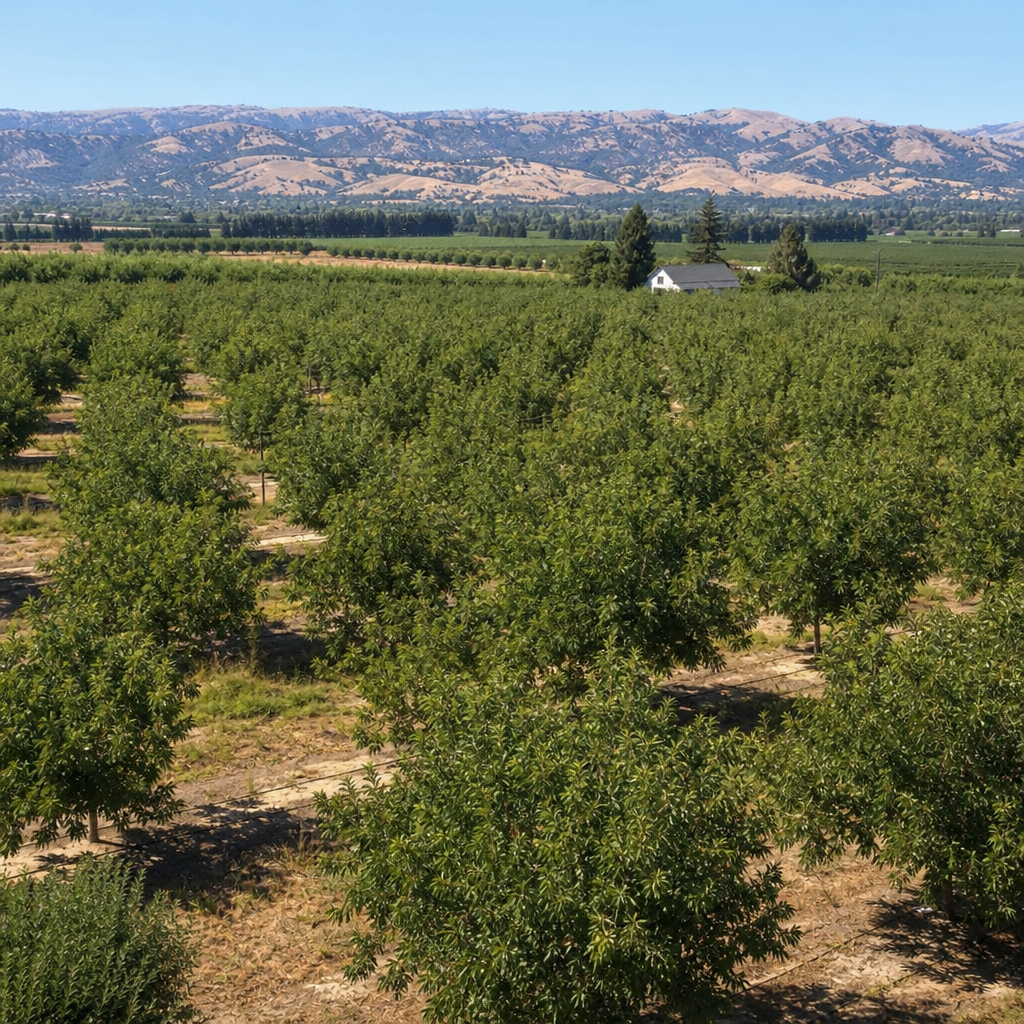
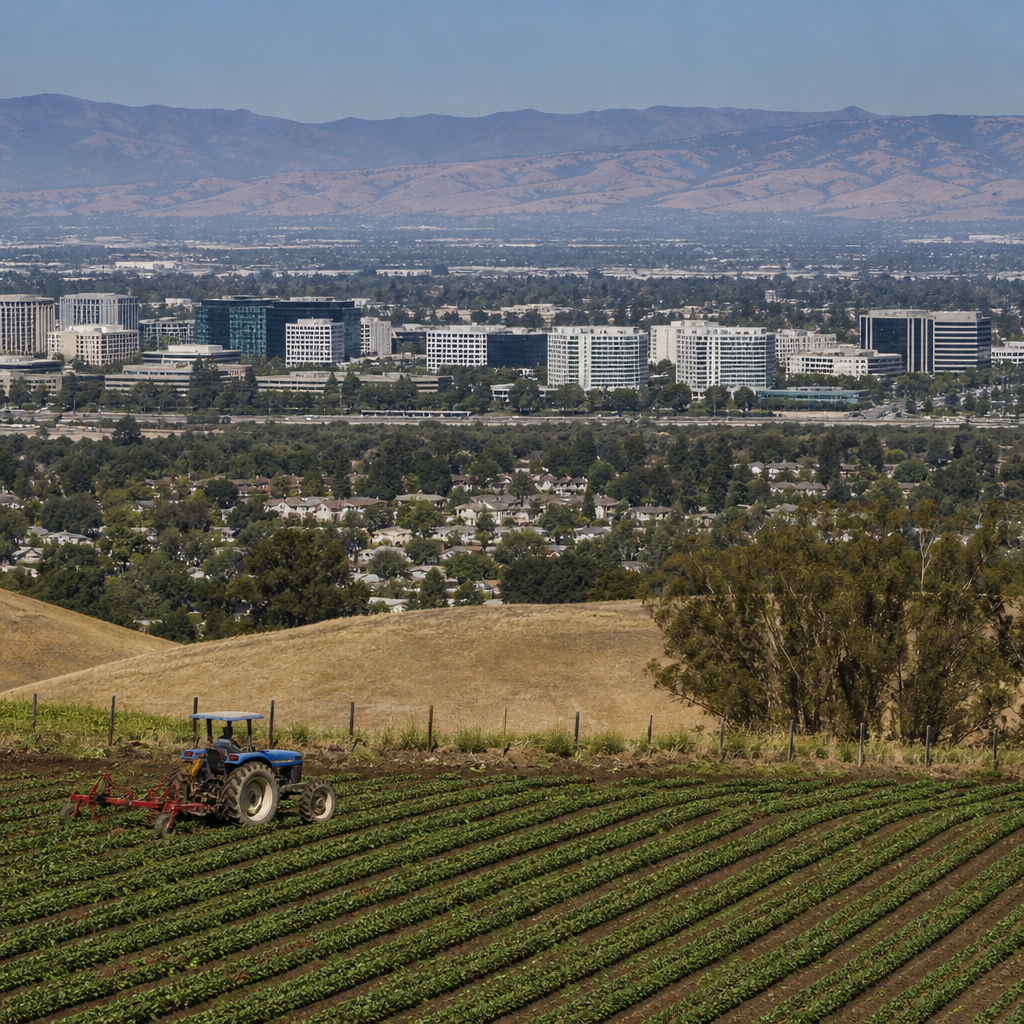
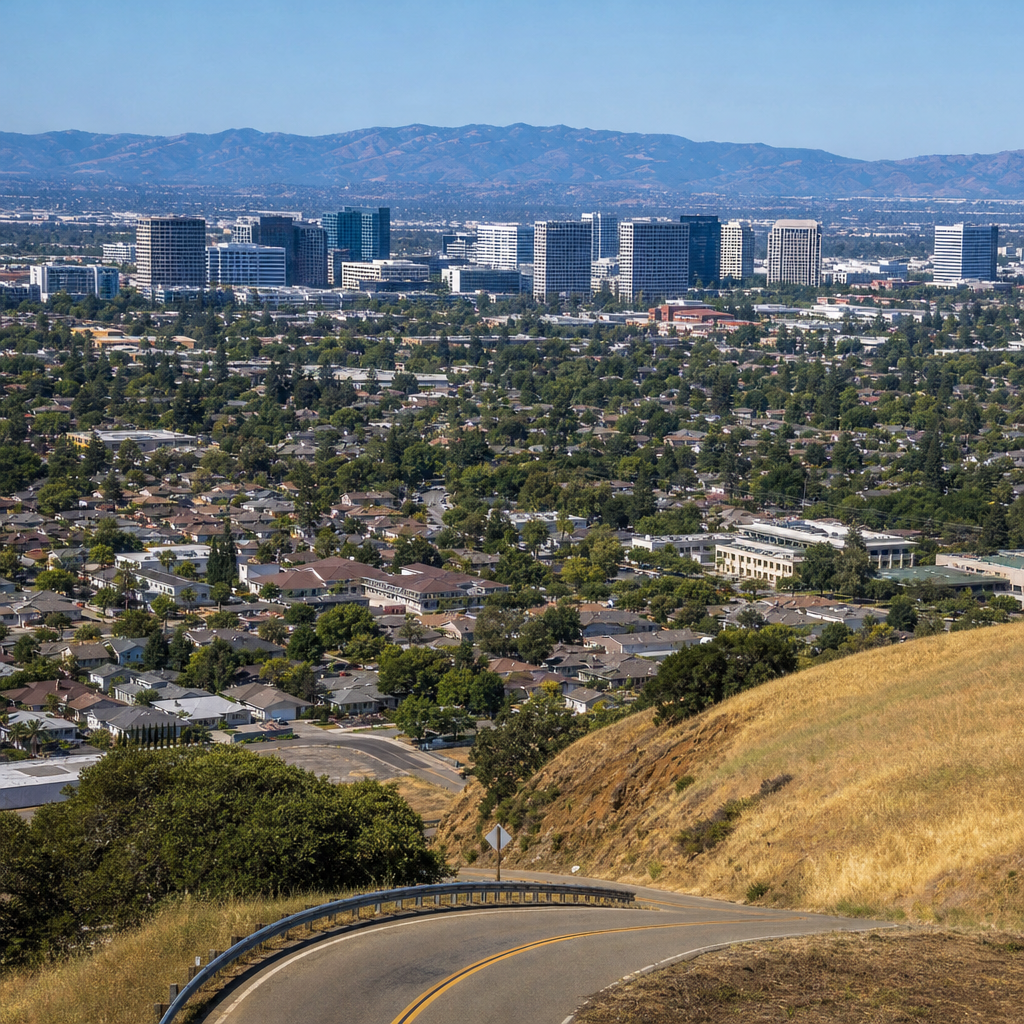
The landscape changed dramatically between the 1940s and the 1990s. Santa Clara Valley had once been marketed as the Valley of Heart’s Delight because of its fruit orchards. As suburbanization accelerated, farmland gave way to tract housing, industrial parks, and expressways. Unlike older industrial regions built around dense factory districts, Silicon Valley spread horizontally. Low-rise campuses, tilt-up manufacturing buildings, and office parks were practical for electronics assembly, prototyping, and later software firms that valued expandable floorplates and highway access. This physical form still affects commuting, land values, and municipal finance.
Specific places illustrate the pattern. Palo Alto mixed university prestige with early corporate research. Sunnyvale and Santa Clara offered land for manufacturing and defense contractors. Cupertino later became globally identified with Apple, while Mountain View evolved from semiconductor and aerospace adjacency into an internet powerhouse. North San Jose, once more peripheral, absorbed major office growth because large parcels remained available. Even today, the valley’s geography reflects successive industry waves layered onto the same transportation spine. Semiconductor clean rooms, data infrastructure, suburban campuses, and mixed-use redevelopment coexist within a relatively compact corridor.
Silicon Valley Today in the Larger Bay Area Map
Today, Silicon Valley is best understood as the historic core of a larger Bay Area innovation system. Venture capital remains heavily concentrated along Sand Hill Road in Menlo Park and nearby offices, though investors now operate across San Francisco, Oakland, and beyond. Stanford remains a foundational talent and research institution, while San Jose State, Santa Clara University, and the University of California system contribute workforce depth. Companies may place headquarters in Cupertino, cloud teams in San Francisco, hardware labs in Sunnyvale, and manufacturing partnerships overseas, yet still derive strategic advantage from the valley’s dense local networks.
That broader scale does not erase the value of precise geography. If you are writing about origins, semiconductor history, or the classic startup corridor, the center of gravity is the South Bay and southern Peninsula. If you are analyzing present-day venture patterns, housing pressure, or AI hiring, the relevant map may widen to include San Francisco and East Bay nodes. The key is to match the boundary to the question. Serious coverage of Silicon Valley always distinguishes between the historic region and the broader Bay Area tech economy.
Silicon Valley is located in the southern San Francisco Bay Area, centered on Santa Clara County and extending into southern San Mateo County. Its core cities include Palo Alto, Mountain View, Sunnyvale, Santa Clara, Cupertino, Menlo Park, and San Jose. Its boundaries are flexible because technology regions follow networks of talent, capital, and infrastructure more than legal borders. Its origins lie in Stanford-linked research, defense electronics, semiconductor spinouts, and suburban development that transformed Santa Clara Valley from orchards into the world’s most influential innovation corridor. For anyone exploring the geography and origins of the tech region, that distinction is the main takeaway: Silicon Valley is a real place, but it is best understood as a historically rooted regional system rather than a single municipality. Use this hub as your starting point, then continue into deeper histories of semiconductor pioneers, Stanford’s role, and the cities that built the valley map we recognize today.
Frequently Asked Questions
Is Silicon Valley an actual city or legally defined place?
No. Silicon Valley is not a city, not a county, and not an officially mapped district with legally fixed borders. It is a widely used regional name for the technology-centered corridor in the southern part of the San Francisco Bay Area. That is why different people may draw its edges a little differently depending on whether they are talking about geography, commuting patterns, venture capital, startup culture, or the history of semiconductor manufacturing. In everyday use, the term usually refers to the core stretch of communities running from Menlo Park and Palo Alto south through Mountain View, Sunnyvale, Santa Clara, Cupertino, and San Jose, along with nearby towns that are economically and culturally tied to the same tech ecosystem. The name describes a concentration of companies, research institutions, talent, and infrastructure more than a formal political boundary.
Where is Silicon Valley on a map?
On a map, Silicon Valley is centered in the southern San Francisco Bay Area in Northern California. Its historic and commonly understood core lies along the San Francisco Peninsula and the Santa Clara Valley, especially in northwestern Santa Clara County and adjacent southern San Mateo County. If you were tracing it from north to south in its most familiar form, you would usually start around Menlo Park and Palo Alto, then move through Mountain View, Sunnyvale, Santa Clara, Cupertino, and into San Jose. It sits south of San Francisco and southeast of the open waters of the Bay, with major transportation corridors such as U.S. 101 and Interstate 280 helping define the region’s development pattern. Even though maps can differ, most people mean this southern Bay Area tech belt when they say “Silicon Valley,” not a single downtown or municipal boundary.
Which cities are usually considered part of Silicon Valley?
The cities most commonly included are Palo Alto, Menlo Park, Mountain View, Sunnyvale, Santa Clara, Cupertino, and San Jose. These places form the best-known core because they have long been home to major technology firms, startup offices, industrial parks, research labs, and venture-backed business activity. Depending on the speaker, nearby communities such as Los Altos, Los Altos Hills, Milpitas, Campbell, Saratoga, Redwood City, and parts of Fremont may also be included, especially when the discussion is about the broader innovation economy rather than the narrow historic core. This flexibility is part of what makes the term confusing to visitors. Silicon Valley is defined more by shared economic identity and historical association than by a single list of municipalities. If someone is speaking casually, they usually mean the cluster of Bay Area cities where technology companies and related institutions are most densely concentrated.
Why are Palo Alto, Mountain View, Sunnyvale, Santa Clara, Cupertino, and San Jose so closely associated with Silicon Valley?
These cities became central to Silicon Valley because they sit at the heart of the region’s development as a technology powerhouse. Historically, the area grew from a mix of university research, defense contracts, electronics manufacturing, semiconductor innovation, and later software, internet, and platform companies. Stanford University played a major role by encouraging research commercialization and helping foster a culture of entrepreneurship in nearby communities such as Palo Alto and Menlo Park. Over time, companies and talent spread along the corridor into Mountain View, Sunnyvale, Santa Clara, Cupertino, and San Jose, where there was room for campuses, laboratories, and industrial development. The term “Silicon” originally referred to semiconductors, reflecting the chip industry that helped define the area in the mid-20th century, but the region later expanded far beyond hardware. These cities remain closely identified with Silicon Valley because they hosted, and still host, many of the firms, investors, engineers, and institutions that shaped the global tech economy.
Why do people disagree about the boundaries of Silicon Valley?
People disagree because Silicon Valley has always been a functional region rather than a formally designated one. Its boundaries shift depending on the question being asked. If the topic is history, people may focus on the Santa Clara Valley and the early semiconductor corridor near Palo Alto, Mountain View, Sunnyvale, and Santa Clara. If the topic is today’s tech economy, some will include a wider set of Bay Area communities connected by startups, venture capital, office campuses, and commuting flows. Real estate professionals, journalists, business leaders, and residents may all use slightly different definitions, and each can sound reasonable in context. That is why one article might describe Silicon Valley as largely centered in Santa Clara County, while another extends it into southern San Mateo County or adjacent East Bay communities. The disagreement does not mean the term is wrong; it reflects the fact that Silicon Valley is best understood as a regional network with a strong core and softer outer edges.