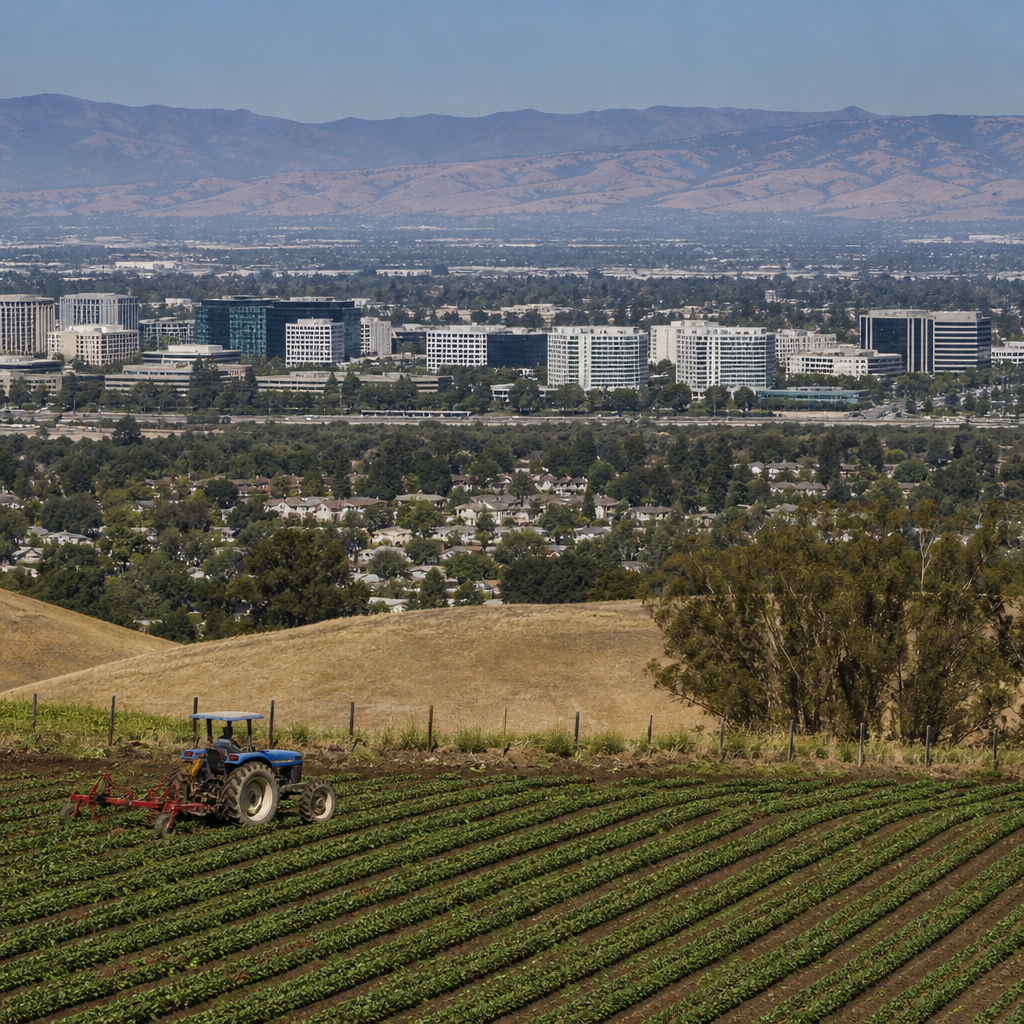
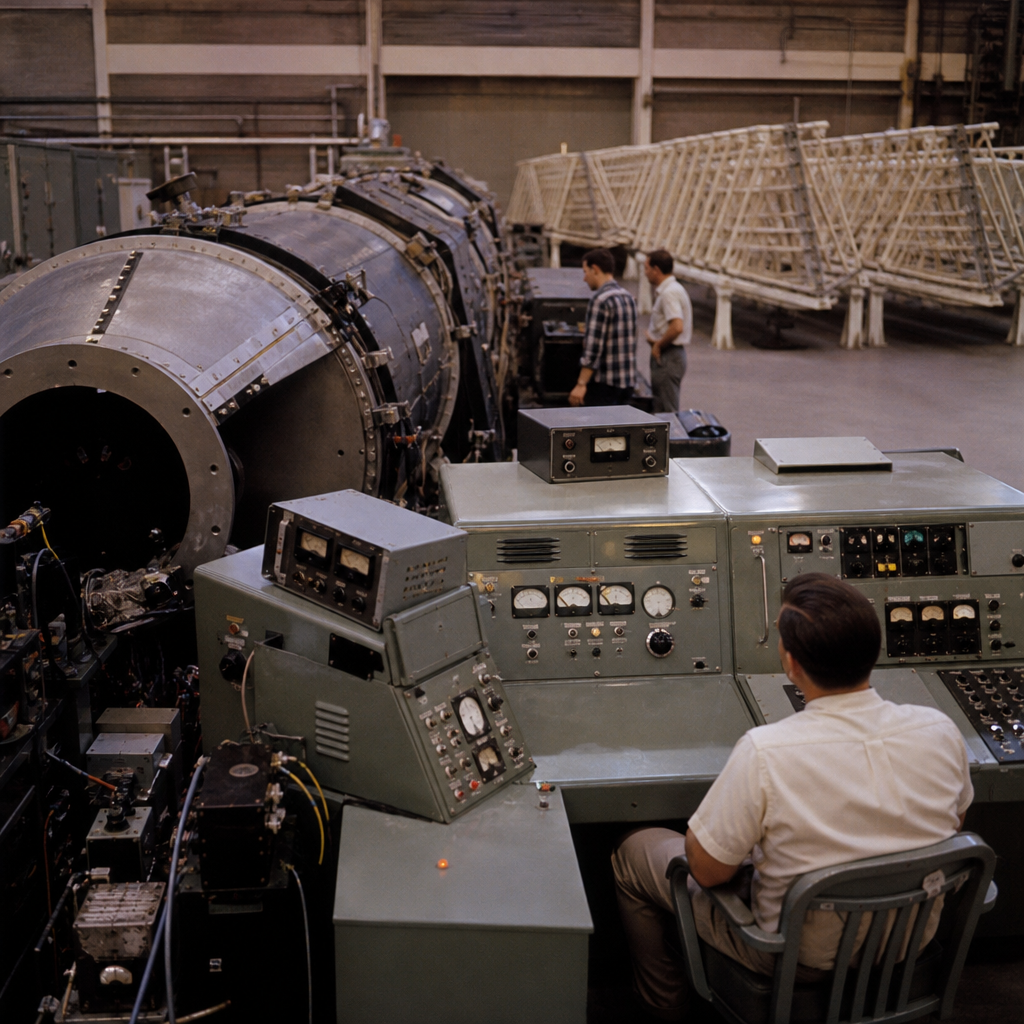
Silicon Valley did not emerge from garage mythology alone; it was built through wartime urgency, Cold War spending, and the unique geography of Northern California. In this historical hub on Geography & Origins, the central question is straightforward: how did World War II and the Cold War accelerate Silicon Valley’s tech industry so dramatically that orchards south of San Francisco became the world’s most influential innovation cluster? The answer begins with definitions. Silicon Valley refers broadly to the southern San Francisco Bay Area, especially Santa Clara County and adjacent cities where semiconductor, electronics, computing, and later software firms concentrated. Acceleration matters here because many ingredients existed before 1940, including Stanford University, radio engineering talent, local entrepreneurs, and access to Pacific trade routes. War transformed those ingredients into a durable industrial system. During the 1940s and 1950s, federal defense contracts, military research priorities, university laboratories, and aerospace procurement created demand for radar, communications equipment, microwave electronics, guidance systems, and eventually integrated circuits. Those demands reduced technical risk for young firms, financed manufacturing capacity, and trained a workforce fluent in advanced electronics. Geography amplified every step. The region offered land for laboratories and plants, proximity to naval and defense facilities, a temperate climate attractive to scientists and engineers, and Stanford’s deliberate role in linking research with industry. From my work studying company archives and defense procurement histories, one pattern appears repeatedly: firms that might have stayed small component suppliers became major technology companies because military agencies bought difficult products early, paid for iteration, and tolerated long development cycles. Understanding this origin story matters because it corrects a common oversimplification. Silicon Valley was not created by pure private-market spontaneity, nor by government planning alone. It emerged from a mutually reinforcing system in which federal money, university research, local geography, immigration, and entrepreneurial culture interacted over decades. This article maps that system comprehensively, showing why World War II laid the foundation and why the Cold War turned the region into a permanent center of technological power.
Before the Boom: Why Geography and Institutions Mattered First
Before wartime spending surged, Northern California already had conditions that made later growth possible. Stanford University was the most important institutional anchor. Under engineering dean Frederick Terman, Stanford encouraged faculty and graduates to start companies, consult for industry, and pursue applied electronics rather than remain isolated in academic research. Terman’s influence on students such as William Hewlett and David Packard is well documented, and their company became an early example of university-linked entrepreneurship. Geography also helped. Santa Clara Valley had room for expansion at costs far below dense eastern industrial centers. The region sat near San Francisco’s port, rail lines, and military installations on the Pacific coast, making it strategically useful as the United States increased naval operations. Just as important, the Bay Area had an existing culture of radio, vacuum tube, and instrumentation work in the 1920s and 1930s. Firms like Federal Telegraph had already shown that advanced electronics manufacturing could thrive there. These prewar assets did not guarantee a global tech hub, but they meant the region was ready when federal demand arrived.
World War II: Radar, Electronics, and the First Great Surge
World War II created the first decisive growth wave. The U.S. military needed better radar, radio communications, navigation, sonar, and electronic countermeasures at immense scale and speed. California’s West Coast position made it central to Pacific operations, so research labs and manufacturers in the Bay Area became directly relevant to urgent military needs. Stanford and the University of California were pulled into defense work, while private companies gained contracts for instrumentation and electronic subsystems. Hewlett-Packard, for example, supplied audio oscillators and other test equipment used in military production and field applications. Firms that could solve specialized engineering problems found a buyer with deep pockets and immediate deadlines. That combination mattered more than simple revenue growth. War contracts funded machine tools, process improvements, quality control practices, and managerial experience in running technically complex production lines. Engineers learned to work across design, fabrication, testing, and logistics under pressure. By 1945, the region had a denser concentration of electronics expertise than before the war, and much of that expertise was transferable to peacetime markets and to the more demanding military technologies of the Cold War.
The Cold War: Permanent Demand for Advanced Technology
If World War II built capability, the Cold War made advanced electronics a standing national priority. The United States no longer treated military technology as an emergency exception; it became a permanent budget category. Containment strategy, nuclear deterrence, and the arms race demanded guidance systems, missile electronics, airborne computing, secure communications, reconnaissance, and later space technologies. This shift was critical for Silicon Valley because it replaced one-time wartime orders with long-term procurement programs. Companies could hire aggressively, invest in clean manufacturing, and plan product road maps knowing that defense agencies would continue buying leading-edge components. Lockheed’s Missiles and Space Division, established in Sunnyvale in the 1950s, symbolized this transformation. Its presence linked the area to missile and satellite programs, drew specialized suppliers nearby, and reinforced the region’s orientation toward high-reliability electronics. The Cold War also legitimized federal support for basic and applied research through agencies such as the Office of Naval Research, the Air Force, the Army Signal Corps, and later ARPA. In practice, this meant laboratories and startups could pursue difficult technical problems years before commercial markets were ready.
Semiconductors, Fairchild, and the Geography of Scale
The semiconductor industry turned defense demand into Silicon Valley’s defining advantage. Early transistors and silicon devices were expensive, fragile, and difficult to manufacture consistently. Commercial buyers often hesitated because the components cost more than established alternatives. Defense and aerospace programs were different. They valued low weight, low power consumption, ruggedness, and miniaturization enough to pay premium prices. That willingness gave semiconductor firms a market during their riskiest years. Shockley Semiconductor Laboratory brought transistor research prestige to Mountain View in 1956, even though William Shockley’s management failures drove key talent away. The famous “Traitorous Eight” then founded Fairchild Semiconductor in 1957, and Fairchild became the template for Silicon Valley spinoffs. Its planar process and manufacturing advances helped make silicon devices more reliable and scalable. Defense and NASA purchases of early integrated circuits in the late 1950s and early 1960s accelerated yield improvements and lowered costs. The local effect was profound: engineers trained at one firm left to start others, suppliers clustered nearby, and tacit process knowledge spread quickly through personal networks. Geography mattered because dense proximity shortened the path between lab insight, pilot production, and customer feedback.
How Federal Money Moved Through the Valley
Defense influence was not abstract; it moved through identifiable channels that linked institutions, firms, and people. The pattern below explains why growth became cumulative rather than isolated.
| Channel | How it worked | Regional effect |
|---|---|---|
| Military procurement | Agencies bought radar, microwave devices, semiconductors, and guidance electronics before mass commercial demand existed. | Young companies gained revenue, credibility, and production experience. |
| University research grants | Stanford and nearby labs received support for electronics, materials, and communications research. | Faculty, students, and equipment fed directly into local firms. |
| Prime contractors | Companies like Lockheed needed specialized component suppliers close to major programs. | Supplier networks concentrated geographically. |
| Skilled labor migration | Scientists, veterans, and engineers moved for defense jobs and stayed for private-sector opportunities. | The labor pool deepened faster than in most regions. |
| Technology spillovers | Knowledge from military projects informed commercial instruments, chips, and computing systems. | Innovation cycles shortened across the region. |
Stanford Industrial Park, Talent Networks, and the Culture of Spinoffs
Geography & Origins cannot be understood without Stanford Industrial Park, established in the early 1950s on university land. This was more than a real estate project. It was a deliberate mechanism to keep research-oriented companies close to Stanford faculty, graduates, and laboratories. Varian Associates, Hewlett-Packard, General Electric, and later many other firms benefited from this proximity. In practical terms, engineers could move between campus and company meetings in minutes, recruit students directly, and share technical language shaped by the same academic environment. I have found that this physical closeness explains why the region developed unusually strong informal networks. People changed employers without leaving the area, met investors and customers through overlapping circles, and launched startups with colleagues they already trusted. Defense work intensified this mobility because projects required specialized expertise that was scarce nationally but concentrated locally. The resulting culture of spinoffs was not just ideological support for entrepreneurship; it was the byproduct of dense technical communities, stock-option incentives, and confidence that another advanced employer was nearby if a venture failed.
From Military Systems to Commercial Computing
By the 1960s and 1970s, technologies nurtured by military demand increasingly flowed into civilian computing markets. Semiconductor process improvements made chips affordable for calculators, instruments, and eventually personal computers. Firms such as Intel, founded in 1968 by Fairchild alumni Robert Noyce and Gordon Moore along with Andy Grove, inherited both the technical base and the organizational patterns built during the defense era. The integrated circuit, once purchased heavily for missiles and spacecraft, became the foundation of mass-market electronics. Even networking had defense roots through ARPANET, whose packet-switching experiments shaped later internet development. This transition is one reason Silicon Valley outpaced many other defense regions. Places dependent on a few giant contractors often struggled to diversify, but the Bay Area had a broad ecology of component makers, instrument firms, research labs, venture-backed startups, and universities. When commercial computing exploded, the region already knew how to miniaturize electronics, manage rapid design cycles, and finance risky technical bets. War and Cold War institutions had effectively subsidized the learning curve.
World War II and the Cold War accelerated Silicon Valley’s tech industry by converting favorable geography into a self-reinforcing innovation system. Prewar assets such as Stanford, available land, and an electronics base mattered, but federal defense demand was the catalyst that made those assets compound. Wartime contracts built manufacturing skills and engineering confidence. Cold War spending sustained laboratories, prime contractors, semiconductor startups, and the talent networks that turned individual firms into an industrial cluster. The geography of Santa Clara Valley amplified these forces by keeping universities, suppliers, and employers close enough for ideas and people to circulate rapidly. That is the essential origin story of Silicon Valley: not a miracle, but a historically specific alliance of place, policy, research, and entrepreneurship. If you are exploring Historical Perspectives further, use this hub as the foundation for deeper study of Stanford’s role, defense procurement, semiconductor spinoffs, and the region’s transformation from orchards to the capital of modern technology.
Frequently Asked Questions
How did World War II help lay the foundation for Silicon Valley’s rise?
World War II was one of the most important catalysts in the early development of what later became Silicon Valley. Before the region was globally associated with semiconductors and software, the Santa Clara Valley was better known for agriculture, especially fruit orchards. The war changed that trajectory by creating urgent demand for advanced electronics, communications systems, radar, and precision engineering. Federal military contracts poured into universities, laboratories, and private firms that could help solve wartime technical problems, and Northern California was well positioned to benefit.
A key institution was Stanford University, which strengthened ties between academic research and practical engineering during this period. Frederick Terman, often called one of the architects of Silicon Valley, encouraged students and faculty to pursue electronics and applied research that could serve both national defense and commercial markets. Wartime funding helped build technical capacity, train engineers, and establish habits of collaboration among government, academia, and industry. Instead of research remaining isolated in classrooms, it increasingly moved into laboratories, startups, and contract work.
World War II also accelerated the development of specialized knowledge in radio, microwave electronics, instrumentation, and systems engineering. These were not temporary wartime skills. They became the technical base from which postwar electronics companies could grow. Just as important, the war legitimized large-scale federal investment in scientific research. Once Washington had seen how crucial technology was to military success, it continued funding research after the war. That meant the region did not simply experience a short boom; it inherited an enduring innovation infrastructure that would support semiconductors, aerospace, and computing for decades.
Why was the Cold War so important to the growth of Silicon Valley’s tech industry?
If World War II created the initial momentum, the Cold War sustained and expanded it. The geopolitical rivalry between the United States and the Soviet Union made advanced technology a matter of national security. Defense officials needed better missile guidance systems, more reliable communications networks, faster computing, improved surveillance, and increasingly sophisticated electronic components. That demand translated into enormous and steady federal spending, much of which flowed to research universities, defense contractors, and high-tech firms in Northern California.
This mattered because emerging technology companies often struggle in their early years to find customers willing to pay for expensive, unproven products. During the Cold War, the U.S. government became exactly that customer. Military and aerospace agencies bought cutting-edge electronics before mass consumer markets existed for them. This gave firms in and around Silicon Valley reliable revenue, room to experiment, and incentives to push the limits of miniaturization, speed, and reliability. In effect, defense procurement acted as a launch platform for the modern electronics industry.
The Cold War also encouraged long-term research rather than quick, low-risk development alone. Agencies such as the Department of Defense and later organizations like ARPA, now DARPA, funded ambitious work in computing, networking, and semiconductor technology. That support helped create the intellectual and commercial environment from which many later breakthroughs emerged. Silicon Valley’s growth was therefore not just a story of private entrepreneurship; it was also a story of strategic state investment during a decades-long military and ideological competition.
What role did Stanford University and local institutions play in shaping Silicon Valley?
Stanford University was central to Silicon Valley’s emergence because it acted as a bridge between research, talent, and industry. Rather than treating the university as a purely academic institution, leaders such as Frederick Terman promoted a model in which faculty and graduates could create companies, collaborate with government agencies, and commercialize research. That approach was unusually powerful in the mid-20th century because it aligned perfectly with wartime and Cold War priorities. Federal money supported scientific and engineering work, and Stanford helped channel that support into regional economic growth.
One of Stanford’s most influential moves was encouraging industrial development near campus. The Stanford Industrial Park, established in the early 1950s, created a physical space where technology firms could locate close to university research and a highly trained labor pool. This proximity made collaboration easier, sped up hiring, and allowed ideas to circulate rapidly between laboratories and businesses. Over time, that concentration of expertise became one of the defining strengths of Silicon Valley.
Other institutions mattered too, including military laboratories, aerospace firms, and regional investors willing to back electronics ventures. But Stanford’s contribution was especially important because it helped create a self-reinforcing ecosystem. Students became engineers, engineers became founders, founders built companies, and those companies attracted more talent and more funding. The result was not a single invention or one famous startup, but a durable regional system for turning research into industry.
Why did Northern California’s geography and regional culture matter so much?
Geography played a larger role in Silicon Valley’s rise than popular mythology often admits. The region south of San Francisco offered available land, relatively mild weather, and room for suburban expansion at a time when research campuses, laboratories, and manufacturing facilities needed space. That physical environment made it easier for universities, industrial parks, and growing technology companies to cluster together. Being near San Francisco also helped because the city connected the region to finance, trade, transportation, and broader cultural networks.
Just as important was the regional concentration of people and institutions. Once engineers, suppliers, professors, and defense contractors were located near one another, the area benefited from powerful network effects. Skilled workers could change jobs without leaving the region, companies could share specialized knowledge informally, and startups could form around new technical opportunities. This kind of clustering made innovation faster and more cumulative. Success in one company often seeded the next generation of firms through spinouts, partnerships, and employee movement.
Regional culture mattered as well. Northern California developed a business environment that was comparatively open to experimentation, technical collaboration, and entrepreneurial risk. That culture did not appear out of nowhere. It was reinforced by the wartime and Cold War research economy, which normalized ambitious engineering projects and close links between science and industry. Over time, Silicon Valley became known not only for technology, but for a style of innovation built around fast iteration, talent mobility, and a willingness to pursue big technical challenges.
Did Silicon Valley grow mainly because of private entrepreneurship, or because of government support?
The most accurate answer is that Silicon Valley grew through the interaction of both, not through one alone. Private entrepreneurship was essential. Engineers and founders took risks, launched companies, refined products, recruited talent, and built competitive businesses. Without that entrepreneurial energy, federal funding by itself would not have created the dynamic and influential technology cluster that Silicon Valley became. The region’s famous company-building culture, willingness to commercialize research, and tolerance for failure all mattered enormously.
At the same time, it would be misleading to describe Silicon Valley as a purely market-driven miracle. Government support was foundational, especially in the decades shaped by World War II and the Cold War. Military contracts, research grants, procurement programs, and public investment in science created demand, reduced risk, and financed technologies long before they were profitable in consumer markets. Semiconductors, computing, aerospace electronics, and networking all benefited from this environment. In many cases, the state helped absorb the early costs of innovation while private firms learned how to scale and commercialize the results.
So the history of Silicon Valley is best understood as a partnership between public power and private initiative. Wartime urgency and Cold War strategy created the conditions for massive technological acceleration. Universities and laboratories translated public funding into knowledge and talent. Entrepreneurs then transformed those resources into companies and industries. That combination is what turned a largely agricultural region into the world’s most influential center of technological innovation.