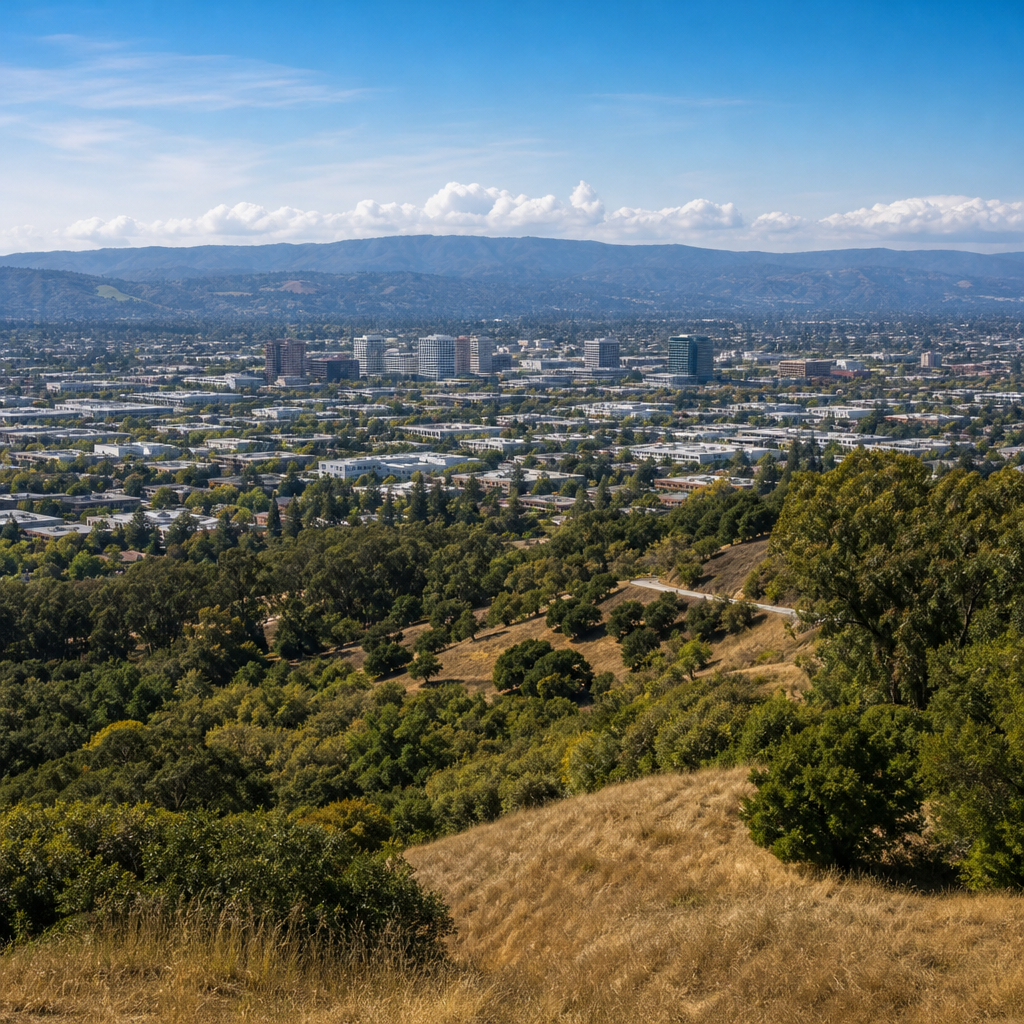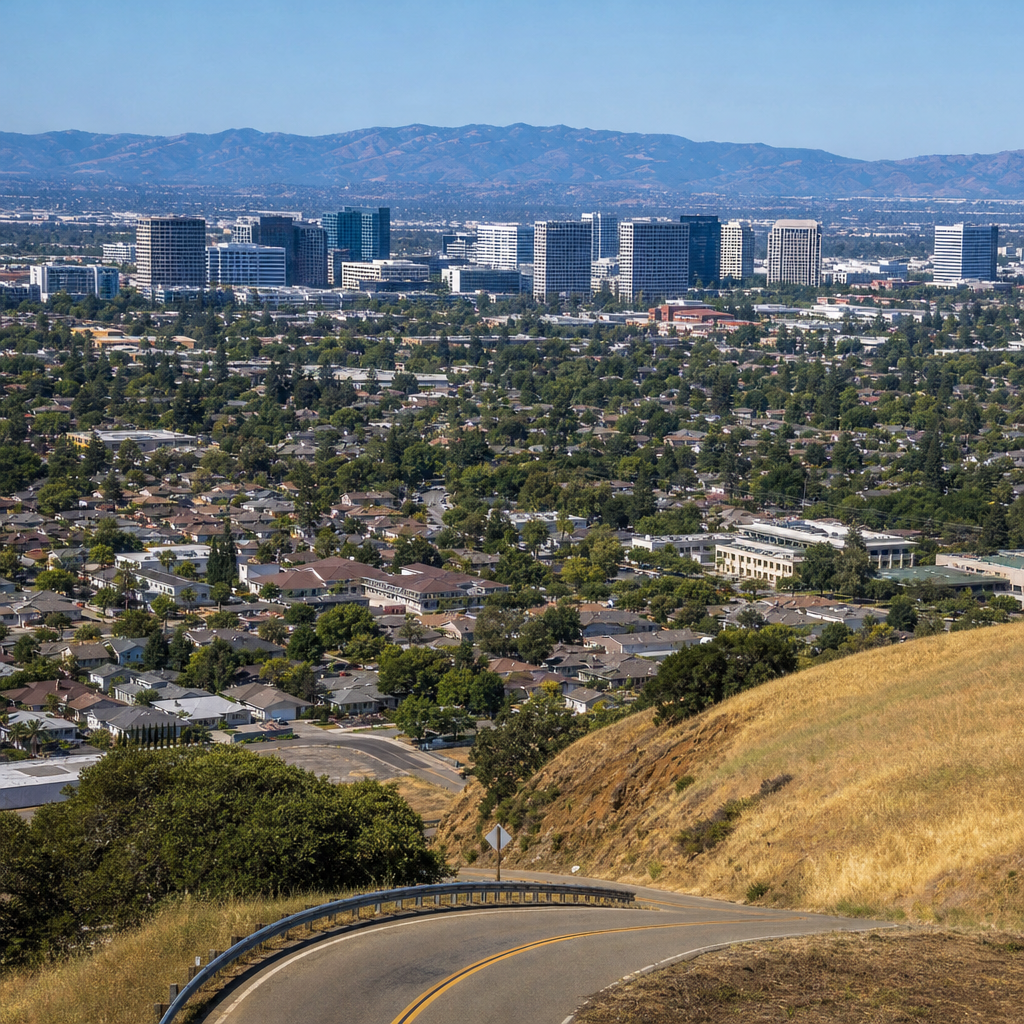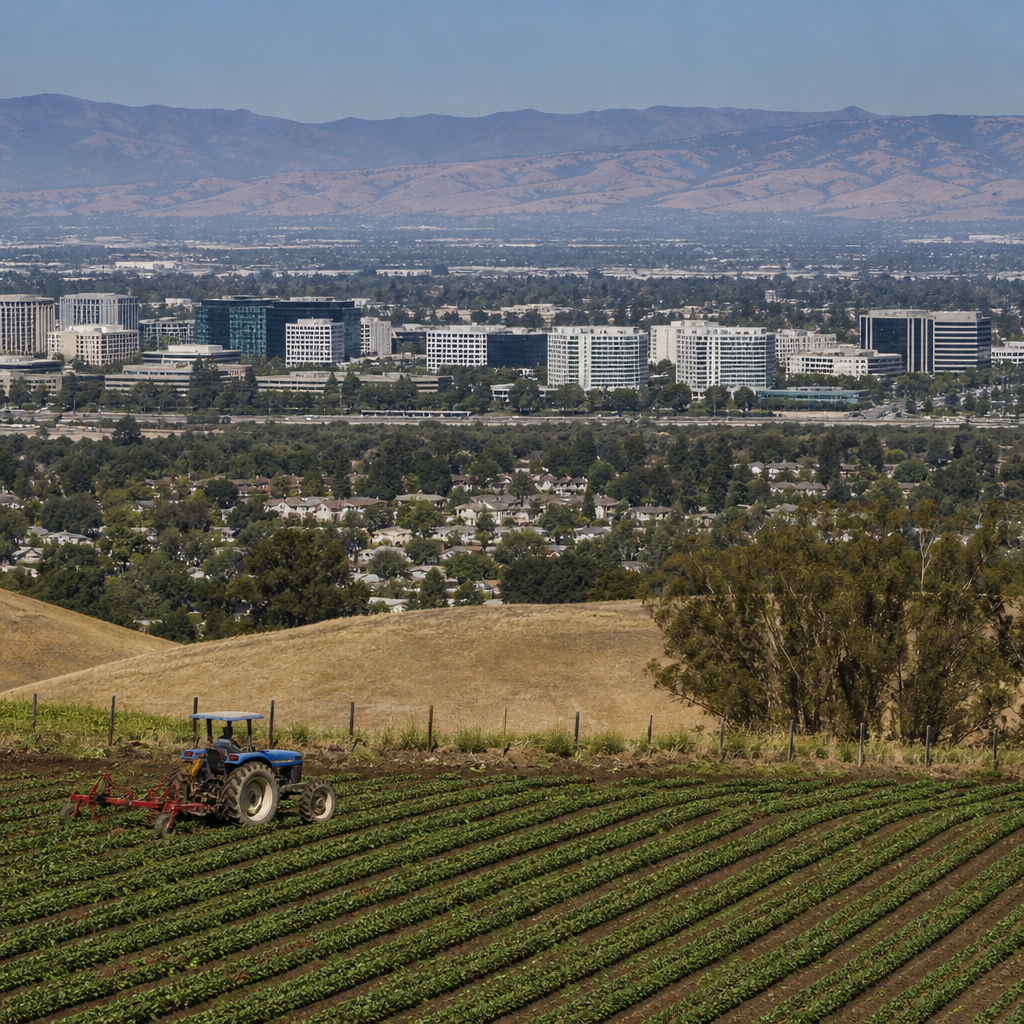
Long before clean rooms, venture capital, and chip fabs defined Santa Clara County, the region was known as the Valley of Heart’s Delight, a fertile landscape of orchards, canneries, and small farming towns that fed a growing nation. In historical terms, “Valley of Heart’s Delight” refers to the late nineteenth- and early twentieth-century identity of the Santa Clara Valley as one of California’s most productive agricultural districts, while “Silicon Valley” describes the postwar concentration of electronics, semiconductor, and computing firms that emerged in the same geography. Understanding how agriculture gave way to electronics matters because the change was not a sudden rupture or a simple story of innovation replacing farming. It was a geographic transition shaped by climate, water systems, rail connections, university research, military spending, suburban land development, and the steady conversion of orchards into industrial campuses and housing tracts. I have spent years tracing this shift through maps, land records, planning documents, and company histories, and the pattern is remarkably consistent: the valley’s agricultural success created the physical and economic platform that later allowed electronics firms to scale quickly. To understand Silicon Valley’s origins, you have to begin with the land itself, the communities that worked it, and the infrastructure that made both apricots and integrated circuits possible.
The Geography That First Made the Valley Rich
Santa Clara Valley sits between the Santa Cruz Mountains to the west and the Diablo Range to the east, opening northward toward the southern end of San Francisco Bay. That position created a Mediterranean climate with wet winters, dry summers, and long growing seasons ideal for fruit cultivation. Deep alluvial soils, built over centuries by streams descending from surrounding mountains, supported prunes, cherries, apricots, pears, and walnuts at commercial scale. By the late nineteenth century, growers had discovered that the valley’s climate reduced frost risk compared with harsher inland areas and allowed orchards to produce high-quality fruit for fresh sale, drying, and canning. Geography also offered market access. Railroad lines connected San Jose and surrounding towns to San Francisco, Oakland, and national distribution networks. The result was a regional economy built not on isolated subsistence farming but on intensive, market-oriented agriculture.
This landscape was highly organized. Towns such as San Jose, Sunnyvale, Santa Clara, Campbell, Los Gatos, and Mountain View sat amid orchards and processing facilities, while seasonal labor moved through harvest cycles. Water mattered as much as soil. Creeks, artesian wells, and later coordinated groundwater pumping supported orchards, although overuse would eventually create serious subsidence problems. Agricultural boosters marketed the valley aggressively, presenting it as healthy, profitable, and picturesque. By the early twentieth century, spring blossom tours became famous, and the nickname Valley of Heart’s Delight captured both abundance and branding. Importantly, this was not empty land waiting for technology. It was a fully functioning economic landscape whose roads, parcels, towns, and utility networks later shaped where factories and office parks would rise.
How Agriculture Built the Region’s Economic Foundation
The valley’s farming economy was sophisticated, capitalized, and tied to processing. Canneries operated at large scale, with firms such as Del Monte and Sunsweet connected to regional growers and distant consumers. Prunes became especially important; by the 1920s Santa Clara County was one of the leading prune-producing areas in the world. Packinghouses, drying yards, cold storage, cooperatives, and freight depots trained local business leaders to think in terms of logistics, quality control, branding, and seasonal labor management. Those skills did not automatically produce electronics, but they did create a culture accustomed to scaling production and shipping specialized products beyond the region.
Land ownership patterns also mattered. Many orchards occupied relatively flat, subdividable parcels near roads and rail spurs. When postwar demand for industrial sites and suburban housing accelerated, developers did not need to invent a new spatial system from scratch. They could assemble former agricultural land that was already surveyed, irrigated, and increasingly served by roads and power. In practical terms, orchard land became development land because it was accessible, level, and close to emerging labor pools. Farmers and heirs, facing rising land values, labor costs, and water pressures, often found sale more profitable than continued cultivation. The transition was therefore economic as well as technological: agriculture made the valley valuable, and that value encouraged conversion.
Stanford, Defense Research, and the Birth of an Electronics Cluster
The decisive turn toward electronics came in the twentieth century through the interaction of higher education, military demand, and entrepreneurial manufacturing. Stanford University, especially under Frederick Terman, played a central role. Terman encouraged faculty and graduates to start companies locally rather than leave for the East Coast. Hewlett-Packard, founded in a Palo Alto garage in 1939, is the best-known early example, but it was part of a broader pattern of university-linked technical enterprise. During World War II and the Cold War, federal defense spending on radar, microwave electronics, communications, and instrumentation flowed into the region. Nearby firms could recruit engineers, collaborate with Stanford laboratories, and secure contracts from the Navy and other agencies.
Industrial geography followed these incentives. Stanford Industrial Park, established in the 1950s, provided a model for placing research-oriented firms near campus on what had been ranch and agricultural land. Companies such as Varian Associates and General Electric’s advanced operations benefited from proximity to research talent and flexible suburban sites. William Shockley’s decision to establish Shockley Semiconductor Laboratory in Mountain View in 1956, followed by the founding of Fairchild Semiconductor in 1957 by the “traitorous eight,” anchored the semiconductor era. Silicon transistors and later integrated circuits did not emerge because farming declined; they emerged because the valley offered a rare combination of land, skilled labor, university support, and federal money. Yet they expanded because agricultural land was available for conversion at exactly the right moment.
From Orchards to Office Parks: Land Conversion in Plain View
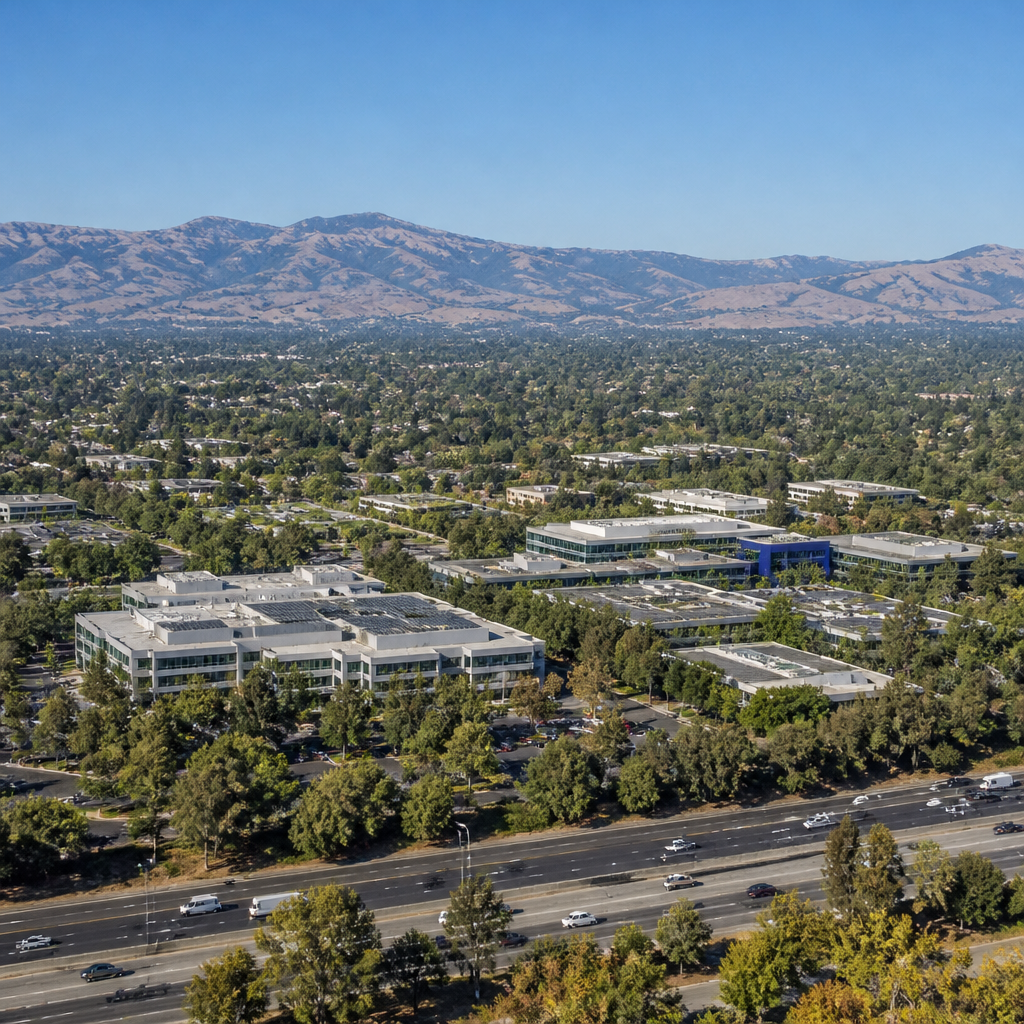
Anyone studying aerial photographs from the 1940s through the 1970s can see the transition clearly. Blocks of orchards around Santa Clara, Sunnyvale, Cupertino, and Mountain View gave way first to low-rise plants, then to business parks, subdivisions, shopping centers, and widened expressways. The following comparison captures the core geographic shift:
| Feature | Valley of Heart’s Delight | Early Silicon Valley |
|---|---|---|
| Dominant land use | Orchards, canneries, small towns | Industrial campuses, labs, suburban housing |
| Key workforce | Growers, cannery workers, seasonal labor | Engineers, technicians, machinists, managers |
| Main infrastructure | Rail spurs, irrigation, packing facilities | Highways, research parks, power, telecom |
| Core products | Prunes, apricots, canned fruit | Oscillators, transistors, semiconductors |
| Growth driver | Agricultural markets | Defense contracts and commercial electronics |
Postwar highways accelerated this shift. U.S. 101, Interstate 280, and later State Route 237 improved movement across the valley and linked dispersed suburbs to employment centers. Zoning decisions favored industrial and residential expansion, often at the expense of long-term farmland preservation. Unlike places that adopted strong greenbelts, Santa Clara County largely urbanized outward across its most productive soils. By the 1970s, the blossom landscape celebrated in postcards was fragmented. Canneries closed, orchards shrank, and municipalities increasingly measured prosperity through corporate tax bases rather than crop yields.
Why This Geography Produced a Lasting Technology Ecosystem
Many regions had universities, and many had farmland, but Silicon Valley’s staying power came from accumulation and feedback loops. Once semiconductor firms clustered, suppliers, specialized lawyers, recruiters, toolmakers, and financiers clustered with them. Talent mobility became a structural advantage. Engineers moved among Fairchild, Intel, National Semiconductor, AMD, and dozens of spinouts, carrying techniques and networks across company lines. The suburban form of the valley, often criticized for sprawl, also made rapid campus expansion easier than in dense older cities. Firms could build one-story fabrication and assembly facilities on large tracts, then add office and R&D space as product cycles shortened.
Geography continued to matter even after agriculture ceased to dominate. Proximity to San Francisco and Oakland connected the valley to ports, finance, and global travel, while the Bay Area’s broader research environment strengthened collaboration. At the same time, the region paid costs for this transformation: groundwater depletion, habitat loss, displacement of farm labor communities, rising housing prices, and severe inequality between knowledge workers and service workers. A balanced historical perspective must hold both truths. Silicon Valley was not built on genius alone, and it was not cost-free progress. It was the result of layered geographic advantages, public investment, private risk-taking, and land-use choices that permanently altered one of California’s richest agricultural valleys.
The journey from Valley of Heart’s Delight to Silicon Valley is best understood as a story of continuity as much as change. Fertile soils, favorable climate, transportation links, and organized production first made Santa Clara Valley an agricultural powerhouse. Those same geographic strengths, combined with Stanford’s influence, defense spending, and postwar suburban development, created ideal conditions for electronics manufacturing and later computing. Orchards did not simply disappear because technology arrived; they were gradually converted as land values, infrastructure, labor markets, and public policy shifted toward industry and housing. That is the core lesson of the valley’s origins: place matters, and economic revolutions usually grow from older landscapes rather than replacing them overnight. For readers exploring historical perspectives on geography and origins, this hub provides the foundation for understanding later topics such as semiconductor pioneers, suburban expansion, water and land policy, and the social consequences of growth. Use it as a starting point, then continue into those related histories to see how a farming valley became the world’s most influential technology region.
Frequently Asked Questions
What was the “Valley of Heart’s Delight,” and why was Santa Clara County known by that name?
The “Valley of Heart’s Delight” was the widely used name for the Santa Clara Valley before it became synonymous with high technology. In the late nineteenth and early twentieth centuries, the area was celebrated for its extraordinary agricultural abundance. Mild winters, dry summers, rich alluvial soils, and reliable water sources created ideal conditions for orchards and row crops. The valley became especially famous for apricots, prunes, cherries, pears, and other fruit, much of it processed in local canneries and packing houses and shipped across the United States and abroad.
The name itself reflected both economic prosperity and the landscape’s beauty. Visitors and residents described miles of blossoming orchards, small towns tied to seasonal harvests, and an economy deeply connected to farming, food processing, and rail distribution. Communities such as San Jose, Sunnyvale, Santa Clara, Campbell, and Los Gatos were shaped by this rural identity. The region was not simply scenic; it was commercially important, with agriculture serving as a major employer and a foundation of local wealth. Understanding this earlier identity is essential because it shows that Silicon Valley did not emerge from an empty landscape. It grew out of an already productive, organized, and economically ambitious region.
How did Santa Clara Valley transition from orchards and canneries to electronics and semiconductors?
The transition was gradual rather than sudden, unfolding over several decades in the mid-twentieth century. Agriculture remained important well into the 1900s, but several forces began to reshape land use and the regional economy. Population growth accelerated during and after World War II, increasing demand for housing, roads, schools, and industrial facilities. At the same time, advances in science and engineering, especially in radio, defense electronics, and semiconductor research, created entirely new economic opportunities that required skilled labor, investment, and proximity to research institutions.
Stanford University played a central role in this shift. Under the leadership of figures such as Frederick Terman, Stanford encouraged closer ties between academic research and private industry. The creation of the Stanford Industrial Park helped attract electronics firms to the area, giving companies room to grow near university talent and laboratories. Federal military spending during the Cold War also mattered enormously. Defense contracts supported research and manufacturing in microwave technology, radar, aerospace electronics, and later semiconductors, helping the region develop a dense concentration of specialized firms and technical expertise.
As these industries expanded, orchard land became increasingly valuable for suburban development and industrial campuses. Canneries and packing plants gave way to office parks, subdivisions, and fabrication facilities. The shift was also reinforced by broader economic logic: electronics and semiconductor firms often generated far greater returns per acre than farming. By the 1960s and 1970s, the balance had decisively changed. Agriculture had not disappeared overnight, but it was no longer the defining force in the valley’s identity. The new economy of circuits, engineering, and venture-backed innovation had taken its place.
Why did the electronics industry take root specifically in this region instead of somewhere else?
Santa Clara County’s rise as a center for electronics was the result of several advantages converging in one place. First, the region had a strong educational anchor in Stanford University, which supplied trained engineers, research partnerships, and a culture that increasingly encouraged entrepreneurship. That relationship between university science and private enterprise became one of the valley’s defining strengths. Instead of treating academic research as separate from business, local leaders helped turn ideas into companies.
Second, the area benefited from federal spending, particularly during World War II and the Cold War. Defense and aerospace contracts poured money into electronics research and manufacturing, supporting firms that could hire engineers, build facilities, and develop advanced products. These contracts reduced risk for young companies and gave them a foundation for later commercial expansion.
Third, the region developed a powerful network effect. Once a critical mass of firms, suppliers, investors, and skilled workers was in place, it became easier for new companies to form and succeed there. Engineers moved between firms, knowledge spread quickly, and entrepreneurs could find both technical collaborators and financial backing close at hand. Over time, venture capital became another major advantage, helping startups scale faster than they might have elsewhere.
It is also important to remember that the valley’s earlier agricultural economy had already created habits of infrastructure building, land development, transportation planning, and market connection. Rail lines, road systems, local business networks, and an entrepreneurial culture did not vanish when orchards declined; they were repurposed. In that sense, Silicon Valley emerged not in spite of the region’s past, but partly because the valley already knew how to organize production, attract investment, and connect local output to national markets.
Did agriculture disappear completely when Silicon Valley emerged?
No, agriculture did not disappear all at once, and in some respects it never vanished entirely from the broader region. For many years, orchards, canneries, and industrial research facilities coexisted. The transition looked uneven on the ground: one area might still be dominated by fruit trees while another nearby was being subdivided for tract housing or converted into a campus for an electronics company. Families who had worked in agriculture sometimes sold land in stages, especially as rising property values made farming less profitable compared with development.
What changed most dramatically was not the immediate existence of farming, but its relative importance. Agriculture ceased to be the valley’s core economic identity. Canneries closed, labor patterns changed, and smaller farming towns became suburbs linked to a metropolitan job market centered on technology and defense industries. As this happened, the visual landscape also transformed. The famous spring blossoms that had once defined the valley gave way to freeways, research parks, shopping centers, and residential subdivisions.
Even so, the agricultural past remains deeply embedded in local memory and place names. Historical museums, preserved buildings, and public history efforts continue to document the region’s orchard era. Many longtime residents and historians emphasize that understanding Silicon Valley requires remembering the labor systems, land use patterns, immigrant communities, and environmental history that came before the tech boom. The region’s story is not one of simple replacement, but of layered identities in which traces of the agricultural landscape continued to shape the communities that followed.
Why is the shift from the Valley of Heart’s Delight to Silicon Valley historically significant?
This transformation is historically significant because it captures a larger American story about land, economy, technology, and identity. Santa Clara County’s evolution from one of the nation’s leading fruit-growing districts into a global center of electronics and computing shows how regions can be radically reshaped by innovation, war-related investment, higher education, suburbanization, and real estate development. Few places illustrate so clearly how one economic order can give way to another while still leaving behind important institutional and cultural legacies.
The change also matters because it challenges simplistic narratives of technological progress. Silicon Valley is often described as a place that appeared almost naturally from invention and genius, but its rise depended on older systems: agricultural wealth, transportation networks, land ownership patterns, migrant and seasonal labor, university expansion, and public funding. In other words, the high-tech future was built on foundations laid during the valley’s farming era. Recognizing that continuity gives a fuller and more accurate picture of regional history.
Finally, the story remains relevant today because it raises questions that still resonate: how economic growth changes communities, how land gets repurposed, who benefits from development, and what is lost when an older way of life disappears. The move from orchards to semiconductors was not just a change in industry; it was a redefinition of the landscape, workforce, environment, and public imagination. That is why the journey from the Valley of Heart’s Delight to Silicon Valley remains one of California’s most compelling historical transformations.