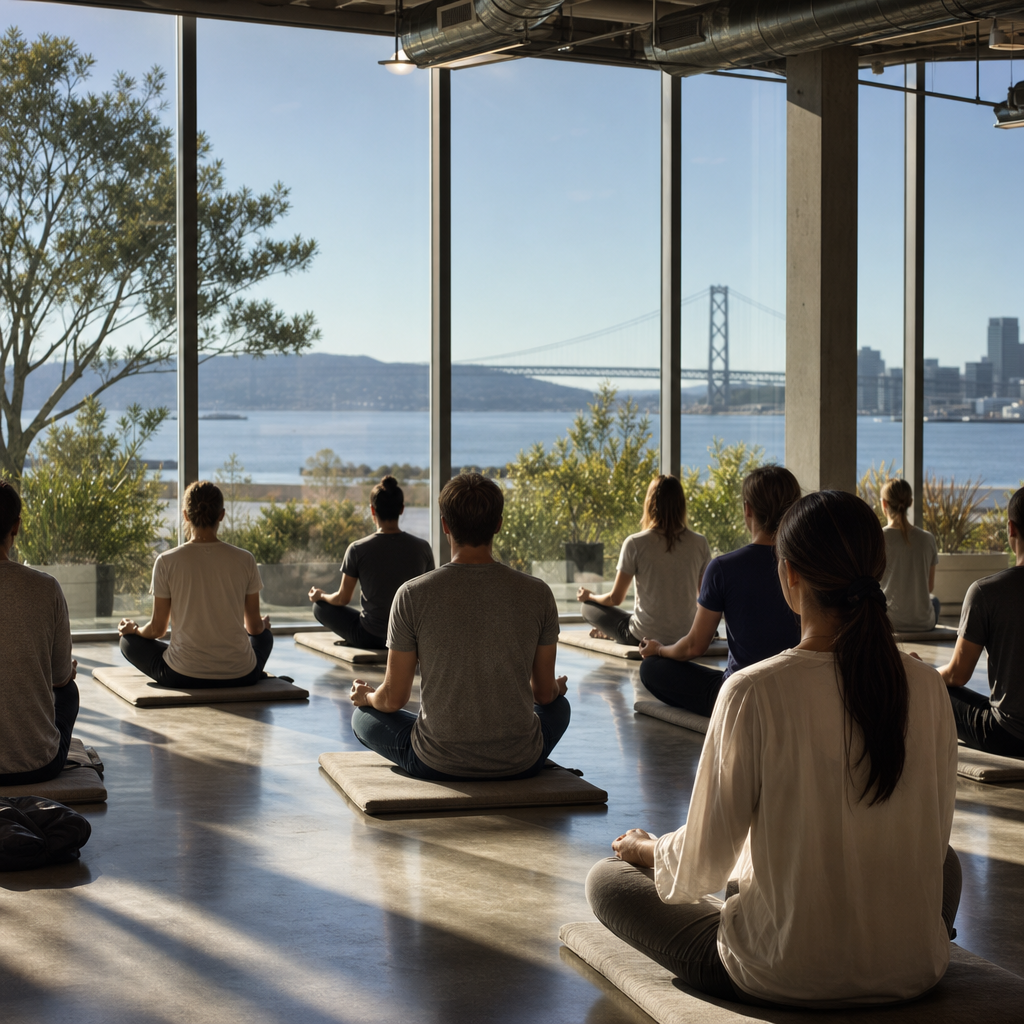
Tech and mindfulness have become deeply intertwined in Silicon Valley, where intense workloads, constant connectivity, and a relentless learning curve push professionals to search for practical ways to stay focused, healthy, and resilient. In this context, mindfulness means deliberate attention to the present moment without immediate judgment, while wellness includes mental health, sleep quality, stress regulation, physical recovery, and sustainable performance at work. I have seen teams adopt meditation apps, meeting-free blocks, coaching, and biofeedback tools not as perks, but as operating systems for better decisions. That shift matters because the region’s culture rewards speed and innovation, yet punishes distraction, burnout, and emotional reactivity. A hub article on the learning curve within tech wellness must explain not only what companies are doing, but why these methods spread, where they work, and where they fall short. Silicon Valley’s approach is shaped by startup economics, behavioral science, consumer software design, and a growing recognition that knowledge workers cannot perform at a high level indefinitely without recovery. The result is a distinctive model of wellness: measurable, experimental, app-enabled, and tightly linked to productivity. Understanding that model helps students, founders, managers, and employees evaluate which practices genuinely support long-term growth.
Why mindfulness gained traction in Silicon Valley
Mindfulness became mainstream in the tech industry because it answers a specific business problem: cognitive overload. Engineers, product managers, designers, and executives often work in environments defined by notifications, rapid context switching, and ambitious delivery timelines. Research from the American Psychological Association and studies on attention residue have consistently shown that fragmented work reduces concentration and increases stress. In practical terms, people make worse decisions when they move from Slack to email to code review to meetings without mental recovery. Mindfulness training offers a simple intervention: strengthen attention, notice stress signals earlier, and create a pause before reacting. That is why companies from Google to Salesforce have invested in structured programs, internal workshops, and app subscriptions.
Google’s well-known Search Inside Yourself program helped legitimize the space by translating meditation concepts into emotional intelligence, leadership presence, and self-awareness. That framing was important. In Silicon Valley, wellness initiatives gain traction when they are presented as skills that improve communication, creativity, and execution, not as abstract spirituality. Startups followed a similar pattern. Rather than build traditional wellness departments, many began offering Headspace or Calm memberships, asynchronous work options, and flexible schedules designed to lower stress while maintaining output. The learning curve for employees is significant: they must understand which tools improve focus, how long benefits take to appear, and how to fit mindfulness into an already overloaded day.
The learning curve behind tech-enabled wellness
Silicon Valley treats wellness like any other system users must learn. That means onboarding, experimentation, measurement, and iteration. New employees may receive access to meditation apps, therapy benefits, sleep trackers, ergonomic support, or executive coaching, but access alone rarely changes behavior. In my experience working with high-performing teams, the first barrier is not skepticism; it is friction. People do not know whether they should start with breathing exercises, guided meditation, journaling, therapy, walking breaks, or calendar redesign. They also expect immediate results, which creates disappointment. The real learning curve involves habit formation, feedback, and choosing the right intervention for the right problem.
For example, a software engineer dealing with pre-launch anxiety may benefit more from short box-breathing sessions and reduced notification windows than from a twenty-minute meditation practice. A founder facing decision fatigue may need sleep discipline, structured reflection, and coaching rather than another app. This is why the best wellness programs categorize interventions by outcome: focus, stress reduction, recovery, emotional regulation, and team communication. Learning progresses when employees understand cause and effect. Poor sleep raises cortisol and impairs judgment. Constant interruptions reduce deep work. Unprocessed stress shows up in meetings as impatience, defensiveness, or avoidance. Once people see those links, mindfulness stops feeling optional and starts looking like professional maintenance.
| Wellness challenge | Common tech response | Learning curve issue | Best use case |
|---|---|---|---|
| Notification overload | Focus apps and calendar blocking | Requires boundary-setting habits | Deep work for engineers and analysts |
| Acute stress before launches | Breathwork and short guided meditation | Benefits depend on daily repetition | Product, operations, and incident response teams |
| Sleep disruption | Wearables like Oura or Apple Watch | Data can overwhelm without behavior change | Executives, founders, remote workers |
| Emotional reactivity in meetings | Coaching and mindfulness training | Progress is slower and harder to quantify | Managers and cross-functional leaders |
| Burnout risk | Therapy benefits and workload redesign | Needs organizational support, not only individual effort | High-growth startups and scaling teams |
Tools, platforms, and workplace practices
The most visible side of Silicon Valley wellness is the tool stack. Meditation platforms such as Calm and Headspace dominate because they are easy to deploy at scale and simple for employees to test. Wearables including Apple Watch, Fitbit, Garmin, and Oura Ring add biometric feedback, especially around sleep, heart rate variability, resting heart rate, and activity levels. These metrics appeal to the tech mindset because they convert vague feelings into trackable signals. Yet numbers can mislead when stripped of context. Heart rate variability, for example, may suggest recovery trends over time, but it is not a standalone diagnosis of readiness or mental health. Effective programs pair data with education.
Workplace practices often matter more than apps. Meeting-free mornings, no-message weekends, flexible work windows, and documented expectations around response time produce stronger wellness gains than a meditation subscription alone. Atlassian, Asana, and other workflow-oriented companies have influenced broader norms by emphasizing transparency, asynchronous collaboration, and reduced communication friction. When teams rely less on constant interruptions, employees have more cognitive bandwidth for focused work and less need to recover from digital chaos. Mindfulness in this setting is not confined to eyes-closed meditation. It includes intentional task design, better pacing, and routines that preserve attention.
Another important category is mental health support. Many technology employers now provide teletherapy through platforms such as Lyra Health, Spring Health, or Modern Health. This expands care access, particularly for employees who travel frequently or work hybrid schedules. Still, access does not eliminate stigma, nor does it guarantee quality fit between clinician and patient. Companies that treat therapy as one part of a broader system tend to get better results. The practical lesson is clear: a mature wellness strategy combines digital tools, manager training, policy design, and clinical support rather than relying on a single product.
Benefits, evidence, and common misconceptions
The strongest case for mindfulness in tech is not that it makes every worker calmer all the time. It is that, when applied consistently and appropriately, it improves attention control, emotional regulation, and stress awareness. Studies published in journals such as JAMA Internal Medicine and research synthesized by institutions including the National Center for Complementary and Integrative Health indicate that mindfulness-based interventions can help reduce anxiety, stress, and some symptoms of depression, while also supporting sleep and overall well-being. In workplace settings, those benefits translate into fewer impulsive reactions, better listening, and more sustainable concentration.
However, several misconceptions persist. First, mindfulness is not a cure for systemic overload. If a company demands sixty-hour weeks, rewards after-hours responsiveness, and lacks staffing discipline, meditation alone will not prevent burnout. Second, wellness data is not always objective truth. Sleep scores, readiness metrics, and productivity dashboards can encourage useful reflection, but they can also create new forms of anxiety when employees start optimizing every bodily signal. Third, not everyone responds to the same practice. Some people benefit from seated meditation, others from mindful walking, therapy, structured exercise, or simply fewer meetings and clearer priorities. The learning curve is personal, and effective leaders respect that variation.
There is also a cultural misconception that mindfulness in Silicon Valley is merely a branding exercise. In some organizations, that criticism is fair. Superficial wellness marketing exists. But I have also seen teams use these practices to reduce conflict, improve incident response, and help managers recognize when exhaustion is distorting judgment. The difference is whether wellness is attached to meaningful operational changes. When executives model boundaries, review workload realistically, and support recovery after demanding cycles, mindfulness becomes credible and useful.
How to build a practical learning path
For readers using this educational hub to understand the learning curve in tech wellness, the best starting point is a staged approach. Begin with awareness: identify the main stressors in your work pattern, whether they are notifications, poor sleep, emotional fatigue, or lack of focus. Next, choose one intervention that matches the problem. Use a five-minute breathing exercise for acute stress, a protected ninety-minute focus block for distraction, or a consistent bedtime routine supported by a wearable for recovery. Then measure outcomes that matter: attention span, irritability, sleep consistency, or meeting quality. Keep the time horizon realistic. Most benefits appear through repetition over weeks, not after one session.
Managers and founders should go further by designing environments that support healthy behavior. Clarify what constitutes an urgent message. Reduce unnecessary meetings. Normalize breaks after major launches. Train leaders to notice burnout indicators such as withdrawal, short temper, declining work quality, and decision paralysis. Most importantly, connect wellness to learning and performance honestly. The goal is not constant optimization of the self; it is sustainable excellence over time. Silicon Valley’s best wellness practices work because they acknowledge a hard truth: human attention is finite, recovery is necessary, and growth becomes fragile when people ignore those limits. Use that insight to evaluate tools carefully, adopt habits deliberately, and build a work style that supports both achievement and health.
Frequently Asked Questions
1. Why has mindfulness become so popular in Silicon Valley?
Mindfulness has gained traction in Silicon Valley because it addresses a very specific set of pressures that define modern tech culture: long hours, rapid product cycles, constant notifications, high-stakes decision-making, and the expectation of continuous learning. In that environment, many professionals are not simply looking for relaxation techniques. They are looking for practical tools that help them think more clearly, regulate stress, recover faster, and perform consistently without burning out. Mindfulness fits that need because it can be applied in real time, whether someone is preparing for a difficult meeting, moving between back-to-back calls, debugging under pressure, or trying to disconnect after work.
Another reason for its popularity is that tech workers often respond well to systems that are measurable, repeatable, and easy to integrate into existing routines. Mindfulness can be introduced in short sessions, supported by apps, paired with wearables, or built into team practices such as meeting pauses and focus blocks. That makes it more accessible than many people assume. In Silicon Valley, mindfulness is often framed less as a spiritual trend and more as a practical performance and wellness skill. When used well, it supports attention, emotional balance, better communication, improved sleep habits, and a healthier relationship with work. That combination explains why it has moved from a niche interest to a mainstream part of many workplace wellness conversations.
2. What does mindfulness actually look like in a tech workplace?
In a tech workplace, mindfulness usually looks much simpler and more practical than people expect. It may begin with a two-minute breathing pause before a product review, a few quiet moments at the start of a team meeting, or a deliberate transition ritual between deep work and collaboration. Some teams encourage employees to silence notifications during focus periods, take short walking breaks between intense work sessions, or use guided meditation apps during the day. Individuals may practice mindful email habits by pausing before responding, noticing stress reactions, and choosing more thoughtful communication rather than reacting impulsively.
It can also appear in leadership behavior and team norms. Managers may build recovery time into schedules, encourage realistic deadlines, and create space for employees to speak honestly about workload and cognitive fatigue. Engineers and designers might use mindfulness to improve concentration during demanding tasks, while founders may rely on it to stay grounded during uncertainty and high-pressure decision cycles. In more mature wellness cultures, mindfulness is not treated as a single activity but as a way of working: paying attention deliberately, noticing stress signals earlier, responding rather than reacting, and creating conditions that support sustainable performance. The goal is not to slow innovation. It is to make high performance more stable, humane, and repeatable over time.
3. Can mindfulness really improve wellness and job performance, or is it mostly a trend?
When practiced consistently and paired with healthy workplace habits, mindfulness can genuinely improve both wellness and job performance. Its strongest value lies in helping people become more aware of their mental and physical state before stress escalates. That awareness can lead to better decisions around pacing, boundaries, sleep, communication, and recovery. For example, someone who notices rising tension early may step away briefly, reset their breathing, and return with better judgment instead of pushing into irritability or mental overload. Over time, that kind of self-regulation can reduce the cumulative wear and tear caused by chronic stress.
From a performance perspective, mindfulness can support sustained attention, emotional control, and cognitive flexibility. These abilities matter in technology roles where people are often switching contexts, solving complex problems, and collaborating across fast-moving teams. Mindfulness is not a magic solution, and it cannot compensate for unhealthy expectations, poor management, or systemic overwork. If a company promotes meditation while rewarding burnout, the benefits will be limited. But when mindfulness is used as one part of a broader wellness strategy that includes realistic workloads, quality sleep, movement, psychological safety, and time for recovery, it can be highly effective. In that sense, it is more than a trend. It is a practical skill set that helps people function better in demanding environments.
4. How do tech companies use apps, wearables, and digital tools to support mindfulness and wellness?
Silicon Valley has taken a distinctly technology-driven approach to mindfulness and wellness by using apps, wearables, and digital platforms to make these practices easier to start and sustain. Meditation apps offer guided sessions for stress, focus, sleep, and emotional regulation, which helps busy professionals fit mindfulness into short breaks or daily routines. Wearables add another layer by tracking signals such as heart rate, sleep patterns, recovery, and activity levels. While these tools do not replace self-awareness, they can help people notice patterns they might otherwise ignore, such as poor sleep after late-night screen time or elevated stress during periods of intense workload.
Companies may also integrate wellness tools into employee benefits, offer subscriptions to mindfulness platforms, run digital challenges around sleep or movement, or provide dashboards that encourage healthier habits without requiring a major time commitment. The best use of technology in this area is supportive rather than intrusive. It should help employees understand their energy, attention, and recovery patterns, not create new pressure to optimize every moment. There is also an important balance to maintain: using technology to reduce the harm caused by constant connectivity should not result in even more self-monitoring and digital dependence. The most effective approach combines useful data with human judgment, realistic expectations, and permission to unplug when needed.
5. What are the limitations of Silicon Valley’s approach to mindfulness and wellness?
The biggest limitation is that mindfulness can be presented as a solution for problems that are actually structural. If employees are dealing with unrealistic deadlines, poor leadership, chronic understaffing, or a culture that rewards constant availability, mindfulness alone will not fix the underlying issue. In those situations, asking people to meditate more can feel superficial or even dismissive. It may help individuals cope in the short term, but it does not remove the causes of ongoing stress. That is why a credible wellness strategy has to include both personal tools and organizational change.
Another limitation is the tendency to frame wellness entirely through productivity. In Silicon Valley, mindfulness is often embraced because it can improve focus, creativity, and output. Those are real benefits, but wellness should not be valued only for its effect on performance. Mental health, sleep, recovery, and emotional balance matter because they are essential to a healthy life, not just because they help people work longer or faster. There is also the risk of turning mindfulness into another optimization project, where people feel pressure to track, improve, and perfect their inner state. A healthier view is more balanced: mindfulness is useful because it helps people pay attention, recover, and respond with greater clarity. It works best in cultures that respect boundaries, support genuine rest, and recognize that sustainable success depends on human wellbeing, not just relentless output.