Technology and art are no longer separate lanes in education; they increasingly form a single learning pathway that prepares students to think critically, build creatively, and adapt to digital culture. In schools, universities, museums, and independent studios, educational programs merging creativity with technology help learners move from passive media consumption to active design, production, and problem solving. I have seen this shift firsthand while reviewing curricula for digital media and STEAM initiatives: the strongest programs do not treat software as a gimmick or art as decoration. They teach students how tools, ideas, and human expression work together.
In this context, the learning curve refers to the progression from beginner familiarity to confident, independent creation. It includes technical fluency with tools such as Adobe Creative Cloud, Procreate, Blender, Scratch, Arduino, and creative coding platforms, but it also includes visual literacy, iteration, critique, and project planning. A good program recognizes that students rarely struggle only with technology or only with art. They struggle with sequencing, confidence, feedback, and connecting concepts across disciplines. That is why this topic matters for the broader Educational Resources landscape: families, educators, and adult learners need a clear map of which programs build foundational skills, which support portfolio development, and which lead toward careers in design, animation, game development, UX, digital fabrication, and interactive media.
Learning Curve as a hub topic matters because demand for hybrid skills keeps rising. The U.S. Bureau of Labor Statistics continues to project growth across computer and information technology roles, while creative industries increasingly expect proficiency with digital workflows, collaboration software, and multimedia storytelling. At the same time, schools are under pressure to prove that arts education develops transferable skills such as communication, empathy, experimentation, and resilience. Programs that merge creativity with technology answer both needs. They help a middle school student code an animation, a college learner prototype an app interface, or an adult career changer build a motion graphics portfolio. The challenge is choosing programs that sequence learning well, provide enough support, and balance artistic exploration with technical rigor.
What Tech-and-Art Programs Actually Teach
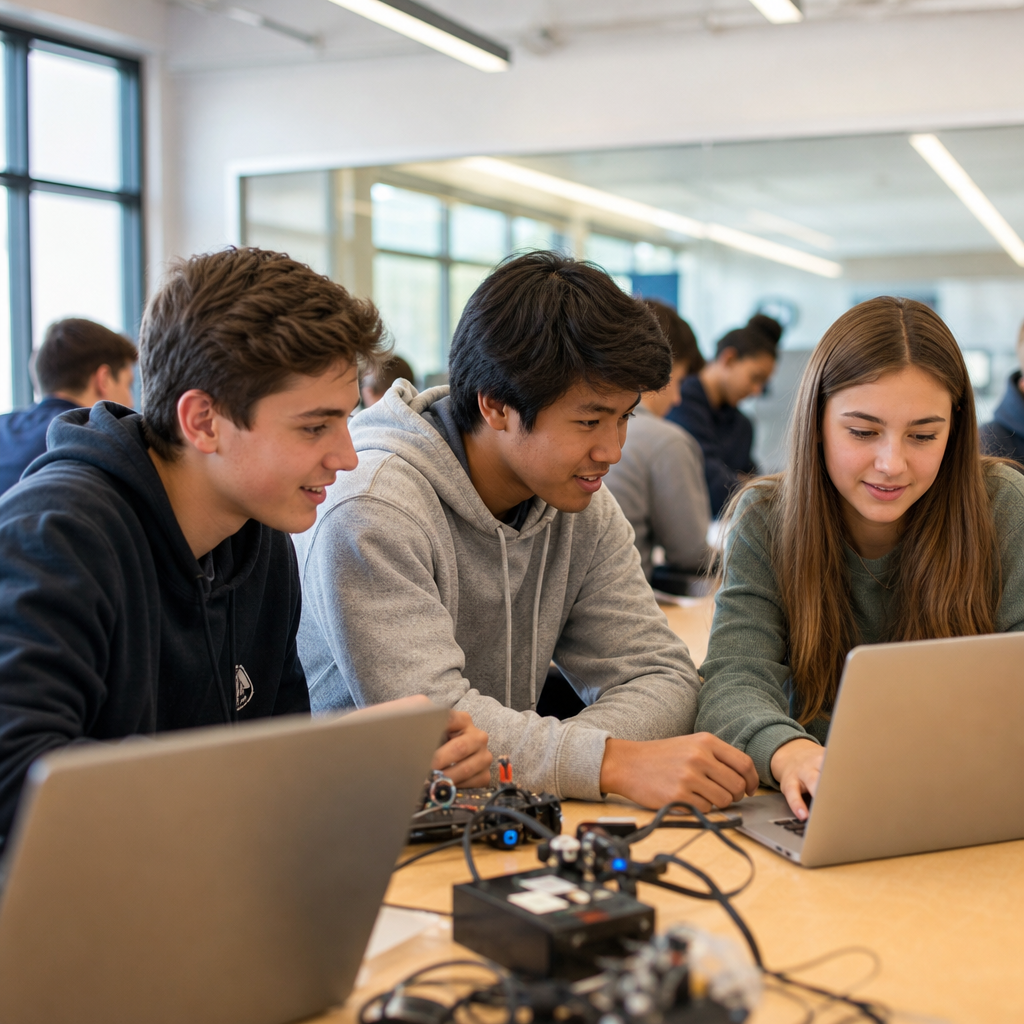
The best educational programs in this space teach a layered skill set rather than a single app or trend. At the entry level, students learn core concepts such as composition, color, typography, storytelling, rhythm, user interaction, and file management. Alongside those basics, they begin using digital tools to create visible outcomes quickly. That early momentum matters. When beginners can sketch on a tablet, animate a sprite in Scratch, edit a short video in Premiere Rush, or laser-cut a simple pattern after one or two sessions, they gain a sense of agency that reduces dropout risk.
As learners progress, programs introduce more demanding workflows. Digital illustration courses move from brush presets to custom layering and non-destructive editing. Animation courses advance from frame-by-frame exercises to timing charts, rigging, and sound synchronization. Maker-centered pathways expand from simple circuits to sensor-based interactive installations using Arduino or micro:bit. In strong curricula, every technical step supports a creative objective. Students are not just learning Blender menus; they are learning how light, modeling, and camera movement shape meaning. They are not just learning Figma components; they are learning how interface decisions affect accessibility and user behavior.
Programs also differ by educational setting. K-12 schools often integrate technology and art through STEAM labs, media arts electives, robotics with design components, or project-based interdisciplinary units. Universities may offer majors in digital media, interaction design, game art, computational arts, or creative technology. Community organizations and museums frequently provide workshops in digital photography, fabrication, sound design, and immersive media. Online learning platforms fill gaps by offering flexible tutorials and certificate tracks, although self-paced study works best when paired with critique and project deadlines. The format matters because the learning curve is heavily shaped by feedback, equipment access, and peer collaboration.
How the Learning Curve Works in Creative Technology Education
The learning curve in creative technology education is rarely linear. Students usually improve in bursts: a breakthrough in drawing perspective, a sudden understanding of layers and masks, or the moment code starts controlling a visual output predictably. Early frustration is normal because learners are managing both conceptual and operational load. They must understand artistic intent while also remembering keyboard shortcuts, export settings, or hardware connections. Programs that ignore this dual load tend to overwhelm beginners. Programs that scaffold it produce stronger results.
In practice, scaffolding means reducing complexity without lowering standards. A sound introductory curriculum often follows a sequence of demonstration, guided replication, controlled variation, and independent project work. I have found this structure especially effective in media labs. First, the instructor models a technique, such as masking an image or building a simple p5.js animation. Next, students replicate the process exactly. Then they modify parameters, colors, timing, or assets. Finally, they create something original using the same underlying method. This sequence helps learners understand not just what to click, but why the process works.
Critique is another essential part of the learning curve. In art-and-tech programs, feedback should address aesthetics, usability, and technical execution together. For example, a student poster may have strong color contrast but poor hierarchy; an interactive prototype may function correctly but confuse users; a 3D model may look impressive in a render yet contain topology problems that complicate animation or printing. Teaching students to evaluate work from multiple angles makes them more employable and more independent. It also reflects real creative production, where designers, developers, editors, and clients assess different dimensions of the same project.
| Stage | Typical Student Challenge | Effective Program Response | Example Outcome |
|---|---|---|---|
| Beginner | Tool overload and low confidence | Short projects with templates and live demonstrations | Simple digital poster or coded animation |
| Developing | Inconsistent technique and weak planning | Project milestones, critique, and reusable workflows | Branding set, short film, or interactive prototype |
| Advanced | Portfolio quality and specialization decisions | Capstones, client-style briefs, and tool-specific depth | Game environment, UX case study, or installation piece |
Which Program Features Make Learning Easier and More Effective
When evaluating educational programs that merge creativity with technology, look first at sequencing. Strong programs define prerequisites clearly and build from fundamentals to advanced applications. A weak course catalog often lists attractive topics such as virtual reality, AI art, or motion graphics without clarifying what students need to know beforehand. That can create the illusion of fast progress while leaving major gaps in drawing, design principles, coding logic, or production workflow. Learners usually advance faster when the pathway is explicit.
Access to professional tools matters, but tool choice should fit learning goals. Adobe Photoshop, Illustrator, After Effects, Figma, Blender, Autodesk Fusion, Unity, Unreal Engine, and Ableton Live all have valid educational uses. However, not every beginner needs enterprise-level complexity immediately. For younger learners, Scratch, Tinkercad, Canva, GarageBand, and Procreate can provide lower-friction entry points. The right program knows when to introduce industry-standard software and when to use simpler environments to teach transferable concepts first.
Faculty expertise is equally important. In the best programs, instructors have both teaching skill and production experience. They know how to explain raster versus vector graphics, CMYK versus RGB color spaces, or parametric versus polygonal modeling in plain language, and they can show why those distinctions matter in real output. They also understand common beginner mistakes: exporting low-resolution assets, using too many fonts, ignoring version control, or designing beautiful interfaces that fail accessibility checks under WCAG guidance. That practical insight shortens the learning curve substantially.
Support structures often determine whether students persist. Look for critique sessions, lab time, tutoring, peer review, portfolio reviews, and opportunities to exhibit or publish work. Public-facing outcomes are powerful motivators. A student who knows their animation will screen at a showcase, or their interactive sculpture will appear in a community exhibition, usually commits more deeply to revision. Programs with internships, industry partnerships, or collaborations with local nonprofits are especially effective because they connect learning to authentic constraints, deadlines, and audiences.
Real-World Pathways and Career Relevance
Students and families often ask a practical question: what can you do with an education that combines art and technology? The short answer is a great deal, provided the program builds both craft and adaptable digital skills. Graduates move into graphic design, motion design, user experience, front-end creative development, game art, animation, architectural visualization, digital fabrication, museum media, marketing content production, and educational media. Some become freelancers; others join agencies, startups, schools, or cultural institutions.
Specific pathways depend on the program emphasis. A learner focused on creative coding may progress from Processing or p5.js into interactive installations, data visualization, or web-based art experiences. A student in digital fabrication may move from laser cutting and 3D printing into product design, wearable technology, or maker education. A UX-oriented pathway typically combines visual design, research, information architecture, prototyping, and usability testing, often using Figma and analytics tools. Animation and game-art tracks add storyboarding, environment design, rigging, compositing, and engine integration with Unity or Unreal.
Portfolio quality remains the deciding factor in many hiring contexts. Employers and admissions reviewers want to see process as well as final output: sketches, wireframes, prototypes, iterations, and evidence of decision-making. Educational programs that understand the learning curve make portfolio development continuous rather than leaving it for the final semester. They teach students how to document projects, write case studies, present critiques, and explain constraints. That habit benefits not only job seekers but also learners pursuing scholarships, residencies, or graduate study.
For this Educational Resources hub, the core lesson is simple: the most effective tech-and-art programs do more than teach software. They build creative confidence, technical discipline, and a repeatable way of learning new tools. If you are comparing schools, camps, certificates, or online courses, examine the sequence, instructor quality, feedback systems, and portfolio outcomes before making a decision. Start with a program that matches your current skill level, commit to regular practice, and use this hub as your guide to the wider Learning Curve topic. The right program can turn curiosity into capability and capability into lasting opportunity.
Frequently Asked Questions
1. What are educational programs that merge technology with art?
Educational programs that merge technology with art are learning experiences designed to teach creative expression alongside digital tools, technical systems, and applied problem solving. Rather than treating art as separate from science or technology, these programs combine visual design, media production, coding, animation, sound, fabrication, and interactive storytelling into one connected pathway. Students may work with graphic design software, digital illustration tools, video editing platforms, game engines, 3D printers, motion graphics applications, or creative coding environments while also learning the fundamentals of composition, color, narrative, audience awareness, and critique.
What makes these programs especially valuable is that they move students beyond passive use of devices. Instead of simply consuming content, learners begin to create it, analyze it, and improve it. A student might design a short animated film, build an interactive installation, produce a podcast, create a virtual reality experience, or develop a digital portfolio that demonstrates both artistic judgment and technical fluency. In strong programs, the emphasis is not just on mastering tools, but on understanding how technology shapes communication, culture, and creative work.
These programs appear in many settings, including K-12 schools, colleges, museums, maker spaces, libraries, and independent studios. Some are structured as digital media, design, or arts integration courses, while others exist as interdisciplinary labs or career and technical education tracks. The common thread is that they help students think critically, make intentionally, and adapt to a world where creative work is increasingly digital, collaborative, and innovation-driven.
2. Why is it important for students to study both creativity and technology together?
Studying creativity and technology together is important because modern learning and modern work rarely separate the two. In nearly every field, students are expected to communicate ideas clearly, solve unfamiliar problems, use digital tools confidently, and respond thoughtfully to rapidly changing platforms. When creativity is paired with technology, students do not just learn how software works; they learn how to use technology to express ideas, design solutions, and engage audiences in meaningful ways.
This kind of education also strengthens core academic and cognitive skills. Creative technology projects naturally involve research, planning, experimentation, revision, and reflection. Students learn to test ideas, respond to feedback, and improve their work over time. For example, producing a digital story may require writing, visual design, sequencing, audio editing, and project management. Building a simple interactive experience may introduce logic, user-centered thinking, and iterative design. These are transferable skills that support success far beyond the arts.
There is also a cultural reason this matters. Young people live in a digital environment shaped by images, interfaces, video, algorithms, and media systems. Programs that merge art and technology help students understand that environment instead of simply reacting to it. They become more informed creators and more critical readers of media. That combination is powerful because it builds agency. Students begin to see that they can shape digital culture, not just consume what others produce.
3. What skills do students gain in tech-and-art educational programs?
Students in tech-and-art programs typically develop a blend of creative, technical, and professional skills that are highly relevant across industries. On the creative side, they learn visual communication, storytelling, design thinking, composition, color theory, typography, sound design, and concept development. These skills help them make work that is not only functional, but compelling and purposeful. They also learn how to evaluate creative choices, give and receive critique, and refine ideas through multiple drafts or prototypes.
On the technical side, students often gain experience with digital tools and platforms used in real-world creative environments. Depending on the program, that may include photo editing, video production, animation, web design, 3D modeling, game design, digital music production, coding, augmented reality, fabrication tools, or interactive media software. The exact tools may change over time, but the larger skill students develop is digital adaptability: the ability to learn new systems, troubleshoot issues, and apply technology in a thoughtful way.
Just as important are the broader habits of mind these programs cultivate. Students learn collaboration, time management, presentation skills, project planning, and audience awareness. They often work across disciplines, which teaches them how to communicate with people who think differently and bring different expertise to a project. Many programs also emphasize portfolio building, creative confidence, ethical media use, and understanding the social impact of technology. Together, these skills prepare students not only for creative careers, but for any environment that values innovation, communication, and resilient problem solving.
4. What kinds of careers can these programs prepare students for?
Programs that combine creativity with technology can prepare students for a wide range of careers because they develop both artistic vision and practical digital capability. Some graduates pursue clearly creative roles such as graphic designer, animator, illustrator, video editor, photographer, sound designer, game artist, multimedia producer, or art director. Others move into hybrid positions that sit between design and technology, including user experience designer, user interface designer, web designer, interactive media developer, motion graphics specialist, digital content strategist, or creative technologist.
These programs can also open pathways into emerging fields that did not exist in the same form a generation ago. Students may find opportunities in virtual production, immersive media, augmented reality, digital fabrication, exhibit design, educational media, app design, social media storytelling, and museum technology. For students interested in entrepreneurship, the combination of technical fluency and creative problem solving is especially useful, since it supports freelancing, studio work, startup collaboration, and independent content creation.
It is worth noting that the value of these programs extends beyond job titles that sound artistic. Employers in many sectors want people who can present ideas visually, work with digital platforms, think strategically about audiences, and bring originality to problem solving. That means students who complete strong tech-and-art programs may also be well prepared for roles in marketing, communications, education, product development, publishing, nonprofit outreach, and innovation teams. In other words, these programs do not narrow opportunity; they often broaden it by giving students a versatile skill set that translates across industries.
5. What should families and students look for in a strong program that blends art and technology?
Families and students should look first for balance. A strong program does more than place students in front of devices or teach isolated software functions. It connects technical instruction with creative purpose. That means students should be learning how to develop ideas, solve design problems, study examples, revise their work, and explain their decisions, not just follow tutorials. The best programs teach tools in context, using projects that require imagination, research, and critical thinking.
It is also important to examine the structure of the curriculum. Strong programs usually include hands-on projects, opportunities for collaboration, exposure to multiple media forms, and a progression from foundational skills to more advanced work. Students should have chances to create original pieces, receive meaningful feedback, and build a portfolio over time. Access to updated equipment and software matters, but so does the quality of instruction. Skilled educators help students understand both process and purpose, encouraging experimentation while maintaining clear standards for craftsmanship and communication.
Finally, families should consider whether the program reflects the realities of contemporary creative work. Useful signs include interdisciplinary learning, connections to real audiences or community projects, attention to digital citizenship and ethics, and opportunities to explore careers or internships. A strong program should help students become more capable makers, more thoughtful media users, and more confident problem solvers. When those elements are in place, students gain much more than technical exposure; they gain a meaningful educational experience that prepares them to create, adapt, and contribute in a digital world.