Jay Last stands at the center of semiconductor roots because he helped transform the integrated circuit from a lab concept into a manufacturable product, and that shift changed modern electronics forever. In the history of Silicon Valley, many names draw attention for founding companies or funding breakthroughs, yet Last’s role at Fairchild Semiconductor deserves special focus because he worked at the point where physics, materials science, and production engineering met. He was one of the “traitorous eight,” the group that left Shockley Semiconductor Laboratory in 1957 to start Fairchild, and he became a key figure in the team that made silicon devices practical at scale. When people ask how the integrated circuit became commercially useful rather than merely theoretically possible, Fairchild is a large part of the answer, and Jay Last was inside that story.
To understand why this matters, it helps to define a few terms clearly. A semiconductor is a material, usually silicon, whose electrical behavior can be controlled precisely. A transistor is a switch or amplifier built from semiconductor material. An integrated circuit places multiple electronic components onto one small piece of silicon so they function together as a single unit. Practical, in this context, does not just mean “working once in a laboratory.” It means repeatable fabrication, acceptable yields, manageable cost, reliability in real operating conditions, and a pathway to mass production. I have worked with semiconductor history archives and process documentation enough to know that this distinction is everything. In electronics, an invention matters less than the manufacturing method that lets thousands, then millions, of identical devices leave a factory.
This article serves as a hub for Semiconductor Roots by tracing the people, methods, and business decisions that turned early transistor research into the integrated-circuit industry. Fairchild Semiconductor sits at the center because it linked the scientific discoveries of Bell Labs, the entrepreneurial break from William Shockley, the planar process pioneered by Jean Hoerni, and the commercial scaling that later enabled Intel and the wider chip economy. Jay Last’s importance lies not in celebrity but in execution. He led teams, solved process problems, and helped move the industry from hand-built experimentation toward modern semiconductor manufacturing. If you want to understand the roots of microelectronics, this is one of the clearest places to begin.
From Shockley to Fairchild: Why the Breakaway Mattered
The road to Fairchild began with William Shockley, co-inventor of the transistor and founder of Shockley Semiconductor Laboratory in Mountain View, California. Shockley recruited brilliant young scientists and engineers, including Jay Last, Robert Noyce, Gordon Moore, Jean Hoerni, Julius Blank, Victor Grinich, Eugene Kleiner, Sheldon Roberts, and Jim Gibbons. The technical promise was enormous, but Shockley’s management style was famously destructive. He shifted research directions abruptly, distrusted his own staff, and created an environment where talented people could not work effectively. In 1957, eight of them left together. That departure is one of the defining moments in semiconductor roots because it transferred elite talent from a dysfunctional lab into a startup built for execution.
Fairchild Semiconductor was funded by Fairchild Camera and Instrument after investment banker Arthur Rock helped broker the deal. This financing structure mattered. It gave the new company enough support to buy equipment, hire staff, and move fast in a capital-intensive industry where clean processing, diffusion furnaces, photolithography tools, and testing resources were expensive. Jay Last joined not just another research shop but a manufacturing venture aimed at commercial devices. That distinction shaped everything that followed. Fairchild’s mission was not to publish elegant theory; it was to produce reliable silicon transistors and then integrated circuits customers would actually buy.
Last, trained as a physicist, fit perfectly into this environment. He understood materials and device behavior, but he also operated in teams solving yield, contamination, and process consistency problems. In the earliest semiconductor era, these were existential challenges. A device could fail because of impurities, poor masking, alignment errors, or unstable interconnections. What separated winners from losers was not just who had the smartest idea, but who could make the same device repeatedly with acceptable economics. Fairchild became a model for that transition, and Last was one of the people driving it from within.
The Planar Process and the Birth of Practical Silicon ICs
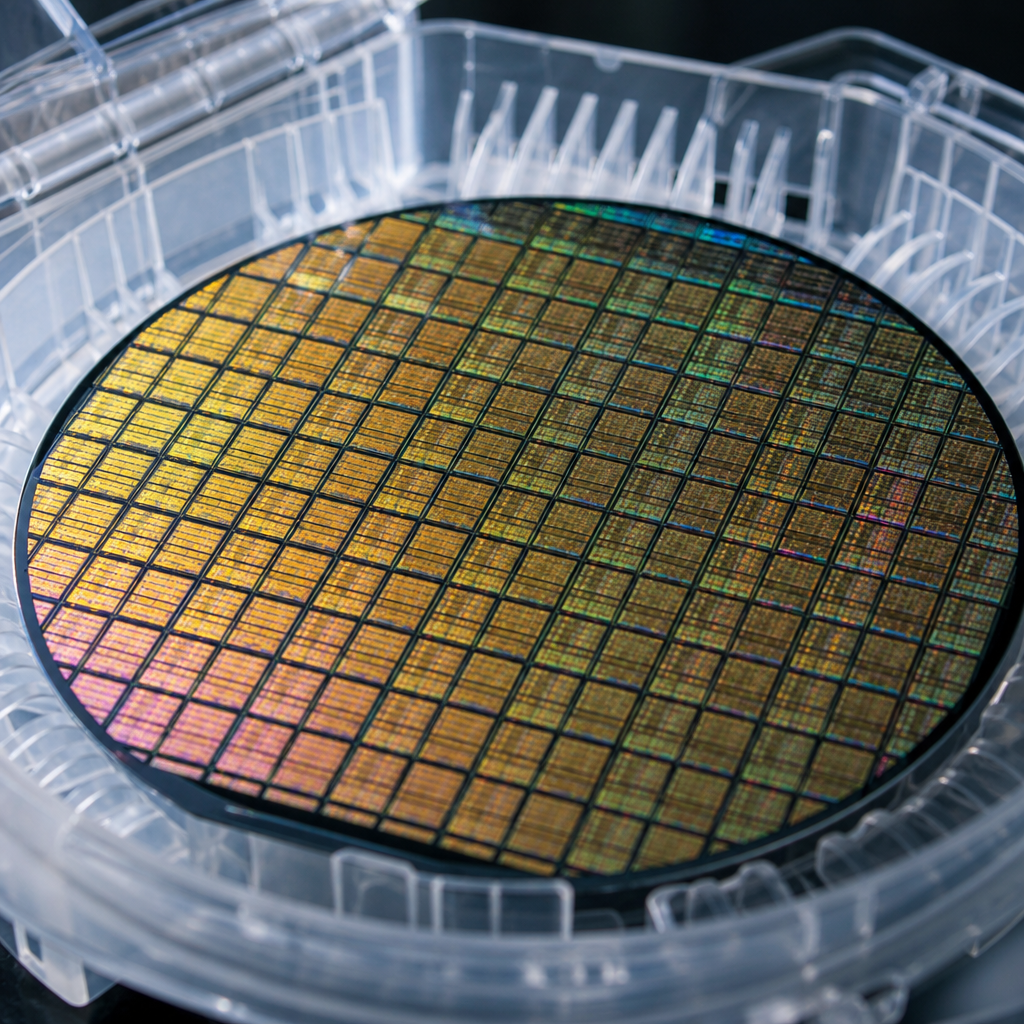
If one technical development explains why Fairchild changed the industry, it is the planar process. Jean Hoerni developed the key idea of building transistors beneath a protective silicon dioxide layer, allowing openings to be etched where dopants could be diffused into the silicon. This oxide layer improved surface stability and made devices far more reliable than earlier approaches. Robert Noyce then recognized that the same basic process could support on-chip interconnections, creating a practical path to monolithic integrated circuits. Jay Last led the group that turned these concepts into manufacturable devices.
That leadership was crucial because there is a large gap between a plausible process on paper and a functioning production line. Last’s team had to refine photolithographic patterning, impurity diffusion, oxide growth, metal deposition, and defect control. Early germanium technologies had limitations in heat stability and process robustness, so Fairchild’s focus on silicon was strategically correct. Silicon dioxide offered a naturally useful insulating and passivating layer, which made the planar method far more effective. In plain terms, Fairchild found a way to protect, pattern, and connect tiny components on one chip using methods that could be repeated in volume.
Texas Instruments engineer Jack Kilby built an earlier integrated circuit in 1958, and his work was foundational. But Fairchild’s contribution was different and decisive: the planar silicon integrated circuit was better suited to mass production. That is why Jay Last’s role matters in any serious discussion of semiconductor roots. He did not merely participate in a symbolic invention race; he helped push the version of the technology that industry could scale. Military and aerospace customers, who needed compact, reliable electronics, became early adopters. Once production improved and costs fell, integrated circuits expanded into computing, communications, industrial equipment, and consumer products.
| Milestone | Key Figure or Group | Why It Mattered |
|---|---|---|
| Transistor invention, 1947 | Bell Labs | Established the device class that replaced vacuum tubes |
| Shockley Semiconductor founded, 1956 | William Shockley | Brought elite talent to what became Silicon Valley |
| Fairchild founded, 1957 | Traitorous Eight | Created the company that commercialized advanced silicon processes |
| Planar process developed | Jean Hoerni | Enabled reliable, manufacturable silicon devices |
| Monolithic silicon IC commercialized | Fairchild team led by Jay Last | Made integrated circuits practical for scaled production |
Jay Last’s Working Style and What It Reveals About Early Chipmaking
Last’s career shows that early semiconductor success depended on disciplined collaboration more than lone-genius mythology. Accounts from Fairchild consistently point to a culture where physicists, chemists, metallurgists, process engineers, and equipment specialists worked side by side. In my experience studying industrial innovation, this is exactly how difficult technologies mature: progress comes from constant iteration, process control, and unglamorous problem solving. Last embodied that mode of work. He was deeply technical, but he was also pragmatic about deadlines, manufacturability, and customer needs.
One reason Fairchild moved ahead was its willingness to integrate research with production. Instead of treating manufacturing as a secondary step, the company designed processes with yield in mind. That included reducing contamination, improving wafer handling, standardizing masks, and validating reliability. Today those ideas sound obvious because every advanced fab relies on statistical process control, metrology, and defect density reduction. In the late 1950s and early 1960s, however, these practices were still being invented in real time. Last’s contribution sits in that transition from experimental physics to industrial engineering.
He also represents an overlooked truth about semiconductor roots: the people who make a technology practical often have as much historical significance as the people who first imagine it. Kilby, Noyce, Hoerni, and Moore are essential names, but Jay Last belongs in the same conversation because he helped bridge concept and commerce. Without that bridge, the integrated circuit might have remained limited, expensive, and niche for much longer.
Why Fairchild Became the Seedbed of Silicon Valley
Fairchild Semiconductor did more than ship components. It established a template for the regional innovation system that became Silicon Valley. The company trained engineers who later founded or led major firms, including Intel, National Semiconductor, Advanced Micro Devices, and many others. This pattern is often called the “Fairchildren” effect, and it shows why a Semiconductor Roots hub should treat Fairchild as a central node rather than a side story. Talent, capital, technical methods, and startup culture all radiated outward from one company.
Jay Last was part of that foundational generation. Even though he left the semiconductor business relatively early and later became known for collecting African art and citrus crate labels, his influence remained embedded in the industry’s structure. Fairchild proved that top technical staff could leave an established leader, secure funding, build a new company, and out-execute the incumbent. That lesson became one of Silicon Valley’s governing norms. It encouraged mobility, spinouts, stock-based incentives, and intense competition around process and design innovation.
The company also accelerated the shift from east-coast electronics dominance toward Northern California. Before Fairchild, much of advanced electronics expertise and corporate power sat elsewhere, including Bell Labs in New Jersey and established defense contractors across the country. After Fairchild, Santa Clara Valley became the focal point for semiconductor entrepreneurship. This regional transformation was not accidental. It came from the concentration of specialized talent, supplier relationships, defense demand, and venture-backed risk taking that Fairchild helped normalize.
Semiconductor Roots: The Bigger Historical Context
Looking at Jay Last in isolation would miss the broader lineage that made his work possible. Semiconductor roots begin with quantum physics and materials research, continue through Bell Labs transistor breakthroughs, move into Shockley’s attempt to commercialize silicon devices, and then flower at Fairchild through manufacturable processes. From there, the story leads into MOS technology, memory chips, microprocessors, and today’s systems-on-chip. A good hub page should connect those stages because each one depends on the previous layer of knowledge and infrastructure.
Fairchild’s integrated-circuit work also demonstrates a recurring rule in technology history: manufacturing advantage creates strategic advantage. The company that can produce a device reliably, in volume, and at declining cost usually shapes the market. That was true for planar silicon ICs, and it remains true today in advanced nodes where firms such as TSMC, Samsung, and Intel compete through process capability, yield learning, packaging, and capital intensity. The roots of that manufacturing logic run directly through Fairchild and through leaders such as Jay Last.
For readers exploring Historical Perspectives, this page should serve as a launch point into related subjects: the traitorous eight, the planar process, Robert Noyce and Jean Hoerni, early defense electronics procurement, Bell Labs transistor research, and the rise of Silicon Valley startups. Jay Last’s story ties all of them together because it shows how institutions, people, and fabrication methods converged at the exact moment the integrated circuit became practical. That is his enduring importance. To understand modern computing at its foundation, start with Fairchild, study the planar silicon breakthrough, and put Jay Last back where he belongs: near the center of semiconductor history.
Frequently Asked Questions
Who was Jay Last, and why is he important in the history of semiconductors?
Jay Last was one of the key early figures in the semiconductor industry and a founding member of Fairchild Semiconductor, the company that became one of the most influential launching points in the history of Silicon Valley. He is especially important because his work helped move the integrated circuit from a promising scientific idea into something that could actually be fabricated in a repeatable, scalable way. That distinction matters. Many breakthroughs begin as elegant demonstrations in a lab, but modern electronics depend on the far harder achievement of turning those demonstrations into manufacturable products.
Last was part of the group later known as the “traitorous eight,” the engineers and scientists who left Shockley Semiconductor Laboratory to build a new company around better management, stronger collaboration, and more practical innovation. At Fairchild, he worked in the environment where chemistry, physics, materials science, and process engineering all had to come together. His contribution was not simply theoretical. It was deeply tied to the production challenges that determine whether a technology remains experimental or becomes commercially transformative.
That is why Jay Last deserves special recognition. He stood at the moment when semiconductor technology was shifting from discovery to industry. The integrated circuit changed computing, communications, defense systems, consumer electronics, and eventually nearly every aspect of modern life. Last helped make that shift possible by contributing to the methods and manufacturing discipline that allowed semiconductor devices to be produced reliably and at scale.
What did Jay Last do at Fairchild Semiconductor that helped make the integrated circuit practical?
At Fairchild Semiconductor, Jay Last played a central role in the development and refinement of semiconductor manufacturing processes that made integrated circuits feasible as commercial products. In simple terms, he helped bridge the gap between invention and production. An integrated circuit is only world-changing if it can be built consistently, with useful yields, in volumes large enough to support real applications. That required solving difficult problems involving materials purity, device patterning, interconnections, contamination control, and repeatable fabrication techniques.
Fairchild became a pivotal force in this transformation through advances in the planar process and related production methods. These innovations allowed multiple components to be formed on a single piece of silicon in a way that was more stable, protectable, and scalable than earlier approaches. Last’s work sat within that crucial process-development context. He was involved in the engineering effort that turned semiconductor fabrication into a disciplined manufacturing system rather than a series of isolated experiments.
What made this so important was that practical integrated circuits needed more than clever design. They needed a manufacturing framework that could support reliability and cost reduction over time. Last helped Fairchild develop the technical and organizational capabilities to do exactly that. His contribution is best understood as part of the team effort that made semiconductors industrially viable, which is why his role remains so significant in the story of the integrated circuit.
Why is Fairchild Semiconductor so central to the story of Silicon Valley and modern electronics?
Fairchild Semiconductor occupies a unique place in technology history because it was both a breakthrough company and a breeding ground for future innovation. It helped establish the technical, entrepreneurial, and cultural model that would define Silicon Valley for decades. On the technical side, Fairchild accelerated the development of silicon-based devices and integrated circuit manufacturing. On the business side, it showed how a startup built around highly skilled scientists and engineers could outperform older, more rigid organizations. On the cultural side, it normalized the idea that talented people could leave one company, start another, and spread innovation across an entire region.
Jay Last’s significance fits directly into this broader Fairchild story. He was there during the period when the company was proving that semiconductor innovation was not just about isolated genius but about coordinated advances in process engineering, fabrication methods, and manufacturability. This mattered because modern electronics require millions, then billions, of reliable components. Fairchild helped create the pathway from discrete transistors to integrated systems, and that pathway became the foundation for computers, aerospace electronics, telecommunications networks, industrial controls, and consumer devices.
Fairchild also had an outsized influence through the people who passed through it. Many later founded or shaped major companies, helping turn Silicon Valley into a dense network of technical expertise and startup formation. Because Jay Last was one of the original figures in that foundational period, his story is inseparable from the rise of the region itself. His work reflects the moment when semiconductor science became an industry and when that industry began reshaping the modern world.
How did Jay Last’s work differ from the more famous inventor narratives often told about the integrated circuit?
Popular history often focuses on singular inventors and dramatic moments of invention, but the real story of the integrated circuit is broader and more collaborative. While individual breakthroughs absolutely mattered, semiconductor progress depended just as much on the people who solved the less glamorous but essential problems of fabrication, repeatability, design compatibility, and scale. Jay Last represents that critical side of innovation. His importance lies not in a simplified myth of lone invention, but in the engineering reality that a technology only changes the world when it can be manufactured effectively.
This is one reason his legacy can be overlooked in mainstream retellings. Public attention tends to favor patents, product launches, and charismatic founders. Yet the semiconductor industry was built by teams who wrestled with process details, materials limitations, and production bottlenecks. Last was one of the figures operating exactly at that intersection. He helped address the practical challenges that determined whether integrated circuits would remain specialized curiosities or become the basis of a new technological age.
Understanding Jay Last’s role gives a more accurate picture of innovation itself. Major technological revolutions are rarely the result of a single breakthrough alone. They emerge from the combination of scientific insight, engineering discipline, manufacturing skill, and organizational execution. Last’s story reminds readers that making something practical can be just as historically important as inventing it in the first place.
Why does Jay Last still matter today when discussing the origins of modern computing and electronics?
Jay Last still matters because the world we live in is built on the success of practical semiconductor manufacturing. Every smartphone, laptop, data center, network switch, medical device, automobile control system, and advanced industrial machine depends on the ability to fabricate complex integrated circuits reliably and economically. That capability did not appear automatically once the basic concept of the integrated circuit existed. It had to be engineered into reality, and Last was among the people who helped make that happen at a formative stage.
His relevance today is also historical. Understanding modern computing requires looking beyond end products and famous corporations to the foundational process innovations that made large-scale electronics possible. Fairchild Semiconductor was one of the central institutions in that transition, and Jay Last was one of the important contributors within it. His work helps explain why Silicon Valley emerged where it did, why semiconductor manufacturing became the backbone of digital progress, and why process engineering deserves as much attention as headline-making invention.
In a broader sense, Last’s career offers a lesson about how technological revolutions really unfold. They depend on people who can connect scientific possibility with manufacturing practicality. That was true in the early semiconductor era, and it remains true today in fields such as artificial intelligence hardware, advanced materials, biotechnology, and clean energy systems. Jay Last matters not only because of what he did in the past, but because his story continues to illustrate how transformative technologies become real.