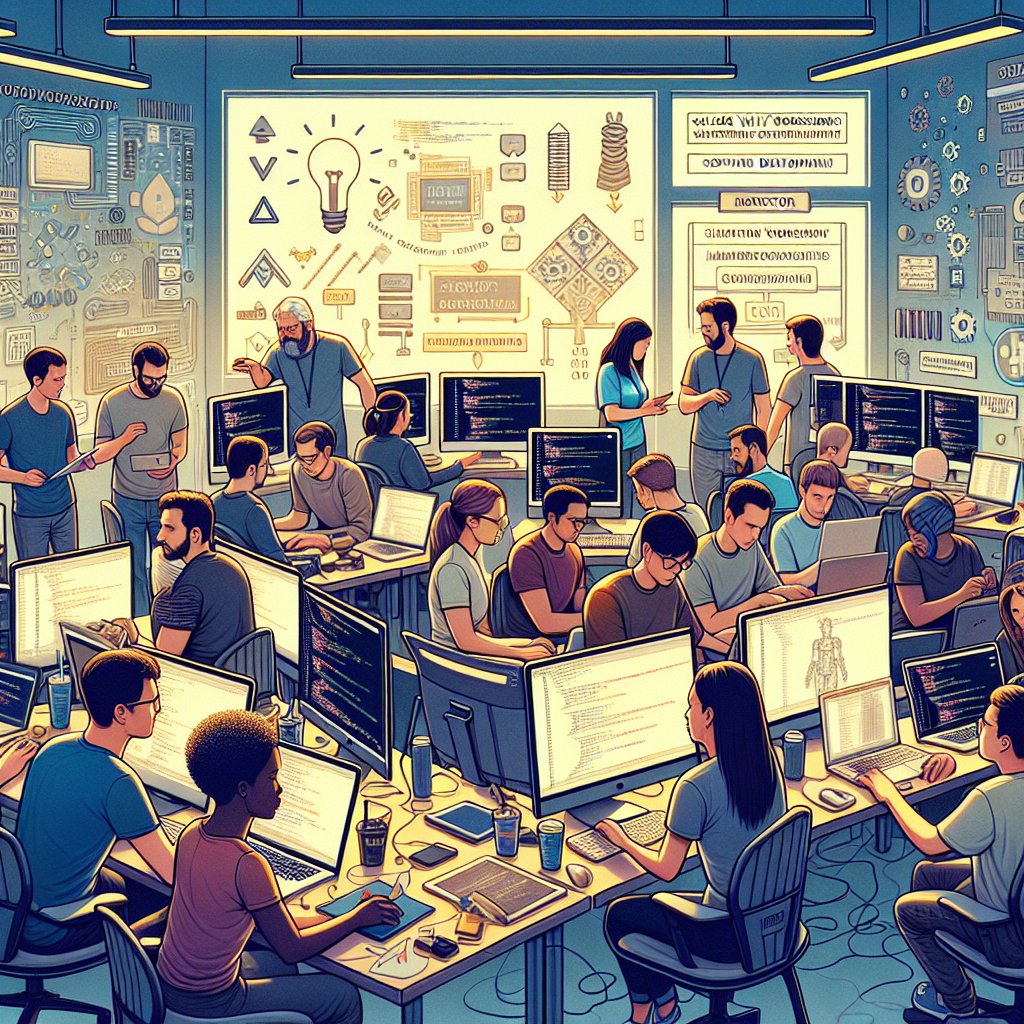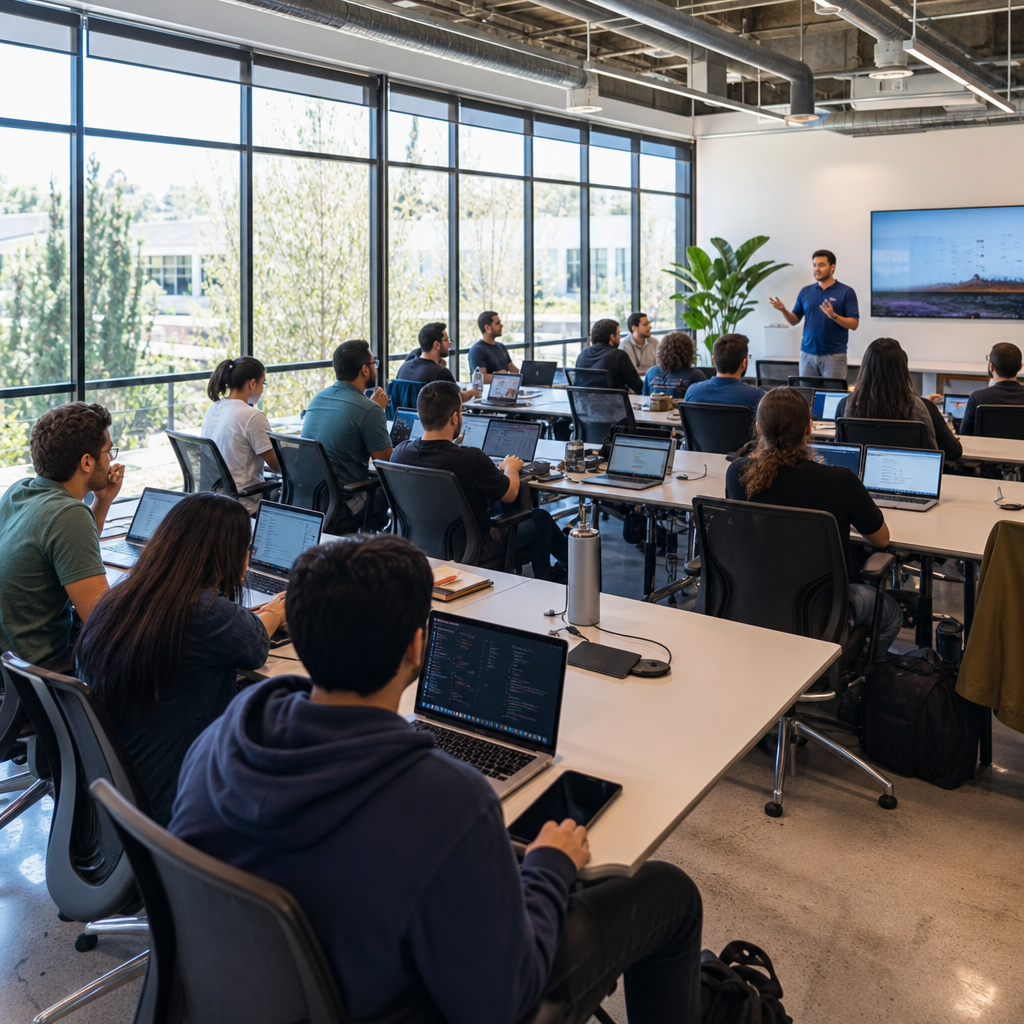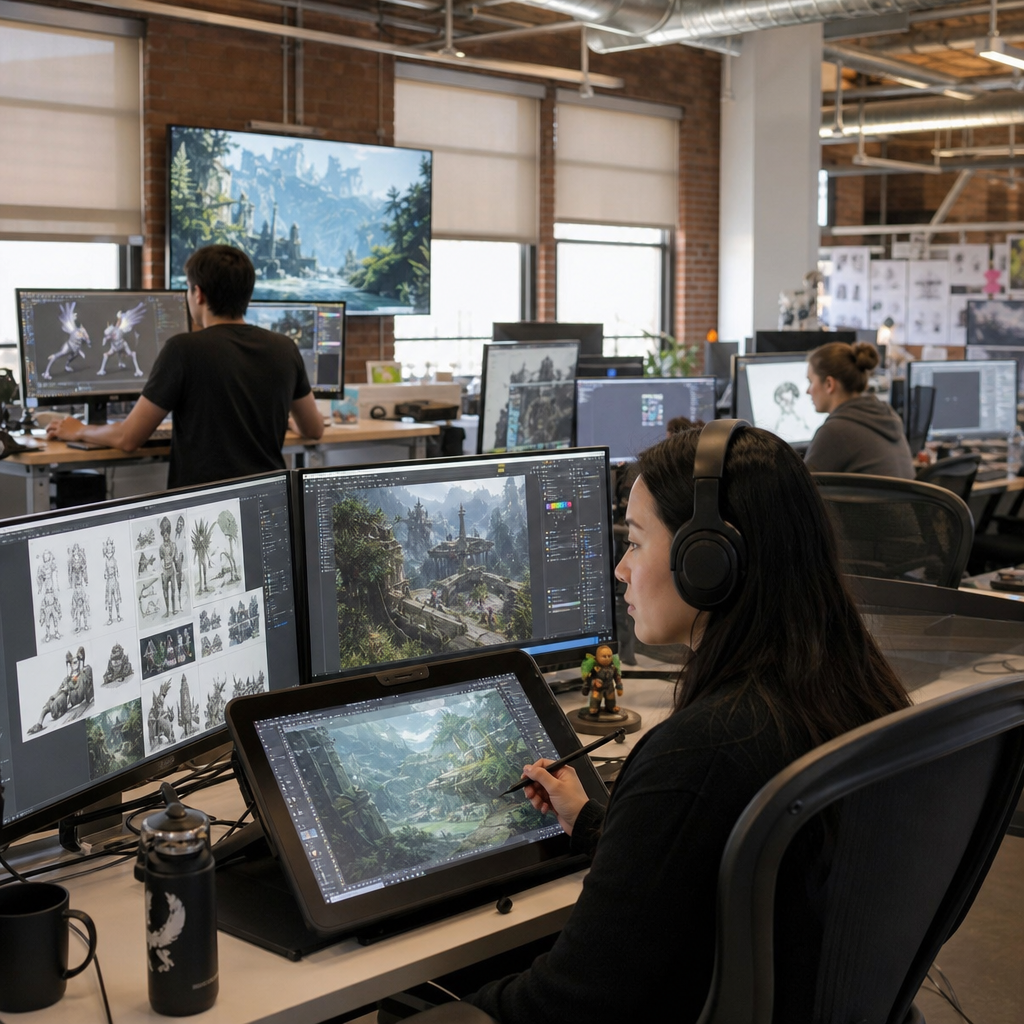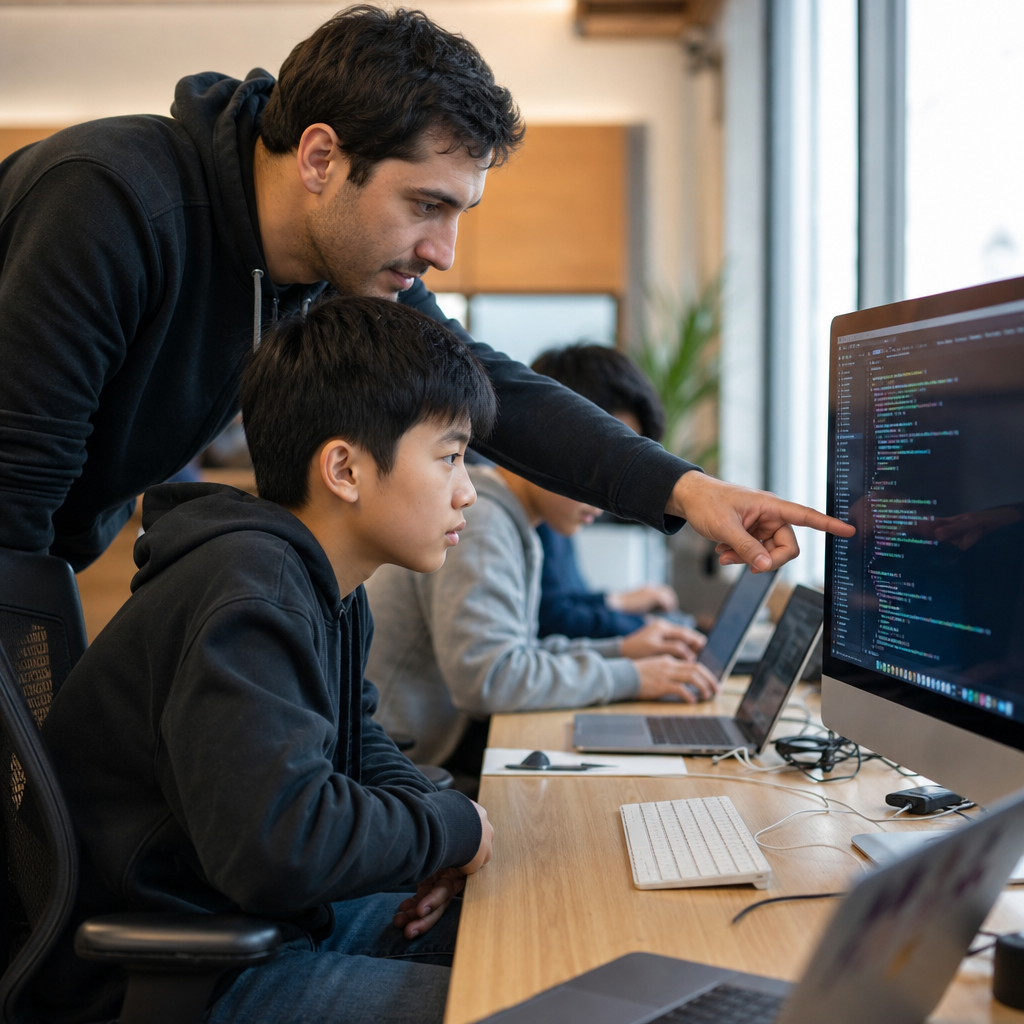
Creative coding has become one of Silicon Valley’s most distinctive educational movements, blending computer science, art, design, and entrepreneurship into programs that teach people how to build with code while thinking imaginatively. In this context, creative coding means using programming languages, visual development platforms, physical computing tools, and data-driven media to produce interactive experiences, digital art, games, prototypes, and new ways of solving problems. I have worked with student teams and adult learners in Bay Area maker spaces, bootcamps, district partnerships, and university extension programs, and the pattern is consistent: learners stay engaged longer when code is connected to visible, expressive outcomes. That matters because the region’s employers increasingly value hybrid skills, not just technical fluency in Python or JavaScript, but the ability to communicate ideas, prototype quickly, collaborate across disciplines, and adapt to fast-changing tools.
Silicon Valley’s educational ecosystem is uniquely suited to this approach. It combines research universities, public school innovation initiatives, nonprofit labs, startup accelerators, libraries with fabrication equipment, and companies that fund outreach in robotics, digital media, and applied artificial intelligence. As a hub for expanding knowledge and skills, creative coding programs help learners move from passive consumption to active creation. They also serve a wide audience: elementary students experimenting with Scratch, teenagers building Arduino installations, college learners studying human-computer interaction, and working professionals upskilling through UX prototyping or machine learning visualization. For readers exploring educational resources in this broader subtopic, this article maps the core program types, teaching methods, tools, outcomes, and access pathways that define Silicon Valley’s model, while pointing toward the deeper learning opportunities that branch from this hub.
What Makes Silicon Valley’s Creative Coding Programs Different
The defining feature of Silicon Valley’s creative coding education is interdisciplinary design. Traditional programming courses often start with syntax and abstract logic, then ask learners to trust that practical value will arrive later. Creative coding in the Valley usually reverses that sequence. Programs begin with a tangible goal, such as designing an interactive mural, building a sensor-based music device, prototyping an app, or turning climate data into a visual story. From there, students learn variables, control flow, APIs, event handling, and debugging because they need those concepts to make something work.
This project-first structure reflects the region’s startup culture and product mindset. At Stanford’s d.school influenced programs, at local coding studios using Processing or p5.js, and in museum education spaces around San Jose and Palo Alto, instructors often frame assignments around user experience, iteration, and critique. Learners present work, gather feedback, revise, and document choices. That mirrors real technical work more accurately than isolated problem sets do. It also broadens participation. Students who may not initially identify as future software engineers often enter through animation, storytelling, music technology, game design, or civic data projects, then develop strong computational thinking through sustained practice.
Another difference is proximity to industry-standard tools and mentors. A student in Silicon Valley might learn JavaScript through interactive media, then connect that work to web development internships. A professional attending an evening program may prototype with Figma, integrate code in React, and test simple AI features with cloud APIs in the same learning cycle. Because local instructors frequently come from product teams, digital agencies, research labs, and startups, they teach not only code but workflow: version control in GitHub, collaboration norms, portfolio development, accessibility checks, and presentation skills. Those applied habits are a major reason creative coding programs in the region produce graduates with practical momentum.
Core Program Types and Who They Serve
Silicon Valley offers creative coding pathways across age groups and experience levels. K–12 programs commonly appear in public school enrichment, charter innovation tracks, summer camps, after-school robotics clubs, and library makerspaces. Younger learners usually start with block-based environments such as Scratch before moving into p5.js, Python, or robotics kits. The strongest K–12 models do more than teach commands. They combine design prompts, peer review, and public showcases, helping students connect coding to communication and confidence.
For teens, specialized academies and nonprofit programs often emphasize portfolio-building. Students might create mobile games in Unity, physical computing projects with Arduino, wearable electronics using microcontrollers, or data narratives about local issues. These formats are especially valuable for college preparation because admissions committees and scholarship reviewers can see evidence of initiative, persistence, and interdisciplinary thinking. I have seen students explain a single well-documented installation project more effectively in interviews than a transcript full of generic course names.
At the college and adult level, creative coding expands into certificate programs, university extension courses, bootcamps, and workforce upskilling. Here the audience includes design students learning front-end development, engineers exploring generative art, marketers learning no-code automation, and career changers entering UX engineering or interactive media. Programs frequently combine synchronous workshops with independent studio time, which reflects how adults learn best: guided instruction paired with room to experiment, fail, and refine. Some offerings are intensive and career-focused; others are exploratory and ideal for professionals who want to expand adjacent skills without changing roles immediately.
| Program type | Typical audience | Common tools | Primary outcome |
|---|---|---|---|
| K–12 enrichment | Elementary and middle school students | Scratch, micro:bit, LEGO robotics | Computational thinking and confidence |
| Teen academies | High school students | p5.js, Arduino, Unity | Portfolio projects and college readiness |
| University and extension | College students and adult learners | JavaScript, Python, Processing, Figma | Interdisciplinary technical fluency |
| Bootcamps and workforce programs | Career changers and professionals | React, GitHub, APIs, cloud tools | Job-ready prototypes and applied skills |
Skills Learners Build Beyond Basic Programming
The most important outcome of creative coding is not mastery of a single language. It is the expansion of durable skills that transfer across roles, industries, and technologies. First is computational thinking: breaking problems into components, recognizing patterns, designing logic, and testing assumptions. In creative environments, these skills are easier to observe because the output is visible. If an animation stalls, a sensor fails, or a data visualization misrepresents scale, students can diagnose cause and effect in concrete terms.
Second is design literacy. Many Silicon Valley programs teach learners to think about audience, usability, accessibility, and narrative structure from the beginning. A student making an interactive installation must decide what users should notice first, how feedback appears, and whether color choices remain legible. An adult learner building a dashboard must consider clarity, hierarchy, and error states. This combination of technical and design judgment is increasingly valuable in roles spanning product management, UX engineering, digital marketing, educational technology, and research communication.
Third is collaboration. Creative coding projects naturally require cross-functional work: one learner handles visuals, another writes logic, another tests hardware, another documents the build. In well-run programs, instructors formalize this through sprint check-ins, critique sessions, GitHub repositories, and demo days. These habits matter because employers consistently rank communication, teamwork, and adaptability alongside technical competence. According to the World Economic Forum’s Future of Jobs reporting, analytical thinking, creativity, resilience, and technology literacy are all rising in importance. Creative coding programs cultivate those capacities together rather than treating them as separate domains.
Leading Tools, Teaching Methods, and Learning Environments
Several tools appear repeatedly across Silicon Valley’s strongest programs because they lower barriers while still supporting sophisticated work. Scratch remains effective for beginners because it teaches sequencing, loops, events, and conditionals without syntax frustration. Processing and p5.js are foundational for visual and interactive coding, especially when programs want students to see immediate graphical output in the browser. Arduino and micro:bit support physical computing, making abstract logic tangible through sensors, LEDs, motors, and wearables. Python often enters when learners move toward data analysis, machine learning concepts, or creative automation. JavaScript and React become common in programs tied to web-based product development.
The teaching methods are just as important as the tools. Effective instructors use scaffolded projects: a tightly guided first build, a semi-structured second assignment, then an open-ended capstone. They also emphasize critique, reflection, and documentation. In my experience, students learn faster when asked to explain not only what they built but why they made certain decisions, what broke, and how they fixed it. This metacognitive layer turns experimentation into durable knowledge.
Learning environments vary, but the strongest ones share common traits. They provide access to devices and materials, maintain low student-to-instructor ratios, and create psychologically safe conditions for trial and error. Public libraries with maker labs, community colleges, museum studios, district innovation centers, and private academies can all succeed when they support iterative work. Access remains uneven, however. Equipment costs, transportation, and tuition can exclude learners, which is why scholarships, loaner hardware, open-source software, and community partnerships are essential if creative coding is meant to expand opportunity rather than simply reward those already well positioned.
How to Choose the Right Program and Keep Growing
Choosing a creative coding program starts with a simple question: what do you want to make? Someone interested in animation or data art should look for p5.js, Processing, or design-led JavaScript courses. A learner drawn to smart devices, robotics, or interactive installations should prioritize Arduino, micro:bit, and fabrication access. Professionals aiming for career mobility may need programs that include GitHub workflows, portfolio reviews, team projects, and exposure to product thinking. The best fit is usually the one that aligns tools, teaching style, and outcomes with your immediate goal.
It is also wise to evaluate practical details. Check whether projects are instructor-led or open-ended, whether feedback is individualized, whether accessibility and inclusive pedagogy are visible, and whether alumni outcomes are documented. Strong programs can clearly show sample work, mentor profiles, and progression paths into advanced study, internships, or community showcases. As this hub for expanding knowledge and skills, creative coding is best understood not as a niche elective but as a durable gateway into modern digital literacy. It teaches people to think critically, build confidently, and communicate ideas through technology. If you are exploring educational resources in Silicon Valley, start with a program that lets you make something real, then follow that momentum into the next course, tool, or collaborative project.
Frequently Asked Questions
What is creative coding, and why has it become such an important part of Silicon Valley education?
Creative coding is an approach to learning and building with technology that combines programming with experimentation, design, storytelling, and hands-on problem-solving. Instead of teaching code only as a technical skill used to write software in a traditional business setting, creative coding programs encourage learners to use code to make interactive visuals, digital art, games, prototypes, installations, data experiences, and physical computing projects. In Silicon Valley, this model has gained momentum because it reflects how innovation often works in the real world: breakthrough ideas emerge when technical ability is paired with imagination, empathy, and the willingness to test unconventional concepts.
Educational institutions, bootcamps, maker spaces, and youth programs across the region have embraced creative coding because it helps students see programming as a flexible medium rather than a rigid discipline. A learner might begin by animating shapes with JavaScript, then move into building an Arduino-powered object, creating a game in Unity, or designing a data visualization that communicates a social issue. This variety makes coding more accessible to people who may not initially identify as engineers, including artists, designers, aspiring founders, and interdisciplinary learners.
Silicon Valley values creative coding because it develops the same habits that power startup culture and product innovation: rapid prototyping, iterative thinking, cross-functional collaboration, and comfort with ambiguity. Students do not just learn syntax; they learn how to transform an idea into something testable and shareable. That makes creative coding especially relevant in a region where education is closely tied to entrepreneurship, product development, and emerging technology.
How are Silicon Valley’s creative coding programs different from traditional computer science courses?
Traditional computer science courses often emphasize foundational theory, algorithms, data structures, software engineering practices, and formal problem-solving methods. Those subjects are valuable and, in many cases, essential. Creative coding programs differ in their entry point and their learning experience. Rather than starting with abstract concepts alone, they frequently begin with making: students create something visual, interactive, physical, or expressive from the start. That immediate feedback loop can make learning more engaging and easier to grasp, especially for beginners.
In Silicon Valley’s creative coding environments, a lesson might center on building an interactive installation, generating visual patterns from data, programming a simple game mechanic, or creating a prototype for a new product concept. Technical skills are still being taught, but they are embedded in meaningful projects. Learners often work with tools such as Processing, p5.js, Python, JavaScript, Unity, Arduino, Raspberry Pi, TouchDesigner, or no-code and low-code platforms, depending on the program’s goals. The emphasis is on experimentation, iteration, and connecting code to real user experiences.
Another major difference is the interdisciplinary culture. Creative coding programs often bring together principles from design, media arts, electronics, human-computer interaction, and entrepreneurship. Students may be asked not only whether their code works, but also whether the experience is intuitive, visually compelling, emotionally resonant, or useful in a market context. In Silicon Valley, where products must compete on both technical performance and user experience, this broader lens is especially valuable. The result is an educational model that prepares learners to think like builders who can bridge engineering and creativity.
Who can benefit most from creative coding programs in Silicon Valley?
One of the strongest features of creative coding is that it serves a very wide range of learners. Students and young people benefit because creative coding can make technical education feel more approachable, playful, and relevant. Instead of encountering code only through textbook exercises, they can use it to animate graphics, build simple games, control hardware, or create digital stories. That early sense of authorship often increases confidence and long-term interest in STEM-related fields.
Creative professionals also benefit significantly. Designers, artists, filmmakers, musicians, and content creators can use creative coding to expand their capabilities and develop interactive work, generative systems, or media-rich prototypes. In Silicon Valley, where design and technology are deeply intertwined, these skills can open doors to product design, UX prototyping, immersive media, and innovation-focused roles. For professionals who already think visually or conceptually, creative coding provides a practical pathway into software-driven creation without requiring them to follow a purely traditional engineering route.
Entrepreneurs, product thinkers, and career changers are another strong fit. Many Silicon Valley programs are designed around building and testing ideas quickly, which is ideal for founders who need to prototype concepts, validate experiences, or communicate product vision to investors and collaborators. Even technical professionals can benefit, particularly if they want to sharpen their front-end, visualization, prototyping, or human-centered development skills. In short, creative coding is not limited to aspiring programmers; it is valuable for anyone who wants to combine analytical thinking with invention and make technology more expressive, engaging, and useful.
What kinds of projects do students typically build in creative coding programs?
Projects in creative coding programs are intentionally varied because the field is built around using code as a medium for expression, interaction, and innovation. Students often create interactive web experiences, generative art pieces, browser-based sketches, simple games, and animated visual systems. These projects help learners understand core concepts such as variables, conditionals, loops, functions, events, and object-oriented thinking, but they do so through outputs that are immediately visible and personally meaningful.
Many Silicon Valley programs also emphasize physical computing and prototyping. Students may build sensor-based installations, wearable tech experiments, responsive objects, robotics projects, or connected devices using platforms like Arduino and Raspberry Pi. This kind of work teaches not only coding but also systems thinking, electronics basics, debugging across hardware and software, and user interaction design. It mirrors the region’s maker culture and its broader interest in product development that spans both digital and physical experiences.
More advanced learners may work on data visualizations, machine learning experiments, immersive media, app prototypes, or startup-oriented proof-of-concept products. For example, a team might create an interface that turns environmental data into live visuals, design a prototype for an educational game, or build a tool that demonstrates a new interaction idea for health, accessibility, or commerce. These projects are valuable because they do more than showcase technical skill; they demonstrate how a learner can identify a problem, imagine a solution, and bring it to life through iterative development. That ability is highly respected in Silicon Valley’s educational and professional ecosystems.
How can someone choose the right creative coding program in Silicon Valley?
The best program depends on a learner’s goals, background, and preferred way of working. A beginner who wants a friendly introduction should look for programs that prioritize project-based learning, mentorship, and accessible tools such as p5.js, Processing, or visual development platforms. Someone with design experience may prefer a course that focuses on interaction design, creative front-end development, or experiential media. A founder or product-minded learner may benefit more from a program that combines prototyping, entrepreneurship, and collaborative problem-solving.
It is also important to evaluate the program’s teaching philosophy. Strong creative coding programs do more than teach software; they create an environment where experimentation is encouraged and failure is treated as part of the process. Look for evidence of hands-on projects, portfolio development, critique sessions, and cross-disciplinary collaboration. In Silicon Valley, the most effective programs often connect learners to a larger ecosystem through showcases, demo days, maker communities, industry speakers, or partnerships with startups and labs. Those opportunities can be just as valuable as the curriculum itself because they help students translate learning into real-world momentum.
Finally, consider practical factors such as time commitment, cost, instructional level, and the kinds of outcomes you want. If your goal is career development, choose a program that helps you build a strong portfolio and explain your process clearly. If your goal is exploration, prioritize breadth, creativity, and access to supportive mentors. If you want to build products, look for opportunities to prototype, test, and refine ideas with feedback. In Silicon Valley, the strongest creative coding programs are not just teaching people how to code; they are helping them develop a maker mindset that blends technical fluency with curiosity, originality, and execution.