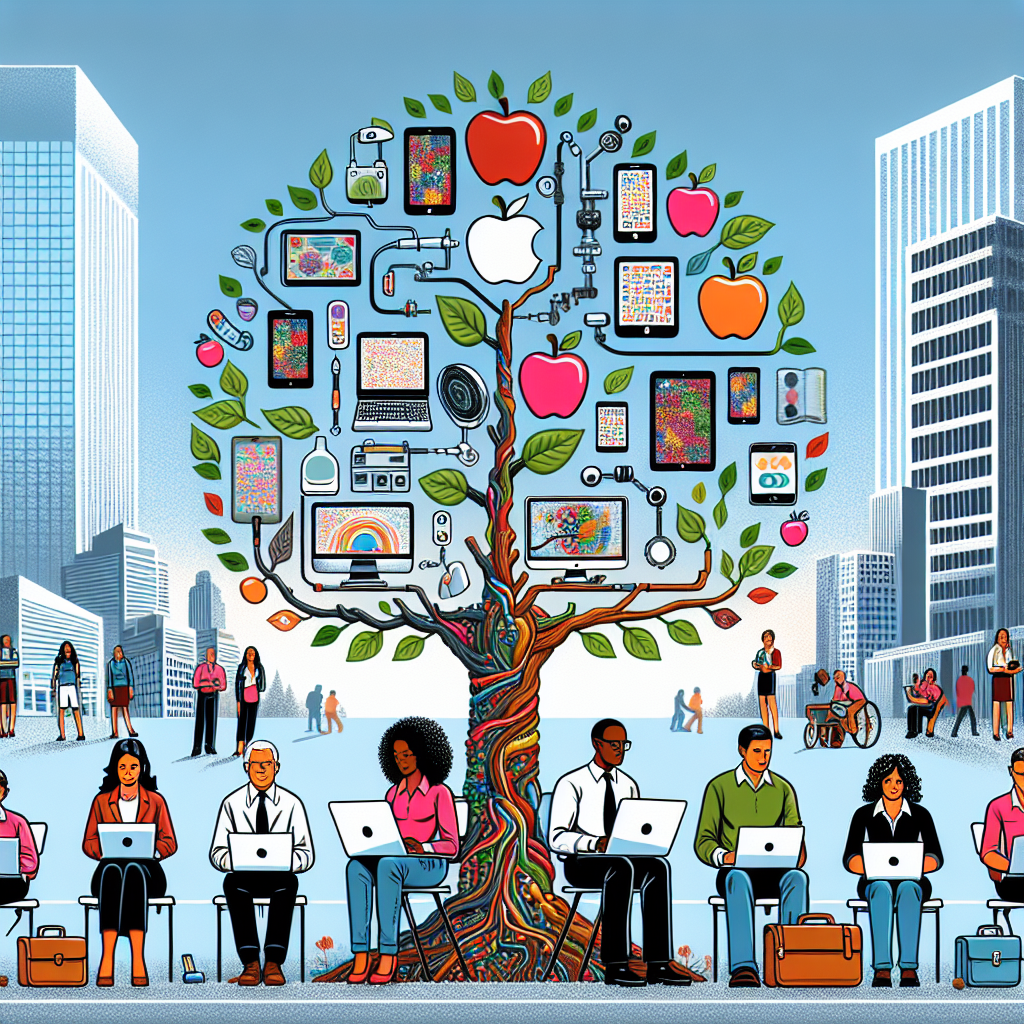

Silicon Valley used to signal itself through office parks, Sand Hill Road conference rooms, and accelerator demo days, but much of its operating system now lives in founder communities, hacker houses, and AI meetups. These informal networks function as the new infrastructure for entrepreneurship and venture capital because they help people find cofounders, recruit early employees, test ideas, meet investors, and learn faster than formal institutions often allow. In practical terms, founder communities are curated groups of builders who share advice, introductions, and accountability; hacker houses are shared living or working spaces organized around intense collaboration; AI meetups are recurring gatherings where researchers, engineers, founders, and investors exchange technical knowledge and market signals. I have watched early-stage teams make their most important decisions in these settings, sometimes before they ever incorporated or pitched a fund. For anyone studying accelerators and ecosystem dynamics, this matters because the center of gravity has shifted. The best opportunities increasingly surface in semi-public rooms where trust, speed, and repeated interaction shape outcomes more than logos do. Understanding this informal layer is now essential to understanding how Silicon Valley actually works.
Why informal infrastructure is replacing formal gatekeepers
The classic startup ecosystem relied on a sequence: build a prototype, join an accelerator, raise from angels, then pursue seed capital. That path still exists, but it is no longer the only credible route. Informal infrastructure has expanded because company formation has become cheaper, technical talent has become more distributed, and communication tools have compressed the time between meeting someone and starting a project. A founder can now attend a machine learning meetup on Thursday, move into a hacker house on Saturday, and start building with a new collaborator on Monday. That speed changes competitive advantage.
These networks are effective because they solve three hard problems better than many formal programs. First, they reduce search costs. Instead of cold-emailing dozens of potential hires or investors, founders enter a dense environment where the right people are already present. Second, they create high-frequency trust. Repeated dinners, demo nights, and working sessions reveal who ships, who follows through, and who only talks. Third, they circulate tacit knowledge. The most valuable startup lessons are often not found in public blog posts. They are specific: which cloud credits actually help, which enterprise pilot terms to reject, how to structure a SAFE side letter, or how to evaluate model inference costs before launch.
Informal infrastructure does not eliminate accelerators; it changes their role. Y Combinator, Techstars, and domain-specific programs still provide brand, structure, and investor access. However, many founders now arrive with stronger networks, better customer insight, and even early traction because they have already been incubated by communities long before an application is submitted.
Founder communities as distribution, diligence, and support systems
Founder communities range from private Slack groups and WhatsApp circles to membership networks such as On Deck, Pavilion, South Park Commons, and industry-specific peer groups. Their value is not just emotional support, although that matters during the volatility of company building. Their deeper role is economic. A strong founder community acts as a distribution channel for opportunities and a diligence layer for people.
In practice, these groups help members answer urgent questions quickly. Who has implemented a compliant data pipeline for healthcare AI? Which recruiters can close senior infrastructure engineers? Which seed funds move fast and understand open-source business models? Because members have reputations at stake, answers tend to be higher quality than what founders get from public social feeds. I have seen a single community thread lead to a first design partner, an interim finance lead, and three investor introductions in a day.
Communities also help normalize pattern recognition without forcing conformity. Founders compare metrics, pricing experiments, and fundraising narratives, then pressure-test assumptions in plain language. This is especially useful in sectors where benchmarks are still emerging, such as AI agents, developer tools built on foundation models, and robotics software. The strongest communities are not networking clubs. They are working environments with norms: give before asking, share specifics, protect confidentiality, and show evidence.
Hacker houses and the return of proximity
Hacker houses look informal from the outside, but the best ones are highly intentional. They are temporary or semi-permanent spaces where builders live, work, and host events together. In a remote-first era, they restore one scarce asset: proximity. The advantage is not aesthetic; it is operational. When product, research, and go-to-market conversations happen over breakfast and continue past midnight, iteration cycles shorten dramatically.
Some hacker houses focus on broad startup creation, while others specialize in AI safety, open-source infrastructure, consumer apps, crypto, robotics, or bioengineering. During recent AI waves, San Francisco houses became launchpads for model fine-tuning projects, agent frameworks, and applied enterprise products. A resident might get architecture feedback from a visiting staff engineer, legal advice from a startup attorney at dinner, and a warm introduction to an active seed investor by the weekend.
There are tradeoffs. Hacker houses can become echo chambers, and weak operators sometimes confuse density with discipline. Shared spaces also raise practical issues around privacy, labor boundaries, and inclusion. The best houses set explicit expectations on confidentiality, event access, visitor policies, and code ownership. They work because they combine serendipity with structure, not because they romanticize sleep deprivation.
AI meetups as real-time market intelligence
AI meetups have become one of the fastest ways to understand where technical progress is translating into startup formation. A strong meetup blends research updates, live product demos, operator lessons, and candid discussion about deployment constraints. In Silicon Valley, groups centered on large language models, open-source tooling, retrieval systems, evaluation, multimodal interfaces, and GPU optimization have become recurring forums where the ecosystem takes its pulse.
For founders, the value is immediate. Meetups reveal which problems are crowded and which remain underexplored. They surface implementation details that rarely make it into polished conference talks: token cost management, latency bottlenecks, hallucination mitigation, eval design, security review for model APIs, and the limits of retrieval-augmented generation in regulated environments. Investors attend for the same reason. By listening to practitioners compare what is working in production, they get sharper signals than they would from pitch decks alone.
These events also create visible reputations. A founder who explains a concrete deployment challenge clearly often attracts better talent and higher-quality investor follow-up than one who simply announces a launch. In the current market, demonstrated technical judgment is a stronger credential than social visibility alone.
How this ecosystem connects to accelerators and venture capital
Informal infrastructure does not sit outside venture capital; it feeds it. Funds increasingly monitor communities, houses, and meetups to identify founders before a formal round starts. Scouts, platform teams, and associates attend events, host technical dinners, and track who is repeatedly recommended by trusted operators. This changes sourcing. The most competitive investors now build presence long before they ask for access to a deal.
It also changes acceleration. Instead of being the first structured environment a founder enters, an accelerator may now serve as a scaling layer for a team already shaped by community feedback. By the time founders join, they may have a refined wedge, reference customers, and a better sense of market timing. That makes programs more selective but also more useful when they focus on leverage points such as customer introductions, recruiting, regulatory navigation, and follow-on financing strategy.
| Infrastructure type | Primary function | Best use case | Main limitation |
|---|---|---|---|
| Founder communities | Peer learning and introductions | Problem validation and hiring | Quality varies with curation |
| Hacker houses | High-intensity collaboration | Rapid prototyping and team formation | Can become insular |
| AI meetups | Technical knowledge exchange | Market sensing and reputation building | Signal can be noisy |
| Accelerators | Structured support and investor access | Fundraising and go-to-market acceleration | Time-bounded and standardized |
For readers exploring the broader entrepreneurship and venture capital landscape, this is the hub idea to keep in mind: ecosystem advantage comes from how these layers interact. Formal programs still matter, but they work best when connected to active informal networks.
What founders should evaluate before joining
Not every community, house, or meetup will help a company. Founders should evaluate them the way they would evaluate any strategic resource. Start with member quality and relevance. Are participants at your stage, slightly ahead of you, or completely misaligned? Next, assess norms. Do people share specifics, protect confidences, and make useful introductions, or is the group mostly performative? Then look at operator density. One experienced engineer, product leader, or repeat founder who actively helps can be more valuable than a hundred passive members.
Measure outcomes, not branding. Useful signs include introductions that convert into customer calls, feedback that changes the roadmap, recruiting referrals that close, and investor conversations that continue beyond a first meeting. Also consider inclusion and sustainability. A healthy ecosystem should expand access, not just recycle the same insiders. The strongest networks create pathways for new technical talent, immigrant founders, and underrepresented operators to become central contributors.
Finally, treat participation as reciprocal. The founders who gain the most from informal infrastructure are usually the ones who contribute notes, answer questions, host sessions, and connect others without immediate expectation of return. That pattern builds credibility faster than any personal brand strategy.
Founder communities, hacker houses, and AI meetups now form a critical layer of Silicon Valley’s startup infrastructure. They reduce search costs, accelerate trust, spread hard-won operating knowledge, and connect directly to accelerators and venture capital. For founders, they can compress months of isolation into weeks of informed action. For investors, they offer earlier and clearer signals about who can build, learn, and attract talent. For anyone mapping the accelerators and ecosystem landscape, they explain why startup formation increasingly happens outside formal institutions before flowing back into them. The practical takeaway is simple: do not evaluate the Valley only by firms, funds, and programs. Evaluate the rooms where people repeatedly gather, share specifics, and start working together. If you are building a company, choose one strong community, attend the right technical meetups consistently, and engage with intention. Informal infrastructure is no longer peripheral. It is where the next generation of startups gets built.
Frequently Asked Questions
Why are founder communities, hacker houses, and AI meetups being described as Silicon Valley’s new infrastructure?
They are increasingly being called the new infrastructure because they now do much of the practical coordination work that formal institutions used to handle. In an earlier era, people often relied on office parks, accelerator cohorts, university labs, or scheduled investor meetings to enter the Valley’s network. Today, a large amount of that activity happens through recurring dinners, shared living-and-building spaces, Slack and Discord groups, demo nights, reading groups, and highly targeted meetups. These settings create faster paths to the same essential outcomes: meeting potential cofounders, finding early hires, getting warm introductions to angels and venture firms, pressure-testing ideas, and learning what is actually happening at the frontier.
What makes these networks powerful is not just access, but speed and density. A founder community can compress months of isolated searching into a few weeks of repeated interaction. A hacker house can turn passive acquaintances into collaborators because people are building in close proximity and exchanging feedback in real time. AI meetups, in particular, have become hubs where researchers, product builders, infrastructure engineers, and investors overlap, making them unusually efficient environments for sharing knowledge and spotting talent. In that sense, the “infrastructure” is no longer just physical real estate or institutional brand names. It is the living social graph that helps ambitious people coordinate quickly around new opportunities.
What practical advantages do these informal networks offer to founders compared with more traditional startup channels?
The main advantage is that they reduce friction at nearly every stage of company formation. Traditional channels can still matter, but they are often slower, more selective in rigid ways, or less responsive to fast-moving markets. Informal networks help founders solve immediate problems with less ceremony. If someone needs a machine learning engineer, a design partner, feedback on pricing, an intro to a seed fund, or advice on cloud costs, the answer may come from a meetup conversation or a trusted group chat long before it comes from a formal program. That responsiveness is especially important in areas like AI, where technical and market conditions can change dramatically in a single quarter.
These communities also improve decision quality because they expose founders to a wider range of real operating experience. Instead of hearing only polished advice from staged events, they hear what other builders are actually trying, what broke, what customers rejected, what infrastructure stacks are working, and where investors are leaning. That level of candid exchange is hard to replicate in highly scripted environments. There is also a signaling benefit: showing up consistently in the right circles can establish credibility before a company has major traction. People begin to associate a founder with seriousness, speed, technical depth, or generosity, and that reputation often compounds into opportunities.
How do hacker houses and AI meetups influence hiring, cofounder matching, and early product development?
They influence these areas by creating repeated, high-context interactions rather than one-off introductions. In standard recruiting, a founder reviews resumes, conducts interviews, and tries to infer whether someone can execute under uncertainty. In a hacker house or active technical meetup community, that uncertainty is lower because people can observe one another building, problem-solving, communicating, and following through. You are not just hearing what someone says they can do; you are seeing how they think, how fast they ship, what technical standards they hold, and whether they work well with others. That makes these spaces unusually effective for identifying early employees and potential cofounders.
They also accelerate product development because the feedback loops are immediate. Founders can show rough prototypes to peers, get blunt reactions, refine positioning, and test assumptions before investing too much time in the wrong direction. AI meetups are especially valuable here because attendees often include practitioners who understand both the capabilities and limitations of current models, tooling, and deployment patterns. That means feedback is often more technically grounded than what a founder would receive from a general audience. In the earliest stages of a startup, speed of iteration matters enormously, and these environments are designed, intentionally or not, to maximize exactly that.
Do investors and venture capital firms really pay attention to these informal ecosystems?
Yes, and in many cases they do so very closely. Investors understand that some of the best opportunities appear first in small, trusted circles before they become visible through headlines, polished pitch decks, or formal demo days. Founder communities and technical meetups function as early signal-detection systems. They reveal which themes are gaining momentum, which builders are attracting talent, which prototypes are generating excitement, and which people repeatedly earn respect from their peers. For investors trying to identify exceptional founders early, those are valuable signals.
That does not mean every meetup or community gathering is a fundraising venue, nor should founders treat them that way. The real value for investors is observational and relational. By spending time in these ecosystems, they can see who is consistently present, who contributes useful insight, who is able to attract collaborators, and who has unusually sharp instincts about where a market is going. Many firms now complement formal sourcing methods with community-driven sourcing for exactly this reason. In practice, that means the path to capital is often less about a single pitch meeting and more about becoming legible within a network where trust, competence, and momentum can be seen over time.
How can founders participate in these communities effectively without wasting time or treating every event as a networking exercise?
The best approach is to participate with clear intent and a long-term mindset. Founders should choose a small number of communities that genuinely align with their stage, technical interests, or industry focus, then show up consistently enough to become a known quantity. That usually works better than attending a large number of random events. It is also important to lead with substance. Ask thoughtful questions, share concrete lessons, offer help when you can, and talk honestly about what you are building and what challenges you are facing. People remember useful contributors far more than they remember aggressive networkers.
It also helps to define what success looks like before investing time. For one founder, the goal may be finding a technical cofounder. For another, it may be meeting design partners, recruiting one strong engineer, or staying current on AI tooling. Having that clarity makes it easier to decide which events, houses, or communities are actually worth joining. Finally, founders should remember that the highest-value relationships in Silicon Valley are rarely transactional from the start. Trust is built through repeated contact, credibility, generosity, and follow-through. The founders who benefit most from informal infrastructure are usually the ones who contribute meaningfully to it, not the ones who try to extract from it as quickly as possible.