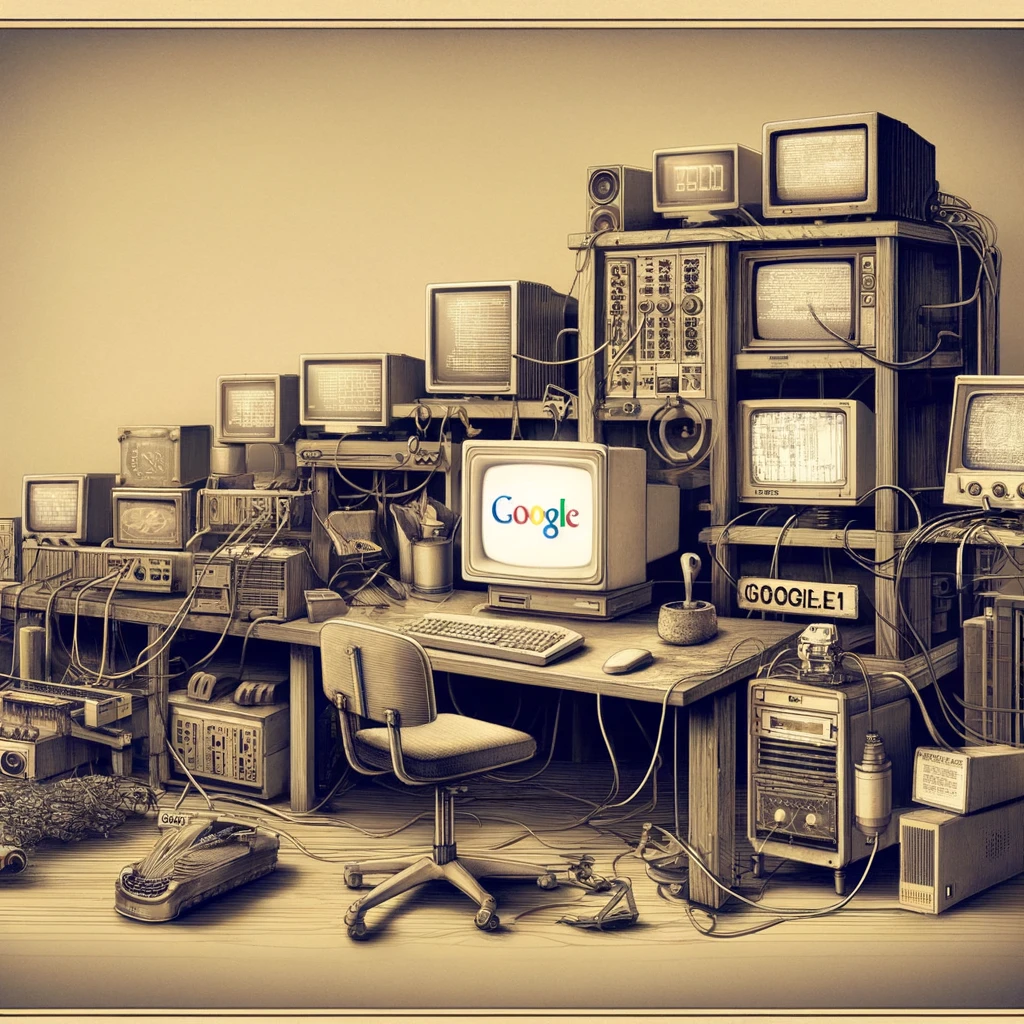
In the heart of Silicon Valley, at Stanford University in 1995, an idea was born that would redefine the internet. Larry Page, considering Stanford for grad school, was introduced to Sergey Brin, a student there. Despite initial disagreements, by 1996, they formed a partnership that laid the foundation for a revolution in the digital world.
Their first creation, a search engine named Backrub, operated on the principle of using links to determine the importance of web pages. Soon, this project was aptly renamed Google, reflecting the founders’ mission to organize and make the world’s information universally accessible and useful. This name, derived from ‘googol,’ represented the vast amount of data they aimed to process.
By 1998, with a modest investment from Sun co-founder Andy Bechtolsheim, Google Inc. was officially established. The newly incorporated team moved from their dorms to a garage in Menlo Park, California. This space, owned by Susan Wojcicki, who later became the CEO of YouTube, was Google’s first official office.
Google’s early approach was marked by a reluctance to use advertising pop-ups, a common practice in search engines at the time. However, the founders soon realized the potential of a revenue model based on simple text ads. By the end of 1998, Google had indexed around 60 million pages, and despite being in its beta phase, it was already outperforming competitors with its innovative technology.
1999 brought significant changes. Google tried to sell itself to Excite for $1 million, a deal that was ultimately rejected. Later that year, Google moved to Palo Alto, signaling its rapid growth. By 2003, the company had expanded to a complex in Mountain View, later known as the Googleplex.
As the new millennium dawned, Google’s influence continued to grow. In 2000, the introduction of AdWords marked a pivotal moment. This new, contextually relevant advertising model turned Google into a financial powerhouse. The company’s focus on hiring was evident with a prominent “Jobs@Google” link on their homepage, and the addition of multiple language options showcased their global reach. Their April Fool’s Day pranks, starting in 2000, also became a quirky tradition.
In these early years, Google constantly evolved its offerings. The tabbed interface introduced in 2001 enhanced user experience, and the launch of Froogle in 2002 expanded Google’s domain into product search and shopping.
Google’s growth was not just in its products but also in its philosophy. The famous motto “Don’t be evil” reflected their commitment to ethical business practices. This motto was so integral to their identity that it was included in their IPO prospectus in 2004.
The acquisition of Pyra Labs in 2003, the creator of Blogger, bolstered Google’s ability to use blog postings to improve the speed and relevance of news articles in Google News. This move was a testament to Google’s strategy of expanding its services and influence across the internet.
Over the years, Google has evolved from a simple search engine to a vast conglomerate with a range of products like YouTube, Android, and Gmail. Starting from a dorm room to a garage and now a global entity, Google’s journey is a testament to the power of innovation, vision, and relentless pursuit of improvement.
Google’s journey from a nascent search engine to a tech giant has been nothing short of phenomenal. It’s a story of vision, innovation, and strategic growth that redefined how the world accesses and uses information. From its modest beginnings in a garage to becoming a global leader in technology, Google’s story remains a quintessential example of Silicon Valley’s innovative spirit.

As Google continued to expand, it never lost sight of its core value: innovation. The company’s focus on creating a more organized and accessible internet birthed several initiatives that would become staples in the digital era.
Google’s Expanding Universe
By 2005, Google had launched the Google Maps service, revolutionizing how people navigated the world. This tool not only provided directions but also incorporated satellite imagery, making it a comprehensive resource for global exploration. Alongside this, Google Earth, released in the same year, allowed users to explore a three-dimensional representation of the planet, blending satellite imagery with maps and terrain information.
Another significant development was the acquisition of YouTube in 2006. This purchase marked Google’s entry into the world of online video content, setting the stage for what would become the world’s most popular video-sharing platform.
Google’s foray into mobile technology came with the development of the Android operating system, acquired in 2005 and officially launched in 2008. This open-source platform revolutionized the smartphone market, providing a viable alternative to Apple’s iOS and democratizing access to mobile technology.
The Philosophy of Innovation
One of the defining characteristics of Google has been its philosophy of constant innovation. This ethos is embodied in their approach to product development and company culture. Google’s famous ‘20% time’ policy encouraged employees to spend 20% of their work time on projects they were passionate about, even if they didn’t directly relate to their primary job responsibilities. This approach led to the creation of some of Google’s most successful products, including Gmail, AdSense, and Google News.
Challenges and Controversies
Despite its numerous successes, Google’s journey has not been without challenges and controversies. As the company grew, it faced increasing scrutiny over privacy concerns, particularly related to its data collection practices. The company’s dominance in various sectors also led to antitrust investigations in both the United States and Europe.
In response to these challenges, Google has consistently adapted its policies and operations. The company has made efforts to increase transparency and provide users with more control over their data. However, these issues remain an ongoing aspect of Google’s story, reflecting the broader tensions between technological innovation and privacy in the digital age.
Google Today
Today, Google stands as a behemoth in the tech industry. Its suite of products and services extends far beyond its original search engine, encompassing cloud computing, artificial intelligence, consumer electronics, and more. The company’s impact on technology, culture, and everyday life is undeniable.
Yet, despite its size and influence, the spirit of those early days in a Menlo Park garage persists. Google’s dedication to innovation, its willingness to venture into uncharted territories, and its commitment to organizing the world’s information remain at the core of its identity.
Conclusion
From its inception in a university dorm room to its current status as a global technology leader, Google’s story is a remarkable tale of innovation, adaptability, and vision. It has not only redefined how we use the internet but also shaped the very fabric of the digital age. Google’s journey is a testament to the power of a simple idea executed brilliantly, driven by a relentless pursuit of improvement and an unwavering commitment to its founding principles.
References
- “Google Maps and Google Earth – The Beginning of a New Era in Mapping.” Google Maps.
- “YouTube – Google’s Venture into Video Sharing.” YouTube Official Blog.
- “The Birth and Growth of Android.” Android Authority.
- “Google’s 20% Time Policy.” Business Insider.
- “Google Privacy Concerns and Antitrust Investigations.” Wired.