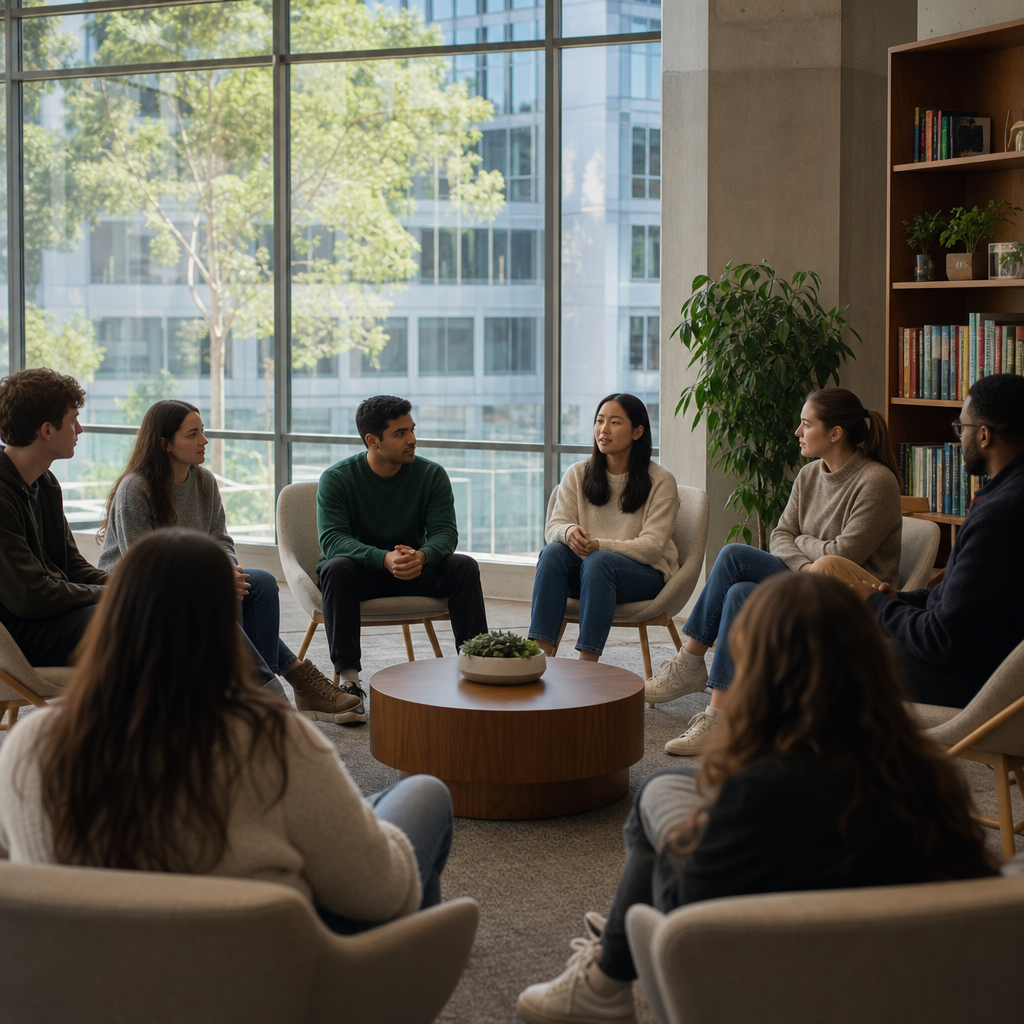
Innovation and creativity are not happy accidents in Silicon Valley; they are cultivated through an educational approach designed to reward curiosity, experimentation, and problem solving. In this context, education means more than classroom instruction. It includes project-based learning, industry partnerships, maker culture, entrepreneurship training, digital literacy, and the confidence to test ideas in public. Empowering through education describes a model that gives learners the tools, networks, and mindset to create value, not just absorb information. I have worked with schools, startup mentors, and workforce programs using this model, and the pattern is consistent: students progress fastest when they build real things, receive fast feedback, and see a direct path from learning to impact. That matters because the modern economy increasingly rewards adaptable thinkers who can collaborate across disciplines, use technology responsibly, and keep learning over time.
Silicon Valley’s educational approach matters well beyond Northern California because it offers a practical template for preparing people for complex, fast-changing careers. Traditional schooling often emphasizes compliance, memorization, and standardized outcomes. By contrast, the Valley’s strongest programs combine rigorous fundamentals with hands-on application. A middle school robotics team learns physics and coding by debugging a machine. A community college cybersecurity student practices threat detection in a lab that mirrors enterprise systems. A high school founder program teaches market research, customer interviews, and ethical product design alongside writing and mathematics. This hub article explains the principles behind that model, the institutions that support it, the methods that make it effective, and the tradeoffs educators should understand when adapting it elsewhere.
The Core Philosophy: Learning by Making
The defining principle of Silicon Valley education is learning by making. Students are expected to turn abstract concepts into prototypes, presentations, data analyses, apps, policy recommendations, or community solutions. This approach draws from constructionism, design thinking, and experiential learning. In plain terms, learners understand ideas more deeply when they create something tangible with them. In schools influenced by this model, a lesson on environmental science may end with sensor-based air quality monitoring, not only a quiz. A lesson on literature may become a podcast or digital exhibit. The emphasis is not novelty for its own sake. It is on transfer: can the learner use knowledge in a new setting, explain choices, and improve through iteration?
This philosophy also changes the role of failure. In many conventional systems, failure is final and punishing. In Silicon Valley classrooms and accelerator-style programs, failure is diagnostic. If a prototype does not work, students review assumptions, test alternatives, and document lessons learned. That mirrors how engineering teams, product managers, and researchers operate. The practical result is resilience. Students become more willing to ask better questions, gather evidence, and revise work. When educators structure projects well, this does not lower standards. It raises them by requiring evidence of understanding, communication, teamwork, and execution, all at once.
Institutions That Shape the Ecosystem
No single school created Silicon Valley’s educational culture. It emerged from an ecosystem. Stanford University helped normalize close ties between research, entrepreneurship, and commercialization. Community colleges such as Foothill and De Anza provide accessible pathways into software, data, advanced manufacturing, and transfer programs. Public school districts in the region have expanded computer science, engineering labs, and career technical education, while nonprofit organizations support coding clubs, science fairs, and college access. Libraries, museums, and makerspaces add another layer by making tools like 3D printers, laser cutters, and media studios available to wider communities.
Industry participation is equally important. Companies offer internships, mentorship, guest lectures, hackathons, and capstone sponsorships. In the best versions of these partnerships, business input informs curriculum without dictating it. Students gain exposure to current tools such as GitHub, Figma, Tableau, AutoCAD, TensorFlow, and cloud platforms, while educators maintain responsibility for pedagogy and equity. I have seen the strongest programs establish clear boundaries: partners define authentic problems, schools protect student learning goals, and both sides agree on measurable outcomes. That balance prevents programs from becoming shallow marketing exercises and keeps educational value at the center.
How Empowering Through Education Works in Practice
Empowering through education means giving learners agency, capability, and access. Agency is the ability to make meaningful choices about what to investigate, build, or improve. Capability comes from structured skill development in literacy, numeracy, digital tools, communication, and critical thinking. Access includes devices, broadband, mentors, safe learning environments, and pathways into higher education or employment. Remove one of these elements and the model weakens. A student may have ideas but no internet, or technical skills but no network to convert them into opportunity.
In practice, effective programs combine challenge with support. A startup incubator for teens might ask students to identify a real local problem, interview potential users, estimate market size, build a minimum viable product, and present to judges. But beneath that visible project is a scaffold of mini-lessons on user research, spreadsheet modeling, copyright, presentation design, and ethical decision making. The educational power lies in this blend of freedom and structure. Learners feel ownership, yet they are not left to guess what quality looks like. Rubrics, exemplars, peer critique, and mentor check-ins make expectations explicit.
Key Methods: From Project-Based Learning to Entrepreneurial Thinking
Several methods appear repeatedly across Silicon Valley-inspired education because they align with how innovation actually happens. Project-based learning asks students to investigate a question over an extended period and produce a public outcome. Design thinking teaches them to define problems from the user’s perspective, ideate multiple options, prototype quickly, and test. Inquiry-based learning encourages students to start with questions rather than answers. Entrepreneurial education adds customer discovery, budgeting, storytelling, and market validation. Media literacy and data literacy help students judge sources, understand metrics, and communicate evidence.
These methods work best when linked to strong foundations. Coding without mathematics can become fragile. Entrepreneurship without ethics can become reckless. Creativity without domain knowledge often stays superficial. That is why effective programs integrate fundamentals instead of replacing them. For example, a machine learning unit should include statistics, bias mitigation, model evaluation, and privacy considerations. A student app project should involve writing user stories, documenting requirements, testing usability, and presenting findings clearly. The goal is not simply to make students “innovative.” It is to help them produce work that is useful, responsible, and technically sound.
| Method | What Students Do | Skills Built | Example |
|---|---|---|---|
| Project-based learning | Create a public product over weeks | Planning, research, collaboration | Build a water-use dashboard for campus |
| Design thinking | Interview users, prototype, test | Empathy, iteration, problem framing | Redesign a school lunch ordering app |
| Entrepreneurial learning | Validate demand and present a pitch | Market analysis, finance, storytelling | Launch a peer tutoring service |
| Technical lab work | Use industry tools in realistic tasks | Tool fluency, troubleshooting | Analyze network logs in a cyber lab |
The Role of Teachers, Mentors, and Assessment
Teachers in this model are not passive facilitators. They are expert designers of learning experiences. They sequence content, anticipate misconceptions, calibrate challenge, and connect student interests to rigorous standards. Mentors from industry add relevance by showing how professionals frame decisions, manage constraints, and recover from setbacks. When both roles are clear, students benefit from academic depth and real-world context. When roles are unclear, projects can drift into shallow activity. Strong programs therefore train mentors, define communication norms, and ensure teacher leadership remains central.
Assessment also looks different. Standardized testing may measure portions of literacy and mathematics, but it rarely captures the full range of innovative work. Silicon Valley-style programs often use portfolios, exhibitions, performance tasks, code reviews, demo days, and reflective writing. Good assessment answers four questions directly: What did the student build or investigate? How strong is the underlying reasoning? How effectively did the student collaborate and communicate? What did the student learn through iteration? In my experience, the most credible systems combine traditional measures with authentic assessment. That combination reassures families and institutions while preserving the integrity of hands-on learning.
Equity, Access, and the Limits of the Model
Silicon Valley’s educational approach is powerful, but it is not automatically equitable. Regional wealth, parent networks, and proximity to major firms can create advantages that other communities do not share. Even within the Valley, access gaps remain in housing stability, broadband, transportation, disability support, and representation in advanced courses. A makerspace is not empowering if students cannot stay after school. A coding program is not inclusive if English learners or girls are subtly pushed to the margins. The best programs address these barriers deliberately through device access, paid internships, transportation support, bilingual outreach, universal design, and transparent recruitment.
There are also pedagogical limits. Not every subject or learner benefits from constant open-ended projects. Novices often need explicit instruction before they can work independently. Deep reading, foundational math practice, and direct teaching still matter. The strongest version of this model is not chaos and not permanent group work. It is a disciplined blend of explicit teaching, deliberate practice, and authentic application. For schools building an educational resources hub around empowering through education, that is the central lesson. Start with clear goals, invest in teacher capacity, build partnerships carefully, measure what matters, and give learners repeated chances to turn knowledge into action.
Innovation and creativity thrive when education treats learners as capable builders of knowledge, solutions, and opportunity. Silicon Valley’s unique educational approach shows that empowering through education is not a slogan. It is a repeatable system built on hands-on learning, strong fundamentals, expert teaching, industry connection, and equitable access. Students gain more than technical skills. They learn how to ask better questions, work across disciplines, test ideas responsibly, and communicate with confidence. Those habits prepare them for college, careers, civic life, and continuous change.
As the hub for this topic, this article points to the bigger picture: effective educational resources should help schools, families, and organizations create pathways from curiosity to competence to contribution. The model is adaptable. A rural district can build local industry projects. A library can host digital media workshops. A community college can align certificates with regional employers. Start by identifying one real problem learners can solve, one tool they need to master, and one partner who can deepen the experience. Then build from there with intention.
Frequently Asked Questions
What makes Silicon Valley’s educational approach different from traditional models of learning?
Silicon Valley’s educational approach stands out because it treats innovation and creativity as skills that can be intentionally developed, not as rare talents that only a few people possess. In more traditional models, education often emphasizes memorization, standardized testing, and the ability to produce correct answers within fixed structures. By contrast, Silicon Valley-inspired learning environments place a strong value on curiosity, experimentation, iteration, and real-world problem solving. Students are encouraged to ask bold questions, test ideas, make mistakes, and improve through feedback rather than fear failure.
Another defining difference is that learning extends far beyond the classroom. In this model, education includes hands-on projects, collaboration with peers, mentorship from industry professionals, access to technology, and opportunities to build products, prototypes, or solutions that address genuine needs. Rather than separating academic subjects into isolated categories, this approach often blends science, technology, engineering, design, business, and communication into integrated experiences. A student might code an app, research a social problem, pitch a solution, and revise the project based on user input—all within the same learning process.
Just as important, Silicon Valley’s approach encourages learners to think like creators instead of passive consumers of information. Students are not simply taught how systems work; they are invited to imagine how systems could be improved. This creates a culture of agency, where learners begin to see themselves as capable of shaping outcomes, launching ideas, and contributing meaningfully to their communities and future industries.
How does project-based learning help students become more innovative and creative?
Project-based learning is one of the most important pillars of Silicon Valley’s educational philosophy because it mirrors how innovation actually happens in the real world. Instead of absorbing information only to repeat it on an exam, students work on extended challenges, build tangible solutions, and learn by doing. This process strengthens creativity because it asks learners to generate ideas, compare options, solve unexpected problems, and make decisions that have visible consequences.
Innovation thrives when students are given meaningful problems to solve rather than narrow instructions to follow. In project-based learning, a student may be asked to design a sustainable product, develop a digital tool, create a community initiative, or engineer a prototype that responds to a practical need. These experiences require research, collaboration, experimentation, communication, and resilience. Students quickly learn that first ideas are rarely final ideas, and that improvement comes through iteration. That lesson is fundamental to both entrepreneurial thinking and creative confidence.
This model also develops a broader set of skills than conventional instruction often can. Students learn how to manage time, divide responsibilities, present their thinking, incorporate feedback, and adapt when results do not go as planned. These are essential innovation skills because new ideas almost always emerge through trial, revision, and teamwork. By engaging in authentic projects, learners begin to understand that creativity is not just artistic expression; it is the disciplined process of turning ideas into workable solutions.
Why are industry partnerships and mentorship so important in Silicon Valley-style education?
Industry partnerships and mentorship matter because they connect education directly to the environments where innovation is actively happening. In Silicon Valley, schools, programs, and learning communities often collaborate with entrepreneurs, engineers, designers, startup founders, and technology companies. These connections give students exposure to current tools, emerging trends, real workplace expectations, and practical examples of how ideas move from concept to impact. That kind of access helps make learning more relevant, motivating, and future-focused.
Mentorship is especially powerful because it gives students insight that textbooks alone cannot provide. A mentor can explain how a product was built, what problems arose during development, how teams communicate under pressure, and why persistence matters when early attempts fail. This guidance demystifies innovation. Students begin to see that successful creators are not people with perfect ideas from the start, but individuals who refine their work through discipline, testing, and collaboration. That perspective can be transformative for young learners who may otherwise assume innovation is out of reach.
Partnerships also create opportunities for internships, guest lectures, collaborative projects, pitch events, and maker experiences that strengthen both technical and professional growth. Students may receive feedback from people working in the field, which raises the level of seriousness and authenticity in their work. Over time, these experiences help learners build networks, confidence, and a clearer understanding of how their skills can translate into real careers, ventures, or community impact.
What role do maker culture, entrepreneurship, and digital literacy play in fostering creativity?
Maker culture, entrepreneurship, and digital literacy are central to Silicon Valley’s educational model because together they turn abstract learning into action. Maker culture encourages students to build, tinker, design, test, and improve physical or digital creations. It promotes hands-on exploration and reinforces the idea that learning happens through experimentation. When students use tools such as fabrication equipment, coding platforms, electronics kits, design software, or multimedia tools, they gain a practical understanding of how ideas can become real products and experiences.
Entrepreneurship adds another important layer by teaching students to identify opportunities, understand user needs, evaluate feasibility, and communicate value. This does not simply mean training students to start companies. More broadly, it means helping them think proactively, solve problems creatively, and take initiative in uncertain situations. Entrepreneurial education teaches learners to notice gaps, generate solutions, test assumptions, and respond to feedback—habits that are essential in both business and civic life.
Digital literacy supports both maker culture and entrepreneurship by ensuring students can use technology thoughtfully, effectively, and responsibly. In today’s innovation economy, learners need more than basic computer skills. They must know how to research, create digital content, analyze information, collaborate online, use emerging technologies, and understand ethical issues related to data, media, and digital systems. When these elements come together, students are not just consuming technology; they are using it as a platform for invention, expression, and meaningful problem solving.
How does this educational approach empower students to test ideas publicly and build confidence?
One of the most distinctive strengths of Silicon Valley’s educational approach is that it teaches students to move from private thinking to public experimentation. In many conventional settings, students are rewarded for avoiding mistakes and giving polished answers only when they are certain. Silicon Valley-style learning often takes the opposite view: progress comes from sharing ideas early, receiving feedback, refining the work, and trying again. This helps students become more comfortable with uncertainty and more willing to take intellectual risks.
Public testing can take many forms, including classroom presentations, design reviews, demo days, hackathons, startup pitches, exhibitions, and collaborative critiques. These experiences help learners develop communication skills, self-awareness, and resilience. They learn how to explain their reasoning, defend their choices, listen to criticism without shutting down, and use feedback as a tool for improvement. Over time, this process builds genuine confidence because students see that they can navigate challenge, adapt to new information, and strengthen their ideas through iteration.
Perhaps most importantly, this model empowers students by giving them the tools and networks needed to act on their ideas. They are not only told to be creative; they are given structured opportunities to practice creativity in visible, meaningful ways. They learn that failure is not a final verdict but a source of information. They experience what it means to build something, share it, revise it, and keep going. That mindset—curious, capable, and unafraid to test ideas in the open—is a major reason Silicon Valley’s educational approach continues to be associated with innovation, adaptability, and long-term creative growth.