Silicon Valley’s approach to tackling global food security blends software discipline, venture capital speed, and deep science to address one of the world’s hardest problems: how to feed more people nutritious food while climate pressure, water scarcity, soil degradation, and supply chain volatility intensify. Global food security means reliable physical and economic access to sufficient, safe, and nutritious food for an active, healthy life. It rests on four pillars recognized by the UN Food and Agriculture Organization: availability, access, utilization, and stability. In practice, that means farms must produce enough, markets must move food efficiently, households must afford it, and shocks such as drought, conflict, pests, or inflation must not break the system.
In the Valley, food security is treated less as a single agriculture issue and more as a systems engineering challenge. Founders map bottlenecks across genetics, farm operations, logistics, financing, retail, and waste reduction, then build tools that improve measurable outcomes such as yield per acre, water-use efficiency, spoilage rates, and forecast accuracy. I have worked with startup teams pitching growers, distributors, and institutional buyers, and the strongest companies never promise to “disrupt food” in the abstract. They target a costly failure point, prove return on investment quickly, and fit into existing farm and supply chain workflows.
This matters because agriculture employs more than one billion people globally, yet the sector remains under-digitized in many regions. At the same time, roughly one-third of food produced for human consumption is lost or wasted, according to the FAO. Silicon Valley’s contribution is not that it replaces agronomy, public policy, or rural infrastructure. Its value is the ability to turn data, automation, and new business models into scalable tools. As a hub for advancements and startup success, this topic connects precision agriculture, climate-resilient inputs, alternative proteins, market access platforms, and cold-chain intelligence into one practical innovation story.
Precision agriculture turns field variability into actionable decisions
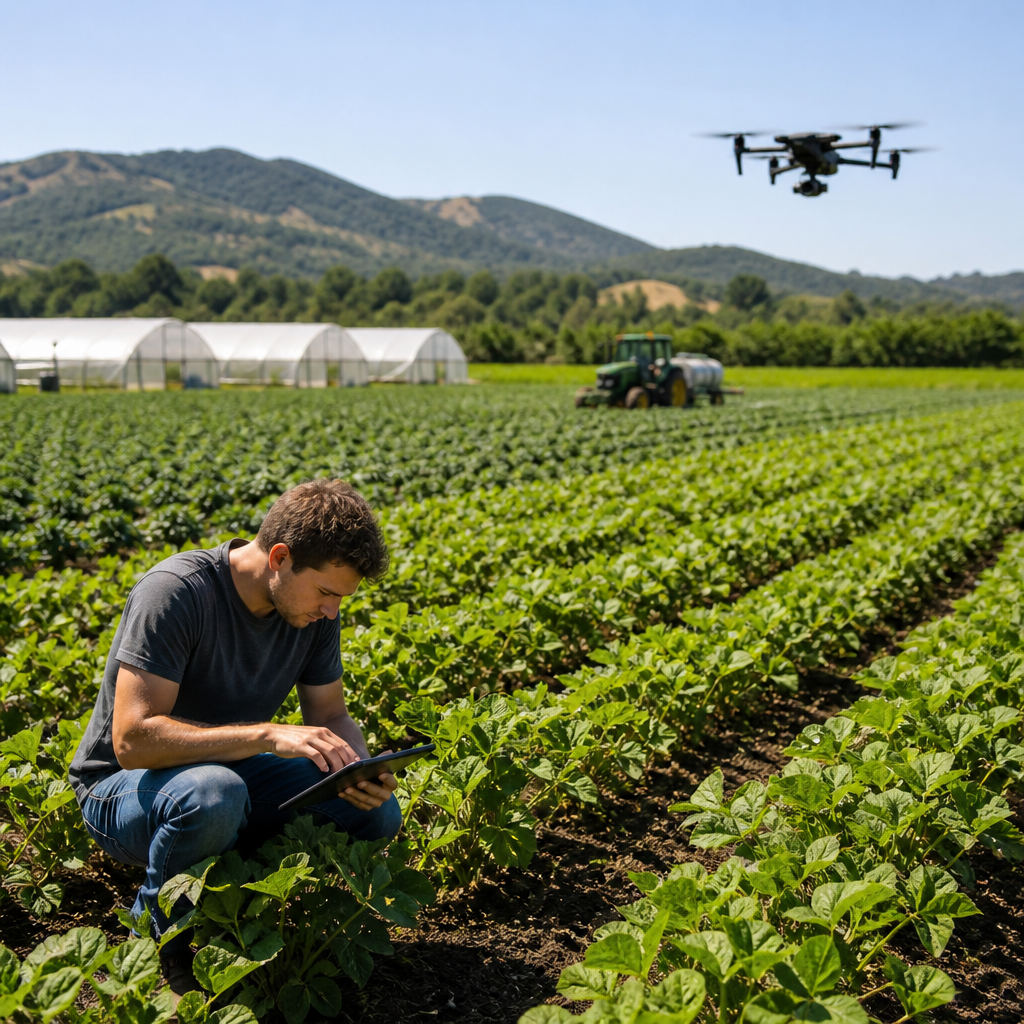
Precision agriculture is the clearest example of Silicon Valley thinking applied to food security. Instead of treating a field as uniform, growers use sensors, satellite imagery, drones, and machine learning to manage variability by zone, row, or even plant. The goal is simple: apply the right input at the right rate, right place, and right time. John Deere’s Blue River technology, for example, uses computer vision for targeted spraying, reducing herbicide use while maintaining weed control. Climate FieldView helps growers visualize planting, fertility, and yield data in one platform, making agronomic decisions more evidence-based.
For food security, the gains are practical. Better irrigation scheduling reduces water stress. Disease models catch fungal pressure before an outbreak spreads. Variable-rate fertilizer prevents overapplication in low-response areas and supports productivity where nutrients are limiting. In California specialty crops, irrigation tools tied to evapotranspiration data and soil moisture probes can materially improve water-use efficiency. In staple crops, yield mapping helps farmers identify underperforming zones caused by compaction, drainage, salinity, or nutrient imbalance. These improvements add resilience because they preserve scarce inputs while protecting output.
The startup lesson is that adoption depends on workflow fit, not just model accuracy. Farmers already juggle equipment platforms, weather risk, labor constraints, and thin margins. Successful companies package analytics into recommendations that can be executed through existing machinery, agronomist relationships, or farm management software. They also prove value over a season, not over a distant future. When founders can show lower cost per acre, fewer tractor passes, or stronger packout rates, procurement teams listen.
Biotech and climate-resilient inputs expand what farms can produce
Another major path is biological innovation. Silicon Valley investors have backed seed technology, microbial inputs, gene editing platforms, and controlled environment agriculture because genetics and crop physiology directly shape food availability under stress. Drought tolerance, nitrogen-use efficiency, salinity tolerance, and resistance to pests or diseases are not abstract traits; they determine whether harvests hold up when weather becomes erratic. CRISPR-based breeding has accelerated trait development by enabling more precise edits than older methods, though regulation still varies by country and crop.
Indigo Ag helped popularize microbial seed treatments and carbon programs, while Pivot Bio developed nitrogen-fixing microbial products designed to supplement synthetic fertilizer in corn. Plenty and Bowery focused on vertical farming for leafy greens, arguing that controlled conditions can reduce land use, shorten supply chains, and buffer weather shocks. These models are useful, but their food security role is narrower than headlines sometimes suggest. Vertical farms currently suit high-value perishable crops far better than staple grains. Their economics depend heavily on energy prices, facility utilization, and local market density.
That tradeoff matters. A technology can be technically impressive yet limited in global security impact if it cannot scale affordably across diverse farming systems. By contrast, a resilient seed trait or shelf-stable biological input can travel through existing distribution channels and reach many regions quickly. The strongest startups understand where they fit: some improve broad-acre productivity, some secure horticulture supply, and some reduce dependence on volatile fertilizer or pesticide markets.
Supply chain software, traceability, and financing reduce food loss
Producing food is only half the challenge. A huge share of insecurity comes from post-harvest loss, poor market coordination, and weak access to capital. Silicon Valley startups have attacked these gaps with logistics software, traceability systems, embedded finance, and demand forecasting tools. If a tomato harvest cannot be cooled, graded, routed, and sold quickly, increased production alone will not help consumers. If smallholders cannot buy seed or irrigation equipment at the start of the season, yield potential stays theoretical.
Traceability platforms use barcodes, RFID, QR codes, and cloud records to track food through processing and distribution. This improves recall speed, buyer trust, and export compliance. Cold-chain monitoring tools use IoT sensors to log temperature and humidity, reducing spoilage in transit. Demand planning software helps retailers and distributors align orders with realistic consumption patterns, lowering waste. On the finance side, digital underwriting can assess farm performance from transaction histories, satellite observations, and input purchase records, extending working capital to businesses that traditional lenders underserve.
| Innovation area | Typical startup solution | Food security impact | Main limitation |
|---|---|---|---|
| Precision agriculture | Sensors, imagery, variable-rate analytics | Higher yields with fewer inputs | Adoption and data integration |
| Biological inputs | Microbes, improved seed traits | Resilience to drought and nutrient stress | Field performance variability |
| Controlled environment farming | Vertical farms, smart greenhouses | Reliable local production of perishables | Energy and capital intensity |
| Supply chain intelligence | Cold-chain sensors, forecasting, traceability | Lower spoilage and safer distribution | Fragmented infrastructure |
| Embedded finance | Digital lending and input financing | Better access to productivity tools | Credit risk and regulatory complexity |
I have seen distributors adopt temperature monitoring faster than they adopt flashy AI because the business case is immediate: one saved shipment can justify the deployment. The same is true for traceability in categories facing retailer scrutiny or food safety requirements. Success usually comes from solving a compliance or margin problem first, then expanding into broader optimization.
Alternative proteins and waste-to-value startups widen the food system toolkit
Silicon Valley also treats food security as a diversification problem. If conventional livestock production faces land, feed, methane, and disease constraints, then alternative proteins can complement the supply base. Companies such as Impossible Foods used heme science, extrusion, and food formulation to mimic meat’s sensory qualities with plant ingredients. Upside Foods and other cultivated meat companies aim to grow animal cells directly, though large-scale cost reduction remains the central hurdle. Precision fermentation startups produce functional proteins, fats, or enzymes using microbes, creating ingredients with lower dependence on animals.
These approaches matter most where they improve protein availability, reduce resource intensity, or stabilize supply chains. Plant-based proteins are already commercially viable in many channels, while cultivated meat is still early. The key distinction is timeline. Near-term food security benefits come from products that can be manufactured at scale with predictable input costs and accepted consumer taste. Longer-term bets may reshape the system, but they must clear regulatory review, manufacturing scale-up, and price parity.
Waste-to-value companies provide another practical lever. Startups convert surplus produce into shelf-stable foods, animal feed, biomaterials, or ingredients. Apeel built plant-derived coatings to extend produce shelf life, directly targeting post-harvest loss. Too Good To Go built a marketplace that helps retailers and restaurants sell surplus food before disposal. These models improve stability because the cheapest food is often the food already produced but not yet eaten.
Why startup success depends on partnerships, policy, and patient execution
The mythology of Silicon Valley celebrates speed, but food systems reward disciplined execution. Agriculture runs on biological cycles, seasonal cash flow, and conservative procurement. A founder cannot brute-force adoption with marketing alone. The startups that succeed in advancements and startup success usually combine technical novelty with channel strategy: partnerships with seed distributors, agribusinesses, equipment makers, food processors, NGOs, or government programs. They also understand standards, from GlobalG.A.P. and FSMA requirements to carbon accounting protocols and local crop input regulations.
Policy shapes outcomes as much as code does. Subsidies, crop insurance rules, water law, import restrictions, and food labeling standards determine which technologies scale. Public research institutions remain crucial, especially for staple crops and lower-income markets where venture returns are harder to capture. That is why the most credible Silicon Valley approach is collaborative rather than triumphalist. Private capital can accelerate product development and deployment, but durable food security still depends on roads, extension services, storage, power, trade policy, and public trust.
The central lesson is clear: Silicon Valley contributes best when it solves specific frictions across production, distribution, nutrition, and waste instead of chasing vague disruption. Precision agriculture improves efficiency and resilience. Biotech and biological inputs strengthen crop performance under stress. Supply chain software and embedded finance cut losses and expand access. Alternative proteins and waste-to-value models diversify how food reaches people. Together, these advancements create a richer startup success playbook for global food security.
For leaders building in this space, the next step is practical. Identify the bottleneck you can measure, validate it with growers or buyers, and design for adoption in the real world. For readers exploring the broader Tech Innovations & Startups landscape, use this hub as the starting point for deeper articles on precision ag, food logistics, ag fintech, alternative proteins, and climate-smart farming. The opportunity is significant, but the standard is higher than hype: solutions must work reliably, scale responsibly, and help more people access better food.
Frequently Asked Questions
What makes Silicon Valley’s approach to global food security different from traditional agricultural development models?
Silicon Valley tends to approach global food security as a systems problem that can be improved through faster iteration, better data, and scalable technology. Traditional agricultural development models often focus on public-sector programs, long research cycles, and region-specific interventions delivered through governments, NGOs, and extension networks. By contrast, Silicon Valley brings together software thinking, venture capital funding, engineering talent, and scientific commercialization to move ideas from lab to market more quickly. That can include precision agriculture tools, AI-driven crop insights, climate-resilient seed technologies, indoor farming systems, alternative proteins, supply chain traceability platforms, and financial tools that help farmers manage risk.
Another major difference is the emphasis on scalability and measurable performance. Startups and investors often look for solutions that can be deployed across many farms, markets, or supply chains with relatively low marginal cost once the core platform is built. A satellite-based crop monitoring service, for example, can potentially support growers across multiple countries, while a digital marketplace can improve links between producers, distributors, and buyers. This mindset can accelerate innovation, but it also creates tension: food security is not just a technical challenge, and solutions that look efficient in a pitch deck may still fail if they do not fit local infrastructure, farmer economics, cultural preferences, or regulatory realities.
Most importantly, Silicon Valley’s model is increasingly expanding beyond yields alone. Global food security, as defined by the UN, rests on four pillars: availability, access, utilization, and stability. A strong solution must therefore do more than increase output. It should also help make food affordable, improve nutritional quality and food safety, and strengthen resilience against shocks such as drought, conflict, transport disruptions, and price swings. The most credible Silicon Valley-backed efforts are those that combine deep science with practical delivery, local partnerships, and a clear understanding that feeding the world requires resilient food systems, not just more gadgets.
How do software, AI, and data tools actually improve food security in practice?
Software and AI improve food security by helping farmers, food businesses, and policymakers make better decisions with less guesswork. On farms, digital tools can analyze weather patterns, soil conditions, irrigation needs, pest pressure, and crop health in near real time. This helps growers apply water, fertilizer, and crop protection more precisely, which can raise productivity while reducing waste and environmental damage. In regions facing water scarcity and climate volatility, that precision can be the difference between a profitable harvest and a failed season. For smallholders and commercial operations alike, better forecasting and agronomic recommendations can support the food security pillars of availability and stability by protecting yields against increasingly erratic conditions.
Beyond the farm gate, data tools can make supply chains more transparent and efficient. Food loss after harvest is a major global problem, especially where cold storage, transport coordination, and market visibility are weak. Platforms that connect producers to buyers, monitor inventory, predict demand, or flag logistics bottlenecks can reduce spoilage and improve market access. Traceability software can also strengthen food safety by making it easier to identify contamination sources and respond quickly. That matters for utilization, the food security pillar focused on nutrition, safety, and the body’s ability to benefit from food consumed. Better data can help ensure that available food is also safe and useful from a public health perspective.
At the policy and finance level, AI and analytics can support early warning systems for drought, disease outbreaks, crop failures, and price spikes. Governments, insurers, lenders, and humanitarian organizations can use these insights to target support earlier and more effectively. However, the impact depends heavily on data quality, connectivity, trust, and usability. A sophisticated dashboard is not enough if farmers cannot access it, if recommendations are poorly localized, or if business models exclude lower-income users. The strongest digital food security tools are designed around real operating conditions, including low-bandwidth environments, local languages, mobile-first access, and integration with extension services or existing farmer networks.
Why is venture capital so involved in food security, and what are the benefits and risks of that model?
Venture capital is deeply involved because food and agriculture represent enormous markets under pressure to transform. Investors see opportunities in climate adaptation, supply chain modernization, biotechnology, water efficiency, farm automation, and new food categories such as plant-based and cultivated proteins. Global food systems are being reshaped by rising demand, environmental constraints, labor shortages, geopolitical instability, and consumer expectations around sustainability and nutrition. For Silicon Valley investors, those pressures create openings for companies that can solve large, expensive, recurring problems at scale.
The benefits of venture capital include speed, ambition, and willingness to fund high-risk innovation. Many food security challenges require up-front capital for research, hardware deployment, field trials, manufacturing, or platform development. Venture-backed companies can often move faster than traditional institutions in building prototypes, testing business models, recruiting talent, and entering new markets. This can be especially valuable in areas like biological inputs, drought-tolerant crops, remote sensing, robotics, and distributed food infrastructure. Venture funding can also bring visibility to neglected problems and attract additional talent and partnerships from academia, industry, and government.
But the risks are equally important. Venture capital typically seeks large returns within a defined time horizon, and that can push companies toward customers and geographies with stronger purchasing power rather than the communities most vulnerable to hunger. It can also create pressure to overpromise on timelines, underestimate regulatory hurdles, or prioritize growth over long-term impact. Some technologies that are attractive to investors may not be affordable, durable, or practical in low-resource settings. That is why many experts argue that venture capital works best as one part of a broader food security ecosystem that also includes public research, blended finance, philanthropic support, farmer organizations, and policy reform. Food security is too important and too complex to rely on market incentives alone.
Which technologies from Silicon Valley are seen as most promising for strengthening the four pillars of food security?
Several technology categories stand out because they map clearly to the four pillars of food security: availability, access, utilization, and stability. For availability, precision agriculture tools, improved crop genetics, microbial inputs, advanced irrigation systems, and climate intelligence platforms can help produce more food under tougher environmental conditions. These technologies aim to increase yields, reduce crop losses, and maintain productivity despite heat stress, water shortages, and degraded soils. In many cases, their value comes not from a single breakthrough but from combining biology, sensors, data, and automation into more resilient farm management systems.
For access, digital marketplaces, embedded finance, mobile payment tools, and supply chain platforms are especially important. Food can be present in a region and still remain inaccessible if prices are too high, distribution is inefficient, or farmers cannot reliably reach buyers. Technologies that improve logistics, reduce transaction costs, expand credit, or give producers better price transparency can make food systems more inclusive and efficient. When farmers earn more predictable income and consumers face fewer supply disruptions, economic access tends to improve. This is where software-driven infrastructure can have outsized impact, particularly in fragmented markets.
For utilization, promising innovations include food safety testing, traceability systems, cold chain monitoring, nutrient-enhanced foods, and alternative proteins that can expand access to high-quality nutrition with potentially lower resource intensity. Utilization is not simply about calories; it is about whether food is safe, nutritious, and supports healthy lives. Stability, meanwhile, is strengthened by technologies that improve forecasting, diversify production, reduce dependence on fragile supply chains, and support rapid response to shocks. Controlled-environment agriculture, resilient seeds, distributed storage, and risk analytics all play a role here, though each has practical limits. No single technology secures all four pillars. The strongest strategies combine tools in ways that fit local climates, diets, infrastructure, and market realities.
Can Silicon Valley’s food security solutions really work globally, especially in lower-income and climate-vulnerable regions?
They can, but only when they are adapted to local realities rather than exported as one-size-fits-all solutions. Food security challenges vary widely across regions. A water optimization platform that works well for large farms in California may need major redesign to serve smallholder farmers in sub-Saharan Africa or South Asia. Differences in farm size, internet access, electricity reliability, financing options, input availability, language, regulation, and distribution channels all affect whether a solution can work in practice. The most effective companies and research teams understand that technology transfer is not just about shipping a tool; it is about redesigning for affordability, usability, trust, and maintenance under real-world conditions.
Partnerships are usually the deciding factor. Solutions scale more successfully when startups work with local agronomists, cooperatives, governments, NGOs, universities, and regional distributors. These partners help validate whether a product solves a meaningful problem, whether the pricing model is realistic, and whether farmers or food businesses can integrate it into daily operations. They also help bridge one of Silicon Valley’s recurring weaknesses: a tendency to underestimate the importance of institutions, behavior, and context. A product can be scientifically impressive and still fail if training is inadequate, financing is absent, or incentives are misaligned.
The broader answer is that Silicon Valley can contribute powerful tools, but global food security depends on combining innovation with equity and resilience. Lower-income and climate-vulnerable regions often need solutions that are inexpensive, rugged, repairable, and compatible with local food systems, not just technically advanced