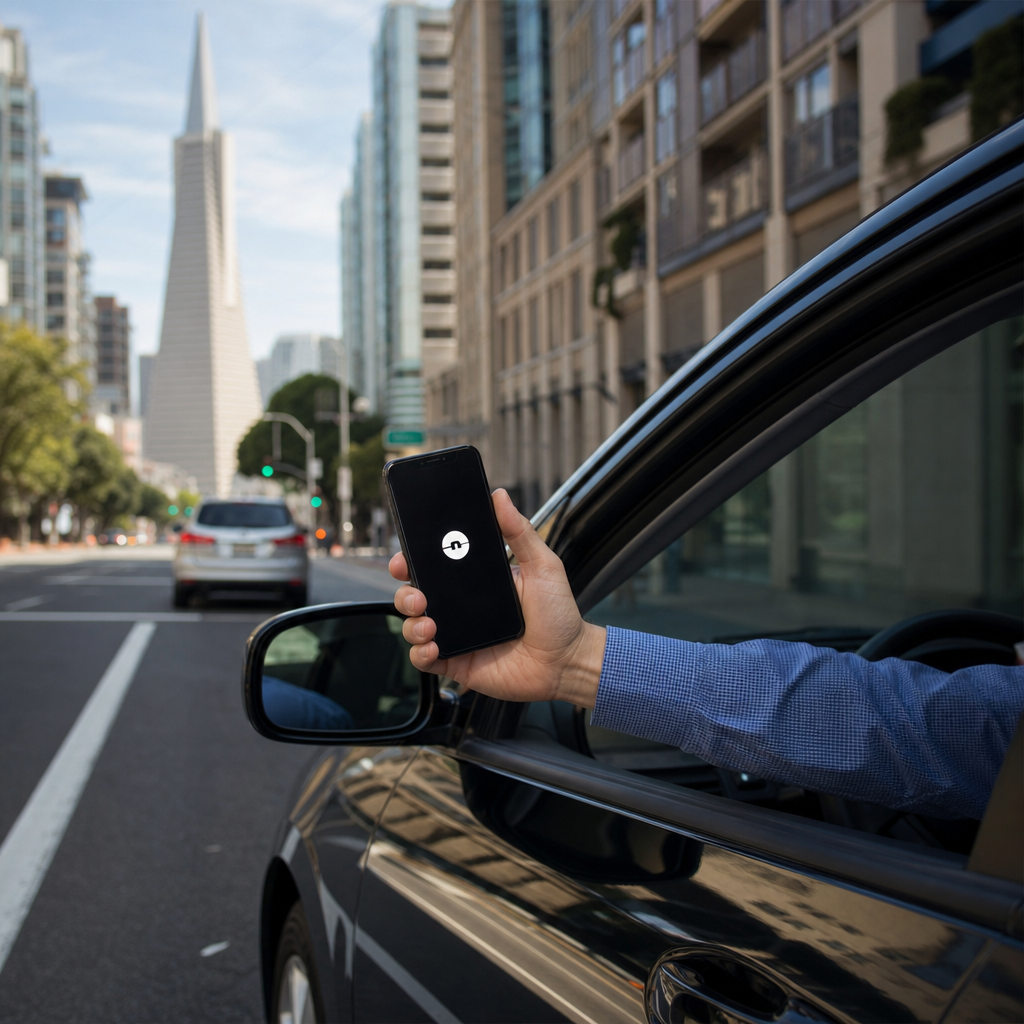
Silicon Valley’s disruptor transformed transportation by turning a simple smartphone interface into a global logistics network, and Uber’s rise remains one of the clearest case studies in how a technology company can reshape a legacy industry. In practical terms, disruption means changing customer expectations, cost structures, labor models, and regulatory assumptions all at once, not merely introducing a new app. Uber changed the transportation industry because it combined GPS-enabled dispatch, dynamic pricing, digital payments, and two-sided marketplace design into a service that felt dramatically faster and more reliable than hailing a traditional taxi in many cities. I have worked on mobility and marketplace analysis, and Uber is the example that consistently appears when executives ask how a company moves from startup novelty to infrastructure-like relevance. This sub-pillar hub on corporate giants uses Uber to explain how major companies build category power, provoke institutional resistance, and force competitors to adapt. Understanding Uber matters because its model influenced food delivery, freight brokerage, grocery delivery, and even how investors evaluate platform businesses. To discuss Uber accurately, three terms matter. A ridesharing platform is the digital marketplace matching riders with drivers, although many trips are functionally for-hire transportation rather than social carpooling. Surge pricing is variable pricing that increases fares when demand outpaces supply. Network effects describe how a platform becomes more useful as more participants join. Those concepts explain why Uber expanded quickly, why it faced backlash, and why its impact reached far beyond urban car trips.
The Market Uber Entered and the Pain Points It Solved
Before Uber launched in 2009, urban point-to-point transportation in many cities was inefficient, opaque, and highly uneven by neighborhood. Riders often could not predict when a cab would arrive, whether a driver would accept a short trip, or what the final fare would be if traffic stalled. Payments were another friction point; in many markets, cash dominated and card readers were unreliable. Dispatch systems existed, but they were fragmented and usually tied to local taxi fleets. For customers, the most important problem was uncertainty. For drivers, underused vehicle time and inefficient matching reduced earnings.
Uber’s initial product solved these frustrations with unusual precision. A rider could open the app, see nearby cars, estimate arrival time, enter a destination, and pay automatically. That sequence compressed several steps into one workflow and made transportation feel on-demand in a way taxis often did not. In operational terms, Uber improved matching efficiency by using location data and continuously updated supply visibility. It also introduced accountability through driver ratings, rider ratings, trip histories, and digital receipts. Those features seem standard today because Uber normalized them, but at the time they materially changed what riders expected from local transportation.
How the Platform Model Rewired Transportation Economics
Uber did not simply digitize taxi booking; it changed the economic architecture of local transportation. Traditional taxi systems usually relied on medallions, fleet ownership, radio dispatch, and regulated fares. Uber used an asset-light marketplace model in which drivers supplied vehicles and labor while the company managed software, demand generation, pricing systems, identity verification, and payment rails. This structure allowed rapid geographic expansion without the capital costs associated with owning fleets.
The platform model also changed utilization. By increasing ride request frequency and reducing dead time between trips, Uber aimed to raise the effective productivity of each driver hour. Dynamic pricing, though controversial, was central to that system. Higher prices during spikes in demand attracted more drivers to the road and rationed scarce supply. In plain terms, surge pricing was a market-clearing mechanism. It improved reliability during rainstorms, major events, or transit disruptions, even as it angered riders who associated transportation with stable fares. The tradeoff was real: more availability for some users, less affordability for others.
| Industry Factor | Traditional Taxi Model | Uber Model | Industry Impact |
|---|---|---|---|
| Dispatch | Phone or street hail | App-based real-time matching | Shorter perceived wait times |
| Pricing | Regulated meter fares | Base fare plus dynamic pricing | Flexible supply response |
| Payments | Cash or card in vehicle | Automatic in-app payments | Lower transaction friction |
| Supply Model | Licensed fleet or medallion holders | Independent drivers using own cars | Rapid market scaling |
| Trust Signals | Company reputation, local licensing | Ratings, receipts, GPS tracking | Greater ride transparency |
Because of these changes, transportation shifted from a regulated local service to a software-mediated market. Competitors and adjacent sectors quickly copied the model. Lyft expanded aggressively in the United States, DiDi dominated China after intense competition, and Bolt, Grab, and Ola adapted the approach to regional markets. The larger lesson for company spotlights is that corporate giants often emerge by redesigning transaction costs, not by inventing demand from nothing.
Consumer Behavior, Trust, and the New Standard for Convenience
Uber changed consumer behavior by making convenience measurable. Riders could track a car on a map, share trip details with family, review fare estimates before booking, and avoid fumbling for payment at the curb. These were not cosmetic features. They reduced cognitive load, increased perceived safety, and created a repeatable service standard. In my work reviewing marketplace retention, products that remove uncertainty almost always outperform products that merely lower price, and Uber benefited from both effects at different times.
The trust model mattered as much as the app design. GPS trip logs, driver photos, license plate details, and mutual ratings created a system of digital accountability absent from many taxi rides. Safety remained a serious challenge, and Uber has faced substantial criticism and legal exposure related to assaults, screening, and incident response. Yet even critics acknowledge that logged trip data and in-app support changed industry expectations for traceability. Taxi operators, black car services, and local regulators eventually adopted many of the same digital safeguards. Once riders experienced real-time tracking and automatic receipts, going back to a purely analog ride felt outdated.
Regulation, Labor, and the Cost of Hypergrowth
Uber’s expansion also exposed the limits of moving quickly in a heavily regulated sector. Transportation is not a typical consumer software category; it affects public safety, traffic, emissions, disability access, airport operations, and labor rights. Uber entered many cities before legal frameworks were prepared for platform-based for-hire transportation. That sparked lawsuits, cease-and-desist orders, protests from taxi drivers, and legislative fights over what counts as a transportation company versus a technology intermediary.
Labor classification became the most persistent issue. Uber’s model depended on treating drivers as independent contractors rather than employees. That distinction affects minimum wage protections, overtime, unemployment insurance, workers’ compensation, and collective bargaining rights. California’s Assembly Bill 5 and Proposition 22 made the debate globally visible, but similar disputes appeared in the United Kingdom, the European Union, and elsewhere. Courts and regulators have not resolved the issue uniformly because the facts vary by jurisdiction and statutory test. The key point is clear: Uber lowered barriers to earning income through flexible work, but it also shifted risk onto drivers, including vehicle costs, downtime, fuel, and insurance complexity.
This tension is central to any deeper analysis of corporate giants. Scale can create undeniable consumer value while distributing costs unevenly across workers, cities, and competitors. Uber’s history cannot be reduced to innovation alone or exploitation alone. Both forces were present, and serious business analysis must account for that.
Competitive Ripples Across Mobility and Logistics
Uber’s influence spread far beyond ride-hailing. Once a company builds a large base of transacting users, a dispatch engine, a mapping stack, and a driver network, it can extend into adjacent categories. Uber Eats became one of the most significant examples, helping mainstream app-based food delivery and intensifying competition with DoorDash, Grubhub, and Deliveroo. Uber Freight applied similar marketplace logic to trucking by matching shippers with carriers and simplifying load booking. The company also experimented with bikes, scooters, transit integrations, and autonomous vehicle partnerships.
Not every expansion worked equally well. Micromobility produced mixed economics. Autonomous vehicle ambitions consumed capital and strategic attention before Uber sold its self-driving unit, Advanced Technologies Group, to Aurora in 2020. Still, the broader playbook proved durable: acquire demand, reduce friction, then layer additional services on top of the same user relationship. That is why Uber belongs in any hub covering corporate giants. Its story is not just about taxis; it is about platform leverage, adjacency strategy, and how software can become a control layer for physical-world services.
What Uber’s Story Reveals About Modern Corporate Giants
Uber shows that a modern corporate giant can grow by challenging incumbents, reshaping consumer expectations, and forcing regulators to update old categories. It also shows that scale alone does not settle the hardest questions. Profitability, labor structure, safety governance, and local compliance remain decisive. For readers diving deeper into corporate giants, Uber is the hub example because it links nearly every major business theme: marketplace economics, brand trust, network effects, political risk, international expansion, and product-led behavior change.
The most important takeaway is straightforward. Uber changed the transportation industry by making immediacy, visibility, and cashless payment the baseline standard for urban mobility, then exporting that model into adjacent logistics markets. Its legacy is visible every time a rider tracks a car on a map, every time a regulator debates gig work, and every time a startup pitches itself as the app layer for an offline service. Use this article as your starting point for the wider Company Spotlights series, and explore related profiles to see how other corporate giants transformed their industries through similar combinations of software, scale, and strategic risk.
Frequently Asked Questions
How did Uber fundamentally change the transportation industry?
Uber changed the transportation industry by redefining what riders expected from getting from one place to another. Before ride-hailing platforms became mainstream, traditional taxi systems often depended on street hails, phone dispatchers, limited service areas, inconsistent wait times, and opaque pricing. Uber introduced a smartphone-based model that combined GPS-enabled dispatch, real-time driver tracking, digital payments, and app-based trip requests into one seamless experience. That convenience did more than improve booking a ride; it reset the baseline for speed, transparency, and ease of use across the entire industry.
What made the shift so significant was that Uber did not just compete on technology alone. It changed operating assumptions. Riders could see estimated arrival times, fare estimates, driver information, route progress, and digital receipts without needing to call a dispatcher or handle cash. Drivers could log on and off the platform with far more flexibility than many traditional transportation jobs offered. At scale, this model transformed transportation into an on-demand service powered by software, data, and network effects. In that sense, Uber was not merely a taxi alternative. It helped turn local transportation into a digitally managed marketplace that influenced taxis, black car services, food delivery, freight, and broader urban mobility strategies.
Why was Uber considered so disruptive compared with traditional taxi companies?
Uber was considered disruptive because it challenged multiple parts of the transportation business at the same time. Traditional taxi companies typically operated within heavily regulated systems built around medallions, fixed licensing structures, dispatcher networks, and geographically bounded supply. Uber entered with a platform model that connected riders and drivers directly through an app, reducing the importance of legacy dispatch systems and changing how supply was matched with demand. Instead of relying on established fleets and centralized call centers, Uber used software to coordinate thousands of independent drivers in real time.
The disruption also extended to economics and consumer behavior. Uber introduced pricing models, including dynamic or surge pricing, that reflected real-time market conditions rather than static fare assumptions. That was controversial, but it represented a major shift in how transportation capacity could be managed during peak demand. At the same time, Uber lowered barriers for riders by making trips easy to request and for drivers by allowing them to use their own vehicles in many markets. The company’s rapid expansion forced cities, taxi operators, and regulators to confront questions they had not fully addressed before: who qualifies as a transportation provider, how labor should be classified in app-based work, and whether older regulatory frameworks still fit digital platforms. That combination of technological convenience, cost restructuring, labor innovation, and regulatory pressure is exactly why Uber became one of Silicon Valley’s most cited examples of disruption.
How did Uber change customer expectations around convenience and service?
Uber changed customer expectations by making transportation feel immediate, visible, and personalized. For many consumers, one of the biggest frustrations with older transportation options was uncertainty. Riders often did not know when a car would arrive, how much the trip would cost, or whether payment would be easy. Uber reduced that uncertainty through app-based visibility. Users could open the app, view nearby drivers, see an estimated pickup time, receive a fare estimate, follow the vehicle on a map, and complete payment automatically. That level of transparency quickly became a standard customers expected, not a premium feature.
Another major shift involved consistency. Even though service quality could vary by market and driver, the app experience itself was broadly standardized. A rider in one city could expect a similar booking flow in another. Ratings, trip histories, saved destinations, customer support tools, and cashless payment created a more controlled and trackable experience than many riders associated with legacy taxi systems. This standardization was powerful because it made transportation feel more like a digital consumer product than a fragmented local service.
As a result, competitors had to adapt. Taxi companies launched their own apps, improved dispatch systems, and added digital payment options. Consumers began to expect not only transportation on demand, but also the ability to compare service tiers, split fares, schedule rides, and receive instant updates. In practical terms, Uber expanded the definition of good transportation service from “a car eventually arrives” to “the entire journey is frictionless from request to receipt.” That expectation now shapes many mobility services far beyond ride-hailing.
What impact did Uber have on drivers, labor models, and gig work?
Uber had a profound impact on labor models because it helped popularize platform-based gig work at global scale. The company’s driver model offered flexibility that many workers found appealing. People could earn income using their own cars, choose when to log in, and work part-time or full-time depending on their needs. For some, that created a new entry point into the labor market and a way to supplement wages. It also introduced a new vision of work in which digital platforms could coordinate large pools of independent workers without employing them in the traditional sense.
At the same time, that model sparked major debates about worker protections, earnings stability, benefits, and legal classification. Critics argued that while drivers had flexibility, they also often carried significant costs such as fuel, maintenance, insurance, depreciation, and unpaid downtime. Because the platform model treated drivers in many markets as independent contractors rather than employees, disputes emerged over minimum earnings standards, healthcare, paid leave, collective bargaining rights, and algorithmic management. These concerns made Uber central to broader political and legal conversations about the future of work.
In that way, Uber’s impact reached far beyond transportation. It became one of the most visible examples of how software platforms could reshape labor relations. Legislators, courts, unions, and economists have all used Uber as a case study for understanding the tradeoffs of gig work: flexibility versus security, low barriers to entry versus variable income, and technological efficiency versus traditional employment protections. Whether viewed as empowering, destabilizing, or both, Uber undeniably accelerated a global rethinking of how labor can be organized in the digital economy.
How did Uber influence regulation and the future of urban transportation?
Uber influenced regulation by forcing governments and city agencies to respond to a new kind of transportation company that did not fit neatly into older legal categories. Traditional taxi regulations were designed around licensed fleets, limited permits, fixed fare structures, and clear employer-operator relationships. Uber’s platform model challenged those assumptions by arguing that it was a technology company facilitating connections between riders and drivers rather than operating as a conventional taxi business. Regulators then had to decide whether to treat ride-hailing as a taxi service, a technology platform, or something entirely new.
This led to legal battles and policy reforms in cities around the world. Questions emerged around safety standards, insurance requirements, background checks, accessibility, congestion, data sharing, labor rights, and local licensing authority. Some cities embraced ride-hailing as a way to expand mobility and reduce gaps in transportation access, especially in underserved areas or during times when traditional taxis were scarce. Others raised concerns about traffic congestion, airport crowding, competition with public transportation, and uneven enforcement between legacy operators and new entrants. Uber’s growth made transportation policy more data-driven, more contested, and more focused on balancing innovation with public accountability.
Looking forward, Uber’s biggest regulatory legacy may be that it changed how cities think about mobility as a system. Transportation is no longer viewed only in terms of taxis, buses, and private cars as separate categories. Instead, it is increasingly understood as an interconnected ecosystem that includes ride-hailing, shared mobility, micromobility, delivery platforms, and future autonomous services. Uber helped accelerate that shift by proving that software could coordinate transportation demand at scale. Even where its methods remain controversial, its influence is clear: regulators, competitors, and urban planners now approach mobility with the assumption that digital platforms will continue to shape how people and goods move through cities.