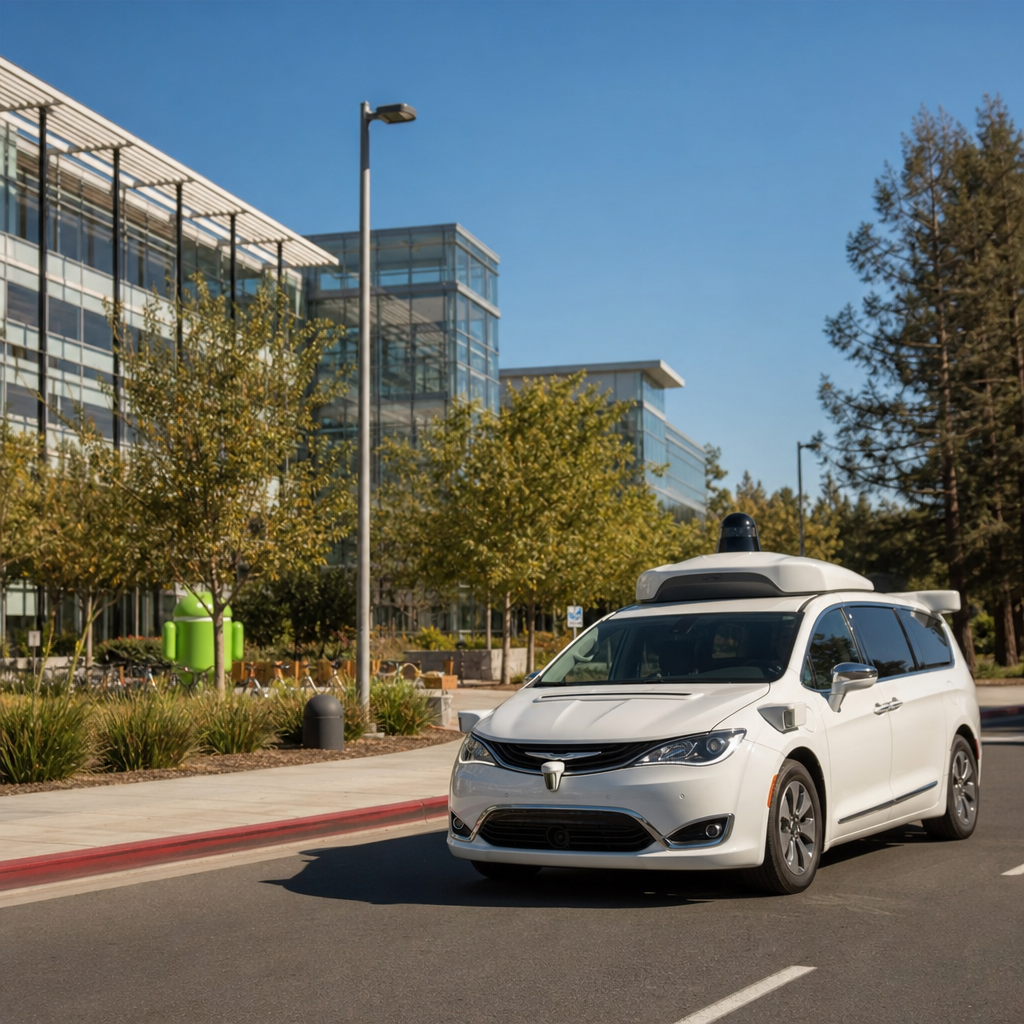
Silicon Valley has become the defining ecosystem behind autonomous tech, shaping how self-driving cars, industrial robots, drones, software agents, and machine decision systems are funded, built, tested, and commercialized. Autonomous tech refers to systems that can sense conditions, interpret data, make decisions, and act with limited or no human intervention. In practice, that includes robotaxis navigating city streets, warehouse machines moving inventory, agricultural equipment optimizing harvest routes, and AI copilots handling routine business tasks. I have worked with founders, investors, and operating teams around these products, and the same pattern appears repeatedly: breakthroughs rarely come from code alone. They emerge when research talent, risk capital, specialized suppliers, regulatory access, and market timing converge in one place.
That convergence explains why Silicon Valley matters so much to entrepreneurship and venture capital. The region created a repeatable model for embracing innovation and investment: university research feeds startups, startups attract venture funding, successful exits recycle capital and talent, and policy debates happen close to the builders. Autonomous technology is particularly dependent on this loop because it is expensive, technically complex, and commercially risky. Training perception models, deploying edge hardware, collecting real-world driving or operating data, and proving safety all demand years of sustained funding. Investors in the Valley have historically been more willing than most markets to finance that long runway in exchange for category-defining outcomes.
Understanding Silicon Valley’s role also helps founders and investors assess where value will actually accrue. Many people assume autonomous tech is only about vehicles, but the bigger opportunity spans logistics, manufacturing, healthcare, defense, construction, and enterprise software. The central questions are straightforward. Why did this region become the launchpad? Which institutions and companies built the playbook? Where are the strongest investment themes now? And what limits should entrepreneurs respect as they scale? This hub article answers those questions directly while framing the broader subtopic of embracing innovation and investment, so readers can connect technical progress with practical venture strategy.
How Silicon Valley Built the Autonomous Tech Playbook
Silicon Valley’s influence started with infrastructure long before autonomous products reached consumers. Stanford, UC Berkeley, and nearby labs produced core advances in computer vision, robotics, mapping, semiconductors, and machine learning. DARPA Grand Challenge alumni became founders and senior engineers at many of the best-known autonomy companies, proving that talent networks matter as much as patents. The Valley also offered dense supplier access: NVIDIA for accelerated computing, Intel and Mobileye partnerships, cloud platforms such as Google Cloud and AWS, and simulation environments developed by specialist software vendors. When founders can recruit systems engineers, buy sensors, raise a seed round, and meet pilot customers without crossing time zones, product cycles compress dramatically.
The startup model itself evolved here. Google’s self-driving project, later Waymo, showed that autonomy required a full stack: lidar or camera sensing, sensor fusion, localization, planning, control, simulation, and safety validation. Tesla, although organizationally distinct, reinforced a different Valley lesson: data collection at scale can become a strategic moat if hardware is already deployed in customer hands. Aurora, Nuro, Zoox, Cruise, and Kodiak each reflected variations of the same regional formula, pairing deep technical teams with patient capital and clear domain choices. Even when these companies expanded operations elsewhere, their strategic DNA remained unmistakably tied to Silicon Valley’s founder-investor ecosystem.
Another reason the Valley became central is its tolerance for iterative failure. In autonomous systems, setbacks are normal because edge cases are endless. A robot can perform flawlessly in simulation yet fail when glare blinds sensors, road markings disappear, or a warehouse layout changes overnight. In less mature startup ecosystems, those issues can shut down funding. In Silicon Valley, experienced investors usually ask a narrower question: is the team learning faster than competitors, and does each iteration reduce technical or commercial uncertainty? That mindset supports companies building difficult systems over many years instead of chasing quick but shallow software wins.
Why Venture Capital Keeps Flowing Into Autonomy
Autonomous tech attracts venture capital because it combines platform economics with industry-scale pain points. Transportation companies want lower labor costs and better asset utilization. Warehouses need throughput gains and safer repetitive handling. Manufacturers face chronic labor shortages and quality-control demands that machine vision can address. Enterprise buyers increasingly want software agents that automate documentation, scheduling, support, and compliance workflows. In each case, autonomy promises measurable returns through lower operating costs, faster cycle times, fewer errors, and continuous service. That is the investment case founders present, and in strong deployments it is credible.
Capital intensity remains the main constraint. Unlike a typical SaaS startup, autonomous companies often need custom hardware integration, fleet operations, data labeling, simulation infrastructure, and substantial insurance or regulatory work. That raises early burn rates and extends time to revenue. Valley investors compensate by syndicating larger rounds, staging milestones, and backing teams with rare technical credibility. Andreessen Horowitz, Sequoia, Khosla Ventures, Lux Capital, NEA, and DCVC have all supported robotics, AI infrastructure, and autonomy plays because they understand that outlier winners can dominate large markets once deployment risk falls. The funding logic is not blind optimism; it is a calculated bet on durable technical advantage.
| Segment | Primary Value Driver | Key Risk | Representative Example |
|---|---|---|---|
| Robotaxis | High utilization and no driver labor | Safety validation and regulation | Waymo commercial rides |
| Autonomous delivery | Lower last-mile cost | Unit economics in dense operations | Nuro neighborhood delivery |
| Warehouse robotics | Faster fulfillment throughput | Integration with legacy systems | Locus and Symbotic deployments |
| Industrial inspection drones | Reduced downtime and safer inspections | Airspace and site constraints | Utility infrastructure monitoring |
| Enterprise AI agents | Labor automation in knowledge work | Accuracy, governance, and security | Support and claims triage workflows |
Investors also favor autonomy when distribution advantages are clear. A startup selling robotics into existing logistics networks may scale faster than one waiting for citywide vehicle regulation. Likewise, enterprise AI agents can reach customers through cloud marketplaces and channel partners, reducing go-to-market friction. The Valley excels at matching these business model realities to financing structures. In my experience, the best boards ask not just whether the technology works, but whether the commercialization path fits the company’s cash profile, risk tolerance, and regulatory exposure.
From Cars to Warehouses: Where Innovation Is Winning
Autonomous vehicles receive the most attention, but logistics and industrial automation are producing some of the clearest commercial wins. Warehouses are structured environments, which makes perception, navigation, and task planning easier than open-road driving. That is why autonomous mobile robots have expanded quickly in fulfillment centers. They reduce walking time for workers, improve pick rates, and generate operational data managers can use to redesign workflows. Companies such as Amazon Robotics normalized the idea that fleets of machines can coordinate in real time under software control, and startups built on that proof point with more flexible systems for third-party logistics providers.
Autonomous trucking is another area where Silicon Valley’s influence is visible. Highway driving is more constrained than urban driving, making it a logical stepping stone for freight automation. Startups like Aurora and Kodiak focused on long-haul routes, transfer hubs, and partnerships with carriers rather than promising instant full replacement of drivers everywhere. That strategic narrowing matters. It shows how Valley companies often commercialize autonomy by choosing domains with limited variables, strong customer pain, and measurable economics. Similar patterns appear in agriculture, where autonomy improves route planning, spraying precision, and field coverage, and in mining, where repetitive routes and safety risks justify heavy investment.
Enterprise autonomy has expanded the definition of the category. Today, software agents can autonomously classify documents, draft customer replies, route claims, monitor anomalies, and trigger workflows across systems like Salesforce, ServiceNow, and SAP. While these tools differ from physical robots, the same venture logic applies: combine machine perception, probabilistic reasoning, human oversight, and continuous learning to reduce manual work. Silicon Valley firms are pushing this convergence aggressively because multimodal models, lower inference costs, and better orchestration frameworks have turned autonomy into a software opportunity as well as a robotics one.
Standards, Safety, and the Limits of the Valley Model
Silicon Valley has accelerated autonomous tech, but it has not solved every problem. Safety remains the defining hurdle, especially in mobility and healthcare. Credible operators use structured safety cases, operational design domains, redundancy planning, and incident review processes rather than marketing claims. Standards such as ISO 26262 for automotive functional safety, SAE J3016 for driving automation levels, and UL 4600 for autonomous product safety provide important reference points, but compliance alone does not guarantee real-world performance. Founders who treat standards as checkboxes usually struggle. Those who integrate safety engineering into product design earn trust faster from regulators, customers, and insurers.
There are also economic limits. Some autonomous applications look impressive in pilots yet fail at scale because maintenance, edge-case handling, and on-site support erase labor savings. I have seen teams underestimate sensor cleaning, battery management, retraining cycles, and customer change management. The Valley’s bias toward speed can magnify that mistake. Moving fast helps discovery, but in autonomy, operational discipline is what converts demos into recurring revenue. This is why many successful companies now emphasize supervised autonomy, constrained deployment zones, and human-in-the-loop escalation instead of promising universal automation from day one.
Geography matters too. Silicon Valley remains a command center, but autonomous innovation is increasingly distributed. Pittsburgh developed strong robotics talent through Carnegie Mellon. Austin and Phoenix became important testbeds for vehicle deployment. Shenzhen dominates critical hardware supply chains. Israel contributes heavily in sensors, security, and edge intelligence. The Valley still leads in venture formation and ecosystem density, yet the future of autonomous tech will be shaped by global collaboration, not regional mythology. Entrepreneurs who understand that distinction make better investment and expansion decisions.
What Entrepreneurs and Investors Should Do Next
Silicon Valley’s role in the evolution of autonomous tech is best understood as a model for turning difficult science into investable companies. The region combined research depth, venture capital, engineering talent, supplier networks, and market access to make autonomy commercially plausible across transportation, logistics, industry, and enterprise software. Its biggest contribution was not a single company or invention. It was a system that tolerated long development cycles while demanding technical rigor, measurable economics, and ambitious scale.
For entrepreneurs, the lesson is to narrow the problem, prove value in a constrained environment, and build safety and operations into the product from the start. For investors, the lesson is to underwrite deployment reality, not just demos or headline narratives. The strongest autonomous companies solve expensive, recurring problems and learn faster with every live installation. If you are exploring entrepreneurship and venture capital opportunities in this space, use this hub as a starting point: map the value chain, study the economics of each segment, and focus your next move where innovation and investment reinforce each other.
Frequently Asked Questions
1. Why has Silicon Valley become so influential in the development of autonomous technology?
Silicon Valley has become central to autonomous technology because it brings together the exact ingredients needed to move complex systems from research to real-world deployment. Autonomous tech depends on advances in artificial intelligence, sensors, cloud computing, semiconductors, robotics, mapping, simulation, and software infrastructure. Few places in the world have such a dense concentration of talent, capital, research institutions, startups, and major technology platforms working across all of those areas at once. That concentration creates a powerful feedback loop: engineers build new tools, venture firms fund ambitious prototypes, large companies provide computing power and distribution, and nearby universities and labs continuously supply new ideas and skilled specialists.
Another major reason is Silicon Valley’s culture of rapid experimentation. Autonomous systems are difficult to perfect because they must operate in dynamic, unpredictable environments. Companies need to iterate quickly, test often, gather large volumes of data, and refine models continuously. Silicon Valley has long rewarded that kind of high-risk, high-speed development. It also has a history of commercializing breakthrough technologies rather than leaving them in the lab. As a result, the region did not just contribute academic ideas about autonomy; it helped transform those ideas into robotaxis, warehouse automation platforms, drone systems, software agents, and machine decision tools that could be tested, funded, and scaled.
Just as importantly, Silicon Valley influences the business model behind autonomy. The region has shaped how autonomous companies think about platform economics, subscription software, fleet learning, data monetization, and long-term infrastructure investment. In other words, Silicon Valley’s role is not limited to inventing the technology itself. It has also helped define how autonomous systems are organized, financed, governed, and brought to market.
2. What types of autonomous technologies has Silicon Valley helped advance beyond self-driving cars?
While self-driving cars receive the most public attention, Silicon Valley’s impact on autonomous technology extends far beyond transportation. One major area is industrial and warehouse robotics. Companies in and around the Valley have helped develop machines that can identify products, move inventory, sort packages, and operate alongside human workers with growing levels of independence. These systems combine computer vision, motion planning, real-time sensing, and software orchestration to improve logistics speed and efficiency.
Another important category is drone technology. Silicon Valley has contributed to autonomous aerial systems used for infrastructure inspection, mapping, security, environmental monitoring, and delivery experiments. These drones rely on many of the same core capabilities as autonomous vehicles, including navigation, obstacle detection, sensor fusion, and machine learning-based decision-making. The region has also played a key role in agriculture, where autonomous equipment is being used to optimize planting, harvesting, crop monitoring, and resource use. Agricultural autonomy can help reduce labor constraints while improving precision in water, fertilizer, and pesticide application.
Silicon Valley has also been highly influential in the rise of software-based autonomous systems, sometimes called software agents or machine decision systems. These include tools that automate cybersecurity responses, coordinate supply chains, optimize pricing, manage energy systems, and support enterprise operations with limited human intervention. Although these systems do not physically move through the world like a robotaxi or drone, they still fit the broader definition of autonomy because they sense inputs, analyze conditions, make decisions, and take action. This broader view is important because it shows that Silicon Valley’s influence spans both physical autonomy and digital autonomy, making the region a driving force in how intelligent systems are integrated across industries.
3. How does Silicon Valley’s startup and investment ecosystem accelerate autonomous tech commercialization?
Commercializing autonomous technology is exceptionally expensive and technically demanding, and Silicon Valley’s startup and investment ecosystem helps solve that problem better than almost any other region. Building an autonomous product often requires years of research, vast data pipelines, specialized hardware, simulation environments, field testing, regulatory work, and multidisciplinary engineering teams. Venture capital firms in Silicon Valley have historically been more willing than most investors to fund long development timelines if they believe a company could ultimately reshape a major market. That willingness matters because autonomy rarely reaches profitability quickly, especially in sectors like self-driving transport, robotics, and aerospace systems.
The startup ecosystem also enables specialization. Instead of one company building every part of the stack, Silicon Valley supports networks of firms focused on perception software, lidar and sensor systems, edge computing, robotic grippers, mapping, fleet management, safety validation, and AI model optimization. That modular structure speeds innovation because startups can focus intensely on one bottleneck while partnering with others across the supply chain. At the same time, larger tech firms often serve as customers, acquirers, infrastructure providers, or strategic investors, which gives promising startups more pathways to scale.
Equally important is the region’s ability to connect technical invention with market adoption. Silicon Valley companies tend to think early about deployment strategy, user experience, platform integration, and recurring revenue models. They are often building not just a machine, but an ecosystem around that machine: software updates, cloud monitoring, analytics dashboards, maintenance services, and operational intelligence. That commercialization mindset has helped autonomous tech move from isolated demonstrations into repeatable business offerings. Even when individual ventures fail, the talent, tools, and lessons usually remain in the ecosystem, accelerating the next generation of autonomous companies.
4. What are the biggest challenges Silicon Valley faces in advancing autonomous systems responsibly?
Despite its leadership, Silicon Valley faces serious challenges in ensuring that autonomous systems are deployed safely, ethically, and responsibly. Safety is the most obvious issue. Autonomous machines must make decisions in environments that are messy, variable, and sometimes dangerous. A self-driving car may encounter unusual road behavior, a warehouse robot may need to react around people, and a drone may face weather or signal disruptions. Building systems that perform reliably at scale requires not only strong technical design but also rigorous validation, continuous monitoring, and clear accountability when things go wrong.
Another challenge is regulation and public trust. Autonomous technologies often move faster than legal frameworks do, which can create uncertainty around liability, testing rules, data collection, and operational boundaries. Silicon Valley companies are accustomed to iterating quickly, but autonomy affects public safety, labor markets, privacy, and infrastructure in ways that demand careful oversight. If companies appear to prioritize speed over transparency, they risk backlash from regulators, workers, and the public. That makes responsible deployment as much a governance issue as an engineering one.
There are also broader social and economic concerns. Autonomous systems can improve efficiency, but they may also disrupt jobs, shift power toward large technology platforms, and introduce bias if machine decision systems are trained on flawed data. Questions around explainability, fairness, cybersecurity, and human control are increasingly important, especially as autonomous software begins to influence hiring, finance, logistics, healthcare support, and public services. Silicon Valley’s challenge is not simply to build more capable systems; it is to prove that those systems can operate in ways that are trustworthy, auditable, and aligned with human needs. Long-term leadership in autonomy will depend as much on responsible stewardship as on technical brilliance.
5. What is Silicon Valley’s long-term role in the future of autonomous technology?
Silicon Valley is likely to remain one of the most important centers shaping the future of autonomous technology, but its role is evolving from pure invention to ecosystem coordination. In the early stages, the Valley helped establish many of the foundational technologies and startup models behind autonomy. Looking ahead, its influence will increasingly come from integrating hardware, AI models, cloud systems, developer platforms, and commercial partnerships into scalable operating environments for autonomy. That means the region will continue to matter not just because it produces breakthrough ideas, but because it helps connect research, infrastructure, and deployment across industries.
One key part of that future is convergence. Autonomous vehicles, industrial robots, drones, and software agents are all beginning to share common enabling technologies such as foundation models, simulation systems, edge AI chips, real-time analytics, and remote operations tools. Silicon Valley is especially well positioned to drive this convergence because it has deep expertise in software platforms and cross-industry technology stacks. As these systems become more connected, the Valley’s biggest contribution may be creating the operating layers that allow different autonomous tools to learn, coordinate, and improve over time.
At the same time, Silicon Valley will not control the future of autonomy alone. Manufacturing hubs, automotive regions, defense contractors, logistics networks, agricultural operators, and regulators around the world will all influence how autonomous systems are actually deployed. Even so, Silicon Valley is likely to remain the strategic nerve center where many of the core ideas, funding decisions, software architectures, and market-defining partnerships originate. Its long-term role is less about owning every outcome and more about continuing to shape the direction, speed, and standards of the autonomous era.