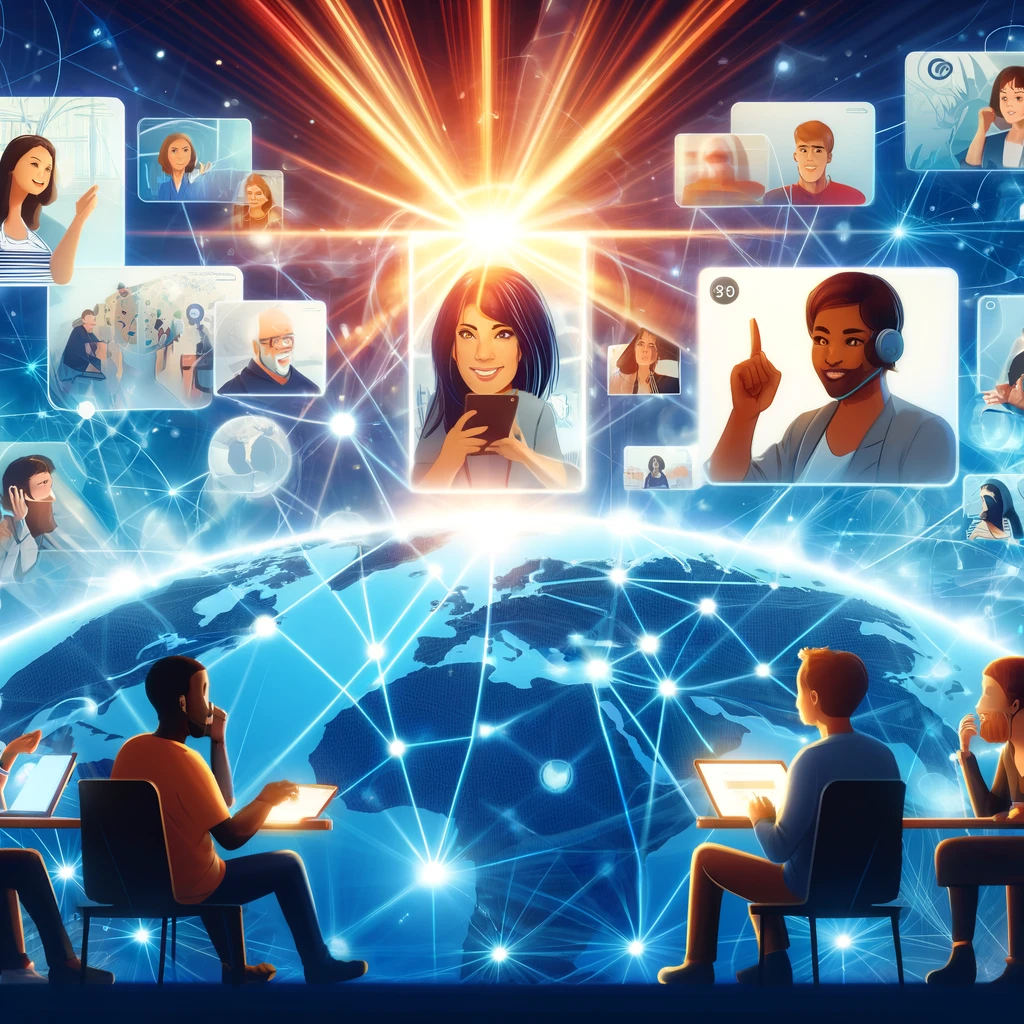
Twitter’s global voice has reshaped how political and social discourse forms, spreads, and hardens into public opinion. For more than a decade, I have watched campaigns, journalists, activists, regulators, and brands treat the platform as both a breaking-news wire and a live arena where narratives are contested in public. In practical terms, Twitter became influential because it compressed communication into fast, repeatable posts, made public conversation searchable through hashtags, and rewarded immediacy over polish. That combination gave ordinary users, elected officials, media organizations, and social movements access to the same distribution system, even if their reach differed dramatically.
To understand why this matters, it helps to define the core ideas. Political discourse is the public exchange of views about government, power, policy, elections, and civic identity. Social discourse includes conversations about culture, race, gender, labor, public health, and collective norms. Twitter sits at the intersection of both because social issues routinely become political questions, and political decisions quickly become social flashpoints. A single thread from a lawmaker can trigger televised debate, market reactions, protest organizing, and policy clarification within hours. Few platforms have matched that speed.
As a hub within Company Spotlights focused on Movers and Shakers, this article examines why Twitter deserves special attention. It is not simply a technology company story; it is a case study in platform power. Understanding Twitter helps readers interpret related articles on influential founders, media executives, political strategists, activist networks, and competing social platforms. The central question is straightforward: how did one company become a global amplifier for voices that can inform, mobilize, polarize, and sometimes mislead millions at once? The answer lies in product design, network effects, elite adoption, and the platform’s role during crises.
How Twitter Became a Real-Time Public Square
Twitter’s importance began with architecture, not ideology. The public-by-default posting model made statements easy to discover, quote, and embed across the web. Journalists adopted it early because it functioned as a tip sheet, headline feed, and sourcing tool. Politicians embraced it because they could bypass press conferences and speak directly to supporters. Activists found it effective because a hashtag could concentrate attention around a cause, event, or injustice with remarkable speed. In my work tracking digital communications, no feature mattered more than this open visibility. Facebook often hosted private or semi-private conversations; Twitter made performance, rebuttal, and amplification visible to everyone.
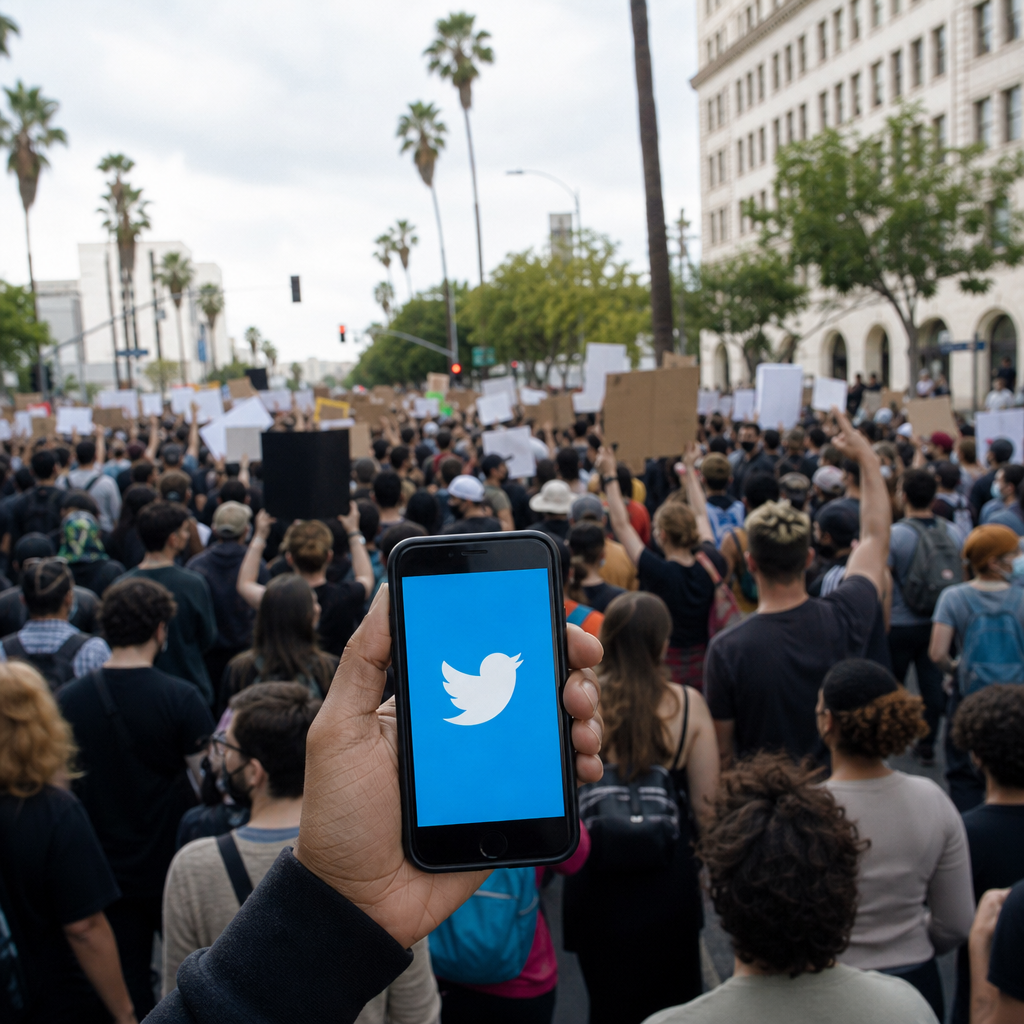
Major events proved the model. During the Arab Spring, tweets and hashtags helped circulate eyewitness accounts and draw international attention, even when traditional reporting was limited. In the Black Lives Matter movement, Twitter transformed local incidents into sustained national and global conversations by linking names, video evidence, protest logistics, and demands for institutional accountability. During elections in the United States, India, Brazil, and the United Kingdom, candidates and parties used Twitter to define opponents, test messaging, and energize core supporters in real time. The platform did not create every movement, but it frequently accelerated visibility and coalition building.
Twitter also became indispensable during emergencies. Natural disasters, terror incidents, public health alerts, and transportation failures all produced bursts of platform activity. Government agencies, emergency responders, newsrooms, and citizens used tweets to share road closures, shelter locations, casualty updates, and official guidance. That practical value strengthened user habits. People learned that if something major was happening, Twitter would likely surface the earliest public reaction. Speed created relevance, and relevance reinforced the network.
Why Political Leaders, Journalists, and Activists Depend on It
Twitter’s unique influence comes from the concentration of agenda setters. Cabinet ministers, presidents, opposition leaders, local officials, prominent reporters, policy analysts, academics, celebrities, and organizers often monitor the same feed environment. That means one post can move vertically through society, from niche expert conversation to mainstream television coverage, or horizontally across communities that would rarely interact offline. I have seen a short policy clip posted in the morning become the framing language used by broadcasters, campaign surrogates, and advocacy groups by nightfall. The platform compresses the time between message creation and narrative adoption.
For journalists, Twitter is both source map and distribution engine. Reporters use lists, advanced search operators, geolocated posts, and verification workflows to identify eyewitnesses and track developing stories. News organizations then recirculate their own reporting on the same platform, where it competes with commentary, memes, partisan framing, and direct statements from officials. This dynamic changes newsroom incentives. Speed matters, but so does verification, because false claims can become entrenched before a correction reaches the same audience. The best newsrooms now pair social monitoring with rigorous confirmation standards from organizations such as the Associated Press and Reuters.
For activists, Twitter lowers coordination costs. Organizers can publish demands, event details, legal resources, donation links, and media-ready evidence without relying on institutional gatekeepers. Hashtags act as indexing tools, making conversations legible to participants and observers. Yet dependence carries risks. Harassment, doxxing, brigading, and algorithmic amplification of outrage can exhaust organizers and distort public understanding. The same mechanics that help a movement gain attention can also make it vulnerable to bad-faith actors, state-linked influence operations, and decontextualized clips designed to inflame rather than inform.
What Shapes Influence on the Platform
Influence on Twitter is not determined by follower counts alone. Reach depends on timing, repost velocity, replies from high-visibility accounts, screenshot circulation on other platforms, and whether journalists or commentators treat a post as newsworthy. Verification badges once signaled notability and helped users assess authenticity, though later product changes complicated that signal. Recommendation systems also matter. When the platform prioritizes engagement-heavy content, emotionally charged posts often outperform measured explanations. That creates a structural advantage for provocation, certainty, and conflict.
In practice, four forces usually determine whether a message dominates the conversation: source credibility, emotional intensity, network proximity to elites, and memetic simplicity. A finance minister announcing emergency measures can command attention because of institutional authority. A protest video can spread because it carries moral shock. A pundit with ties to television producers can bridge social chatter into mass media. A slogan that fits neatly into a hashtag can travel farther than a nuanced policy memo, even when the memo is more accurate.
| Driver of influence | How it works on Twitter | Real-world effect |
|---|---|---|
| Elite amplification | High-profile accounts repost or quote a message | Topic jumps from niche discussion to national coverage |
| Hashtag cohesion | Users organize around a shared label | Movements gain discoverability and media framing |
| Visual evidence | Images or short clips travel faster than text alone | Eyewitness content shapes public sentiment quickly |
| Algorithmic engagement | Replies, reposts, and controversy boost visibility | Polarizing content can outrun careful reporting |
The Benefits and the Democratic Risks
Twitter’s democratic benefit is directness. Citizens can question officials publicly, experts can correct misstatements quickly, and underrepresented voices can gain visibility without buying distribution. Researchers, public health professionals, legal scholars, and election administrators have all used the platform to explain complex issues in accessible terms. During the COVID-19 pandemic, many physicians and epidemiologists provided rapid, plain-language interpretation of emerging evidence, helping audiences understand transmission, masking, and vaccine data before formal institutions updated public guidance.
But the platform’s risks are equally concrete. Misinformation thrives in environments where speed outruns context. Coordinated disinformation campaigns, bot networks, impersonation, and selectively edited media can manipulate discourse at scale. Polarization deepens because users encounter social rewards for performative certainty and social penalties for nuance. Moderation decisions are also contentious. Remove too little harmful content, and abuse and deception spread. Remove too much, or apply rules inconsistently, and accusations of censorship intensify. There is no frictionless solution, only governance tradeoffs involving safety, expression, legality, and legitimacy.
These tensions explain why lawmakers and regulators around the world scrutinize platform governance. Questions about transparency, content moderation, election integrity, child safety, and data access are now central to how major technology companies are assessed. The European Union’s Digital Services Act raised expectations for risk assessment and platform accountability. In the United States, debates over Section 230 continue to shape arguments about intermediary responsibility. Twitter, because of its outsized influence on elite discourse, remains a focal point in these policy battles.
Twitter in the Wider Movers and Shakers Landscape
As a Company Spotlights hub for Movers and Shakers, Twitter connects multiple power centers. It influences political campaign strategy, corporate reputation management, newsroom workflows, investor sentiment, and activist mobilization. Executives use it to signal priorities. CEOs post product roadmaps and respond to critics. Diplomats float positions. Central bankers move markets with a sentence. Athletes and entertainers shape cultural narratives that spill into legislative and brand debates. No serious study of modern influence can ignore this company’s role as connective tissue between institutional power and mass reaction.
Readers exploring this subtopic should treat Twitter as a gateway case. Its story illuminates broader themes covered by adjacent articles: how charismatic founders affect platform identity, how trust and safety teams shape user experience, how media personalities convert attention into political leverage, and how platform design choices alter democratic participation. Studying Twitter also clarifies a larger lesson about movers and shakers in digital business: influence today belongs not only to those who own audiences, but to those who design the systems through which audiences interpret events.
Twitter’s global voice is therefore neither inherently liberating nor inherently corrosive. It is powerful because it makes contest over meaning immediate, public, and scalable. For readers, the practical takeaway is simple: evaluate the source, check the evidence, and watch how amplification occurs before accepting a narrative as settled. For organizations, the lesson is equally clear: platform literacy is now a core leadership skill. Use this hub to explore the people, companies, and decisions shaping modern discourse, and you will better understand who truly moves public conversation.
Frequently Asked Questions
How has Twitter influenced political and social discourse around the world?
Twitter has influenced political and social discourse by turning public conversation into a fast-moving, highly visible, and globally connected stream of commentary. Unlike slower traditional media formats, Twitter allowed politicians, journalists, activists, institutions, and ordinary users to react to events in real time, often while those events were still unfolding. That immediacy changed how narratives form. A speech, protest, policy announcement, or breaking scandal could move from local discussion to international debate within minutes, often propelled by retweets, hashtags, screenshots, and quote-posts.
The platform also reshaped who gets to participate in public debate. It lowered the barrier to entry for commentary, making it possible for independent voices, grassroots organizers, and marginalized communities to reach audiences that were once controlled primarily by large media organizations or political gatekeepers. Hashtags helped people gather around shared causes, whether related to elections, civil rights, public health, or social justice. In many cases, Twitter became the place where language, framing, and emotional momentum around an issue were established before television panels, newspaper editorials, or official statements caught up.
At the same time, Twitter’s influence came from its structure. Short, repeatable posts encouraged distilled messaging, slogans, and emotionally resonant phrases that could spread quickly. That made the platform powerful for awareness and mobilization, but it also encouraged simplification, polarization, and conflict. In practice, Twitter did not just reflect political and social discourse; it actively shaped it by rewarding speed, visibility, and engagement.
Why did Twitter become so important for journalists, activists, and political campaigns?
Twitter became important because it functioned as several tools at once: a breaking-news wire, a publishing platform, a public tip line, a message-testing environment, and a direct distribution channel. For journalists, it offered immediate access to eyewitness accounts, official statements, trending topics, and public reaction. Reporters could monitor developing stories, contact sources, share updates instantly, and see which narratives were gaining traction in real time. Newsrooms increasingly treated Twitter as both a sourcing tool and an audience gateway.
For activists, Twitter offered speed, visibility, and network effects. A local issue could gain national or global attention when a hashtag unified participants and made the conversation searchable. Organizers used the platform to document events, coordinate messaging, challenge official accounts, and attract media coverage. This was especially significant in moments when traditional institutions were slow to respond or when communities felt ignored by mainstream outlets. Twitter gave movements a public stage and a way to sustain momentum through repetition, storytelling, and shared identity.
Political campaigns valued Twitter because it allowed candidates and strategists to communicate without relying entirely on press intermediaries. They could test messages, frame controversies, energize supporters, attack opponents, and respond to events instantly. A well-timed tweet could dominate a news cycle, while a misstep could create a backlash just as quickly. In that sense, Twitter became central not only because it was popular, but because it compressed the timeline between message creation, public reaction, and media amplification.
What role do hashtags and viral posts play in shaping public opinion on Twitter?
Hashtags and viral posts play a major role because they organize attention. A hashtag gives people a shared label for an issue, event, or movement, making it easier to follow, join, and amplify a conversation. This creates a kind of public archive in motion, where users can see how an issue is being framed, who is participating, and which perspectives are winning visibility. In political and social contexts, that matters because public opinion is often shaped not just by facts, but by repeated language, emotional cues, and collective perception.
Viral posts accelerate this process by turning individual messages into reference points for larger debates. A single tweet can summarize a viewpoint so effectively that it becomes the dominant framing repeated by commentators, activists, journalists, and public officials. When that happens, the viral post does more than spread information; it influences how people interpret events. It can humanize a complex issue through a firsthand story, reduce a policy debate to a memorable line, or create outrage that pushes institutions to respond.
However, the same mechanisms that elevate important perspectives can also amplify misinformation, selective context, and emotionally charged distortions. Hashtags can unify people, but they can also harden camps. Viral content can spotlight injustice, but it can also reward oversimplified takes that travel faster than careful analysis. This is why Twitter has been so consequential: it gives public opinion a visible, participatory, and highly reactive form, but one that can shift rapidly based on what gains momentum first.
What are the biggest criticisms of Twitter’s role in political and social conversations?
One of the biggest criticisms is that Twitter tends to reward outrage, conflict, and performative certainty. Because the platform has historically prioritized engagement, content that provokes strong emotional reactions often travels farther than content that is nuanced, cautious, or incomplete. This can distort public understanding by making the loudest or most extreme perspectives appear more dominant than they actually are. It can also pressure public figures, journalists, and institutions to react quickly before facts are fully established.
Another major criticism involves misinformation and manipulation. Coordinated campaigns, bots, partisan networks, and bad-faith actors have used Twitter to spread misleading claims, inflame tensions, and create the appearance of grassroots consensus. In political contexts, this raises serious concerns about election integrity, public trust, and the vulnerability of online discourse to influence operations. Even when falsehoods are later corrected, the initial viral impact can shape beliefs long enough to affect real-world outcomes.
Critics also point to the platform’s tendency to compress complex issues into short, adversarial exchanges. Important topics such as policy reform, international conflict, identity, regulation, and public health often require context and careful explanation, yet Twitter’s format has historically favored brevity and speed. That can encourage tribalism, moral grandstanding, and quote-driven debates instead of deeper deliberation. For many observers, the concern is not simply that Twitter hosts political discourse, but that it reshapes that discourse into a more reactive, polarized, and attention-driven form.
Is Twitter still a major force in shaping discourse, even as the social media landscape changes?
Yes, Twitter remains a major force, although its role has evolved as the broader social media ecosystem has become more fragmented. Newer platforms may dominate in entertainment, creator culture, or private community-building, but Twitter has continued to matter because of the kinds of people and institutions that use it most heavily. Politicians, journalists, analysts, government agencies, academics, brands, and activists still treat it as a place where public narratives can be launched, contested, and monitored in real time. Its influence often comes less from total user scale and more from elite concentration and media visibility.
Even when conversations begin elsewhere, Twitter frequently serves as the platform where they are translated into public, searchable, and newsworthy discourse. A comment, clip, or controversy from another network can gain wider political meaning once it is debated on Twitter by reporters, commentators, and officials. That cross-platform role helps explain why Twitter has remained unusually influential in agenda-setting. It is often where issues become legible to institutions that shape wider public interpretation.
That said, its power is no longer unquestioned. Changes in platform governance, moderation, trust, user behavior, and competition have affected how people use it and how credible they find it. Still, for understanding how political and social discourse hardens into public opinion, Twitter remains one of the clearest examples of how digital platforms can compress attention, amplify conflict, and transform individual expression into globally visible narrative struggle.