Uber’s technological innovations have reshaped urban mobility by turning smartphones, cloud software, mapping systems, and algorithmic dispatch into a coordinated transportation platform used in hundreds of cities worldwide. In this context, urban mobility means the movement of people and goods through dense metropolitan areas, while movers and shakers refers to the companies, founders, engineers, regulators, and market forces actively changing how cities function. As a hub article under Company Spotlights, this page examines why Uber matters as a case study in platform innovation, operational scale, and technology-led service design. I have worked on digital marketplace content and mobility software analysis, and Uber consistently stands out because it did not merely create a ride-hailing app; it integrated routing, payments, identity verification, dynamic pricing, demand forecasting, and logistics into one consumer experience. That combination changed rider expectations, pushed taxi markets toward app-based booking, and influenced delivery, freight, and micromobility sectors. Understanding Uber helps readers make sense of broader shifts in transportation technology, labor models, and city infrastructure. It also provides a useful lens for evaluating other movers and shakers in urban transport, from autonomous vehicle developers to public transit platforms and last-mile delivery networks.
The Platform Model That Rewired City Transportation
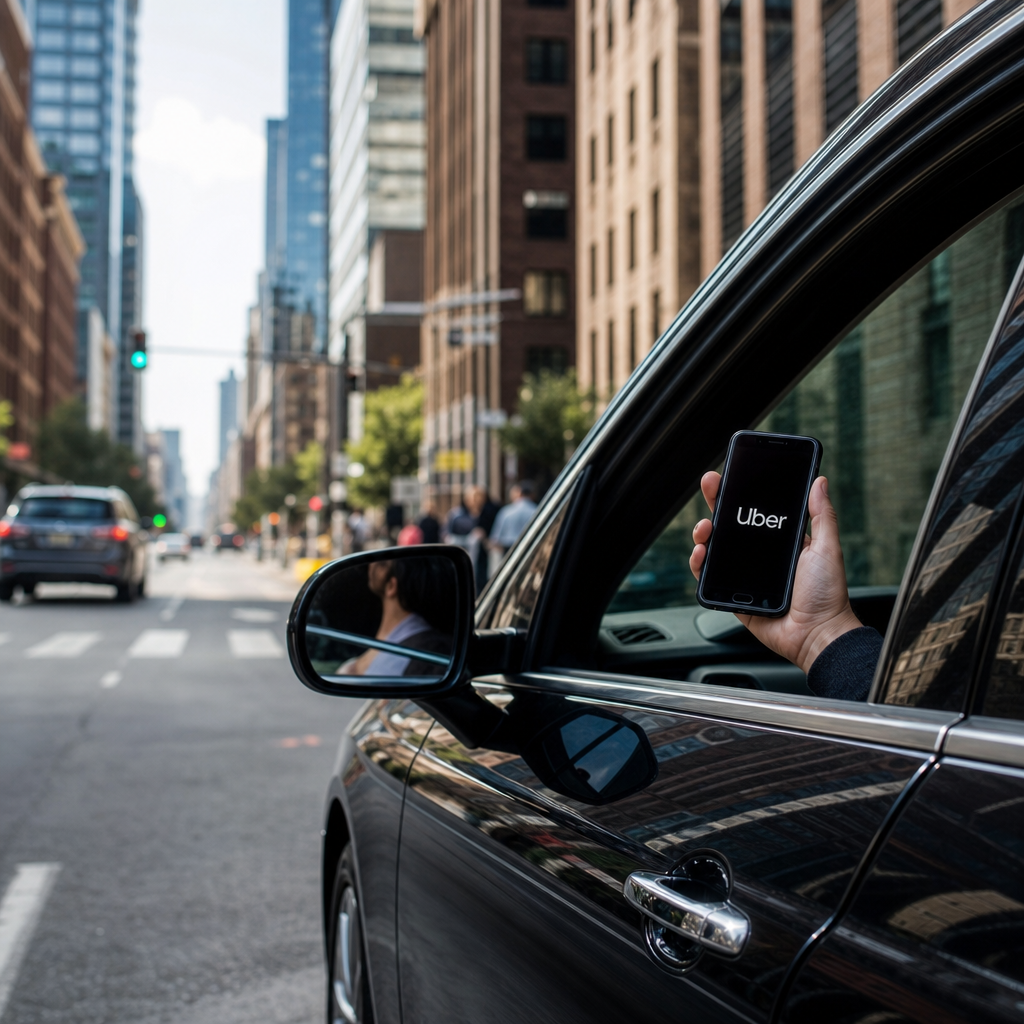
Uber’s first major innovation was not the car itself but the platform architecture that connected riders and drivers in real time. Before app-based ride-hailing, urban point-to-point travel often required calling a dispatcher, hailing on the street, or waiting for uncertain pickup times. Uber reduced friction by combining GPS-enabled smartphones, digital mapping, and stored payment credentials. A rider could request a trip, see the driver approaching, receive an estimated arrival time, and pay automatically at the end. This sounds routine today, but when Uber expanded in the early 2010s, this level of end-to-end integration felt radically convenient. The company translated several separate tasks into one mobile workflow, which is why it grew quickly in dense cities where convenience and time savings have measurable value.
At an operational level, Uber relied on marketplace balancing. The platform had to match fluctuating rider demand with available driver supply minute by minute and neighborhood by neighborhood. That required dispatch systems able to process location pings, trip requests, estimated routes, and driver status changes continuously. The company also had to build trust mechanisms into the product. Driver ratings, rider ratings, trip receipts, identity layers, and in-app support created accountability in a market where strangers share vehicles. This trust framework became one of the defining product patterns later adopted across marketplaces. For city residents, the practical effect was straightforward: transportation became on-demand, trackable, and legible through a phone screen.
Core Technologies Behind Uber’s Service Experience
Uber’s technological stack blends mobile engineering, cloud infrastructure, geospatial data, machine learning, and payment processing. The rider app and driver app are only the visible layer. Underneath, Uber uses location services to estimate pickup points, route engines to model trip duration, and pricing systems that account for distance, time, local demand, and traffic. The reliability of this experience depends on low-latency systems. If a driver’s location updates slowly or a route estimate is wrong, the marketplace degrades immediately. That is why mapping accuracy and event-stream processing are essential, not secondary features.
One of the most consequential technical decisions in Uber’s history was investing heavily in its own mapping and marketplace intelligence instead of relying only on third-party basemaps. City streets are messy: entrances differ from pin locations, one-way restrictions change, airports have pickup zones, and large venues create congestion patterns that generic maps often miss. Uber improved pickup precision by refining location data and guiding riders to feasible curbside points. In practical terms, this reduced cancellations, shortened idle time, and improved driver earnings per active hour. It also made the app more dependable in high-complexity environments such as stadium exits, business districts, and airports.
Machine learning also powers estimated time of arrival, fraud detection, and demand prediction. If a storm begins, a concert ends, or commuter rail is delayed, rider demand can spike quickly. Uber’s systems anticipate these patterns using historical data and real-time signals. That forecasting capability matters because an urban mobility platform fails when too many users open the app and cannot get a ride. Predictive models help position supply, inform incentives, and maintain network responsiveness under stress.
Dynamic Pricing, Dispatch, and Marketplace Efficiency
Dynamic pricing is among Uber’s most debated innovations, but it is central to how the marketplace functions. When demand outpaces supply in a specific area, higher prices signal drivers to move toward that zone and encourage some riders to delay nonessential trips. Economically, this is a rationing and balancing mechanism. Operationally, it helps prevent total service collapse during peaks such as New Year’s Eve, severe weather, or transit disruptions. Critics argue that surge pricing can feel punitive, especially during emergencies, and that criticism is valid. Yet from a systems perspective, fixed prices during extreme demand often lead to no cars being available at all. The tradeoff is between price stability and service availability.
Dispatch logic is equally important. Matching the closest driver is not always optimal. A better system evaluates estimated pickup time, route efficiency, driver direction of travel, traffic conditions, and the probability of cancellation. Uber’s dispatch technology tries to reduce deadheading, the unpaid distance a driver travels without a passenger. Lower deadheading improves marketplace efficiency because more of each driver’s time is revenue-generating. It can also reduce congestion relative to inefficient roaming, although the total impact of ride-hailing on congestion remains contested by transportation researchers and varies by city density and transit substitution patterns.
| Technology | Function | Urban mobility impact |
|---|---|---|
| GPS and mapping | Locates riders, drivers, routes, pickup points | Shorter waits and more predictable pickups |
| Dynamic pricing | Balances demand and driver supply | Improves ride availability during peaks |
| Machine learning forecasts | Predicts demand spikes and trip times | Faster matching and better marketplace resilience |
| Cashless payments | Processes fares automatically | Smoother transactions and reduced friction |
| Safety and identity tools | Ratings, trip tracking, verification | Higher user confidence and accountability |
Safety, Trust, and Product Governance at Scale
Urban mobility platforms succeed only if users believe the experience is safe enough for routine use. Uber introduced several features that later became industry standard: driver background screening in many markets, GPS trip tracking, anonymized communication, share-my-trip functions, and two-way ratings. Over time, the company added in-app emergency assistance, audio recording options in some regions, rider verification features, and telematics-informed safety monitoring. None of these tools eliminates risk, and no platform can credibly promise perfect safety. However, layered controls make incidents easier to prevent, investigate, and document than in traditional street-hail environments where trip records may be sparse.
Governance has also been a defining part of Uber’s evolution. The company’s early growth strategy often outpaced local regulatory frameworks, leading to legal disputes with taxi commissions, labor advocates, and city governments. Those conflicts were not side issues; they shaped the product itself. Licensing workflows, insurance disclosures, airport operating rules, and accessibility requirements all influence how the app functions in specific jurisdictions. From experience analyzing regulated digital marketplaces, I would argue that Uber’s long-term innovation is as much about compliance engineering as customer-facing design. Scaling mobility technology across cities requires adapting to fragmented rules while keeping the core service coherent.
Beyond Ride-Hailing: Delivery, Freight, and Multimodal Expansion
Uber’s influence on urban mobility extends beyond passenger rides. Uber Eats applied the same marketplace principles to food delivery, coordinating consumers, restaurants, couriers, maps, and payments in a time-sensitive network. That expansion proved that the company’s core competency was dispatch orchestration, not simply transporting people. For cities, this had visible effects on curb usage, restaurant operations, and gig work patterns. It also reinforced the idea that one app could mediate multiple forms of movement across urban space.
The company also moved into freight brokerage and experimented with micromobility through bikes and scooters. Not every initiative produced lasting market leadership, but the strategic logic was consistent: use demand aggregation, routing intelligence, and marketplace software to reduce friction in transport networks. In practical terms, Uber became a mobility interface. A user might open the app for a car ride, a package delivery, or a meal. That convergence matters because city residents increasingly expect integrated digital access rather than separate disconnected systems.
Autonomous vehicles remain a major frontier. Uber sold its self-driving unit after heavy investment, but autonomous partnerships are still relevant to its future. If robotaxis scale commercially, dispatch platforms with large demand pools and routing intelligence will remain valuable, even if driver economics change dramatically. The likely outcome is not one technology replacing everything overnight, but layered coexistence: human-driven vehicles, autonomous fleets in defined zones, public transit, and delivery networks connected through software.
What Uber Reveals About Today’s Movers and Shakers
Uber is a useful hub case because it shows how modern movers and shakers change markets through software, data, and network effects rather than physical infrastructure alone. The company did not build roads, manufacture most vehicles, or own a traditional taxi fleet. Instead, it created a coordination layer that made existing urban transport assets more searchable, bookable, and measurable. That pattern appears across today’s most influential mobility companies, whether they focus on transit ticketing, EV charging, last-mile delivery, or fleet telematics.
The broader lesson is that technological innovation in urban mobility is never only about convenience. It affects labor classification, emissions policy, curb management, accessibility, data governance, and public transit usage. Uber improved access to on-demand transportation for many riders, especially in areas where taxis were unreliable. At the same time, cities still debate congestion effects, driver earnings stability, and equitable service distribution. Serious analysis requires holding both realities together. For readers exploring Company Spotlights, Uber is the right starting point because it sits at the intersection of platform economics, consumer technology, and urban policy. Use this hub to evaluate other movers and shakers with a sharper eye: ask what problem they solve, which technology actually creates the advantage, how trust is maintained, and what tradeoffs cities must manage. That framework separates durable innovation from temporary disruption.
Frequently Asked Questions
How has Uber used technology to change urban mobility?
Uber changed urban mobility by combining several existing technologies into one highly coordinated platform that works at city scale. At the center of that system is the smartphone, which allows riders to request trips instantly, view driver locations in real time, receive fare estimates, and complete payment without cash. Behind the app, Uber relies on cloud computing, digital mapping, GPS tracking, routing software, and algorithmic matching to connect riders and drivers quickly and efficiently. This has reduced many of the friction points that once defined traditional urban transport, such as street hailing, uncertain wait times, limited payment options, and poor visibility into vehicle availability.
Its impact is especially significant in dense metropolitan areas, where transportation demand changes by neighborhood, time of day, weather, events, and commuter patterns. Uber’s technology helps respond to those fluctuations dynamically rather than through fixed schedules alone. That flexibility has influenced how people move through cities, how some businesses think about delivery and logistics, and how residents combine ride-hailing with public transit, biking, and walking. In that sense, Uber did not simply create a ride-booking app; it helped build a digital layer over urban transportation that changed how people and goods are coordinated in real time.
What role do algorithms and data play in Uber’s platform?
Algorithms and data are fundamental to how Uber operates. Every trip depends on software systems that process location data, traffic conditions, predicted travel times, driver availability, rider demand, and route efficiency. These systems help determine which driver is best positioned to accept a ride, how long a pickup will take, what route is likely to be fastest, and how pricing should respond to changes in supply and demand. In a busy city, where transportation conditions can shift minute by minute, that level of automated decision-making is essential for keeping the platform responsive.
Uber also uses aggregated data to improve operations over time. Historical trip patterns can reveal where demand spikes regularly occur, such as airport corridors, entertainment districts, business centers, or commuter routes during rush hour. That information can help improve driver positioning, estimated arrival times, and service reliability. More broadly, data has allowed Uber to become one of the major movers and shakers in technology-driven transportation because it learns continuously from millions of trips. At the same time, this reliance on data raises important questions about privacy, transparency, bias in algorithmic systems, and the responsibilities of companies that shape how cities function through software.
Why are mapping, GPS, and cloud infrastructure so important to Uber’s innovations?
Mapping, GPS, and cloud infrastructure form the technical backbone of Uber’s service. GPS enables the platform to identify where riders and drivers are located, estimate pickup times, and track trips from beginning to end. Digital maps make it possible to convert raw location signals into usable directions, estimated routes, and navigation support. Without these systems, the basic promise of on-demand ride-hailing—press a button and get matched with a nearby vehicle—would not work with the speed and precision users now expect.
Cloud infrastructure is equally important because Uber operates across hundreds of cities and must handle enormous volumes of real-time data simultaneously. The cloud supports dispatch systems, trip processing, payments, messaging, fraud prevention, and large-scale analytics without requiring users to see the complexity behind the scenes. This architecture allows the service to scale rapidly, update features regularly, and maintain coordinated operations across many markets. In practical terms, Uber’s technical innovations are not just about a consumer app interface; they are about building a resilient, always-on software platform capable of orchestrating urban transportation activity across diverse and constantly changing environments.
How has Uber influenced other companies, city regulators, and the future of transportation?
Uber has had a major influence far beyond its own platform. It helped establish consumer expectations for real-time service visibility, app-based payments, route tracking, and immediate access to transportation through a mobile device. As a result, competitors, delivery services, taxi operators, and logistics firms have adopted similar digital features. In many ways, Uber pushed the transportation industry toward a software-first model in which user experience, data systems, and network efficiency are central to competitiveness. That influence is one reason Uber is often discussed in hub articles about major companies shaping modern markets.
Its rise also forced regulators and city governments to respond to new questions about licensing, labor models, accessibility, congestion, safety standards, insurance, and data sharing. This has made Uber one of the most visible players among the founders, engineers, policymakers, and market forces redefining urban systems. Looking ahead, its innovations continue to affect discussions around multimodal transport, electric vehicles, autonomous driving, and last-mile delivery. Whether praised as a breakthrough platform or criticized for its disruptions, Uber has undeniably changed the conversation about how technology companies can reshape transportation in large cities.
What are the biggest benefits and challenges of Uber’s technology in cities?
The biggest benefits center on convenience, speed, and flexibility. Riders can request transportation quickly, compare service levels, track arrivals, and pay seamlessly. In areas where taxis were hard to find or inconsistent in service quality, Uber’s platform often improved access and predictability. Its technology has also supported broader urban mobility use cases, including food delivery, courier services, and connections to transit hubs. For many users, Uber made city movement feel more transparent and controllable because information that was once uncertain—such as driver location, expected wait time, and trip cost—became visible in the app.
At the same time, the challenges are substantial. Critics point to congestion effects, pressure on traditional taxi industries, labor concerns involving drivers, and questions about whether ride-hailing complements or competes with public transit. There are also concerns about surge pricing, digital equity, environmental impact, and the concentration of decision-making power in platform algorithms. These tensions are important because urban mobility is not just a business opportunity; it is a core part of how cities function socially and economically. Uber’s technological innovations have delivered real efficiencies, but they have also shown that when software becomes a key organizer of transportation, cities must weigh innovation against fairness, accountability, and long-term public interest.