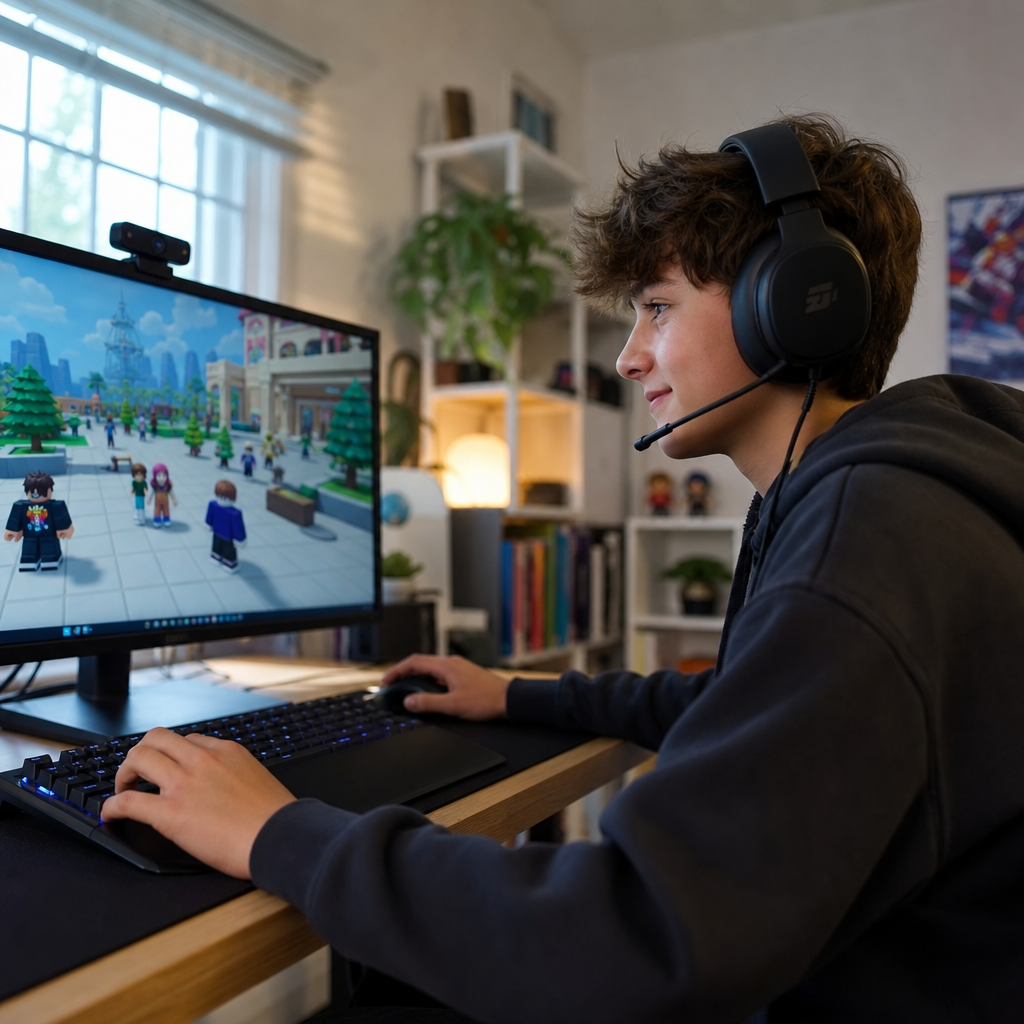
Roblox has evolved from a niche game creation platform into one of the clearest examples of how social gaming is reshaping the digital economy. In practical terms, social gaming means experiences built not only around play, but around identity, communication, user-generated content, and persistent communities. Roblox sits at the center of that shift because it combines a game engine, a publishing platform, a virtual economy, and a social network inside one ecosystem. For readers exploring tech innovators and market leaders, Roblox matters as a company spotlight because it shows how product design, creator incentives, and network effects can produce a category-defining business. I have worked with platform strategy and creator ecosystems long enough to see a recurring pattern: the companies that endure do more than attract users; they enable participants to build value for one another. Roblox does exactly that. Its significance extends beyond entertainment into education, digital commerce, developer livelihoods, and the broader debate about how immersive online spaces should be governed and monetized.
At its core, Roblox offers free tools that let developers build interactive experiences using Roblox Studio and the Luau scripting language, then distribute those experiences to a global audience across mobile, desktop, console, and increasingly immersive devices. Players create avatars, join millions of experiences, chat with friends, attend virtual events, and purchase digital goods using Robux, the platform’s virtual currency. This model matters because it lowers the barrier to entry for creators while raising user engagement through social connection. It also creates a flywheel: more creators produce more experiences, which attract more users, which attract more spending, which rewards more creators. That flywheel has made Roblox one of the most closely watched companies in interactive media, especially among analysts studying platform economics, creator monetization, and the future of online communities.
How Roblox Built a Platform, Not Just a Game
Roblox is frequently described as a gaming company, but that label is incomplete. The company’s stronger identity is as a platform business built on user-generated content. Unlike traditional publishers that release a finite catalog of titles, Roblox provides infrastructure for millions of developers to publish continuously. In my experience reviewing platform businesses, this distinction is critical because infrastructure scales differently from content alone. Roblox does not need to create every hit itself; it needs to make creation, discovery, moderation, and monetization work reliably at scale. That is why its technical stack and product strategy matter so much.
Roblox Studio is central to this advantage. The tool gives creators a relatively accessible environment for building worlds, scripting gameplay, and testing multiplayer interactions without needing the full complexity of engines such as Unreal or Unity. The company also supplies cloud hosting, identity systems, payments, matchmaking, and safety infrastructure. For a small studio or even a solo teen developer, those services remove enormous friction. Games such as Brookhaven RP, Adopt Me!, and Jailbreak became major successes because distribution and infrastructure were already embedded in the platform. This is one reason Roblox is often cited when discussing market leaders in digital creation tools: it compresses the distance between idea, prototype, launch, and revenue.
The Social Layer That Drives Engagement
What makes Roblox especially important in social gaming is that players rarely experience it as a single title. They experience it as a place where their avatar, friend graph, purchases, and habits travel across many different experiences. That persistence creates continuity, and continuity creates attachment. In product terms, Roblox increases retention by making identity portable. A user who leaves one game still remains inside the broader network, ready to join another experience with the same friends and virtual possessions. Few entertainment products achieve that level of cross-experience cohesion.
The social layer also supports use cases that go beyond competition. Many of the most popular Roblox experiences are role-playing spaces, hangout environments, obstacle courses, and community simulations rather than conventional high-intensity games. This is important because it broadens the addressable audience. Younger players use Roblox as a digital third place, similar in some respects to earlier social networks or virtual worlds, but updated for live, participatory entertainment. Brands have noticed this behavior. Companies such as Nike, Walmart, and Gucci have experimented with branded experiences and virtual merchandise because Roblox offers something traditional advertising often lacks: sustained, interactive attention from users who are already expressing identity through digital goods and shared activity.
Creator Economy, Monetization, and Competitive Position
Roblox’s creator economy is one of the strongest reasons it belongs in any discussion of tech innovators and market leaders. The company allows developers to monetize through in-experience purchases, premium payouts tied to engagement, subscriptions, and sales of avatar items. It has also invested in systems for teams, analytics, discovery, and collaboration, making it possible for top creators to operate more like professional studios than hobbyists. The most successful developers build businesses with designers, engineers, community managers, and live-ops specialists. That transition from hobby creation to structured studio operation is a hallmark of a mature platform economy.
There are tradeoffs. Roblox has faced recurring criticism over developer revenue share complexity, discoverability challenges, and the economic realities facing small creators. Those concerns are valid. Platform economies tend to be power-law markets in which a small percentage of experiences capture outsized attention. Still, the scale of opportunity is real, and Roblox has continued refining its tooling and ad systems to improve creator outcomes.
| Area | Roblox Strength | Competitive Challenge |
|---|---|---|
| Creation tools | Accessible Studio workflow and built-in multiplayer infrastructure | Advanced engines offer greater visual fidelity for high-end teams |
| Distribution | Massive built-in audience and cross-device reach | Discovery is difficult for smaller creators in crowded categories |
| Monetization | Robux economy, avatar commerce, subscriptions, engagement payouts | Revenue share and currency conversion can feel opaque to newcomers |
| Social retention | Persistent identity, friends, chat, and avatar continuity | Safety and moderation must scale with social interaction |
From a market perspective, Roblox competes indirectly with Epic Games’ Fortnite ecosystem, Minecraft, Rec Room, and broader creator platforms such as YouTube and TikTok for time, creativity, and community. Its advantage is the integration of social identity with creation and monetization. Its challenge is sustaining growth while improving quality, safety, and economic transparency.
Safety, Governance, and the Responsibilities of Scale
No serious analysis of Roblox is complete without examining safety and governance. Because the platform serves a large youth audience, content moderation and age-appropriate design are not secondary issues; they are central business requirements. Roblox has invested heavily in automated moderation, human review, parental controls, age recommendations, and communication restrictions. It also publishes safety updates and policy changes with increasing regularity. In my work evaluating online communities, I have learned that trust is not created by policy pages alone. It comes from enforcement quality, transparent standards, and fast adaptation when misuse patterns change.
Roblox’s scale makes this difficult. Millions of user-generated assets, social interactions, and monetized experiences create constant moderation pressure. Voice chat, private communication, and user commerce all raise the complexity. The company must balance user expression, developer freedom, legal compliance, and child safety across jurisdictions. Regulations such as COPPA in the United States and age-appropriate design rules in other markets create additional obligations. The strategic point is simple: for a social gaming platform, safety is not just risk management. It is product architecture. If users, parents, and brands do not trust the environment, network effects weaken quickly.
Why Roblox Belongs at the Center of Company Spotlights
As a hub article within company spotlights, Roblox deserves attention because it illuminates several broader patterns across tech innovators and market leaders. First, it shows the power of user-generated ecosystems where the company supplies tools, standards, payments, and distribution rather than all the content itself. Second, it demonstrates how digital identity and virtual goods can become durable economic layers, not temporary features. Third, it highlights the operational reality of modern platform leadership: growth depends not only on product innovation, but on moderation systems, policy governance, creator relations, and infrastructure reliability.
Roblox also serves as a useful bridge to related coverage in this topic cluster. Readers studying creator-led platforms can connect Roblox to articles about digital economies, virtual commerce, youth technology trends, gaming infrastructure, and companies building immersive online environments. Readers focused on public markets can compare Roblox with other businesses monetizing attention, subscriptions, and user-generated content. Readers interested in innovation strategy can study how the company turned accessibility into a moat, making creation simpler without removing the incentive for advanced development. That combination of technological leverage, community participation, and economic design is what makes Roblox more than a gaming story. It is a case study in platform leadership.
The biggest takeaway is that Roblox is building a new era of social gaming by merging creation, play, and commerce into one persistent ecosystem. Its platform model gives developers reach, gives players identity and connection, and gives the company a strong position in the evolving market for immersive digital experiences. The model is not frictionless; discoverability, safety, and creator economics remain active challenges. But the company’s influence is undeniable, and its strategic lessons extend well beyond gaming. If you are exploring tech innovators and market leaders, use Roblox as a starting point for understanding how modern platforms scale through communities, not just products. From here, continue through the broader company spotlights hub to compare how other category leaders are shaping the next generation of digital life.
Frequently Asked Questions
1. Why is Roblox considered a major example of social gaming rather than just a gaming platform?
Roblox is widely seen as a defining example of social gaming because the platform is built around far more than individual gameplay sessions. Traditional games usually focus on completing levels, competing in matches, or following a fixed story. Roblox, by contrast, blends play with identity, communication, creativity, and ongoing community participation. Users do not simply log in to consume content; they create avatars, join friend groups, attend virtual events, explore millions of user-made experiences, and often return to the same digital spaces as part of a persistent social routine.
That combination matters because it reflects a larger shift in how digital entertainment works. On Roblox, games are often social environments first and structured game mechanics second. Players meet friends, express themselves through customization, chat in real time, and move across different experiences without leaving the broader ecosystem. In that sense, Roblox functions like a hybrid of a game engine, a social network, a creator marketplace, and a virtual economy. This is why it is frequently discussed in conversations about the future of online interaction: it shows how gaming can evolve into a platform for community, identity, and digital participation at scale.
2. How does user-generated content help Roblox stand out in the digital economy?
User-generated content is one of the core reasons Roblox has become so influential. Instead of relying only on a central studio to produce entertainment, Roblox provides tools that allow developers and creators to build their own games, worlds, items, and interactive experiences. This creates an enormous and constantly changing content pipeline that can respond quickly to trends, audience interests, and new forms of digital expression. For players, that means the platform feels endlessly renewable. For creators, it opens the door to entrepreneurship inside a digital ecosystem with built-in distribution.
From a digital economy perspective, this model is powerful because it turns users into participants in value creation. Developers can design experiences that attract large audiences, monetize through in-game purchases, and build long-term businesses. Meanwhile, creators of virtual items and accessories contribute to the platform’s culture and commerce by giving users new ways to express identity. The result is an ecosystem where content production, audience growth, and monetization reinforce one another. Roblox is therefore not just hosting entertainment; it is enabling a creator economy in which individuals and small teams can build products, communities, and revenue streams within a shared platform.
3. What role does Roblox’s virtual economy play in its long-term growth?
Roblox’s virtual economy is central to how the platform sustains engagement and growth. The economy is built around digital goods, in-experience purchases, avatar customization, and creator monetization. Its currency system gives users a consistent way to buy access, enhance experiences, and personalize how they appear across the platform. This matters because it links emotional investment and economic activity. When users care about their avatar, their reputation, or the communities they belong to, virtual spending becomes part of how they participate socially as well as how they play.
For creators, the virtual economy provides incentive to keep building and improving experiences. Developers can earn money from the worlds they create, which encourages experimentation, competition, and long-term platform loyalty. This creates a flywheel effect: more creators lead to more content, more content attracts more users, and more users create stronger monetization opportunities. In strategic terms, Roblox’s economy supports a persistent platform model rather than a one-time purchase model. That gives the company a stronger position in the broader digital economy, where recurring engagement, creator incentives, and network effects often matter more than selling a single product once.
4. How does Roblox blend gaming, social networking, and digital identity?
Roblox blends these elements by treating the user not just as a player, but as a persistent digital person inside a connected ecosystem. Avatars are a major part of this. They are not merely cosmetic features; they are expressions of identity that travel across experiences and communities. A user’s friends list, social interactions, visual style, and platform history all contribute to a sense of continuity. This makes Roblox feel less like a collection of separate games and more like a connected digital world where identity carries over from one experience to another.
Social networking features reinforce that continuity. Users discover experiences through friends, join shared activities, communicate while playing, and often build recurring habits around specific communities. This creates durable engagement because people are not returning only for mechanics or rewards; they are returning for relationships, self-expression, and belonging. In a broader technology context, this is significant because it points to how interactive platforms may evolve: not as isolated apps, but as ecosystems where entertainment, commerce, and social life intersect. Roblox stands out because it operationalizes that idea in a way that is already mainstream and economically meaningful.
5. Why does Roblox matter to readers interested in the future of technology and online communities?
Roblox matters because it offers a practical, large-scale example of several major technology trends converging in one place. It demonstrates how user-generated platforms can outgrow traditional content models, how digital economies can support creator livelihoods, and how online spaces can become persistent social environments rather than temporary destinations. For readers interested in tech, Roblox is useful because it is not only a gaming success story; it is also a case study in platform design, community-led growth, virtual commerce, and the increasing importance of digital identity.
It also helps explain where the internet may be heading. As more online experiences become interactive, creator-driven, and socially embedded, the line between game, marketplace, and social platform continues to blur. Roblox shows what that looks like in practice. It has become a testing ground for new forms of entertainment, digital entrepreneurship, and community behavior, especially among younger users who often adopt emerging digital habits first. Studying Roblox can therefore provide insight into the future of online engagement more broadly, including how people may work, socialize, shop, and express themselves in increasingly immersive digital environments.