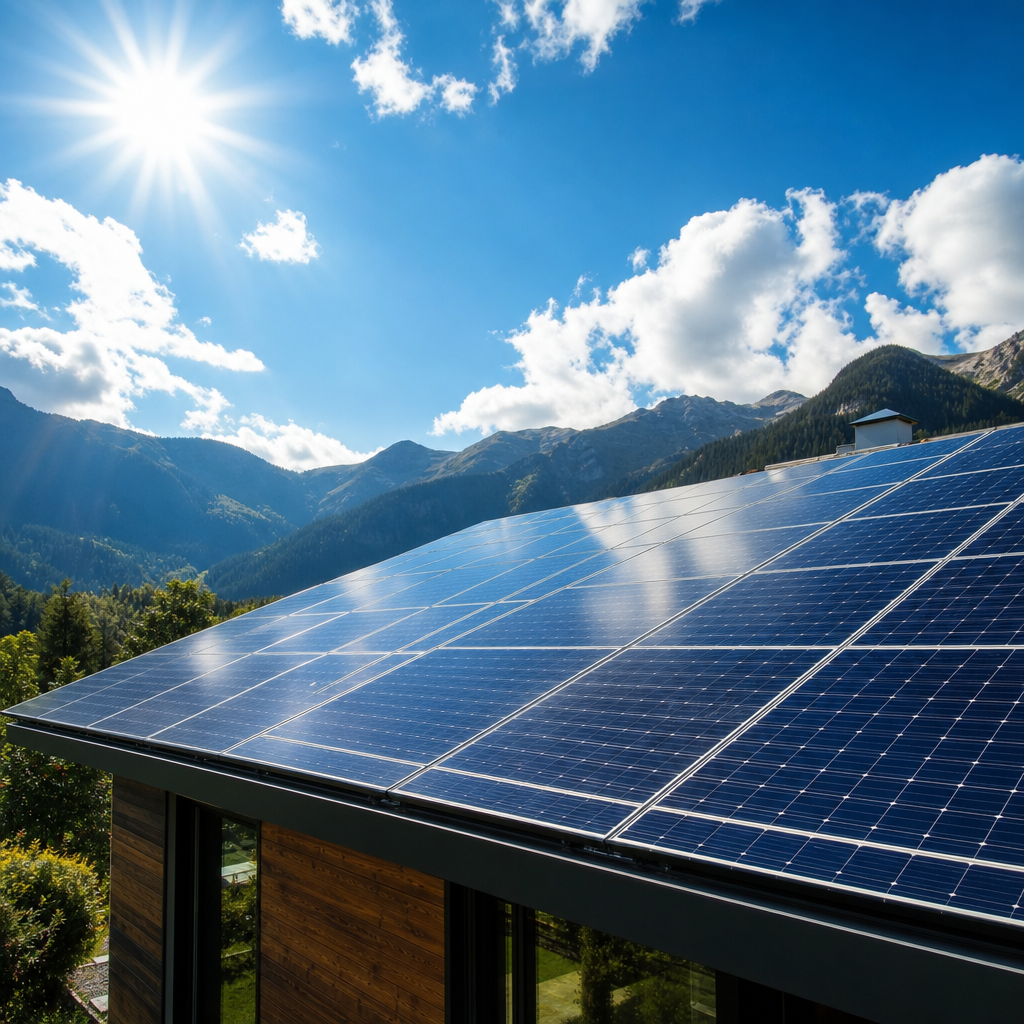
SunPower stands out in solar energy innovation because it combines high-efficiency panel engineering, recognizable consumer branding, and a long history of shaping how homes and businesses adopt distributed power. In the Company Spotlights category, this hub on tech innovators and market leaders explains why SunPower matters, what distinguishes its products and business model, and how its influence fits into the wider solar industry. Solar energy innovation refers to advances in photovoltaic cell design, module efficiency, system monitoring, financing, installation methods, and grid integration that make clean electricity more practical and affordable. Market leadership means more than sales volume; it includes product performance, installer networks, customer trust, intellectual property, and the ability to influence standards across the sector. I have worked with solar content, installer comparisons, and panel specification reviews long enough to see one pattern clearly: companies that lead in this industry do not win on one feature alone. They win by linking engineering, service, and distribution into a system homeowners and commercial buyers can understand. SunPower has repeatedly done that. Its story also opens the door to related company profiles across this subtopic, from inverter makers and battery firms to utility-scale developers and smart energy software providers.
What Makes SunPower a Defining Solar Company
SunPower became a defining name in residential and light commercial solar by focusing on premium performance rather than commodity pricing. The company built its reputation around high-efficiency solar panels using Maxeon cell technology, known for back-contact architecture that places electrical contacts behind the cell instead of on the front surface. That design reduces shading on the active area of the cell and helps boost conversion efficiency. For buyers, the direct benefit is simple: more power output from limited roof space. In markets where roof area is constrained, shade is a factor, or electricity prices are high, that advantage can materially improve system economics.
SunPower also matters because it helped turn rooftop solar into a branded consumer product instead of a loosely assembled collection of parts. In earlier phases of the market, many homeowners could not tell one panel company from another. SunPower narrowed that gap through integrated sales, monitoring apps, long warranties, and a dealer network trained to present the system as a complete energy solution. That approach influenced competitors, many of whom later adopted similar language around energy independence, whole-home systems, and premium service tiers.
Its role as a hub topic is important for another reason. SunPower sits at the intersection of several themes that define tech innovators and market leaders: hardware innovation, channel strategy, financing evolution, customer experience, and brand resilience during industry volatility. Studying SunPower helps readers evaluate other companies in this sub-pillar more intelligently. When you compare any solar company, the core questions are consistent: How efficient is the technology? How bankable are the warranties? How strong is the installer or service network? How well does the company integrate storage, software, and financing? SunPower offers a useful benchmark for all four.
Technology Leadership: Efficiency, Design, and System Performance
SunPower’s strongest historical differentiator has been module efficiency. High efficiency matters because the same roof can produce more kilowatt-hours when each panel converts more sunlight into electricity. For a homeowner with dormers, vents, chimneys, or partial shading, that may determine whether the project offsets 60 percent of annual usage or 90 percent. In practical installation planning, that difference changes payback, utility bill reduction, and whether an electric vehicle charger or heat pump can be added later without expanding the array.
The company’s technology story has centered on Interdigitated Back Contact cell architecture, often associated with Maxeon panels. This design is valued for durability as well as output. Because the metal contacts sit on the rear of the cell, the front side captures more sunlight, and the cell layout is engineered to reduce common failure points. SunPower has long highlighted lower degradation rates than conventional panels, meaning output declines more slowly over time. Lower annual degradation can produce meaningfully greater lifetime energy generation, especially over 25 years or more.
Another innovation area is system-level performance. A strong solar brand is not just a panel manufacturer; it must deliver reliable energy production across mounting, wiring, inverters, and software monitoring. SunPower built value by pairing premium modules with coordinated system design, including panel-level optimization in some offerings and user-facing performance dashboards. In real customer decision-making, monitoring is not a minor add-on. It helps validate the investment, detect underperformance early, and support warranty claims with production data rather than guesswork.
| Capability | Why It Matters | SunPower Advantage |
|---|---|---|
| High module efficiency | Generates more power on limited roof area | Premium output for space-constrained homes |
| Low degradation | Preserves production over decades | Stronger long-term energy yield |
| Integrated monitoring | Shows system health and usage trends | Better visibility for owners and installers |
| Dealer network | Improves design, permitting, and installation consistency | Scalable customer experience across markets |
That combination of cell engineering and system design is why SunPower is often discussed alongside leading inverter brands, battery platforms, and software-driven energy management companies in broader market-leader coverage. A panel can be excellent in laboratory conditions and still disappoint in the field if the surrounding system is weak. SunPower’s significance comes from understanding the full stack.
Business Model, Brand Strength, and Market Position
SunPower’s market position has been shaped by premium branding and channel execution. Rather than competing only on lowest upfront price, the company built a value proposition around performance, warranty confidence, aesthetics, and service quality. That matters in solar because purchasing behavior is not purely transactional. A rooftop system is a major home improvement project that involves financing, electrical work, permits, utility interconnection, and long-term maintenance expectations. Customers often pay more for a provider they believe will still answer the phone years later.
Dealer relationships have been central to this strategy. A strong dealer network expands local reach while preserving national brand recognition. Installers benefit from training, sales support, and recognizable products; the manufacturer benefits from distribution without needing to directly employ every salesperson and crew. I have seen this model work best when product specifications, warranty administration, and monitoring platforms are standardized enough to reduce friction across regions. SunPower leaned into that consistency, which helped it remain visible in a fragmented industry where many local installers operate only in one metro area.
Brand strength also supports financing and customer acquisition. When lenders, lease providers, and homeowners recognize a name, perceived risk falls. That can translate into smoother sales conversations and better conversion rates. In solar, soft costs such as marketing, sales, and customer education are a major part of total installed cost. A trusted brand can reduce those costs over time, even if the hardware itself remains premium priced.
At the same time, SunPower’s market story reflects the pressures facing all solar leaders: margin compression, policy shifts, interest rate sensitivity, supply chain exposure, and changing net metering rules. Premium positioning is powerful, but it requires constant proof. If lower-cost competitors narrow the efficiency gap or offer strong warranties, the premium brand must show that lifetime value still justifies the price. That tension makes SunPower a particularly instructive case study for this subtopic.
How SunPower Fits Into the Broader Tech Innovators and Market Leaders Landscape
As a hub article, this page should guide readers beyond one company and into the wider ecosystem of solar innovation. SunPower is one anchor, but the category also includes inverter specialists such as Enphase and SolarEdge, battery and energy storage leaders such as Tesla Energy, module giants such as First Solar and JinkoSolar, and project developers shaping utility-scale deployment. Each type of company solves a different bottleneck. SunPower’s niche has historically been premium distributed solar systems, especially in residential settings where roof space, homeowner trust, and long-term output matter most.
Comparing SunPower with these peers clarifies what market leadership means. First Solar is often discussed for cadmium telluride thin-film technology and utility-scale strength, not premium rooftop aesthetics. Enphase built leadership through microinverters and software-rich home energy systems. Tesla Energy changed consumer expectations around storage and whole-home backup. SunPower’s identity sits closer to premium module efficiency and curated customer experience. It wins where integrated quality is more persuasive than lowest bid pricing.
This broader lens also helps readers plan their next research steps within Company Spotlights. If you are evaluating manufacturers, the next articles should explore panel chemistry, inverter architectures, storage economics, and installer business models. If you are assessing investable market leaders, examine revenue mix, geographic concentration, policy exposure, and warranty reserve practices. SunPower is a gateway topic because it touches all of these themes without being reducible to any single one.
For homeowners and businesses, the practical takeaway is straightforward: no solar company should be judged by panel wattage alone. The right comparison includes degradation rates, service coverage, software quality, financing options, and local installer execution. SunPower remains relevant in this conversation because it helped define that multidimensional standard.
Key Lessons for Buyers, Analysts, and Industry Watchers
SunPower teaches three durable lessons about solar energy innovation. First, efficiency still matters when installation space is limited or when long-term energy yield drives project value. Second, technology leadership must be paired with dependable execution across sales, design, installation, and after-sales support. Third, strong branding in energy is not superficial; it can reduce perceived risk in a product expected to perform for decades.
For buyers, the best use of the SunPower example is as a checklist. Ask whether a solar provider can document module efficiency, degradation assumptions, workmanship coverage, inverter strategy, monitoring access, and service procedures. Request estimated annual production in kilowatt-hours, not just system size in kilowatts. Review whether financing changes the effective cost of energy. For analysts, SunPower highlights the importance of channel economics, customer acquisition costs, and product differentiation in a crowded market. For industry watchers, it shows how innovation spreads: a premium company proves demand for a feature, and competitors eventually make similar capabilities more mainstream.
SunPower’s legacy in solar energy innovation is therefore larger than any single product generation. It represents a model of how advanced engineering, coherent branding, and customer-focused system design can shape an industry. As you explore the rest of this Company Spotlights sub-pillar on tech innovators and market leaders, use SunPower as a benchmark for evaluating who is truly moving solar forward. Continue to the related company profiles, compare technologies carefully, and focus on the firms that deliver measurable performance rather than promises.
Frequently Asked Questions
What makes SunPower a standout name in solar energy innovation?
SunPower stands out because it has consistently paired advanced solar panel engineering with a strong, consumer-facing brand that helped make residential and commercial solar easier to understand and trust. In a crowded energy market, many companies sell solar products, but fewer have built a reputation around premium efficiency, long-term reliability, and a clear message about performance. SunPower became especially well known for pushing high-efficiency photovoltaic technology, which matters because better efficiency allows a system to produce more electricity from the same amount of roof or land space. That advantage is particularly important for homeowners with limited roof area and businesses trying to maximize output from a fixed footprint.
Another reason SunPower matters is its broader role in shaping how distributed energy is adopted. It has not simply participated in the solar market; it has helped define what consumers expect from it, including panel quality, warranty strength, system aesthetics, and integrated energy solutions. Over time, this influence has extended beyond hardware into sales models, installer networks, financing approaches, and customer education. In that sense, SunPower represents more than a panel manufacturer. It reflects a larger shift in the energy sector toward smarter, cleaner, and more decentralized power generation.
How do SunPower panels differ from standard solar panels?
SunPower panels are often distinguished by their high efficiency, premium construction, and strong long-term performance characteristics. In practical terms, panel efficiency refers to how much sunlight a panel can convert into usable electricity. Higher-efficiency panels can generate more power in less space, which is one of the biggest reasons SunPower has drawn attention from homeowners and businesses that want maximum production without needing a massive installation area. This can make a meaningful difference in urban settings, on roofs with shading challenges, or in projects where every square foot matters.
SunPower has also been associated with engineering approaches designed to improve durability and reduce performance losses over time. Like all solar panels, output naturally declines gradually with age, but premium products are designed to slow that decline and maintain stronger generation for longer. This matters because a solar system is a long-term investment, and buyers are not just comparing upfront wattage. They are also evaluating how much electricity the system will actually deliver over decades of operation. In addition, SunPower products have often been marketed with a focus on sleek design, integrated system compatibility, and robust warranty coverage, all of which can appeal to buyers looking for a high-end solar solution rather than a basic commodity panel.
Why is SunPower important in the broader solar industry, beyond its own products?
SunPower is important because its influence reaches beyond the panels it sells. In the wider solar industry, some companies help move the market forward by raising standards for efficiency, reliability, customer experience, and brand visibility. SunPower has historically played that role. By emphasizing premium performance and making solar more accessible to mainstream customers, it helped elevate public expectations about what a modern solar company should offer. That includes not only strong hardware, but also education, financing options, professional installation, and long-term service support.
Its presence has also contributed to the normalization of distributed energy, which is the idea that homes and businesses can produce electricity near where it is used rather than relying entirely on large centralized power plants. That shift has major implications for grid resilience, consumer energy independence, and the transition to lower-carbon electricity systems. SunPower’s visibility in residential and commercial markets helped show that distributed solar could be practical, attractive, and economically meaningful. As a result, the company’s role in solar innovation is not only technical. It is also cultural and market-driven, helping accelerate broader acceptance of clean energy solutions.
What does SunPower’s business model reveal about changes in the solar market?
SunPower’s business model highlights how the solar market has evolved from a niche technology sector into a more mature energy services industry. In earlier stages of solar adoption, much of the conversation centered on panel technology alone. Over time, however, successful solar companies increasingly needed to provide complete customer solutions. SunPower’s approach has often reflected that shift by combining product innovation with installation partnerships, financing pathways, brand development, and end-to-end system offerings. This model recognizes that many customers do not just want a panel; they want a dependable process for lowering energy bills, improving resilience, and managing long-term energy use.
That broader service-oriented strategy also reflects how competitive the solar market has become. As panel manufacturing expanded globally, differentiation could no longer depend on hardware alone. Companies had to stand out through performance guarantees, software tools, customer support, storage integration, and installer quality. SunPower’s model helps illustrate this transition. It shows that leadership in solar now often depends on how well a company translates technical innovation into a usable, trustworthy customer experience. For readers examining market leaders in the Company Spotlights category, SunPower is a strong example of how brand, technology, and business execution increasingly work together in the clean energy economy.
How does SunPower fit into the future of solar energy innovation?
SunPower fits into the future of solar energy innovation because the industry is moving toward systems that are not only more efficient, but also more integrated, intelligent, and consumer-friendly. Solar innovation today is about more than improving photovoltaic cells. It also includes better system design, energy storage, monitoring software, grid interaction, home electrification, and resilience during outages or peak pricing periods. A company like SunPower is relevant in this environment because its identity has long been tied to premium performance and to the idea that solar should function as part of a larger energy solution rather than as a standalone product.
Looking ahead, the companies most likely to shape the industry will be those that can combine technical excellence with practical value for households and businesses. That means delivering strong energy output, reliable long-term operation, easy installation, and compatibility with batteries, smart energy management tools, and evolving utility programs. SunPower’s historical role in efficiency and customer-facing solar adoption gives it a meaningful place in that story. Even as the market continues to change, the company remains a useful case study in how innovation happens in solar: through a mix of engineering progress, business adaptation, and the ability to make advanced energy technology understandable and attractive to everyday users.