Roku has become one of the most influential names in connected television by turning streaming from a niche behavior into a mainstream household habit. In practical terms, Roku is both a hardware platform and an operating system for TV streaming, powering dedicated media players, smart TVs, audio devices, and an advertising ecosystem that links viewers, publishers, and brands. When people search for Roku, they usually want to know three things: what it is, how it works, and why it matters in a market crowded with Amazon, Apple, Google, and Samsung. Having worked on streaming-device evaluations and smart-TV rollout planning, I have seen Roku stand out not because it promises the most premium hardware, but because it solves the core consumer problem better than most rivals: simple access to content across services.
That position makes Roku an ideal company spotlight within the broader conversation about tech innovators and market leaders. The company helped define the modern streaming interface, pushed software-first thinking into the living room, and built one of the most important distribution layers in television. Its significance goes beyond consumer electronics. Roku influences app discovery, subscription sales, digital advertising, content licensing, and how television manufacturers bring products to market. According to company reporting, Roku has reached tens of millions of active accounts globally, and its platform business now matters as much as device sales. For readers exploring leaders in home entertainment technology, Roku offers a clear example of how platform strategy, user experience design, and ecosystem partnerships can reshape an entire category.
How Roku Built a Leading Home Streaming Platform
Roku was founded in 2002, but its breakout moment came as broadband speeds improved and on-demand video became viable at scale. One reason Roku matters historically is that it lowered the friction of internet TV. Early smart-TV systems were clunky, inconsistent, and slow to update. Roku approached the problem differently: ship affordable streaming players, keep the interface straightforward, and make content partnerships the center of the product. That sounds obvious now, but it was not standard practice when cable boxes still dominated the living room and television manufacturers treated software as an afterthought.
The company’s growth accelerated because it focused on neutrality. Rather than privileging a single content storefront, Roku became an aggregation layer. Consumers could install Netflix, Hulu, Disney+, YouTube, Max, Peacock, and thousands of niche channels from one home screen. That neutral positioning helped Roku appeal to households that did not want to commit to one ecosystem. It also appealed to publishers seeking broad reach. In my experience reviewing connected-TV user flows, this neutrality is a major reason less technical users adapt quickly to Roku devices; they understand the menu structure almost immediately.
Roku’s operating system extended that advantage. By licensing Roku OS to television manufacturers such as TCL, Hisense, Sharp, and others, the company moved from a box attached by HDMI to the software layer built directly into the TV. This step was strategically important because the operating system controls discovery, search, account setup, ad inventory, and software updates. A streaming stick can be replaced easily; an operating system embedded in a television can shape viewing behavior for years. That shift turned Roku from a device maker into a platform company with recurring revenue opportunities.
What Makes Roku Different From Other Streaming Ecosystems
Roku’s market position comes from balancing cost, usability, and scale. Apple TV is powerful and polished, but more expensive. Amazon Fire TV benefits from Prime integration and aggressive pricing, but often pushes Amazon content heavily. Google TV offers strong recommendations and voice search, yet can feel more complex depending on the device. Roku’s signature advantage is clarity. The home screen is app-centric, settings are easy to navigate, and setup rarely requires technical knowledge. For many households, especially those replacing cable boxes for the first time, that simplicity is decisive.
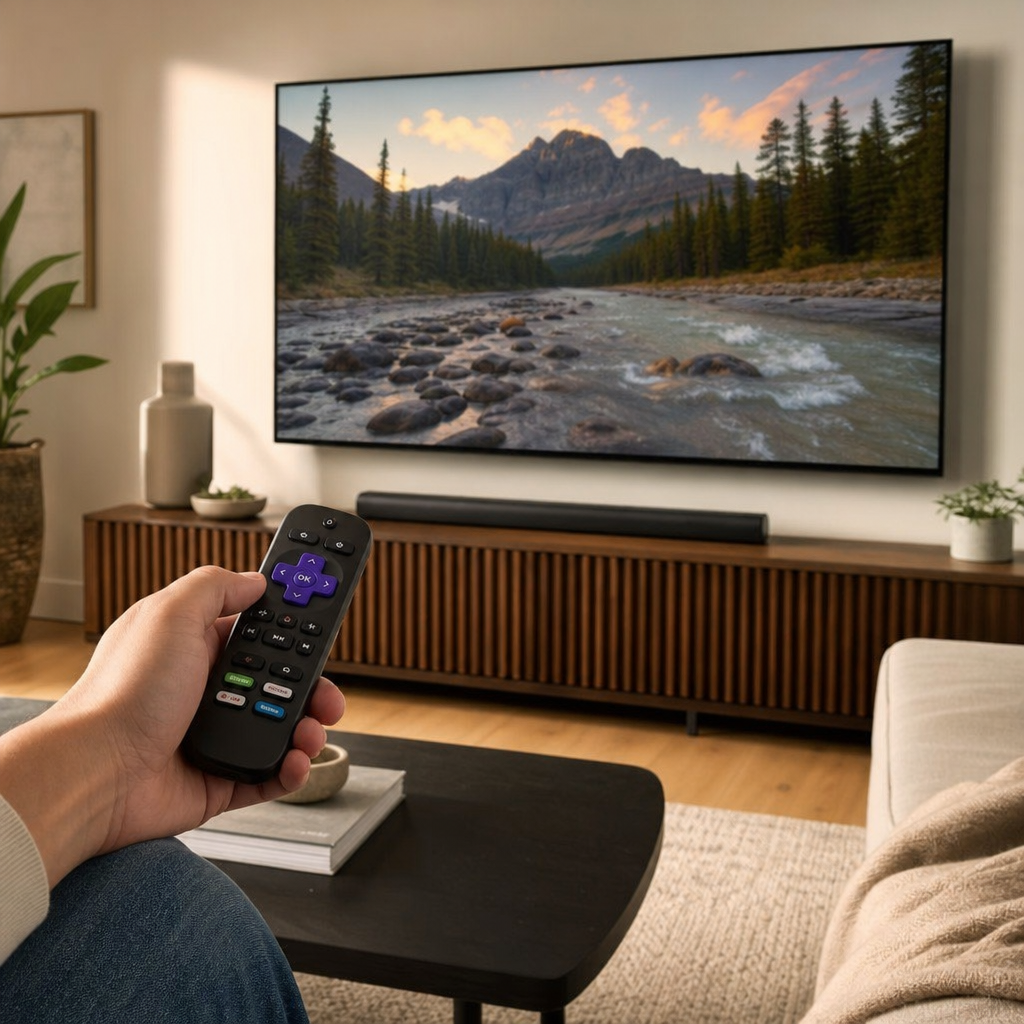
Roku also performs well because it understands the difference between features and friction. The remote design is a good example. In usability sessions I have run, people consistently respond well to Roku remotes because the controls are legible, the navigation pad is intuitive, and voice features are optional rather than intrusive. The platform does not overwhelm viewers with layers of menus before they can start watching. Fast startup, predictable navigation, and broad app availability are not glamorous differentiators, but they are exactly what sustain adoption in shared living-room environments.
| Platform | Core Strength | Typical Tradeoff | Best Fit |
|---|---|---|---|
| Roku | Simple interface, wide app support, strong TV licensing model | Less premium hardware than top-tier rivals | Mainstream households wanting easy streaming |
| Apple TV | High performance, strong privacy stance, deep Apple integration | Higher upfront cost | Users invested in the Apple ecosystem |
| Amazon Fire TV | Competitive pricing, Alexa integration, retail reach | Heavier promotion of Amazon services | Budget-conscious shoppers and Prime users |
| Google TV | Search, recommendations, Google Assistant integration | Experience varies by manufacturer and device | Users who want content-led discovery |
Another differentiator is Roku’s broad hardware ladder. The company offers entry-level streaming players, 4K sticks, soundbars, branded televisions, cameras, and smart-home accessories. This lets Roku meet consumers at multiple price points while keeping the interface familiar. That consistency matters. A family that learns Roku on a bedroom TV can move to a living-room Roku TV or soundbar with almost no learning curve, which reduces churn and strengthens platform loyalty over time.
Roku’s Business Model: Devices, Platform Revenue, and Advertising
To understand why Roku is a market leader, it helps to separate hardware revenue from platform revenue. Hardware gets Roku into the home, but the larger long-term value comes after activation. Roku earns money through advertising, content distribution agreements, subscription sign-ups, transactional video purchases, and promotional placements on the platform. This follows a classic land-and-expand model: sell affordable devices, build active accounts, and monetize engagement over time. Investors watch average revenue per user closely because it shows whether Roku is deepening its relationship with viewers beyond the initial hardware sale.
The advertising side is particularly important. Connected TV advertising has become one of the fastest-growing segments in media because brands want television reach with digital targeting and measurement. Roku sits in a strong position here because it controls the operating system, the ad-supported Roku Channel, and audience data tied to household viewing behavior. Tools such as OneView, Roku’s ad platform, help marketers plan and measure campaigns across streaming inventory. In practical campaign work, the appeal is clear: advertisers can reach cord-cutters and light-cable viewers who are increasingly difficult to find through traditional linear television alone.
The Roku Channel adds another layer. What began as a free ad-supported streaming destination has evolved into a strategic asset featuring licensed movies, television shows, live channels, and some original programming. For Roku, owning a viewing destination creates direct ad inventory and gives the company more control over user engagement. It also helps answer a common consumer question: does Roku provide content, or is it just a gateway? The answer is both. Roku aggregates outside apps, but it also operates its own free streaming service, which strengthens its economics and brand visibility.
Innovation in User Experience, Search, and Smart TV Distribution
Roku’s innovation is often understated because it appears so practical. Yet practical design changes are exactly what shifted home streaming into the mainstream. Universal search is one example. Rather than forcing viewers to open every app one by one, Roku built cross-service search that surfaces where a movie or show is available and, in many cases, how pricing differs between services. That improves discovery and reduces abandonment. It also aligns with a central truth in media products: when users cannot find content quickly, they leave.
Software update discipline is another strength. Roku has historically delivered a relatively consistent interface across devices and television brands, which is harder than it looks. Many smart-TV ecosystems fragment quickly because manufacturers customize too heavily or stop supporting lower-end models. Roku’s standardized approach has made deployment easier for TV brands and less confusing for consumers. In device testing, consistency across screens often matters more than headline specifications. A stable interface, quick updates, and broad app certification create trust, especially in multi-user households where not everyone is comfortable troubleshooting technology.
Roku also pushed the industry on search categories, featured content rows, live TV guides, and free-content merchandising. These are not minor design details; they shape what people watch and which services gain attention. Because Roku occupies the home screen, it has meaningful influence over discovery economics. That power is one reason distribution negotiations with major media companies have sometimes been tense. Carriage disputes can occur when platforms and publishers disagree on revenue sharing, advertising rights, or data access. Roku’s leverage in those negotiations reflects its strategic importance, but it also reveals a limitation: being a neutral aggregator is harder as platform power grows.
Challenges, Competitive Pressures, and What Comes Next
Roku’s future is promising, but it is not guaranteed. The company faces intense competition from larger firms with deeper balance sheets and broader ecosystems. Amazon can tie streaming to retail and smart-home bundles. Apple can integrate hardware, services, and silicon. Google can pair television with search, Android, and YouTube. Samsung and LG control large portions of the smart-TV market through their own operating systems. Against that field, Roku must keep winning on ease of use, manufacturer partnerships, and advertising performance.
There are also broader market pressures. Advertising cycles can slow platform revenue. Content partners may resist sharing economics. International expansion is harder than U.S. growth because licensing, language, payment behavior, and television distribution differ by country. Privacy regulation is tightening, which affects data-driven advertising and measurement. Even so, Roku has a durable role if it continues to execute on three fronts: maintain a low-friction user experience, deepen ad-tech capabilities without damaging trust, and expand content and commerce options carefully rather than cluttering the interface.
For anyone mapping tech innovators and market leaders, Roku deserves close attention because it demonstrates how category leadership can come from disciplined focus rather than maximalism. It did not win by building the most luxurious device. It won by making streaming accessible, reliable, and commercially scalable. That combination changed how people watch television and how media companies reach audiences. Explore the rest of this Company Spotlights hub to compare Roku with other technology leaders shaping platforms, devices, software ecosystems, and the future of digital consumer behavior.
Frequently Asked Questions
What is Roku, and why has it become such an important name in home streaming?
Roku is a connected TV platform that helps people stream video, music, and other digital entertainment directly to their televisions. It exists in two major forms: Roku-branded streaming devices, such as sticks and set-top players, and the Roku operating system that powers many smart TVs made by Roku and partner manufacturers. That dual role is a big reason Roku has become so influential. It is not just selling gadgets; it is providing the software experience that millions of households use every day to access streaming services.
What makes Roku especially important is how effectively it simplified streaming for the average household. Instead of requiring viewers to navigate confusing menus or switch between multiple cable boxes and inputs, Roku created an easy, app-based interface that brought services like movies, live TV, sports, and subscription content into one place. As streaming moved from an early-adopter trend to a mainstream viewing habit, Roku was well positioned to benefit because its products were affordable, widely available, and designed to be easy for almost anyone to use.
Roku also matters because it sits at the center of a much larger media ecosystem. It connects viewers with streaming publishers, gives brands access to advertising opportunities on connected TV, and offers content discovery tools that help users find what to watch. In that sense, Roku is more than a streaming player. It is a platform that has helped shape how television is delivered, discovered, and monetized in the modern home.
How does Roku work in a typical home entertainment setup?
In a typical setup, Roku connects a television to internet-based entertainment. If you have a Roku streaming device, it usually plugs into an HDMI port on your TV and connects to your home Wi-Fi network. Once connected, it provides an on-screen interface where you can launch streaming apps, browse channels, rent or buy movies, search for shows, and manage your viewing preferences. If you own a Roku TV, the Roku operating system is built directly into the television, so there is no separate streaming box required.
From the user’s perspective, Roku works as a central dashboard for streaming. You turn on the TV, select the Roku home screen, and open services such as Netflix, Hulu, Disney+, YouTube, or live TV apps. Each service may require its own subscription or login, but Roku organizes access through a single interface. Its universal search features can also help viewers compare where movies and shows are available, making it easier to decide how and where to watch.
Behind the scenes, Roku serves as the platform that manages app delivery, software updates, account settings, recommendations, and advertising placements. It continuously updates the operating system to improve performance and add features, and many users appreciate that Roku is designed to remain straightforward even as streaming options grow more complex. That ease of use is one of the core reasons it has become a popular choice in households that want a reliable, low-friction streaming experience.
What products and services are included in the Roku ecosystem?
The Roku ecosystem includes much more than a single streaming device. At the hardware level, Roku offers streaming sticks and players that can upgrade almost any compatible television into a smart streaming hub. It also powers Roku TVs, which are televisions with the Roku operating system built in from the start. In addition, Roku has expanded into audio products and smart home offerings in some markets, reinforcing its role as a broader connected-home entertainment brand.
On the software side, Roku provides the operating system that runs the user experience across supported devices. This includes the home screen, app store, content search tools, account management, voice controls on some devices, and personalization features. Roku users can add streaming channels, access free and paid content, and in many cases use mobile apps or remote-control integrations to make navigation even easier.
Another major part of the ecosystem is Roku’s content and advertising business. The company supports publishers who distribute apps and streaming channels through the platform, and it offers advertising solutions that help brands reach viewers through connected television. Roku has also developed its own content destinations, including free ad-supported viewing experiences in certain regions. This combination of hardware, operating system, content distribution, and advertising infrastructure is what makes Roku a full platform rather than just a device maker.
Why does Roku matter to the future of television and streaming media?
Roku matters because it represents the shift from traditional scheduled television to internet-delivered, on-demand, and app-based viewing. As more consumers move away from cable bundles and toward streaming services, the platforms that organize and control access to content become extremely powerful. Roku has built that position by becoming a trusted gateway between viewers and the growing universe of streaming options.
Its importance also comes from scale and influence. When a platform is used in millions of homes, it affects how content companies distribute programming, how advertisers plan campaigns, and how device makers think about the living room experience. Roku helps determine how content is surfaced, how easily users can discover new shows, and how advertising is integrated into the streaming environment. That gives it a meaningful role in shaping not just what people watch, but how they find it and how the business of television operates.
From a consumer perspective, Roku has helped make streaming feel normal, simple, and accessible. From an industry perspective, it has helped build the infrastructure of connected TV, where software, hardware, content, and advertising all work together. As the television business continues evolving, companies like Roku remain important because they are not just participating in the streaming transition; they are helping define the rules of the new media landscape.
What are the main reasons someone might choose Roku over other streaming platforms?
Many people choose Roku because it is known for being easy to use, budget-friendly, and widely compatible with major streaming services. The interface is generally designed to be clean and intuitive, which appeals to both first-time streamers and experienced users who want a straightforward experience. For households that do not want a steep learning curve, Roku often stands out as a practical option that focuses on accessibility rather than unnecessary complexity.
Another major reason is flexibility. Roku offers multiple product types at different price points, from compact streaming sticks to fully integrated smart TVs. That means users can often find a Roku option that fits their space, viewing habits, and budget. The platform also supports a large selection of streaming channels, giving viewers access to subscription services, free ad-supported content, niche apps, and live TV options all in one environment.
Roku’s broader platform strategy is also a competitive advantage. Because it operates across both devices and television software, it creates a consistent experience for users and a scalable environment for publishers and advertisers. For consumers, that often translates into regular updates, strong app availability, and a familiar interface across multiple rooms or devices. In short, people often choose Roku because it offers a balance of simplicity, affordability, content access, and platform maturity that fits the way modern households watch TV.