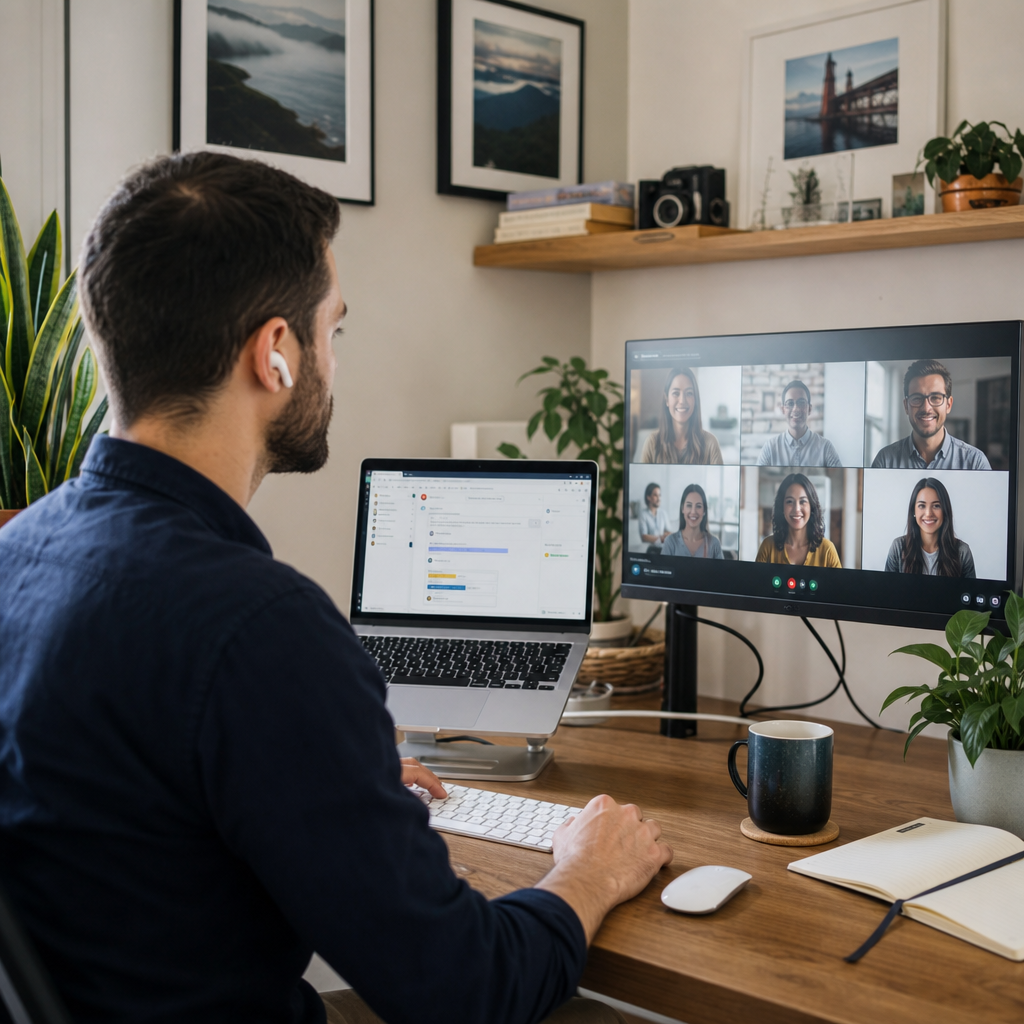
Remote work skills have become essential in the new Silicon Valley work culture, where distributed teams, asynchronous communication, and digital collaboration now shape how companies hire, build products, and measure performance. In practice, remote work means more than logging in from home. It requires a set of teachable abilities: managing time without direct supervision, communicating clearly in writing, using collaboration platforms effectively, and sustaining trust across distance and time zones. I have worked with fully remote teams and hybrid engineering groups for years, and the difference between people who merely work remotely and those who thrive remotely is almost always skill, not personality. That distinction matters because Silicon Valley’s influence extends far beyond Northern California. Startups, SaaS companies, design agencies, and enterprise technology teams across the world have adopted the same operating norms. For professionals, students, career changers, and managers, education is the lever that turns remote work from a disruption into an opportunity. This hub article on empowering through education explains the core skills, tools, habits, and learning paths that help people adapt successfully.
Why remote work skills now define career readiness
Remote work skills matter because modern technology organizations increasingly organize around outcomes rather than visibility. In a traditional office, employees could rely on proximity for clarification, relationship building, and status signaling. In a remote-first environment, those advantages disappear unless they are replaced with deliberate systems. Career readiness now includes digital fluency, written communication, meeting discipline, and the ability to document work so others can move without waiting. Companies such as GitLab, Automattic, Shopify, and Zapier demonstrated that large-scale distributed operations can function effectively when documentation, transparency, and asynchronous workflows are built into daily practice. Their operating models influenced smaller firms throughout the broader Silicon Valley ecosystem.
The biggest shift is cultural. Remote teams reward clarity, consistency, and self-management. A product manager who writes precise briefs, records decisions in Notion or Confluence, and aligns stakeholders in Slack often creates more value than one who relies on ad hoc hallway conversations. An engineer who leaves clear pull request notes, updates Jira accurately, and flags blockers early reduces delivery risk for the whole team. A marketer who can run campaigns using shared dashboards, Loom walkthroughs, and structured status updates contributes more than someone who needs constant live meetings. These are learnable competencies, which is why empowering through education is central to this topic. The most effective educational resources do not treat remote work as a lifestyle trend; they treat it as a professional discipline with standards, tools, and measurable outcomes.
Communication, documentation, and digital presence
The first core remote work skill is communication that travels well through digital channels. In office settings, many misunderstandings are corrected informally. Remote settings expose weak communication immediately. Strong remote professionals write updates that answer the basic questions before they are asked: what happened, why it matters, what is blocked, who owns the next step, and when the next checkpoint occurs. This approach reduces decision latency and supports teams working across multiple time zones. I have seen projects recover simply because one person replaced vague messages like “still working on it” with concise updates that included status, risks, and a proposed resolution.
Documentation is the second half of communication. Good documentation is not bureaucracy; it is operational memory. Teams that document decisions in shared systems avoid repeat debates and onboarding friction. Common tools include Notion, Confluence, Google Docs, Coda, and internal wikis. Engineering teams may pair these with GitHub issues, GitLab merge requests, and architecture decision records. Design teams often add Figma comments and recorded walkthroughs. The point is not the tool itself but the habit of making work legible. In remote culture, if knowledge lives only in someone’s head or in a private message, the team is vulnerable.
Digital presence also deserves attention. Remote workers need to be visible without being performative. That means keeping task boards current, responding within agreed service windows, attending meetings prepared, and using status indicators responsibly. It does not mean being online constantly. In high-functioning remote teams, responsiveness is defined by team norms, not by permanent availability. Educational programs that teach remote communication should therefore include writing drills, documentation templates, meeting etiquette, and feedback practices grounded in real workflows.
Time management, autonomy, and accountability
Autonomy is one of remote work’s greatest benefits, but it only helps people who can manage attention, energy, and priorities. Time management in remote work is not simply calendar control. It is the ability to break ambiguous goals into deliverable pieces, estimate effort realistically, and create routines that protect deep work. Many professionals struggle because home environments blend personal and professional demands. The fix is rarely motivation alone. It is usually system design: setting work blocks, defining start and stop rituals, reducing context switching, and using project management tools consistently.
Accountability follows from structure. In healthy remote teams, accountability is not surveillance software or excessive check-ins. It is observable progress against agreed outcomes. Frameworks such as OKRs help by connecting daily tasks to quarterly goals. Kanban boards make flow visible. Weekly reviews help individuals compare planned versus completed work and adjust before delays become major problems. Managers should evaluate outputs, decision quality, and collaboration reliability rather than keyboard activity. Workers should learn to surface risks early, ask for help before deadlines collapse, and maintain personal systems that make commitments visible.
| Remote skill | Why it matters | Common tools | Practical example |
|---|---|---|---|
| Asynchronous communication | Reduces delays across time zones | Slack, Loom, email, Notion | A team lead records a five-minute update instead of scheduling a meeting for eight people |
| Task visibility | Prevents hidden work and missed dependencies | Jira, Trello, Asana, Linear | An engineer moves a ticket to blocked and tags the needed reviewer immediately |
| Documentation | Preserves decisions and speeds onboarding | Confluence, Google Docs, Coda | A product decision log stops the same debate from resurfacing two weeks later |
| Self-management | Supports reliable execution without supervision | Calendar, Pomodoro timer, task manager | A marketer batches analysis work in the morning and meetings in the afternoon |
Educational resources are most useful when they teach these habits through practice. A good course asks learners to build a weekly planning system, write concise project updates, and run a retrospective on their own work patterns. Those exercises create durable behavior change because they simulate the exact demands of remote roles.
Collaboration across functions, cultures, and time zones
Silicon Valley work culture has always valued speed, but remote operations add a new requirement: coordination without constant co-presence. That is especially important in cross-functional teams where engineering, design, sales, customer success, and operations depend on one another. Each function often uses different language and metrics. Remote work amplifies that friction unless teams establish shared definitions, decision owners, and communication protocols. A launch plan, for example, should specify who approves messaging, who signs off on release quality, what channel carries urgent updates, and how post-launch issues are triaged.
Cultural fluency is equally important. Distributed teams often span countries, and assumptions about tone, urgency, and feedback differ. What sounds efficient in one culture may feel abrupt in another. Training should therefore include inclusive communication, explicit expectations, and conflict resolution. I have found that the simplest intervention is often the most effective: write down team norms. Define response times, meeting etiquette, escalation paths, and preferred formats for proposals. These norms reduce anxiety and make collaboration fairer, especially for new hires and junior staff.
Time zone strategy is another practical skill. Teams should reserve synchronous time for discussion, negotiation, and relationship building, while shifting status updates and documentation to asynchronous channels. Follow-the-sun support models can improve customer coverage, but they require stronger handoff documentation. Product and engineering teams often use overlap hours for standups or design reviews, then rely on recorded demos and written summaries for the rest. Workers who learn these patterns become easier to trust, promote, and retain.
Continuous learning as the foundation of remote career growth
Empowering through education means treating remote work skills as part of lifelong professional development, not a one-time onboarding module. The tools change, company policies evolve, and AI-assisted workflows are reshaping how knowledge work is performed. Professionals need learning systems that keep pace. That includes formal courses, internal training, peer mentoring, and self-directed practice. Platforms such as LinkedIn Learning, Coursera, edX, Udemy, and company academies can help, but the best results come when learning is tied to immediate work. For example, a course on technical writing has more impact when a learner applies it to real sprint updates and architecture notes the same week.
This hub page serves as a starting point for deeper educational resources across the remote work landscape. Readers exploring educational resources should continue into focused guides on remote communication, digital collaboration tools, virtual leadership, online learning strategies, cybersecurity hygiene for home offices, and productivity systems for distributed teams. Those connected topics matter because remote success is cumulative. Clear writing supports better project management. Better project management strengthens trust. Trust enables autonomy. Autonomy creates room for deeper learning and stronger performance.
The most important lesson is straightforward: remote work is no longer an exception in Silicon Valley work culture. It is a mature operating model that rewards people who can communicate clearly, manage themselves, document decisions, collaborate across differences, and keep learning as tools and expectations change. Education is the mechanism that makes those skills accessible to students entering the workforce, professionals changing careers, and managers building resilient teams. If you want to thrive in distributed work, start by assessing your current habits, choose one skill to improve this month, and use the educational resources in this hub to build from there.
Frequently Asked Questions
What remote work skills matter most in today’s Silicon Valley work culture?
The most important remote work skills are the ones that help people operate effectively without constant in-person oversight. In today’s Silicon Valley environment, that usually starts with strong written communication, because distributed teams rely heavily on messages, documentation, project updates, and asynchronous decision-making. Employees who can explain ideas clearly, summarize progress, ask precise questions, and document next steps tend to move work forward faster than those who depend on spontaneous meetings for clarity.
Time management is another core skill. Remote professionals need to prioritize tasks, manage their calendars intentionally, and make progress without waiting for someone to check in every hour. That includes setting daily goals, protecting focus time, and knowing how to balance urgent work with deep work. In many product-driven companies, the ability to manage your own pace is viewed as a sign of maturity and reliability.
Digital collaboration is equally important. Remote employees are expected to use tools such as Slack, Zoom, Google Workspace, Notion, Jira, Asana, GitHub, and other workflow platforms with confidence. It is not enough to simply have access to these tools; people need to know when to use them, how to keep information organized, and how to avoid creating confusion through scattered communication.
Beyond tools and tactics, remote work also depends on trust-building, adaptability, and accountability. Managers want people who can surface blockers early, follow through on commitments, and maintain momentum across time zones and shifting priorities. In short, the most valuable remote work skills combine communication, self-direction, collaboration, and professional consistency.
Why is asynchronous communication so important for remote teams?
Asynchronous communication is central to remote work because distributed teams are often spread across different schedules, cities, and time zones. In that environment, work cannot depend entirely on everyone being online at the same moment. Asynchronous communication allows teams to share updates, review ideas, make decisions, and keep projects moving without requiring constant real-time meetings. This creates more flexibility and often leads to better documentation and more thoughtful responses.
In Silicon Valley companies especially, asynchronous habits support scale and speed. When teams write down decisions, capture context in shared documents, and post clear status updates, they reduce the need for repetitive explanations. New team members can get up to speed faster, cross-functional partners can reference previous discussions, and leadership can review progress without interrupting people’s workflow. Good async communication also helps reduce meeting overload, which is a common challenge in remote organizations.
To communicate asynchronously well, people need to be intentional. That means writing messages with enough context, clearly stating what action is needed, setting deadlines when appropriate, and choosing the right channel for the message. For example, a quick clarification may belong in chat, while a strategic decision should often be documented in a shared file or project tool. Remote employees who master async communication help create a calmer, more efficient work culture because they make information easier to find and easier to act on.
Ultimately, asynchronous communication is not just a convenience. It is a foundational operating skill for modern distributed teams. It improves transparency, supports autonomy, and allows companies to collaborate across distance without sacrificing clarity or execution.
How can professionals improve their time management and productivity while working remotely?
Improving time management in a remote setting starts with structure. Without the natural rhythm of an office, professionals need to create their own systems for planning, prioritizing, and protecting attention. One of the most effective approaches is to begin each day or week by identifying the highest-value tasks and defining what progress should look like. This keeps work tied to outcomes instead of constant busy activity.
It also helps to break work into focused blocks. Remote environments can be full of distractions, including messages, meetings, home responsibilities, and digital multitasking. Successful remote workers often use time blocking, calendar planning, and task batching to reduce context switching. They reserve uninterrupted time for deep work, then respond to emails, chats, and administrative tasks during designated periods. This method improves both concentration and output.
Another important practice is visibility. In remote teams, productivity is not measured by physical presence but by steady progress and clear communication. Professionals should update task boards, share status notes, and flag blockers early so teammates understand what is moving and what needs support. This creates accountability without micromanagement and helps managers evaluate performance based on results.
Healthy boundaries matter too. Many remote workers struggle not because they work too little, but because they work too much. Creating a consistent start and end to the workday, taking breaks, and separating work from personal time can prevent burnout and sustain long-term performance. The strongest remote productivity habits combine disciplined planning, focused execution, transparent communication, and energy management.
What tools and platforms should someone know to succeed in a remote job?
The exact tools vary by company and role, but most remote jobs expect a basic level of fluency across communication, collaboration, project management, and documentation platforms. For communication, that often includes Slack, Microsoft Teams, Zoom, and Google Meet. These tools support chat, video meetings, quick updates, and team coordination, but knowing the etiquette around them is just as important as knowing the features. For example, strong remote workers understand when to send a direct message, when to post publicly for visibility, and when a live conversation is actually necessary.
For documentation and collaboration, platforms such as Google Docs, Notion, Confluence, Dropbox, and shared drives are common. These tools are essential because remote teams rely on written records to preserve context, align decisions, and enable async work. Employees who know how to organize files, maintain version clarity, and write usable documentation are often much more effective than those who keep information trapped in private notes or scattered messages.
Project management systems are also critical. Tools like Asana, Trello, Jira, Monday.com, ClickUp, and Linear help teams track tasks, assign ownership, set deadlines, and measure progress. In technical roles, GitHub, GitLab, Figma, and other specialized tools may also be central to daily work. Being comfortable with these systems signals that you can work transparently and contribute to a distributed workflow.
That said, success in remote work is not about memorizing every platform on the market. It is about understanding the broader habits behind the tools: documenting clearly, updating work consistently, communicating with context, and keeping collaboration organized. People who can learn new systems quickly and use them thoughtfully are usually well positioned for remote roles across the Silicon Valley ecosystem.
How do remote workers build trust and strong relationships with teammates they rarely meet in person?
Trust in remote work is built less through proximity and more through consistency. Teammates trust one another when communication is reliable, commitments are met, and problems are surfaced early instead of hidden. In distributed teams, people cannot casually observe each other’s effort, so they look for signals such as responsiveness, clarity, ownership, and follow-through. A remote worker who regularly delivers quality work on time and keeps others informed naturally becomes someone others want to collaborate with.
Strong relationships also depend on communication style. Tone matters more in digital environments because there are fewer visual and social cues. Being respectful, direct, and thoughtful in written communication helps reduce friction and misunderstandings. It also helps to acknowledge others’ work, ask good questions, and contribute in ways that make collaboration easier for the team. Simple habits such as posting clear updates, thanking colleagues, and documenting decisions can strengthen credibility over time.
Connection should also be intentional. Remote professionals benefit from scheduling occasional one-on-ones, joining team discussions actively, and making space for informal interaction when appropriate. While remote work is highly task-oriented, relationships still matter for creativity, alignment, and morale. Managers and peers are more likely to trust someone they know as both a capable contributor and a collaborative partner.
Finally, trust grows when people demonstrate sound judgment. That includes choosing the right level of urgency, escalating risks at the right time, respecting others’ time zones, and showing empathy in a distributed setting. Remote workers who combine competence with reliability and emotional intelligence tend to thrive in the new Silicon Valley work culture, where successful collaboration depends on trust as much as talent.