The rapid advancement of technology has consistently reshaped various sectors, notably the field of education. One transformative innovation currently garnering attention in educational circles is Virtual Reality (VR). Silicon Valley, a renowned hub of technological prowess and avant-garde innovations, is at the forefront of this significant evolution. Virtual Reality in education isn’t just an enhancement; it represents a paradigm shift with profound implications for teaching methods, learning experiences, and educational outcomes.
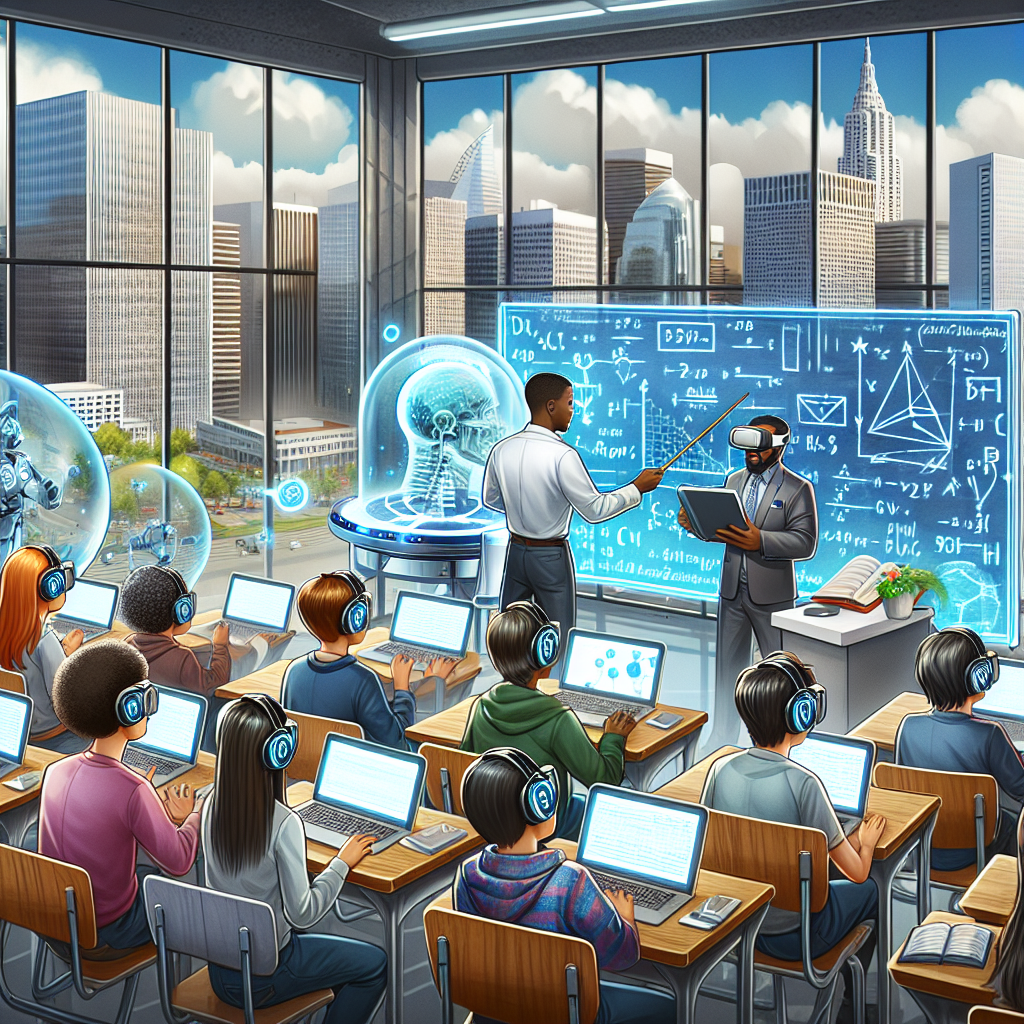
Over the last decade, VR technologies have transitioned from being high-end gaming luxuries to practical tools with tangible benefits in education. Silicon Valley companies, renowned for their innovative prowess, are pioneering VR applications that stand to revolutionize classroom experiences. Imagine students exploring the Roman Empire, dissecting a frog, or walking through the human cardiovascular system—all without leaving their classrooms. Virtual Reality makes this not just possible but effective and engaging.
The emergence and gradual mainstreaming of VR in education also address some of the traditional limitations in teaching. Complex concepts in subjects like physics, chemistry, and biology can be simulated for clearer understanding. Furthermore, VR aids in accommodating various learning styles, ensuring that visual, auditory, and kinesthetic learners all have immersive and engaging experiences that enhance their grasp of subjects.
But, how exactly is VR being implemented in education, and what are the relevant benefits that distance it from conventional teaching methodologies? This article delves into these aspects, shedding light on the current landscape, the predominant VR solutions originating from Silicon Valley, and the potential future trajectory of VR in education.
Current Landscape of VR in Education
To grasp the impact of Virtual Reality in education, it is essential to comprehend the current landscape and scope of VR applications. Several pioneering companies in Silicon Valley have identified the potential of VR in transforming educational practices and are investing heavily in the creation and refinement of VR educational tools.
Google’s Expeditions, for instance, provides a platform where teachers can take students on virtual tours of landmarks, volcanoes, oceans, and even outer space. The scope of Google Expeditions exemplifies how VR can break the constraints of traditional classrooms, offering an expansive realm globally and beyond. It is an extraordinary tool for building interest and deepening understanding through experiential learning.
Another notable mention is Oculus Rift, under the umbrella of Meta (formerly Facebook). Oculus VR is at the pinnacle of VR technology and provides an immersive experience that transcends mere screen viewing, placing users in lifelike simulations and educational scenarios. Partnering with educational entities, Oculus Rift is crafting content that ranges from historical explorations to intricate anatomical studies, making hard-to-reach experiential learning available anywhere, anytime.
Lastly, companies like zSpace combine VR and augmented reality (AR) to present interactive learning modules tailored to specific educational requirements. zSpace has effectively incorporated realistic virtual dissection and experiments, enabling students to engage in hands-on activities in a safe, controlled virtual environment. These applications highlight how varied and versatile VR’s role in education can be.
Benefits of VR in Education
The impact of VR in education goes beyond the novelty of using cutting-edge technology. It has distinct benefits that address inherent challenges in the traditional education landscape. One of the foremost advantages is the enhancement of engagement and motivation among students. The immersive nature of VR captures students’ attention, making learning experiences notably more captivating than conventional textbooks and chalkboards.
VR also significantly aids retention and comprehension. By enabling students to experience subject matter in a vividly realistic way, it enhances understanding and aids memory retention. Studies have indicated that experiential learning, which VR facilitates, leads to better retention rates compared to passive learning methods.
Moreover, VR helps in fostering inclusivity. With the possibility of virtual field trips, students from varied socioeconomic backgrounds can access experiences that were previously beyond their reach. Additionally, VR can adapt to different learning paces and preferences, accommodating students who might struggle with traditional learning methods.
An indirect yet equally critical benefit of VR in education is the preparation of students for future technological landscapes. As VR becomes more prevalent in various professional fields—ranging from medicine to engineering and space exploration—familiarity with VR technologies and applications may be pivotal for future career readiness.
Challenges and Limitations
Despite the promising advantages, VR in education faces several challenges and limitations. One significant obstacle is the cost of VR equipment and software. High-quality VR headsets and complementary resources represent a substantial financial investment, which can be prohibitive for many educational institutions, particularly those in underfunded areas.
Another challenge is the need for technical proficiency among educators. Effective integration of VR in classrooms requires teachers to be adept with the technology. This necessitates comprehensive training programs, which in turn, demand time and resources that might otherwise be directed towards immediate educational needs.
There are also concerns related to prolonged VR use. Extended periods of VR engagement can lead to physical issues such as eye strain, headaches, and even motion sickness in some individuals. Ensuring that VR remains a health-conscious addition to learning entails cautious and measured implementation.
Furthermore, the development of high-quality VR educational content is both time-consuming and resource-intensive. Creating immersive and instructional VR environments calls for collaboration between educators and VR developers, a complex and often expensive liaison that sits outside the capacity of numerous educational bodies.
The Future of VR in Education
The future of VR in education is undeniably promising, spotlighting an era where immersive learning experiences become the norm rather than the exception. With companies in Silicon Valley spearheading these innovations, the trajectory of VR in education is set for exponential growth and refinement.
Looking ahead, we can anticipate enhancements in the accessibility and affordability of VR technologies. As the production of VR headsets and related tools becomes more widespread, we are likely to see a decrease in costs, making them more accessible to a broader range of educational institutions. Moreover, advances in VR technology will lead to more sophisticated, nuanced, and pedagogically sound content.
Another critical factor is the integration of artificial intelligence (AI) with VR. This fusion promises to personalize learning experiences to an extraordinary degree, adapting content dynamically to meet individual student needs and learning curves. AI can analyze student interactions within VR to provide tailored support, feedback, and extensions of learning.
It is also foreseeable that the involvement of VR in teacher training will grow. Prospective and experienced educators will be able to engage in virtual training modules, honing their skills in classroom management, instructional strategies, and even specific subject matter delivery in a simulated yet realistic environment.
Moreover, the broader societal and educational recognition of VR’s potential will continue to expand. As success stories and empirical evidence amass, stakeholders in education—from policy makers to parents and community leaders—will increasingly champion the integration of VR in education, supporting policy and funding initiatives that make this innovative technology standard practice in classrooms.
Silicon Valley’s Role in VR Innovation
Silicon Valley’s ecosystem, characterized by innovation, venture capital, and a collaborative environment, is central to the development and dissemination of VR technology in education. It is the birthplace of some of the most advanced VR tools and platforms, thanks to a rich fabric of tech giants, startups, academic institutions, and think tanks.
The significance of Silicon Valley lies not only in technological creation but in fostering a culture of experimentation and iteration. Startups in the Valley are particularly agile, pivoting and scaling solutions rapidly, which is crucial for the evolving demands of educational landscapes. Pilot projects, supported by Silicon Valley venture capital, allow for the practical testing of VR applications in real classroom settings, with feedback directly funneled back into product development cycles.
Moreover, collaborations between tech companies and educational institutions based in the Valley have been instrumental in developing context-specific VR content. These partnerships ensure that VR applications are not just technologically sophisticated but educationally relevant and pragmatic.
Silicon Valley’s role extends to advocacy and leadership in digital transformation in education. Thought leaders and influencers from the Valley frequently engage in global discussions, conferences, and forums, pushing the envelope on educational innovation and advocating for the integration of advanced technologies like VR.
Furthermore, the philanthropic efforts of Silicon Valley’s tech magnates also play a crucial role. Because VR’s educational potential aligns with broader objectives such as reducing educational disparities and preparing future generations for tech-centric careers, there is a significant flow of philanthropic capital into VR in education initiatives.
Conclusion
As we delve into the transformative potential of Virtual Reality in education, it becomes clear that this is more than a fleeting technological trend. VR represents an educational evolution, offering tangible benefits that enhance traditional learning methodologies and address long-standing challenges within the educational system. From increasing student engagement and retention to providing inclusive and equitable learning opportunities, the advantages are manifold.
Silicon Valley’s pivotal role in driving this transformation underscores the importance of a tech-centric approach in modern education. By developing sophisticated VR tools, fostering collaborative innovation, and advocating for systemic change, Silicon Valley continues to push the boundaries of what is possible in education.
While challenges such as cost, technical training, and health concerns need addressing, the trajectory of VR in education remains extraordinarily promising. With continued advancements in technology, affordability, and accessibility, coupled with strategic integration of AI, VR is poised to become a cornerstone of educational experiences globally.
The ongoing evolution of VR applications, as driven by the innovative spirit of Silicon Valley, ensures that we are only glimpsing the tip of the iceberg. The next frontier in education is not just about using VR as a teaching tool but about reimagining the very fabric of learning environments, making them immersive, experiential, and profoundly impactful.