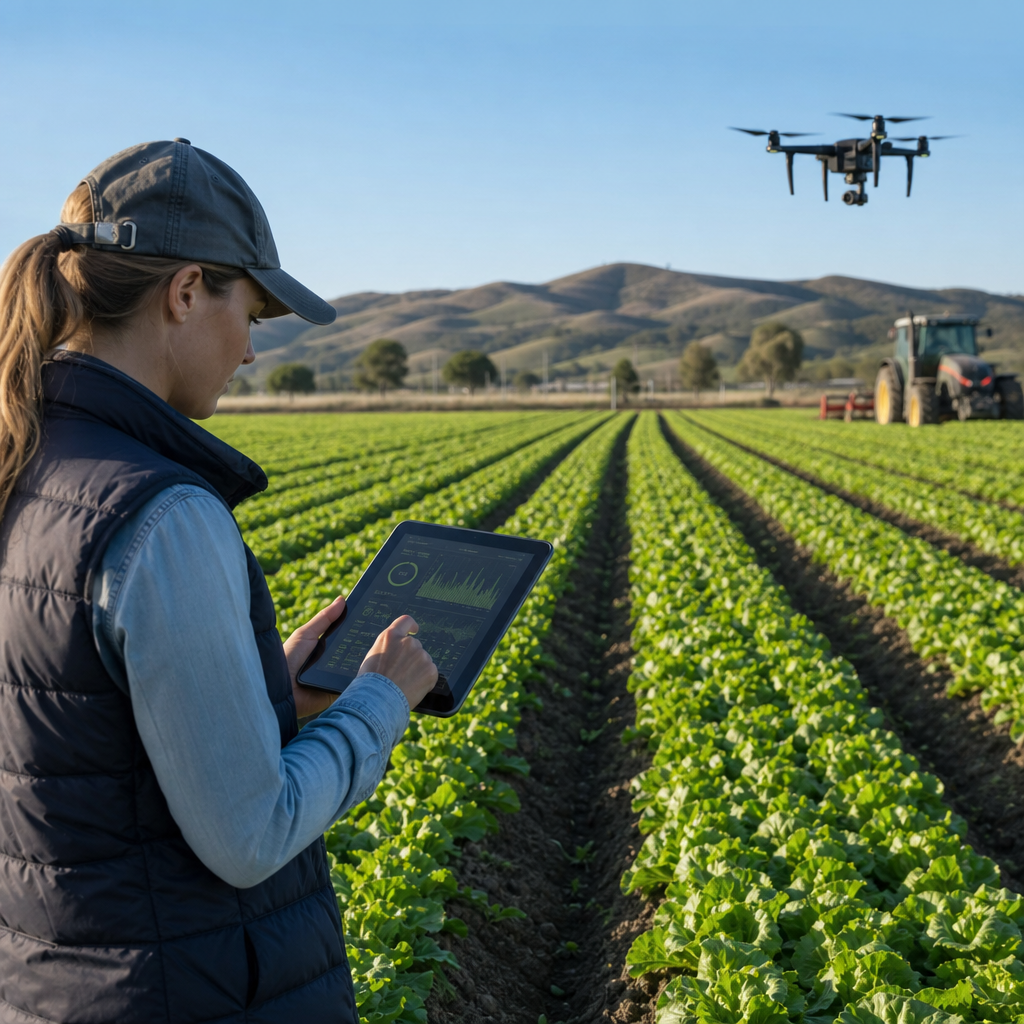
Technology is reshaping agriculture, and nowhere is that shift more visible than in Silicon Valley’s agritech ecosystem. For students, growers, entrepreneurs, and midcareer professionals, the biggest challenge is rarely access to ideas; it is understanding the learning curve well enough to turn interest into practical capability. In agriculture, “agritech” refers to the tools, systems, and data-driven methods used to improve farming, food production, and supply chain performance. That includes precision agriculture, farm robotics, controlled environment agriculture, remote sensing, artificial intelligence, irrigation automation, biotechnology, and farm management software.
I have worked with agricultural technology teams that included software engineers who had never visited a field and growers who had never used a dashboard. Both groups faced the same reality: agritech rewards people who can connect biological systems with digital systems. That learning process matters because agriculture operates under tight margins, weather uncertainty, labor constraints, water restrictions, and increasing pressure to document sustainability outcomes. A tool is only valuable when users understand how to apply it to real field conditions, greenhouse operations, or supply planning.
Silicon Valley has become a powerful learning environment because it combines venture-backed startups, university research, engineering talent, cloud infrastructure, and proximity to California agriculture. The result is not just innovation; it is a network of learning opportunities. Someone entering agritech can learn through university certificate programs, extension workshops, startup internships, demo farms, accelerator communities, open datasets, and product training from established vendors. This article serves as a hub for the learning curve within agritech, outlining what people need to learn, where they can learn it, and how to build useful competence step by step.
What the agritech learning curve actually includes
The agritech learning curve is broader than learning how to use a device or app. It starts with agricultural literacy: soils, crop cycles, pest pressure, irrigation timing, labor workflows, and harvest constraints. Without that foundation, a sensor reading can be misread, and an algorithm can solve the wrong problem. In practice, successful learners understand both agronomy and operations. They know why evapotranspiration data matters, how GPS-guided equipment reduces overlap, and why growers care about payback periods more than technical novelty.
The next layer is technical fluency. In Silicon Valley agritech, that often means GIS mapping, sensor calibration, telemetry, image analysis, API integration, and dashboard interpretation. For example, a vineyard using drone imagery may classify vine stress through multispectral data, but decisions still depend on field scouting and irrigation records. Likewise, a greenhouse operator using climate control software must interpret VPD, CO2 levels, and substrate moisture rather than treat automation as magic. The learning curve is steep because biological variation is constant, and technology must be tuned to local realities.
There is also a business learning curve. Buyers in agriculture evaluate durability, service support, labor savings, input reduction, compliance benefits, and yield protection. I have seen technically elegant products fail because teams did not understand dealer channels, seasonal purchasing cycles, or the fact that a broken sensor during harvest can erase trust instantly. Learning agritech therefore means learning adoption economics, not just engineering.
Core learning opportunities in Silicon Valley and nearby networks
Silicon Valley offers a layered education path for agritech learners. Universities are a starting point. Stanford contributes strengths in AI, robotics, and entrepreneurship, while nearby University of California campuses, especially UC Davis and UC Berkeley, connect those strengths to plant science, water management, food systems, and biological engineering. UC Cooperative Extension remains especially valuable because it translates research into field-level practices, offering workshops and publications that explain irrigation scheduling, pest monitoring, nutrient management, and emerging technologies in plain operational terms.
Startup ecosystems create a second learning channel. Programs such as Plug and Play, IndieBio, and regional incubators expose learners to product development, pilot design, fundraising expectations, and customer discovery. These environments teach a critical agritech lesson: a prototype is not a product until it survives farm conditions, integrates with existing workflows, and demonstrates return on investment. Internships with farm robotics firms, sensing companies, irrigation platforms, or vertical farming startups often provide faster practical learning than classroom work alone because participants see deployment problems directly.
Industry events and demonstration sites add a third route. World Ag Expo in Tulare, FIRA USA for agricultural robotics, the Salinas Valley ag innovation corridor, and controlled environment agriculture showcases offer live exposure to machines, software, and buyer questions. Seeing autonomous weeding systems, machine vision sorters, or smart irrigation controllers in operation compresses the learning curve because it links concepts to real use cases. Demo environments also reveal limits, such as battery life, connectivity gaps, maintenance needs, and operator training requirements.
Skills that matter most for agritech careers
People often ask which skills matter most in agritech. The answer is a hybrid stack: agricultural context, data literacy, operational empathy, and communication. A strong learner can interpret yield maps, understand variability, and ask whether the data was collected consistently. They can also speak with growers, PCA advisers, equipment operators, and software developers without losing the thread. In hiring, I consistently saw candidates stand out when they could explain a field problem, define the relevant metric, and describe how a tool would fit into existing workflows.
| Skill area | What it includes | Example in practice |
|---|---|---|
| Agronomic literacy | Crop cycles, irrigation, pests, soils, harvest timing | Using soil moisture data to adjust irrigation scheduling in almonds |
| Data analysis | Spreadsheets, GIS, dashboards, basic statistics, sensor validation | Comparing NDVI imagery with scouting notes to confirm plant stress |
| Hardware awareness | Sensors, connectivity, batteries, maintenance, calibration | Troubleshooting weather station drift before making spray decisions |
| Software fluency | APIs, farm management systems, interoperability, reporting | Connecting irrigation logs to compliance and cost dashboards |
| Commercial understanding | ROI, procurement cycles, service models, pilot design | Structuring a paid pilot around labor savings during thinning |
These skills can be built deliberately. For technical learners, the gap is usually agronomic context. For agricultural learners, the gap is often data confidence. Neither gap is permanent. The best progression starts with one production system, such as vineyards, leafy greens, berries, dairy, or greenhouse tomatoes, then adds tools around it. That sequence creates practical depth faster than trying to learn every technology category at once.
How to learn agritech without getting overwhelmed
The most effective way to approach the agritech learning curve is to begin with a real production problem. Start with a question growers already care about: How can irrigation be scheduled more accurately? How can labor-intensive weeding be reduced? How can disease pressure be detected earlier? Once the problem is clear, the relevant technologies become easier to evaluate. This avoids a common Silicon Valley mistake: leading with a tool rather than a farm outcome.
A practical learning plan has four stages. First, learn the production system through extension publications, field days, and direct observation. Second, study the data sources tied to that system, such as weather, soil moisture, imagery, machine logs, or greenhouse climate records. Third, compare tools by deployment requirements, integration burden, and payback timeline. Fourth, validate what you learn in real settings. A student who maps irrigation blocks, checks sensor placement, and compares recommendations with actual field decisions will learn more in one season than from months of abstract reading.
It also helps to use recognized platforms and standards. Learners should become comfortable with QGIS or ArcGIS for mapping, common cloud tools for data handling, and interoperability concepts such as APIs and data export formats. In irrigation, understanding CIMIS weather data and evapotranspiration principles is foundational in California. In controlled environment agriculture, climate strategy, fertigation, and food safety protocols are equally essential. Credible learning is specific, not generic.
Common pitfalls and how serious learners avoid them
Several mistakes repeatedly slow down new entrants. The first is assuming that agriculture is a simple software market. It is not. Biological variability, seasonality, regulation, and labor realities make deployment more complex than standard enterprise SaaS. The second mistake is treating pilots as proof of adoption. A pilot can show interest, but repeated seasonal use, measurable value, and service reliability determine whether a product actually sticks. The third mistake is underestimating trust. Growers often adopt technology through recommendations from advisers, neighbors, and existing vendor relationships, not through branding alone.
Serious learners avoid these pitfalls by staying close to operations. They spend time in fields, processing facilities, nurseries, and greenhouses. They ask what happens when connectivity fails, when a worker has five minutes for training, or when recommendations conflict with harvest timing. They also learn to measure outcomes correctly. A technology may improve water use efficiency but add labor elsewhere. Another may reduce pesticide use but require better scouting discipline. Good agritech learning means understanding tradeoffs honestly.
Finally, learners should recognize that Silicon Valley is a gateway, not the whole classroom. The best agritech education connects engineering hubs with farming regions such as Salinas, the Central Valley, Yuma, and coastal greenhouse clusters. If you are building your educational path, choose one crop system, follow the data, learn the economics, and seek hands-on exposure wherever possible. That approach shortens the learning curve, builds judgment, and prepares you to evaluate tools with the practical confidence agriculture demands.
Frequently Asked Questions
What does “agritech” actually include, and why is Silicon Valley such an important place to learn about it?
Agritech covers a broad set of technologies used to improve how food is grown, monitored, harvested, distributed, and managed. It includes precision agriculture tools such as sensors, drones, GPS-guided equipment, satellite imagery, and farm management software. It also includes controlled environment agriculture, robotics, artificial intelligence, irrigation automation, soil health analytics, supply chain tracking, and data platforms that help growers make better decisions. In practical terms, agritech is not just about inventing new machinery. It is about using technology to make agriculture more efficient, resilient, profitable, and sustainable.
Silicon Valley stands out because it brings together the ingredients that make learning faster and more applied: startups, engineers, investors, universities, researchers, and early adopters. In this environment, agriculture is often approached as a systems problem that can be improved through software, hardware, data science, and interdisciplinary collaboration. That matters for learners because it creates access to real-world examples of how innovation moves from concept to field testing and then into commercial use.
Another reason Silicon Valley is significant is the quality of exposure it offers. People interested in agritech can learn not only what the technologies are, but also how they are built, funded, validated, and scaled. That means learning opportunities often extend beyond crop science into product development, operations, entrepreneurship, machine learning, sustainability, and supply chain strategy. For students and professionals alike, this combination makes Silicon Valley less of a trend center and more of a practical learning ecosystem where agriculture and technology regularly intersect.
Who can benefit most from agritech learning opportunities in Silicon Valley?
Agritech learning opportunities are valuable for a surprisingly wide range of people. Students interested in agriculture, engineering, environmental science, business, or data analytics can use Silicon Valley’s ecosystem to understand how these fields connect in real agricultural settings. For them, agritech can be an entry point into careers that combine technical skills with food systems, sustainability, and innovation.
Growers and farm operators can also benefit significantly, especially if they want to evaluate which tools are worth adopting and which are mostly hype. Learning in this space helps producers understand how to assess return on investment, labor impact, water efficiency, crop visibility, and long-term operational fit. Rather than simply being sold a technology, they become more informed decision-makers who can ask better questions and compare solutions with confidence.
Entrepreneurs benefit because agritech is a complex industry where technical talent alone is not enough. Anyone building in this field needs to understand farm realities, seasonality, regulation, supply chains, biological variability, and the fact that agriculture does not always move at software speed. Midcareer professionals transitioning from technology, manufacturing, logistics, sustainability, or finance can also find strong opportunities here. Their existing experience often transfers well, especially in product management, operations, analytics, partnerships, and go-to-market strategy. In short, the people who benefit most are those willing to bridge disciplines and learn how innovation works under real agricultural constraints.
What are the best ways to start learning agritech if you are new to the field?
The best starting point is to build a working understanding of both agriculture and technology, rather than focusing too heavily on one side. Many newcomers make the mistake of jumping straight into advanced tools without understanding the actual farming problems those tools are meant to solve. A stronger approach is to first learn the basics of crop production, resource management, seasonality, farm economics, and supply chain challenges. Once those fundamentals are clearer, technologies like sensors, AI models, automation systems, and digital platforms become much easier to evaluate in context.
From there, practical exposure matters. Look for university extension programs, workshops, incubator events, startup demos, field days, webinars, and short courses related to precision agriculture, food systems innovation, or controlled environment agriculture. Silicon Valley and nearby innovation hubs often host events where participants can hear directly from founders, researchers, and growers. These settings are especially useful because they reveal what is actually being used, what is still experimental, and what obstacles exist between a good idea and reliable farm adoption.
It is also smart to develop a few core skill areas that support long-term growth. Data literacy is one of the most important, since many agritech tools rely on interpreting sensor readings, performance dashboards, yield trends, and environmental inputs. Familiarity with GIS, basic coding, product thinking, or hardware systems can also be helpful depending on your goals. But perhaps the most valuable habit is staying close to the end user. In agritech, the strongest learners are usually the ones who keep asking practical questions: What problem is being solved? Who uses this? How does it perform in the field? What trade-offs does it introduce? That mindset creates a much more durable foundation than simply following the latest startup trend.
What skills are most important for success in agritech careers and education pathways?
Success in agritech usually comes from combining technical fluency with operational awareness. On the technical side, valuable skills may include data analysis, sensor integration, software platforms, automation, robotics, GIS mapping, machine learning, and familiarity with connected devices. These skills help people understand how tools are designed and how information can be turned into action. However, technical ability alone rarely guarantees success in agriculture, because farm environments are shaped by weather, labor availability, biological variation, infrastructure limitations, and financial risk.
That is why domain understanding is equally important. People who do well in agritech tend to appreciate how farming decisions are made in the real world. They understand that a solution must fit into a grower’s workflow, budget, timing, and risk tolerance. Communication skills matter a great deal here, because agritech often requires translating between engineers, operators, researchers, investors, and agricultural customers. Someone who can explain a technical product in practical, field-relevant terms has a major advantage.
Adaptability is another essential skill. Agritech is evolving quickly, and many roles sit at the intersection of industries rather than inside one traditional category. A person may need to evaluate data one day, visit a production site the next, and contribute to product feedback after that. Problem-solving, curiosity, and cross-functional collaboration are therefore especially valuable. For learners choosing an education path, the strongest preparation often comes from mixing disciplines: agriculture with data science, environmental studies with engineering, or business with food systems. That blend reflects how the industry actually works.
How can someone turn agritech learning in Silicon Valley into real career or business opportunities?
The most effective way is to treat learning as a bridge to action, not as a separate academic exercise. Start by identifying which part of agritech interests you most: farm operations, climate-smart systems, robotics, software platforms, controlled environment agriculture, supply chain visibility, or startup building. Once you have a focus area, begin connecting your learning to tangible outcomes such as internships, pilot projects, research collaborations, field visits, product testing, or networking with founders and industry professionals. Silicon Valley is especially useful because opportunities often emerge through ecosystem participation rather than formal job listings alone.
For career seekers, this means building evidence of applied understanding. A portfolio can be very powerful, especially if it shows how you analyzed an agricultural challenge, reviewed technologies, interpreted data, or contributed to a project with real operational relevance. Employers in agritech often look for people who understand both innovation and implementation. Even a small project—such as comparing irrigation monitoring tools, studying greenhouse automation systems, or evaluating farm software usability—can help demonstrate that you know how to connect ideas with real-world agricultural needs.
For entrepreneurs, the path usually starts with customer discovery. Silicon Valley offers strong exposure to product development and funding strategy, but the best agritech businesses are grounded in real problems, not just technical possibility. Founders need to validate whether a problem is urgent, recurring, and expensive enough for customers to pay to solve it. They also need to understand buying cycles, deployment barriers, and adoption behavior in agriculture. In both careers and business creation, the key is the same: use Silicon Valley’s learning environment to build practical capability, credible relationships, and a grounded view of how technology actually serves agriculture.