Silicon Valley’s emerging trends in computer hardware education reflect a sharp shift from theory-first instruction to project-based, industry-linked learning that prepares students for semiconductor design, embedded systems, robotics, and advanced manufacturing. In this context, computer hardware education means the teaching of physical computing systems: processors, memory, printed circuit boards, sensors, networking devices, power systems, and the tools used to design, test, and manufacture them. The learning curve refers to how quickly students and professionals can move from foundational concepts, such as digital logic and circuit analysis, to applied skills like FPGA prototyping, PCB layout, hardware security testing, and system integration. This matters because Silicon Valley employers no longer hire only for narrow specialization. They increasingly want graduates, career changers, and technical educators who can connect hardware with software, data, automation, and product thinking.
I have seen this change firsthand in curriculum reviews with startup engineers and community college instructors. A decade ago, many hardware courses still centered on lectures, isolated lab exercises, and static textbook examples. Today, the strongest programs use open-source development boards, cloud-connected instrumentation, and interdisciplinary capstone projects that mirror real product cycles. Students are expected to debug real signals on oscilloscopes, read datasheets critically, manage version control for schematics, and document design tradeoffs clearly. That shift is not cosmetic. It changes how quickly learners build confidence, where they get stuck, and which educational resources actually help them advance.
For a hub article under Educational Resources, the practical question is simple: what are the dominant trends shaping the hardware learning curve in Silicon Valley, and how should learners respond? The answer involves several connected developments. Bootcamps and maker spaces are compressing entry pathways. Universities are redesigning labs around chip design and embedded AI. Employers are influencing course content through internships and sponsored labs. Remote tools are widening access while exposing gaps in hands-on practice. At the same time, hardware education is becoming more rigorous, not less, because modern devices combine electrical engineering, computer architecture, firmware, manufacturing constraints, and compliance requirements. Understanding these trends helps students choose better resources, helps educators build stronger pathways, and helps employers support talent development more effectively.
Project-Based Learning Is Replacing Theory-Only Hardware Instruction
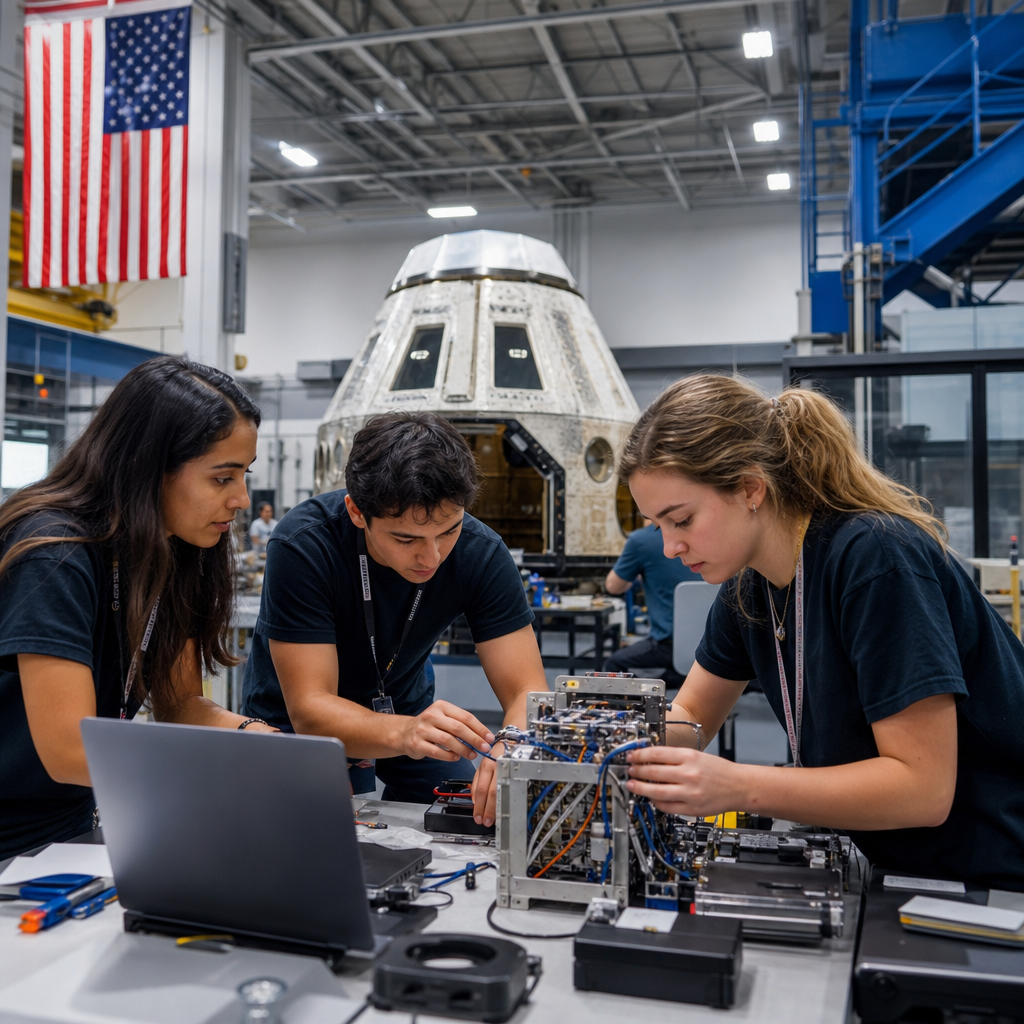
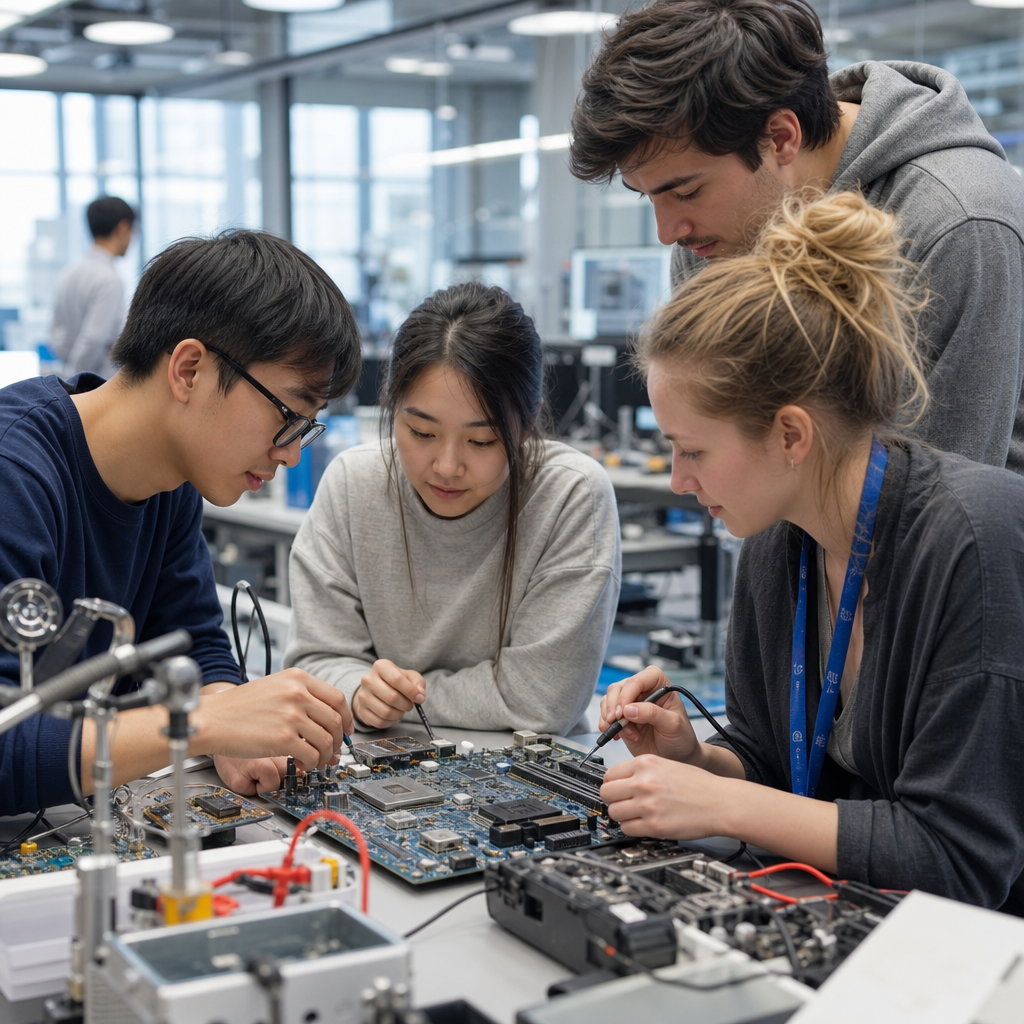
The clearest trend is the dominance of project-based learning. Silicon Valley programs increasingly teach hardware through build cycles rather than through isolated theory blocks. Students still need Boolean algebra, signal integrity basics, and microarchitecture concepts, but those topics are now taught in service of a working artifact. A learner might study voltage regulation while building an IoT sensor node, or timing closure while implementing a RISC-V core on an FPGA. This structure shortens the learning curve because abstract ideas become measurable behaviors: a board boots or it does not, a bus meets timing or it fails, a thermal design passes limits or overheats.
Real-world examples are everywhere. Stanford’s lab-heavy design courses, UC Berkeley’s influence on open instruction around RISC-V, and the Bay Area maker ecosystem all reinforce the same pattern: students learn faster when they design, test, fail, revise, and present. In workforce programs, I have watched learners retain more from a two-week debugging sprint than from a month of slides. They remember why decoupling capacitors matter after seeing unstable rails on a scope. They understand pull-up resistors after tracing an intermittent I2C fault. In hardware education, tactile feedback and visible failure modes accelerate comprehension in ways lectures rarely can.
Open Hardware and Accessible Tools Are Lowering Barriers to Entry
A second major trend is the rise of accessible platforms that reduce startup friction. Arduino, Raspberry Pi, ESP32, BeagleBone, and affordable FPGA boards have become standard entry points because they let learners move from curiosity to execution quickly. Instead of spending weeks assembling a fragile environment, students can write firmware, connect peripherals, and observe system behavior within hours. The same applies to design software. KiCad has matured into a credible PCB design tool for education, while GitHub, PlatformIO, and VS Code help students adopt professional workflows early.
This lower barrier does not mean the work is easier. It means learners can spend more time on architecture, debugging, and design reasoning instead of fighting setup problems. Consider a student building a wearable health prototype. With commodity sensors, open reference designs, and a low-cost logic analyzer, that student can explore power budgeting, data sampling, wireless interference, enclosure constraints, and test planning in a single semester. The educational gain is substantial. Tools that once belonged only to well-funded labs are now available through school libraries, community spaces, and personal kits, broadening access across age groups and career stages.
Chip Design Education Is Expanding Beyond Elite Graduate Programs
Silicon Valley’s renewed focus on semiconductors has pushed chip design education into broader view. What used to be confined mainly to advanced electrical engineering tracks is now appearing in undergraduate labs, workforce certificates, and independent study communities. Students are learning hardware description languages such as Verilog and VHDL earlier, often through FPGA-based courses that demonstrate pipelines, caches, peripherals, and digital signal processing in concrete ways. The open RISC-V ecosystem has been especially influential because it gives educators a modern architecture they can teach without the licensing barriers associated with proprietary instruction stacks.
This trend has strategic importance. Industry demand for chip talent has risen alongside interest in domestic manufacturing, edge computing, AI accelerators, and secure system design. Educational programs are responding by blending RTL design, verification, physical constraints, and software-hardware co-design. A learner who can write synthesizable Verilog, run simulations, interpret timing reports, and connect that logic to C-based firmware is more employable than one who only knows isolated theory. Universities, extension schools, and technical bootcamps are all trying to shorten that path, though successful programs still require strong math and disciplined lab habits.
Interdisciplinary Hardware Skills Now Define the Modern Learning Curve
Another defining trend is convergence. In Silicon Valley, hardware education no longer sits apart from software, data, or manufacturing. The learning curve now includes embedded programming, Linux fundamentals, cloud connectivity, machine learning at the edge, and product validation. A robotics student may need motor control, sensor fusion, PCB design, ROS integration, and battery safety knowledge in the same project. A consumer electronics learner may need schematic capture, Bluetooth debugging, test fixture design, and regulatory awareness before a prototype is truly viable.
This interdisciplinary expectation can feel steep, but it mirrors actual work. Hardware teams collaborate across firmware, mechanical, sourcing, test, and security from the beginning of development. Education that exposes students to those interactions reduces onboarding time later. The strongest resources explain not only how to build a circuit, but how to document it, version it, manufacture it, and troubleshoot it under realistic constraints. That is why system thinking has become central in the Educational Resources landscape for Learning Curve content.
| Trend | What Learners Study | Why It Matters |
|---|---|---|
| Project-based labs | Prototyping, debugging, test plans | Builds practical judgment fast |
| Open hardware tools | Boards, PCB software, firmware workflows | Lowers entry cost and setup time |
| Chip design expansion | Verilog, FPGA, RISC-V, verification | Matches semiconductor hiring demand |
| Interdisciplinary training | Embedded systems, AI edge, manufacturing | Reflects real product development |
| Industry-linked education | Internships, capstones, lab sponsorships | Aligns skills with employer needs |
Industry Partnerships Are Reshaping Curriculum and Career Pathways
Employer involvement is another major trend. Silicon Valley companies increasingly influence hardware education through sponsored labs, guest instruction, internship pipelines, donated equipment, and capstone mentorship. This has clear advantages. Students gain exposure to current toolchains, documentation standards, and engineering review practices. Instructors get feedback on which skills are outdated and which gaps are blocking hiring. I have seen courses improve dramatically after employers asked for stronger coverage of test automation, design reviews, and root-cause analysis rather than only final-demo performance.
There are tradeoffs. Programs too tightly tied to one vendor or narrow stack can become fragile if the market changes. Good curriculum design balances industry relevance with durable fundamentals. Students should learn how to read any datasheet, reason about any bus protocol, and validate any prototype, not just use one company’s development kit. The best partnerships therefore support broad competencies while adding realistic context through case studies, internships, and manufacturing exposure.
Remote Labs, Simulation, and AI Support Are Changing How Students Learn
Remote learning has also changed the hardware education landscape. During the past several years, institutions invested in simulation tools, remote-access lab benches, virtual instrumentation, and collaborative design platforms. Students can now run SPICE simulations, share waveform captures, review PCB layouts asynchronously, and even access networked test equipment from off campus. For learners balancing work or family obligations, this flexibility is valuable and often decisive.
Still, hardware has limits that purely remote education cannot erase. Solder joints, connector failures, EMI issues, thermal drift, and assembly tolerances are physical realities. Simulations help, but they never replace bench intuition. The most effective programs use hybrid models: simulation first, guided physical labs second, and reflective troubleshooting throughout. AI support tools are increasingly part of that process as well. They can summarize datasheets, suggest debugging sequences, and explain protocol traces, but they must be checked carefully because hardware errors compound quickly when assumptions are wrong.
How Learners Can Navigate Silicon Valley’s Hardware Education Trends
For students, educators, and career changers, the practical response is to build a staged learning plan. Start with electronics fundamentals and microcontroller projects, then progress into PCB design, instrumentation, embedded software, and system integration. Add one specialization based on your goal: FPGA and RTL for chip design, motor control for robotics, RF basics for connected devices, or manufacturing test for operations-focused roles. Keep a documented portfolio with schematics, code, test results, and design revisions. Hiring managers consistently trust evidence of problem solving more than generic course lists.
Use the Educational Resources ecosystem intentionally. Community college labs, university extension courses, open-source projects, hackathons, and maker spaces all serve different parts of the learning curve. Choose resources that force you to measure, debug, and explain your decisions. If a course never asks for a timing analysis, power estimate, BOM tradeoff, or failure report, it is probably too shallow for modern hardware work.
Silicon Valley’s emerging trends in computer hardware education point toward one conclusion: the fastest, most reliable learning comes from structured hands-on practice connected to real industry expectations. Project-based instruction, open tools, chip design access, interdisciplinary training, employer partnerships, and hybrid lab models are all reshaping the learning curve for the better. They make hardware education more accessible, but they also raise the standard by demanding deeper technical fluency and better engineering judgment. If you want to grow in this field, choose resources that let you build real systems, test them rigorously, and learn from failure. Start with one serious project, document it well, and use that momentum to explore the rest of this Learning Curve hub.
Frequently Asked Questions
1. What is changing most in Silicon Valley’s approach to computer hardware education?
The biggest change is a clear move away from purely theory-first instruction toward hands-on, project-based learning that mirrors how hardware is actually developed in industry. Instead of spending long periods focused only on abstract electronics, computer architecture, or signal theory before touching real equipment, students are increasingly introduced early to design labs, prototyping workflows, debugging tools, and collaborative engineering projects. In Silicon Valley, this shift is especially pronounced because employers need graduates who can contribute quickly to semiconductor design teams, embedded systems development, robotics platforms, edge devices, and advanced manufacturing environments.
Another major change is the growing integration of software and hardware education. Modern hardware engineers are rarely isolated from firmware, automation scripts, simulation environments, and data analysis tools. As a result, programs now often combine circuit design, printed circuit board development, sensor integration, FPGA work, microcontroller programming, hardware validation, and production testing into a single learning path. Students are being trained not just to understand what a processor, memory subsystem, or networking interface does, but also how to model it, test it, optimize it, and deploy it in a complete product pipeline.
Silicon Valley institutions and training programs are also aligning coursework more closely with current industry workflows. That means exposure to CAD tools, electronic design automation platforms, oscilloscopes, logic analyzers, simulation software, manufacturing constraints, and design-for-test principles. In practice, students may now complete capstone projects that resemble startup or enterprise product development: building prototypes, revising board layouts, validating power systems, integrating sensors, and presenting measurable performance results. This trend reflects a broader goal: producing graduates who are not only knowledgeable, but job-ready in a fast-moving hardware economy.
2. Why is project-based learning becoming so important in hardware education?
Project-based learning has become central because computer hardware is inherently practical. It is one thing to understand how processors, buses, memory hierarchies, or power regulation work in theory; it is another to build a functioning system that performs reliably under real-world conditions. Students learn far more deeply when they must translate concepts into working hardware, troubleshoot failures, interpret test data, and make design trade-offs related to cost, heat, size, speed, and manufacturability. In Silicon Valley, where development cycles are fast and expectations are high, that practical fluency is extremely valuable.
This model also teaches the problem-solving habits that employers want. Real hardware projects rarely work perfectly on the first attempt. Components behave unexpectedly, signal integrity issues appear, power consumption exceeds targets, sensors require recalibration, and prototypes reveal mechanical or thermal limitations. Through project-based learning, students gain experience with iteration, debugging, root-cause analysis, documentation, and collaboration across disciplines. These are not secondary skills in hardware engineering; they are core professional capabilities.
Just as importantly, project-based learning helps students understand the full lifecycle of a hardware product. A well-designed course may require them to define specifications, choose components, design a schematic, build or order a PCB, write supporting firmware, test performance, and revise the design based on results. That kind of experience makes classroom learning more relevant and gives students a portfolio of demonstrable work. In Silicon Valley’s competitive environment, being able to show a robot controller, embedded sensor platform, custom board, or FPGA prototype often speaks more loudly than grades alone.
3. Which technical areas are seeing the most growth in Silicon Valley hardware education?
Several technical areas are expanding rapidly, driven by both employer demand and the broader evolution of the technology sector. Semiconductor design is one of the most important. As chip innovation continues to shape computing, AI acceleration, mobile systems, and data center performance, education programs are placing greater emphasis on digital logic, verification, chip architecture, hardware description languages, and fabrication-aware design principles. Students interested in this area are increasingly exposed to workflows that connect theoretical architecture with practical design, simulation, and validation tasks.
Embedded systems are another major growth area. These systems power everything from smart devices and industrial sensors to automotive platforms and medical equipment. In response, hardware education is placing more emphasis on microcontrollers, real-time constraints, low-power design, peripheral integration, communication protocols, and hardware-software co-design. Students are learning how to build systems that combine processing, memory, sensors, networking, and power management into compact, efficient products. This is especially relevant in Silicon Valley, where IoT, edge computing, and connected devices continue to create demand for engineers who can work across multiple layers of a system.
Robotics and advanced manufacturing are also becoming more prominent. Robotics education increasingly blends hardware design with motion control, sensing, embedded intelligence, and mechanical integration. Advanced manufacturing adds another layer by teaching students how products move from prototype to production, including design for manufacturability, automated testing, reliability, and supply chain considerations. In addition, networking hardware, power electronics, PCB design, and hardware security are gaining attention as industries become more dependent on resilient and efficient physical computing systems. Together, these growth areas show that hardware education is broadening beyond isolated component knowledge toward complete systems thinking.
4. How are industry partnerships shaping computer hardware education in Silicon Valley?
Industry partnerships are playing a major role in making hardware education more relevant, current, and career-focused. In Silicon Valley, schools, bootcamps, labs, and technical programs often collaborate with semiconductor firms, device manufacturers, robotics companies, and electronics startups to ensure that students are learning technologies and workflows that reflect actual market needs. These partnerships can influence curriculum design, equipment selection, lab exercises, and capstone project themes. As a result, students are less likely to encounter outdated material and more likely to train on the kinds of tools and processes used in professional engineering environments.
These relationships also create valuable pathways into internships, mentorships, and real-world project experience. Engineers from industry may guest lecture, review student designs, advise competition teams, or sponsor problem-based assignments drawn from practical challenges. That exposure helps students understand what hardware roles really involve, from board bring-up and validation to chip verification, embedded integration, and manufacturing test. It also helps them build professional networks early, which can be especially important in a region where personal connections and demonstrated ability often influence hiring.
Perhaps most importantly, industry partnerships strengthen the bridge between education and employability. When students work on projects informed by real constraints such as cost targets, compliance requirements, reliability standards, thermal limits, or production scalability, they graduate with a more realistic understanding of engineering work. Employers benefit because they can hire candidates who already appreciate team workflows, documentation standards, design reviews, and iterative testing. In this way, Silicon Valley’s hardware education ecosystem is becoming less isolated from industry and more tightly connected to the product development realities students will face after graduation.
5. What skills should students develop to succeed in modern computer hardware education and careers?
Students should start by building a strong foundation in core hardware concepts, including digital electronics, circuits, computer architecture, memory systems, power delivery, networking fundamentals, and physical computing components such as sensors and processors. Those basics still matter enormously. However, success now depends on going beyond theory and becoming comfortable with tools, workflows, and system-level thinking. Students should aim to understand not just how individual parts work, but how complete hardware systems are designed, tested, integrated, and manufactured.
Technical versatility is especially important. A strong student should be able to read schematics, use lab instruments, work with PCB design tools, understand embedded programming, interpret data sheets, and debug both hardware and hardware-adjacent software issues. Familiarity with simulation, verification, automation scripts, and version-controlled project workflows is also increasingly valuable. In many Silicon Valley roles, the line between hardware and software is not rigid, so the most effective learners are those who can move comfortably between physical devices and the code or tooling used to support them.
Just as critical are professional and practical skills. Hardware development is collaborative, iterative, and detail-intensive, so students need clear communication, documentation discipline, teamwork, and resilience when prototypes fail. They should learn how to present technical decisions, justify trade-offs, and incorporate feedback from peers, instructors, and mentors. Building a portfolio of meaningful projects is one of the smartest moves a student can make, because it proves capability in a very concrete way. In Silicon Valley’s emerging model of computer hardware education, the most successful students are not simply those who know the theory, but those who can turn that knowledge into reliable, testable, real-world systems.