Sustainable tech innovation is reshaping how Silicon Valley teaches, hires, and builds, and the region’s educational focus now determines which ideas become durable companies instead of short lived experiments. In this context, sustainable tech innovation means creating digital and physical technologies that reduce environmental harm, use resources efficiently, and support long term economic resilience, while educational focus refers to the programs, partnerships, and learning pathways that expand knowledge and skills for students, workers, founders, and educators. I have seen this shift firsthand in curriculum planning meetings, workforce briefings, and startup mentorship sessions where the central question is no longer simply what can be built, but what should be built responsibly and who needs training to do it well. That matters because Silicon Valley remains a global signal setter: when its universities, bootcamps, venture networks, and employers prioritize climate literacy, circular design, energy efficiency, data ethics, and interdisciplinary problem solving, those priorities spread into hiring standards, product roadmaps, and investment decisions worldwide. For readers looking for educational resources, this hub article maps the core competencies, institutions, and practical learning models that are expanding knowledge and skills across the sustainable technology ecosystem.
Why sustainable technology education now sits at the center of innovation
The strongest sustainable technology ecosystems treat education as infrastructure, not as an afterthought. Companies developing clean energy software, battery analytics, precision agriculture tools, carbon accounting platforms, or low power semiconductors need people who understand both technical systems and environmental constraints. A machine learning engineer building grid forecasting models must know data pipelines and electricity demand variability. A product manager at a mobility startup must understand lifecycle emissions, procurement, regulation, and user behavior. In my experience advising teams, the biggest delays often come not from lack of ambition, but from skills gaps between disciplines that should already be working together.
Silicon Valley’s educational focus has broadened accordingly. Stanford’s Doerr School of Sustainability, UC Berkeley’s Energy and Resources Group, and programs connected to Lawrence Berkeley National Laboratory all reflect a wider pattern: climate and sustainability topics are being embedded into engineering, business, public policy, and design education rather than confined to niche electives. This integrated model is more effective because real world sustainability challenges are systems problems. Electrifying transport, decarbonizing data centers, and scaling water efficient infrastructure each require technical knowledge, financing literacy, regulatory understanding, and communication skills. Expanding knowledge and skills therefore means building fluency across domains, not just adding one green credential to a resume.
Core knowledge areas learners need to build sustainable tech careers
People entering this field often ask what they actually need to learn first. The answer is a structured mix of fundamentals and application. Environmental accounting is essential because teams must measure carbon, energy use, water consumption, and material impacts before they can improve them. Data literacy matters because sustainability claims increasingly rely on dashboards, sensor networks, geographic information systems, and reporting tools. Systems thinking is nonnegotiable because local optimizations can create wider inefficiencies, as seen when a product lowers electricity use but increases embedded emissions in manufacturing. Policy literacy is equally important because incentives such as the Inflation Reduction Act, state renewable portfolio standards, and building efficiency codes directly shape market demand.
Technical specialization then builds on that base. Software learners should study cloud efficiency, telemetry, edge computing, model optimization, and responsible AI deployment. Hardware learners need exposure to materials science, embodied carbon, thermal management, supply chain traceability, and repairability. Founders and operators should understand lifecycle assessment, ESG reporting boundaries, power purchase agreements, and circular economy design principles. These are not abstract concepts. When I worked with startup teams evaluating product strategy, the groups that understood scope 1, 2, and 3 emissions, ISO 14001 style management processes, and greenhouse gas accounting under the GHG Protocol made better product and procurement decisions much earlier.
How Silicon Valley institutions are expanding knowledge and skills
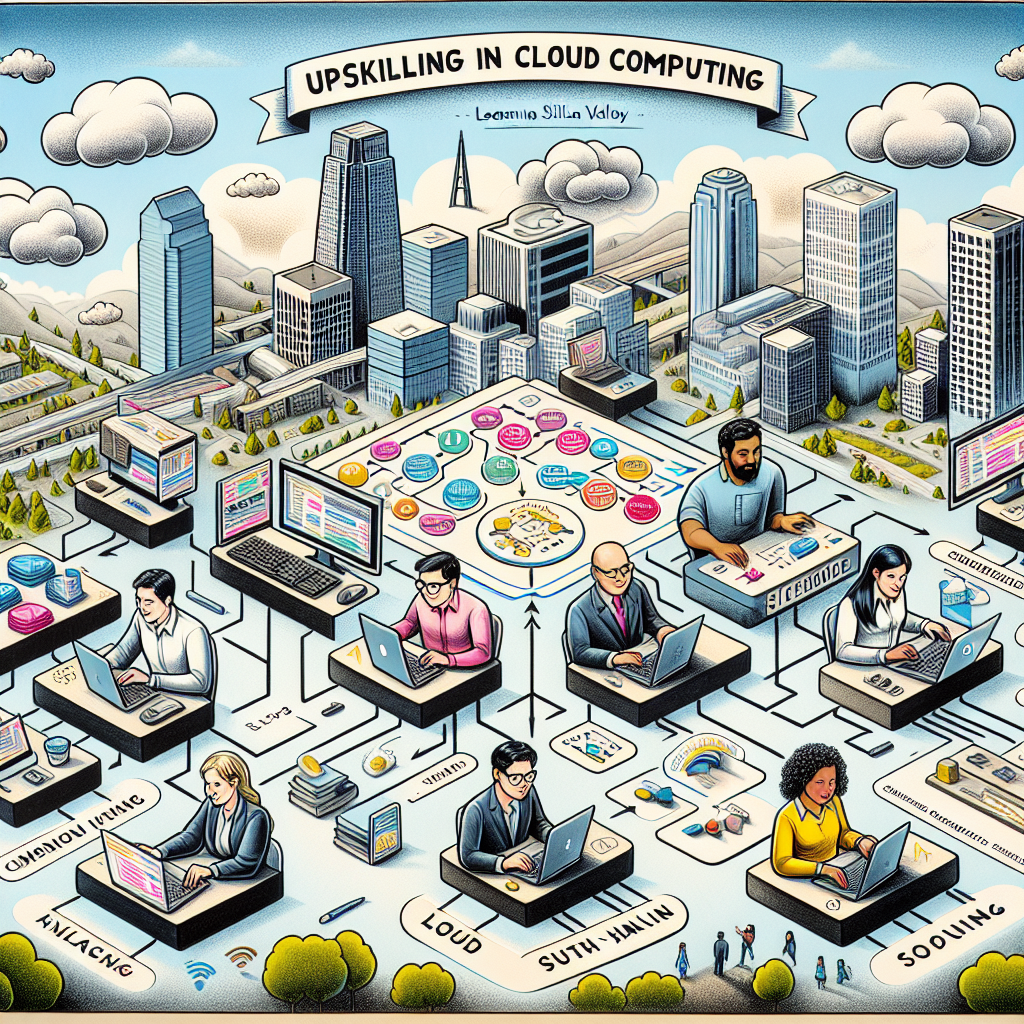
Silicon Valley does not rely on a single educational channel. Its strength comes from stacked pathways that let learners move between formal education, industry training, research collaboration, and community based upskilling. Universities provide foundational research and credibility. Community colleges and extension programs create access for career switchers and technicians. Bootcamps accelerate practical software and analytics skills. Employers supply apprenticeship style learning through rotational programs, capstone projects, and sustainability operations teams. Nonprofits and incubators add mentorship, convening power, and local relevance.
A useful way to understand this hub topic is to look at how different learning routes support different goals.
| Learning pathway | Primary skills developed | Example Silicon Valley relevance |
|---|---|---|
| University degree programs | Research depth, systems analysis, engineering fundamentals | Energy systems, sustainable design, climate data science |
| Community college and certificate programs | Technical operations, workforce entry, practical lab skills | EV maintenance, building controls, solar installation support |
| Bootcamps and short courses | Rapid digital skill building, applied analytics, product workflows | Carbon accounting software, GIS, Python for energy modeling |
| Employer led training | Tool specific execution, compliance, cross functional collaboration | Data center efficiency, supplier reporting, lifecycle reporting |
| Incubators and fellowships | Commercialization, pitching, policy navigation, stakeholder communication | Climate tech startups, university spinouts, civic pilots |
These pathways work best when they connect instead of competing. A student might start in a community college electronics program, transfer into engineering, complete a climate data internship, and later join a startup accelerator. That layered progression is exactly how expanding knowledge and skills becomes inclusive rather than elitist. It also reflects labor market reality: employers increasingly value demonstrated capability, portfolios, and domain fluency alongside degrees.
What effective educational resources look like in practice
Educational resources in sustainable tech must do more than explain concepts; they should help people apply methods to live problems. The most effective resources combine foundational instruction with project based learning. For example, a course on sustainable product development should not stop at defining lifecycle assessment. It should ask learners to compare two materials, estimate emissions hotspots, evaluate supplier risks, and recommend a redesign. A lesson on cloud sustainability should include workload rightsizing, storage tiering, server utilization analysis, and the tradeoffs between latency and energy use. Practical exercises turn sustainability from a branding term into an operational discipline.
Good resources also use recognized tools and standards. Students should encounter the GHG Protocol, Science Based Targets initiative concepts, LEED and ENERGY STAR references where relevant, open data from the US Department of Energy, and software such as Tableau, ArcGIS, Python, or emissions accounting platforms. In workshops I have led, learners gain confidence much faster when they can connect theory to named frameworks and actual datasets. Case studies help too. Google’s data center cooling optimization, Tesla’s battery manufacturing scale up, and Apple’s supplier clean energy push are useful not because they are perfect, but because they show measurable decisions, constraints, and tradeoffs.
Skills gaps, access barriers, and what the region still must improve
Despite progress, Silicon Valley’s educational focus still has uneven reach. Advanced sustainability content is often concentrated in elite institutions, while many workers who maintain buildings, manage logistics, support manufacturing, or operate municipal systems have less access to the same upskilling opportunities. Cost remains a barrier. So does time. Midcareer professionals rarely need another broad degree; they need targeted modules they can complete while working. Another common problem is fragmentation. Learners can find separate resources on coding, climate science, entrepreneurship, and policy, yet struggle to find integrated pathways that show how these fields interact in actual jobs.
There is also a credibility issue in the market. Some programs overpromise green job outcomes without teaching the quantitative skills employers demand. Hiring managers routinely look for spreadsheet fluency, SQL or Python basics, measurement discipline, and communication skills, not just enthusiasm for climate action. The region should therefore invest more in stackable credentials, employer validated curricula, paid internships, and bilingual technical training. Public libraries, workforce boards, K 12 districts, and local employers can all contribute here. If Silicon Valley wants sustainable tech innovation at scale, it must treat broad based skills expansion as a competitive necessity, not a philanthropic side project.
Building a hub strategy for expanding knowledge and skills
As a sub pillar hub under Educational Resources, this topic should connect readers to deeper content on climate tech careers, sustainability certifications, green software practices, energy literacy, circular design, startup education, and workforce transition programs. The hub works when it answers the big question clearly: how do people gain the knowledge and skills needed to participate in sustainable tech innovation? The answer is through layered learning, credible standards, applied practice, and strong links between education and employment. Readers should leave understanding both the landscape and their next step.
Silicon Valley’s advantage is not just capital or talent density. It is the ability to turn new knowledge into teachable systems that spread across institutions and companies. Sustainable tech innovation succeeds when education keeps pace with product complexity, regulatory change, and environmental urgency. For students, that means choosing interdisciplinary programs and building portfolios. For workers, it means targeting practical upskilling tied to real tools and standards. For educators and employers, it means designing resources that are accessible, rigorous, and connected to real jobs. Use this hub as a starting point, then explore the related articles in Educational Resources to build a sharper, more durable path into sustainable technology.
Frequently Asked Questions
What does sustainable tech innovation mean in Silicon Valley’s educational context?
In Silicon Valley’s educational context, sustainable tech innovation refers to teaching students, founders, engineers, and emerging professionals how to design technologies that deliver strong business value while also reducing environmental impact and improving long-term resilience. That includes software systems that use energy more efficiently, hardware designed with lower material waste, clean energy tools, smarter supply chains, circular manufacturing models, and data-driven platforms that help organizations measure and reduce emissions. The educational side is just as important as the technology itself. Schools, universities, accelerators, workforce programs, and industry partnerships are shaping how people think about product design, capital allocation, ethics, regulation, and resource use from the beginning of the innovation process.
This shift matters because Silicon Valley has historically excelled at speed, disruption, and scaling, but sustainable innovation asks a more durable question: can a technology succeed over time without creating unnecessary environmental, social, or economic costs? Educational programs increasingly answer that question by blending engineering, climate science, entrepreneurship, policy, and systems thinking. Instead of treating sustainability as a niche topic or a compliance issue, many institutions now frame it as a core design principle. That means future builders are being trained not only to create new products, but to understand life cycle impacts, energy demands, infrastructure constraints, and the broader consequences of innovation. In practical terms, education is becoming the bridge between ambitious ideas and companies that can survive shifting regulations, investor expectations, and market demands.
Why is education becoming such a central driver of sustainable tech innovation in Silicon Valley?
Education is becoming central because sustainable technology is more complex than traditional product development. Building a climate-conscious software platform, a battery storage company, a low-emission semiconductor process, or a smart building solution requires more than coding skill or startup ambition. It requires a working understanding of environmental systems, data interpretation, materials, public policy, operational efficiency, and long-term risk. Silicon Valley’s education ecosystem is increasingly responsible for combining those disciplines into practical learning experiences that prepare people to solve real-world problems. When education evolves, the innovation pipeline evolves with it.
There is also a hiring and investment reason behind this shift. Employers want graduates and professionals who can move across technical, regulatory, and business conversations with confidence. Investors are looking more closely at whether startups understand carbon accounting, supply chain resilience, energy costs, and sustainability reporting, because those issues now affect valuation, scalability, and market trust. Educational institutions are responding by offering specialized programs in climate tech, sustainable product design, green entrepreneurship, and responsible AI infrastructure. They are also creating partnerships with startups, venture firms, nonprofits, and local governments to make learning more applied and career-connected. In that environment, education does not simply support innovation from the sidelines. It actively determines which founders are prepared, which ideas are viable, and which companies are built to last.
How are universities, bootcamps, and industry partnerships changing the way sustainable technology is taught?
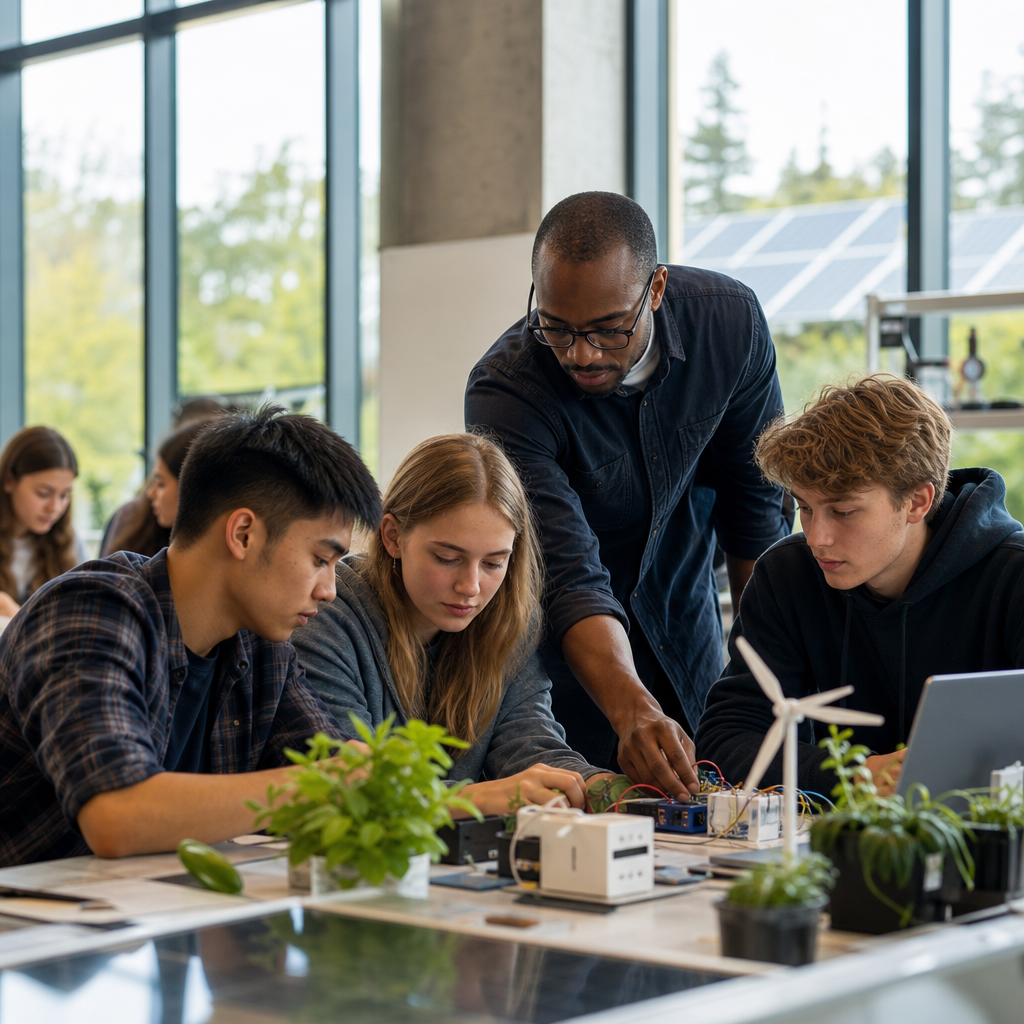
They are changing it by moving away from isolated classroom theory and toward interdisciplinary, problem-based learning tied to actual industry challenges. Universities in and around Silicon Valley are increasingly combining computer science, engineering, environmental studies, business, and policy into shared programs or research initiatives. Students may work on projects involving clean energy optimization, sustainable data centers, electric mobility, carbon tracking software, or circular hardware design. This creates a more realistic learning environment because sustainable innovation rarely fits into a single academic department. It depends on collaboration across technical and nontechnical fields, and education is starting to reflect that reality.
Bootcamps and workforce training programs are also playing an important role by making sustainable tech skills more accessible to career changers, early-career workers, and professionals who need to update their expertise quickly. These programs often focus on practical capabilities such as energy analytics, ESG data tools, climate software platforms, lifecycle assessment basics, and sustainable operations strategy. At the same time, partnerships with employers are giving learners direct exposure to the tools, workflows, and performance expectations used in real companies. Internships, sponsored labs, startup incubators, corporate mentorship programs, and public-private innovation hubs all help connect education to execution. The result is a more agile model of learning, one that prepares talent not only to understand sustainability in theory, but to implement it inside products, teams, and business models.
What skills are most valuable for students and professionals who want to work in sustainable tech innovation?
The most valuable skills combine technical depth with systems thinking. On the technical side, employers often look for software engineering, data analysis, machine learning, hardware design, energy systems knowledge, product management, and operational modeling. But sustainable tech roles increasingly require people who can go beyond a narrow specialty. Professionals need to understand how technology choices affect energy use, material consumption, emissions, supply chains, user behavior, and regulatory exposure. That makes skills like lifecycle thinking, carbon literacy, sustainability metrics, and cross-functional communication especially important. Someone who can build a powerful product and explain its environmental performance in business terms is highly valuable in today’s market.
Strategic and collaborative skills matter just as much. Sustainable innovation often happens where engineering, finance, policy, and customer needs overlap, so professionals must be comfortable working across disciplines. They need to evaluate tradeoffs, interpret incomplete data, and make decisions that balance speed with long-term durability. Founders and operators also benefit from understanding climate policy trends, procurement expectations, and investor scrutiny around sustainability claims. In Silicon Valley, where competition is intense and products move quickly, the strongest candidates are often those who can pair innovation with accountability. They can ask not just whether something can scale, but whether it should scale, under what conditions, and with what long-term impact. That mindset is increasingly becoming a career advantage rather than an academic extra.
How does Silicon Valley’s educational focus influence which sustainable tech companies succeed over time?
Silicon Valley’s educational focus influences success by shaping the quality of talent, the maturity of ideas, and the decision-making habits that founders bring into the market. When education emphasizes sustainability as a foundational principle rather than a late-stage add-on, startups are more likely to design products with efficiency, compliance, resilience, and measurable impact in mind from the beginning. That reduces the risk of building companies around fragile assumptions or short-lived trends. Founders who have been trained to think about resource constraints, infrastructure realities, stakeholder trust, and long-term operating costs are better equipped to build durable businesses. In many cases, education directly affects whether a promising innovation becomes a scalable company or remains an interesting experiment.
This influence shows up in several ways. It affects how teams evaluate market need, how they define product success, how they communicate with investors, and how they respond to policy and supply chain shifts. It also shapes the regional innovation culture. If universities, training programs, and industry partners consistently reward responsible design, measurable outcomes, and interdisciplinary problem-solving, those values become part of the startup ecosystem itself. That creates better alignment between talent development and market demand. Over time, the companies most likely to succeed are not simply those with bold ideas, but those built by people who understand sustainability as a practical business discipline. In Silicon Valley, education is increasingly the mechanism that turns sustainable tech from a promising category into a repeatable model for long-term company building.