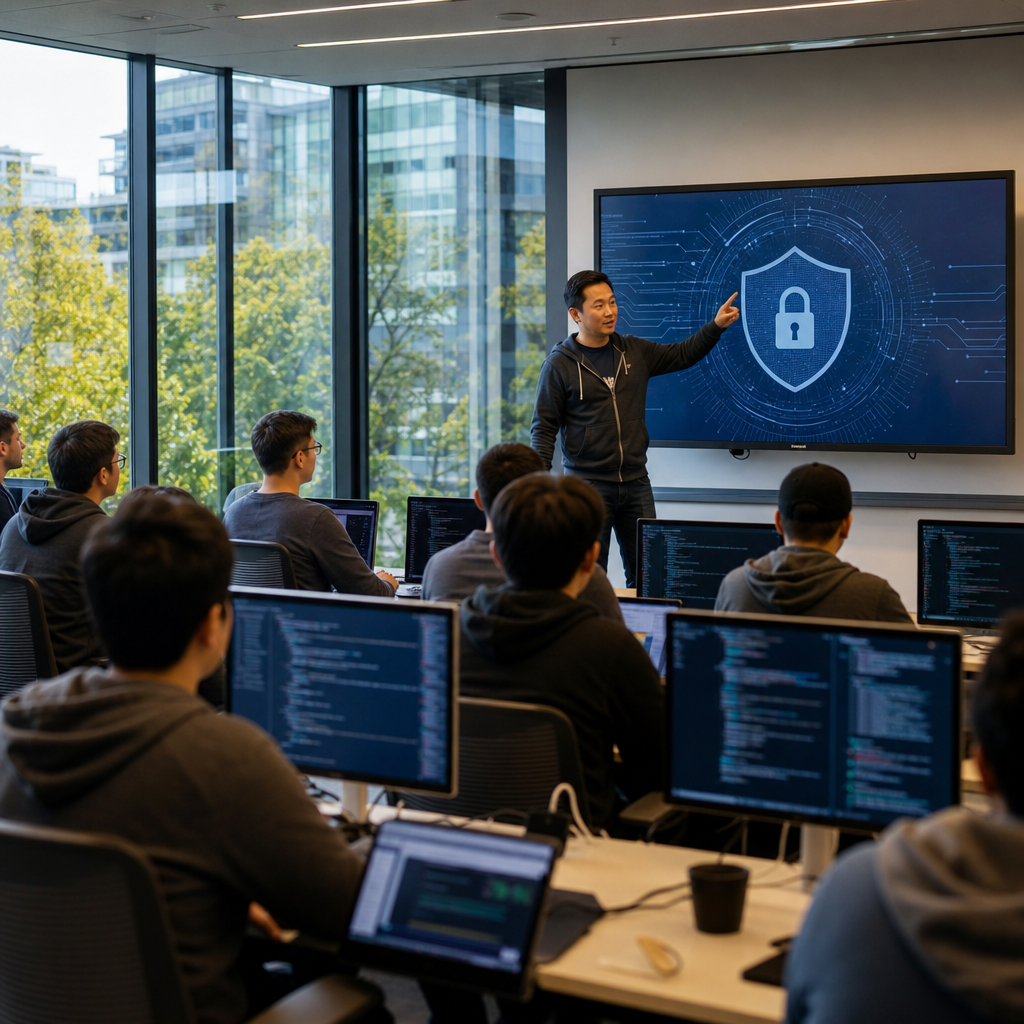
Silicon Valley’s leadership in cybersecurity education rests on a rare combination of technical talent, venture capital, research universities, and employers that continuously redefine the skills modern defenders need. In practical terms, cybersecurity education includes degree programs, bootcamps, workforce certificates, lab-based training, internships, and ongoing professional development designed to build competence in protecting systems, data, networks, identities, and critical infrastructure. I have worked with teams hiring security analysts, cloud engineers, and governance specialists across California, and the pattern is consistent: organizations increasingly value candidates who can demonstrate applied ability, not just theoretical knowledge. That shift matters because cyber risk now affects every sector, from hospitals and school districts to fintech platforms and semiconductor manufacturers.
When people ask why Silicon Valley stands out, the answer is not simply that it has famous companies. The region connects education directly to live industry demand. Stanford, Santa Clara University, San Jose State University, UC Berkeley, and nearby community colleges feed into an ecosystem shaped by companies such as Google, Cisco, Palo Alto Networks, CrowdStrike, Okta, and Fortinet. Those employers influence what gets taught, whether the topic is zero trust architecture, cloud security posture management, secure software development, incident response, or security operations center workflow. The result is an educational environment where curricula evolve quickly, students see current tools in context, and working professionals can reskill without leaving the labor market. For anyone exploring educational resources, this hub matters because it shows how expanding knowledge and skills works best when learning, mentorship, and market needs reinforce one another.
Why Silicon Valley Sets the Pace
Silicon Valley leads cybersecurity education because it compresses the full talent pipeline into one geography. A learner can move from a foundational networking class to a capture-the-flag event, then to a cloud security internship, and later into an enterprise role managing identity access controls or threat detection workflows. That proximity reduces friction and speeds up learning. In regions where education and employers are disconnected, students often struggle to translate coursework into practice. In Silicon Valley, the handoff is smoother because instructors, hiring managers, startup founders, and security practitioners often participate in the same meetups, advisory boards, and alumni networks.
Another reason the region sets the pace is specialization. Cybersecurity is no longer one discipline. Education providers increasingly separate pathways into offensive security, defensive operations, application security, digital forensics, privacy engineering, compliance, governance, cloud security, and AI security. Silicon Valley institutions typically reflect this structure. For example, a student studying secure coding may also learn software supply chain risk, container hardening, and code scanning through platforms like GitHub Advanced Security, Snyk, or Checkmarx. A learner focused on detection engineering may work with Splunk, Microsoft Sentinel, Chronicle, Elastic, or Wireshark rather than relying only on textbook examples. The educational signal is clear: employers need people who can work across modern stacks, not just recite concepts.
How Universities, Bootcamps, and Industry Work Together
The strongest cybersecurity education systems do not rely on one format. Universities provide depth in computer science, cryptography, operating systems, networking, risk management, and research methods. Bootcamps and short-form certificate programs provide speed, structure, and practical repetition. Industry provides tools, threat intelligence, and the realism that keeps training relevant. Silicon Valley is unusually strong because all three layers interact. I have seen hiring teams prefer candidates who pair academic rigor with lab experience and some form of workplace exposure, even if that exposure began as a student security club, internship, volunteer audit project, or bug bounty contribution.
University programs in and around Silicon Valley often embed project-based learning. Students may model an attack path, design a least-privilege access policy, or evaluate a phishing-resistant authentication rollout using FIDO2 security keys. Bootcamps, meanwhile, often compress foundational topics such as Linux, TCP/IP, SIEM usage, vulnerability management, and Python scripting into career-transition formats accessible to adult learners. Employers then reinforce those skills through apprenticeships, rotational programs, and vendor training. This layered approach is especially useful for career changers from IT support, military service, compliance, or software development, because it acknowledges that cybersecurity learning is cumulative and role-specific rather than linear.
Core Skills That Define Modern Cybersecurity Education
Any serious hub on expanding knowledge and skills should define what learners actually need. First, cybersecurity education must build technical foundations: networking, system administration, cloud architecture, identity management, logging, and secure coding. Without those basics, advanced topics remain abstract. Second, learners need analytical skills: threat modeling, root cause analysis, risk prioritization, and control mapping. Third, they need communication skills, because many security failures are governance failures. A security analyst who cannot explain exposure to an executive audience will struggle to drive change.
Silicon Valley programs increasingly emphasize the following competency areas because they map directly to employer demand and widely accepted frameworks such as the NIST Cybersecurity Framework, the NICE Workforce Framework for Cybersecurity, and CIS Critical Security Controls.
| Skill area | Why it matters | Typical tools or methods |
|---|---|---|
| Cloud security | Most organizations run workloads in AWS, Azure, or Google Cloud | IAM reviews, CSPM, encryption, network segmentation |
| Security operations | Teams need fast detection and response to limit attacker dwell time | SIEM, EDR, log analysis, playbooks, case management |
| Application security | Software defects and supply chain flaws create direct business risk | SAST, DAST, dependency scanning, code review, SBOMs |
| Identity and access | Credential abuse remains one of the most common intrusion paths | MFA, SSO, PAM, conditional access, least privilege |
| Governance and compliance | Security must align with legal, audit, and operational requirements | Risk registers, policy design, ISO 27001, SOC 2, NIST mapping |
These areas are not separate silos. In real environments, a cloud misconfiguration can expose an application, which then creates an identity compromise, which then becomes an incident response problem. Good education makes those connections visible.
What Learners Gain from the Silicon Valley Ecosystem
Learners benefit from access to real-world context. In this region, cybersecurity is taught close to the environments where attacks and defenses actually unfold at scale. A student can study secure development while hearing from engineers who protect millions of users. A compliance professional can learn privacy engineering from teams balancing innovation with requirements under CCPA, HIPAA, PCI DSS, or global data transfer rules. That immediacy changes the quality of learning because examples are current and consequences are tangible.
Another advantage is exposure to interdisciplinary thinking. Silicon Valley cybersecurity education often sits at the intersection of engineering, law, business, and product management. This is critical because strong defenders rarely work in isolation. They negotiate with developers on release timing, partner with HR on insider risk, coordinate with legal on disclosure, and brief executives during incidents. Programs that teach only command-line tasks miss the organizational reality of security work. The best regional educational resources therefore include labs, case studies, mock incident exercises, and collaborative projects that mirror cross-functional decision-making.
Networking also matters. Mentorship in Silicon Valley can materially change outcomes. Students meet practitioners through ISSA chapters, BSides events, OWASP meetups, university labs, and startup communities. Those introductions often lead to referrals, project opportunities, and clearer career direction. In my experience, learners who actively join these communities progress faster because they receive candid advice about role expectations, certification value, interview standards, and portfolio development.
Expanding Knowledge and Skills Through Lifelong Learning
Cybersecurity education does not end with a degree or first job. Threats change too quickly, and platforms evolve constantly. Silicon Valley’s strongest contribution may be its culture of continuous learning. Security teams routinely upskill in areas that barely existed as mainstream topics a few years ago, including SaaS security, machine identity, software bill of materials analysis, AI model security, and detection engineering for cloud-native environments. Educational resources in this ecosystem reflect that reality through modular learning paths, vendor academies, lab subscriptions, conference workshops, and role-based training.
For early-career professionals, expansion usually means building breadth before depth. That can start with CompTIA Security+, Linux fundamentals, networking refreshers, and home labs using Kali Linux, Security Onion, or cloud free tiers. Mid-career professionals often deepen into specializations such as incident response, GRC, cloud architecture, or application security, frequently adding certifications like CISSP, CCSP, CISM, GIAC, or vendor-specific credentials. Senior leaders continue learning as well, especially around board communication, cyber resilience, third-party risk, and regulatory shifts. The common thread is that cybersecurity rewards disciplined practice over static credentials.
For this Educational Resources hub, the broader lesson is straightforward: expanding knowledge and skills requires a system, not isolated courses. Learners need foundational instruction, applied labs, recognized frameworks, mentorship, and repeated exposure to authentic problems. Silicon Valley demonstrates how that system can function at a high level because the region links education to employers, research to implementation, and credentials to demonstrable capability. Its leadership in cybersecurity education is not an abstract branding claim; it is visible in curriculum design, hiring patterns, professional communities, and the steady production of talent prepared for current security challenges. If you are evaluating where to begin or how to advance, use this hub as a roadmap: identify your target role, build core technical fluency, seek hands-on experience, and keep learning with the same discipline the field demands every day.
Frequently Asked Questions
Why is Silicon Valley considered a leader in cybersecurity education?
Silicon Valley stands out because it brings together the full ecosystem that shapes modern cybersecurity talent. Few regions combine world-class research universities, highly technical employers, venture-backed startups, federal and private-sector research activity, and a culture of constant innovation in quite the same way. That matters in cybersecurity education because the field changes quickly. New attack methods, cloud architectures, AI-driven threats, identity risks, software supply chain vulnerabilities, and regulatory demands all influence what defenders need to know. In Silicon Valley, educational programs are often developed with direct input from the companies and practitioners dealing with those issues every day.
Another reason for the region’s leadership is proximity between learning and application. Students in degree programs, bootcamps, and certificate pathways are not learning in isolation; they are often surrounded by organizations building security tools, defending global infrastructure, and setting industry standards. This creates stronger feedback loops between academia and industry. Universities can update curricula around secure software development, incident response, digital forensics, governance, risk management, and cloud security based on real-world employer needs. At the same time, companies gain access to a pipeline of learners who understand current technologies rather than outdated models.
Silicon Valley also attracts top faculty, researchers, founders, and security engineers, which raises the overall quality of educational opportunities. Whether someone is pursuing a formal degree, hands-on lab training, or continuing professional development, the region offers exposure to advanced thinking in areas such as zero trust architecture, adversarial AI, cryptography, security operations, and critical infrastructure protection. That combination of talent, capital, research, and practical demand is what makes Silicon Valley a recognized leader in cybersecurity education.
What types of cybersecurity education programs are available in Silicon Valley?
One of Silicon Valley’s greatest strengths is the range of learning pathways available to different kinds of students and professionals. Traditional degree programs remain important, especially for people seeking deep foundations in computer science, information assurance, network security, systems engineering, or applied cryptography. These programs often provide broad academic preparation, research opportunities, and access to faculty expertise. They are well suited for learners who want structured study and long-term career flexibility, including potential movement into advanced technical roles or leadership positions.
At the same time, the region is known for practical, accelerated options. Bootcamps and intensive training programs are designed for career changers, early-career professionals, or people who want to build job-ready skills quickly. Many focus on topics such as SOC analysis, threat detection, security tooling, vulnerability assessment, cloud security fundamentals, and ethical hacking workflows. Workforce certificates and short-form professional programs are also common, especially for learners who want targeted training in areas like compliance, identity and access management, secure coding, or risk assessment without committing to a full degree.
Lab-based education is another major part of the landscape. Cybersecurity is not a field that can be mastered through theory alone, so many Silicon Valley programs emphasize hands-on environments where students can practice defending networks, analyzing logs, investigating incidents, testing systems, and working through realistic attack scenarios. These labs are often complemented by internships, apprenticeships, capstone projects, and employer partnerships that connect classroom learning to business operations. For working professionals, ongoing development is equally important. Many programs support upskilling through executive education, evening courses, online modules, and specialized certifications that help security practitioners stay current as technologies and threats evolve.
How do Silicon Valley employers influence cybersecurity education?
Employers play an unusually direct role in shaping cybersecurity education in Silicon Valley. Because so many companies in the region operate at the forefront of cloud computing, software development, AI, enterprise platforms, digital identity, and critical digital services, they have immediate insight into the skills security teams need. That insight often flows back into educational programs through advisory boards, curriculum partnerships, guest lectures, sponsored labs, internship programs, and collaborative research. Instead of teaching cybersecurity as a static subject, programs are pushed to reflect current operating environments and threat realities.
For example, employer demand has increased the emphasis on cloud-native security, DevSecOps, identity-centric defense, data protection, API security, and incident response readiness. Organizations no longer want graduates who only understand perimeter-based concepts; they need people who can secure distributed systems, assess risks across hybrid environments, and work across development, operations, and compliance functions. Silicon Valley employers also value communication and business alignment, so education in the region increasingly includes teamwork, reporting, policy awareness, and security decision-making in addition to technical skills.
Internships and work-based learning further strengthen this connection. Students can gain experience with real tools, workflows, and security operations before entering the workforce full-time. They may observe how threat intelligence is used, how alerts are triaged, how vulnerabilities are prioritized, or how security teams collaborate with legal, engineering, and executive stakeholders. This practical exposure helps close one of the biggest gaps in cybersecurity hiring: the difference between knowing concepts and being able to apply them in complex environments. In that sense, employer involvement does more than improve curriculum; it helps make cybersecurity education more relevant, more applied, and more responsive to where the field is heading.
What skills do students typically gain from cybersecurity education in Silicon Valley?
Students usually develop a blend of technical, analytical, and professional capabilities. On the technical side, strong programs often cover network security, operating systems, threat detection, vulnerability management, identity and access control, secure software practices, cloud and infrastructure security, encryption concepts, endpoint defense, and incident response. Depending on the program level, students may also explore malware analysis, penetration testing, digital forensics, governance frameworks, and security architecture. The goal is not only to teach individual tools, but to help learners understand how systems interact and where risks emerge across the technology stack.
Just as important are hands-on problem-solving abilities. Cybersecurity professionals must investigate ambiguous situations, interpret evidence, prioritize action under pressure, and continuously adapt to new information. Silicon Valley programs often emphasize labs, simulations, team exercises, and case-based learning because these methods build practical judgment. A student might learn how to analyze suspicious activity, harden a misconfigured environment, respond to a phishing incident, or assess the security implications of a new product rollout. These experiences help learners move from memorizing terminology to developing operational competence.
In addition, many programs recognize that modern cybersecurity work is highly collaborative. Professionals need to explain risks to nontechnical stakeholders, document findings clearly, support compliance requirements, and help organizations make informed decisions. As a result, students often gain experience in communication, reporting, ethics, policy awareness, and cross-functional collaboration. In Silicon Valley especially, where security is deeply tied to product development and business strategy, successful learners are often those who can combine deep technical understanding with the ability to work effectively across teams and adapt to fast-changing environments.
Who can benefit most from cybersecurity education in Silicon Valley?
Cybersecurity education in Silicon Valley can benefit a wide range of learners, not just aspiring security engineers. Students early in their academic journey can use the region’s programs to build strong foundational knowledge and explore different career directions within cybersecurity. Career changers are also strong candidates, especially those coming from adjacent backgrounds such as IT support, software development, systems administration, networking, data analysis, or compliance. Because the local education ecosystem includes everything from full degrees to short-term certificates and immersive bootcamps, learners can often find an entry point that matches their experience, schedule, and career goals.
Working professionals may benefit even more from Silicon Valley’s emphasis on continuous learning. Cybersecurity does not stand still, and many roles now require regular upskilling as organizations adopt new cloud platforms, automation tools, AI-enabled products, and evolving risk frameworks. Security analysts, engineers, auditors, product managers, and IT leaders can use professional development programs to strengthen expertise in specialized domains such as cloud governance, application security, threat hunting, identity management, privacy engineering, or executive risk strategy. For employers, this ongoing education supports retention, capability building, and stronger internal security maturity.
The region is also especially valuable for learners who want exposure to cutting-edge thinking and strong professional networks. Access to internships, industry events, startup communities, university research, and employer partnerships can accelerate both skill development and career mobility. That said, the biggest beneficiaries are often people who are prepared to learn continuously and apply their knowledge in practical settings. Silicon Valley’s cybersecurity education environment rewards curiosity, adaptability, and a willingness to engage with both the technical and strategic sides of defending systems, data, identities, networks, and critical infrastructure.