Understanding IoT in Silicon Valley starts with a practical definition: the Internet of Things is the network of physical devices, sensors, machines, vehicles, and consumer products that collect data, exchange it over wired or wireless networks, and trigger actions in software or hardware systems. In classrooms and workshops across the Bay Area, IoT education goes far beyond connecting a temperature sensor to a microcontroller. It includes embedded systems, cloud platforms, cybersecurity, data pipelines, edge computing, prototyping, compliance, and product strategy. Silicon Valley matters here because it concentrates universities, startup accelerators, chip companies, cloud vendors, and hardware labs in one region, creating an unusually dense learning ecosystem for engineers, product managers, founders, and career changers.
As a hub within Educational Resources, this guide focuses on expanding knowledge and skills through IoT courses and workshops in Silicon Valley. It answers the questions learners usually ask first: what should you study, which formats work best, how technical do programs get, and how do you choose options that lead to real capability rather than superficial exposure. I have seen this gap repeatedly when teams hire for connected-device projects. Candidates often know app development or data science, but struggle with constrained devices, MQTT messaging, power budgets, device provisioning, or over-the-air updates. Strong IoT training closes those gaps by combining theory with build-test-debug cycles using platforms such as Arduino, Raspberry Pi, ESP32, AWS IoT Core, Azure IoT Hub, and Google Cloud services.
The best Silicon Valley programs also reflect the reality that IoT is multidisciplinary. A solid course does not treat hardware, firmware, cloud integration, security, and analytics as separate silos. Instead, it shows how a sensor reading moves from an edge device through a secure transport layer into storage, monitoring, dashboards, and automation. For professionals, this matters because employers rarely need isolated knowledge. They need people who can understand the full path from device design to deployment, maintenance, and business value. That is why this article serves as a central resource for exploring the skills, formats, providers, and decision criteria that define high-quality IoT learning opportunities in Silicon Valley.
What IoT Courses in Silicon Valley Typically Cover
Most reputable IoT courses begin with architecture. Learners study devices, gateways, networks, cloud endpoints, applications, and operational management. In practice, this means understanding sensors and actuators, choosing communication protocols such as MQTT, CoAP, HTTP, Bluetooth Low Energy, Zigbee, LoRaWAN, or Wi-Fi, and designing for latency, battery life, and reliability. When I evaluate a curriculum, I look for whether it explains tradeoffs clearly. For example, Wi-Fi offers throughput but increases power use, while BLE is efficient for short-range device communication and LoRaWAN works for long-range, low-bandwidth telemetry. A course that only teaches one protocol without discussing alternatives leaves students underprepared.
Good programs also include embedded development and edge computing. Students should learn how microcontrollers differ from single-board computers, how real-time constraints affect code design, and why local processing can reduce cloud cost and response time. A workshop built around an ESP32 board might teach GPIO control, interrupt handling, sensor calibration, and low-power modes. A more advanced course may cover FreeRTOS, containerized edge workloads, or TinyML inference on-device. These are not niche topics anymore. In industrial monitoring, smart buildings, and wearables, edge intelligence is often necessary because connectivity is intermittent, bandwidth is limited, or privacy rules restrict raw data transfer.
Cloud integration is another core area. Silicon Valley training providers frequently use AWS, Microsoft Azure, or Google Cloud because employers already run production systems there. Learners should see device registration, certificate-based authentication, message routing, time-series storage, stream processing, alerting, and dashboard creation. The strongest instructors demonstrate failure modes as well as happy paths: what happens when certificates expire, devices drift out of sync, firmware updates fail, or telemetry spikes beyond expected thresholds. Those operational lessons are what turn a class project into job-ready knowledge.
Workshops, Bootcamps, and University Programs: Which Format Fits
Silicon Valley offers several learning formats, and each serves a different goal. Short workshops are useful for exposure, prototyping, and rapid skill acquisition around a narrow topic such as sensor integration, MQTT, embedded Linux, or IoT security testing. They are often hosted by makerspaces, corporate training groups, community colleges, or event-based organizations near San Jose, Santa Clara, Palo Alto, and San Francisco. These workshops work well for professionals who already have adjacent skills and need a focused upgrade.
Bootcamps are broader and more immersive. They compress multiple topics into intensive schedules, often blending hardware labs, cloud deployment, and capstone projects. In my experience, bootcamps are most effective for career changers or software engineers moving into connected products because they provide structure and deadlines. The limitation is pace. If the program moves from circuitry to firmware to dashboards too quickly, learners can finish with fragmented understanding. Prospective students should examine lab hours, instructor access, and whether capstones require debugging real device-to-cloud issues.
University and extension programs usually offer the most depth. Stanford, UC Berkeley extension pathways, Santa Clara University, San Jose State University, and specialized institutes in the region often connect IoT topics to computer engineering, networking, machine learning, or cybersecurity. These programs may be less flashy than startup-style bootcamps, but they tend to provide stronger grounding in systems thinking, signal processing, operating systems, and secure design. For people targeting senior engineering roles, product architecture positions, or graduate study, that foundation matters more than quick certificates.
| Format | Best For | Typical Strength | Main Limitation |
|---|---|---|---|
| Workshop | Busy professionals | Fast, hands-on topic mastery | Narrow scope |
| Bootcamp | Career changers | Structured practical progression | Can sacrifice depth for speed |
| University program | Long-term specialists | Strong theory plus recognized credentials | Higher time commitment |
Core Skills That Expand Knowledge and Skills in IoT
If your goal is genuine growth rather than a line on a résumé, focus on six skill clusters. First is hardware literacy: reading schematics, understanding voltage, current, pull-up resistors, sensor interfaces such as I2C, SPI, and UART, and diagnosing noise or power issues. Second is firmware development: writing efficient code in C, C++, MicroPython, or Rust, managing memory, and handling concurrency or timing constraints. Third is networking: choosing protocols, securing connectivity, and understanding packet loss, latency, and bandwidth ceilings.
Fourth is cloud and data engineering. IoT devices are valuable because their data becomes operational insight. Students should learn ingestion pipelines, message brokers, time-series databases, event rules, and observability tools. Fifth is security. Any credible IoT course in Silicon Valley must cover threat modeling, secure boot, hardware roots of trust, key management, certificate rotation, signed firmware, and least-privilege access control. Standards and guidance from NIST, the OWASP IoT Top 10, and ETSI EN 303 645 are useful anchors because they connect classroom learning to accepted industry practice. Sixth is product thinking. Teams need to translate technical possibilities into measurable outcomes such as lower downtime, better energy efficiency, predictive maintenance, or regulatory compliance.
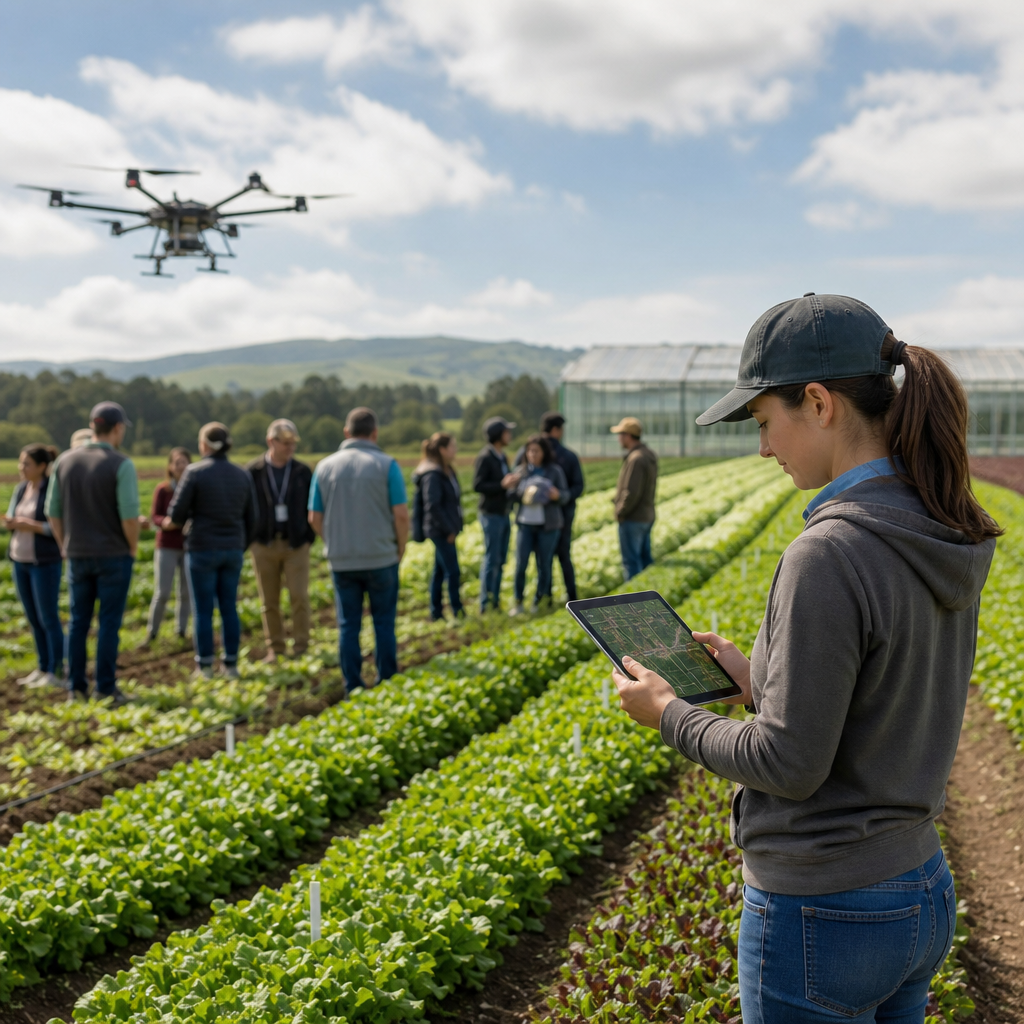
Real projects reveal why these clusters belong together. Consider a smart agriculture prototype using soil moisture sensors, solar power, a LoRaWAN gateway, and a cloud dashboard. Hardware choices determine battery life. Firmware choices affect sensor accuracy and sleep cycles. Network choices influence coverage and data rate. Cloud design shapes alerts for irrigation. Security protects field devices from tampering. Product thinking decides whether the system is optimizing water usage, labor efficiency, or crop yield. A learner who has touched each layer is far more valuable than someone who has only built the dashboard.
How to Evaluate Silicon Valley IoT Training Providers
Not every program advertised as IoT training is worth your time. Start with the syllabus. Strong courses specify boards, sensors, protocols, cloud services, and lab outcomes. Weak courses rely on vague promises such as innovation, disruption, or future readiness. Next, check who teaches it. Instructors should have shipped connected products, operated devices at scale, or secured embedded systems in production. That experience shows up in the details they emphasize, such as calibration drift, provisioning bottlenecks, RF interference, or firmware rollback strategies.
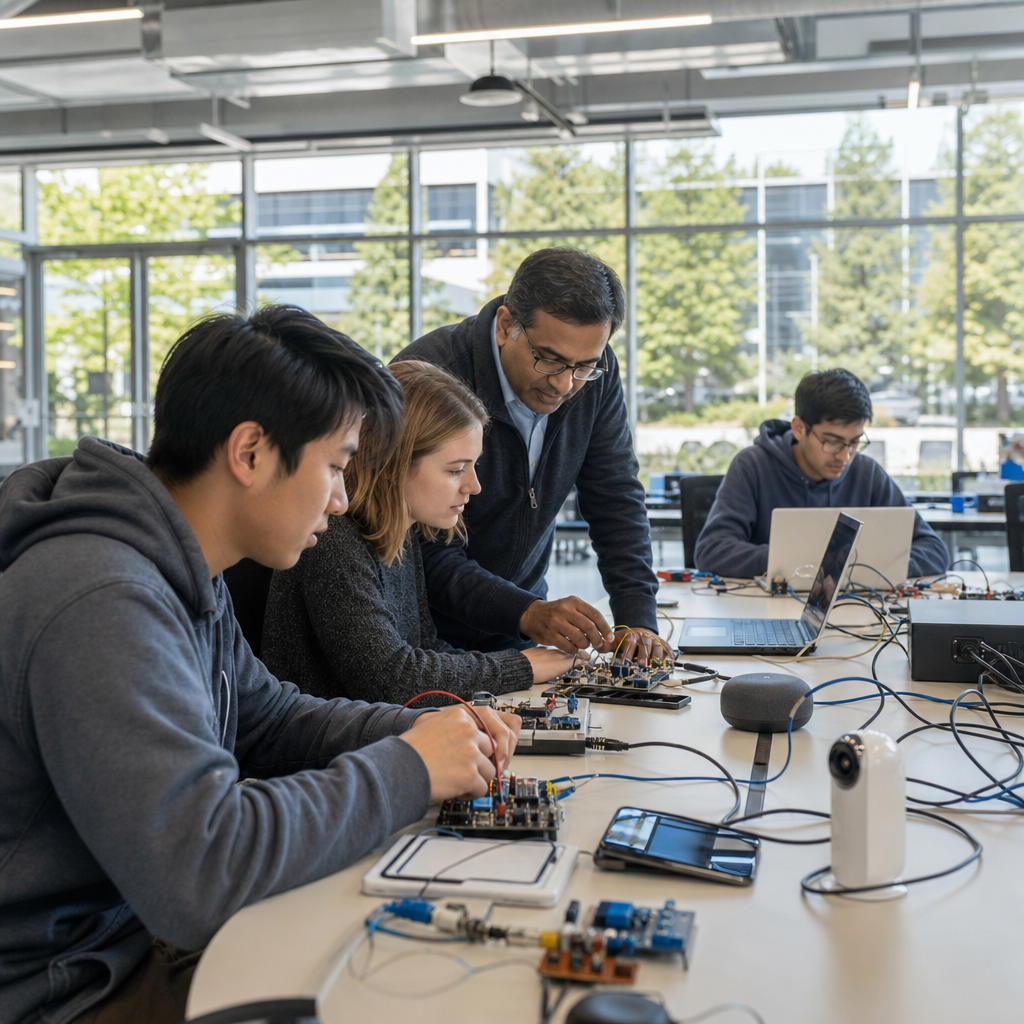
Look closely at hands-on requirements. A worthwhile workshop should involve wiring, coding, testing, logging, and debugging, not just slide decks. Ask whether students leave with a working prototype, architecture diagram, repository, or deployment checklist. Also examine tool relevance. Platforms like PlatformIO, Git, Docker, Node-RED, Grafana, Wireshark, FreeRTOS, and cloud IoT services reflect the environments many teams actually use. Vendor-specific instruction can be valuable, but only if the course also teaches transferable concepts.
Finally, judge outcomes realistically. A weekend class will not make someone an IoT architect, but it can build a clear mental model and confidence with prototyping. A twelve-week certificate can support entry into junior roles if it includes substantial labs and portfolio work. The strongest providers also connect learners to meetups, incubators, university labs, and professional communities across Silicon Valley, where many opportunities arise through collaboration rather than formal applications alone.
Building an IoT Learning Path Beyond a Single Course
The smartest way to use this hub page is as a starting point, not an endpoint. Begin with your current strength. Software developers should add electronics and embedded fundamentals first. Electrical engineers often need cloud, APIs, and data pipelines. Product managers benefit from architecture, security, and implementation constraints so they can scope connected products realistically. After that, choose one end-to-end project and document it carefully. Build a sensor node, secure it with certificates, push telemetry to the cloud, create alerts, and measure performance. Employers trust demonstrated systems more than generic course lists.
Silicon Valley is especially useful because learning resources stack well. You can take a university extension class for fundamentals, join a weekend hardware workshop for prototyping speed, attend a security seminar focused on device hardening, and then present your project at a local meetup. That layered approach expands knowledge and skills faster than isolated study because each setting reinforces different competencies. If you are planning your next move in IoT, use this hub to map the subtopics you need, compare formats carefully, and choose training that results in something built, tested, and explained clearly.
Frequently Asked Questions
What does IoT actually mean in the context of Silicon Valley courses and workshops?
In Silicon Valley education, the Internet of Things refers to much more than a simple network of smart gadgets. It describes complete systems made up of physical devices, embedded processors, sensors, connectivity layers, cloud services, software dashboards, and automated actions. In practical training environments, students learn how data moves from a sensor or machine into a local controller, across wired or wireless networks, into cloud infrastructure, and then back into applications that support monitoring, analytics, alerts, or control. That full-stack view is important because real-world IoT projects rarely stop at hardware assembly.
Courses and workshops in the Bay Area often emphasize how IoT operates in business and industrial settings, not just in hobbyist builds. That means students may explore smart manufacturing, medical monitoring, connected vehicles, environmental sensing, energy systems, logistics tracking, and consumer electronics. They are introduced to the interaction between microcontrollers, edge devices, communication protocols such as MQTT or Bluetooth Low Energy, cloud platforms, APIs, mobile apps, and data pipelines. As a result, the term IoT in these programs usually signals an interdisciplinary field that combines electronics, networking, software development, systems integration, and security.
What topics are usually covered in IoT courses and hands-on workshops in the Bay Area?
Most strong IoT programs in Silicon Valley are structured around both foundational concepts and practical implementation. On the hardware side, students commonly work with embedded systems, microcontrollers, sensor integration, power management, prototyping tools, and device debugging. They may learn how to select components, read sensor data, manage firmware, and design devices that can operate reliably in real environments. These lessons are often paired with lab exercises so participants can see how hardware decisions affect system performance, battery life, and scalability.
On the software and systems side, the curriculum usually expands into networking, cloud connectivity, data ingestion, dashboards, automation logic, and application development. Many workshops also include topics such as edge computing, device management, over-the-air updates, interoperability, and analytics. A major area of focus is cybersecurity, because connected devices can create serious vulnerabilities if they are not designed carefully. Students may study authentication, encryption, secure boot, firmware integrity, network hardening, and privacy considerations. In more advanced offerings, instructors may also cover machine learning at the edge, digital twins, industrial IoT architectures, and methods for deploying connected solutions at enterprise scale.
Who should take an IoT course or workshop in Silicon Valley?
IoT education can be valuable for a wide range of learners because the field sits at the intersection of several disciplines. Engineers often enroll to strengthen their understanding of embedded hardware, cloud integration, or device communications. Software developers may join to learn how physical devices interact with backend systems and how sensor data becomes usable in applications. Product managers, startup founders, and technical leaders also benefit because they need to understand how connected products are architected, what constraints shape development, and where security, compliance, and maintenance costs appear over time.
These programs are also useful for career changers and students who want exposure to a growing technology area with practical applications across many industries. Silicon Valley workshops in particular tend to attract people interested in innovation, prototyping, and rapid product development. Beginners can benefit from introductory courses that explain the essential building blocks of IoT systems, while experienced professionals may prefer advanced training focused on architecture, industrial deployments, cybersecurity, or cloud platforms. The best choice depends on whether a learner wants broad fluency, hands-on building skills, or specialized expertise tied to a specific role.
Why is Silicon Valley a strong place to study IoT compared with other regions?
Silicon Valley offers a unique learning environment because it brings together hardware startups, semiconductor companies, cloud providers, software firms, research institutions, investors, and experienced product teams in one ecosystem. That concentration matters in IoT, where successful solutions depend on coordination across many technical domains. Learners in the region are often exposed to instructors and mentors with direct experience building connected products for manufacturing, healthcare, mobility, consumer technology, and enterprise systems. This can make courses especially practical and current, rather than purely theoretical.
Another advantage is the Bay Area’s emphasis on experimentation and commercialization. Workshops often reflect the realities of product development, including prototyping, testing, cybersecurity reviews, cloud deployment, data strategy, and scaling devices from pilot to production. In many cases, students also gain access to maker spaces, startup communities, networking events, and industry meetups that can extend learning beyond the classroom. For people who want to understand not only how IoT works technically but also how connected products are designed, funded, launched, and managed in the real world, Silicon Valley remains one of the most relevant places to study the field.
How can someone choose the right IoT course or workshop for their goals?
The best approach is to start by identifying your primary objective. If you are new to the subject, look for a course that introduces the end-to-end IoT stack clearly, including devices, networking, cloud connectivity, security, and data flows. If your goal is to build prototypes, prioritize hands-on workshops with lab time, sensor kits, microcontroller programming, and project-based instruction. If you are already technical and want to move into production-grade systems, focus on programs that cover architecture, scalability, device lifecycle management, cybersecurity, and integration with cloud platforms and analytics tools.
It is also wise to evaluate the instructor’s background, the balance between theory and implementation, and the technologies used in the curriculum. Strong programs usually make their learning outcomes clear and explain whether they are geared toward beginners, developers, engineers, or product professionals. Reviewing prerequisites can save time and frustration, especially if the course expects prior experience in Python, C/C++, electronics, or cloud services. Finally, consider whether the program includes portfolio-worthy projects, collaboration opportunities, or exposure to real industry use cases. In IoT, practical experience is especially valuable, so a workshop that helps you design, build, secure, and explain a connected system can provide lasting benefits well beyond the class itself.