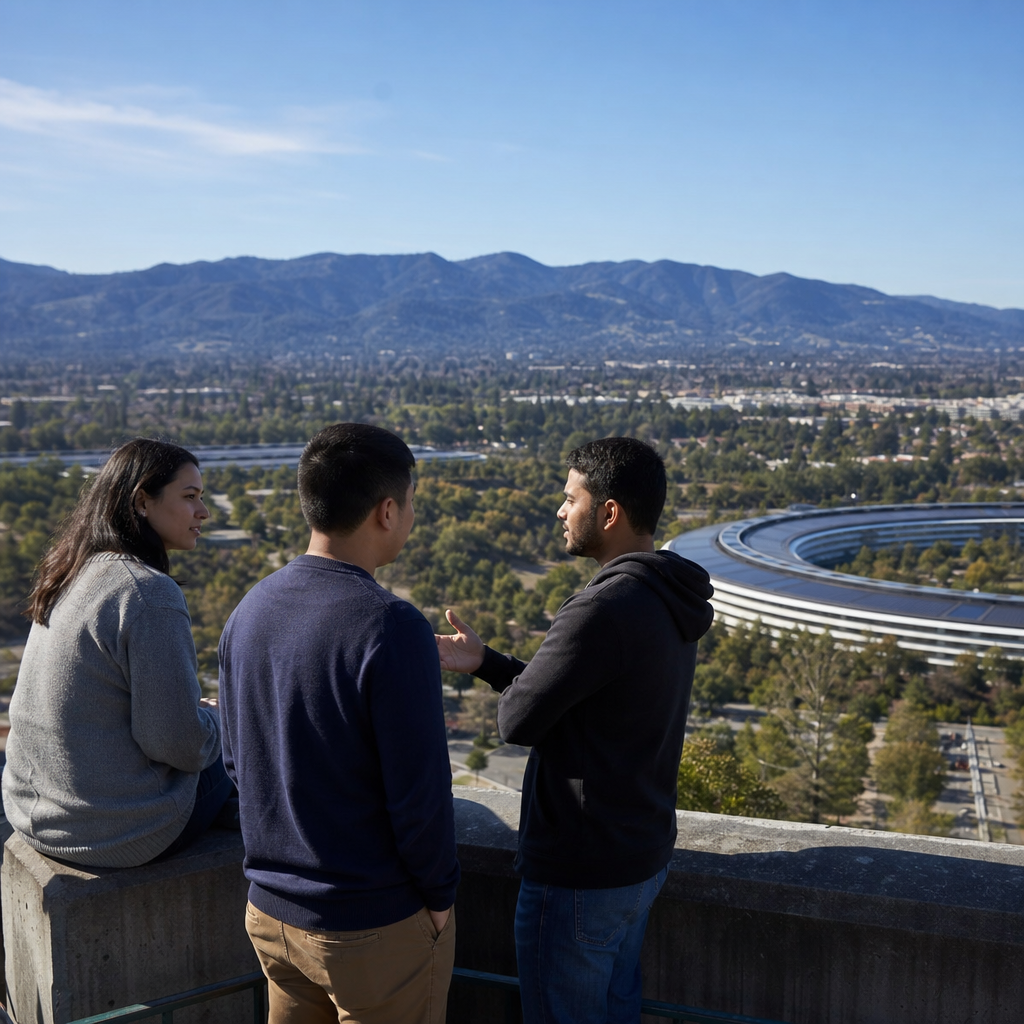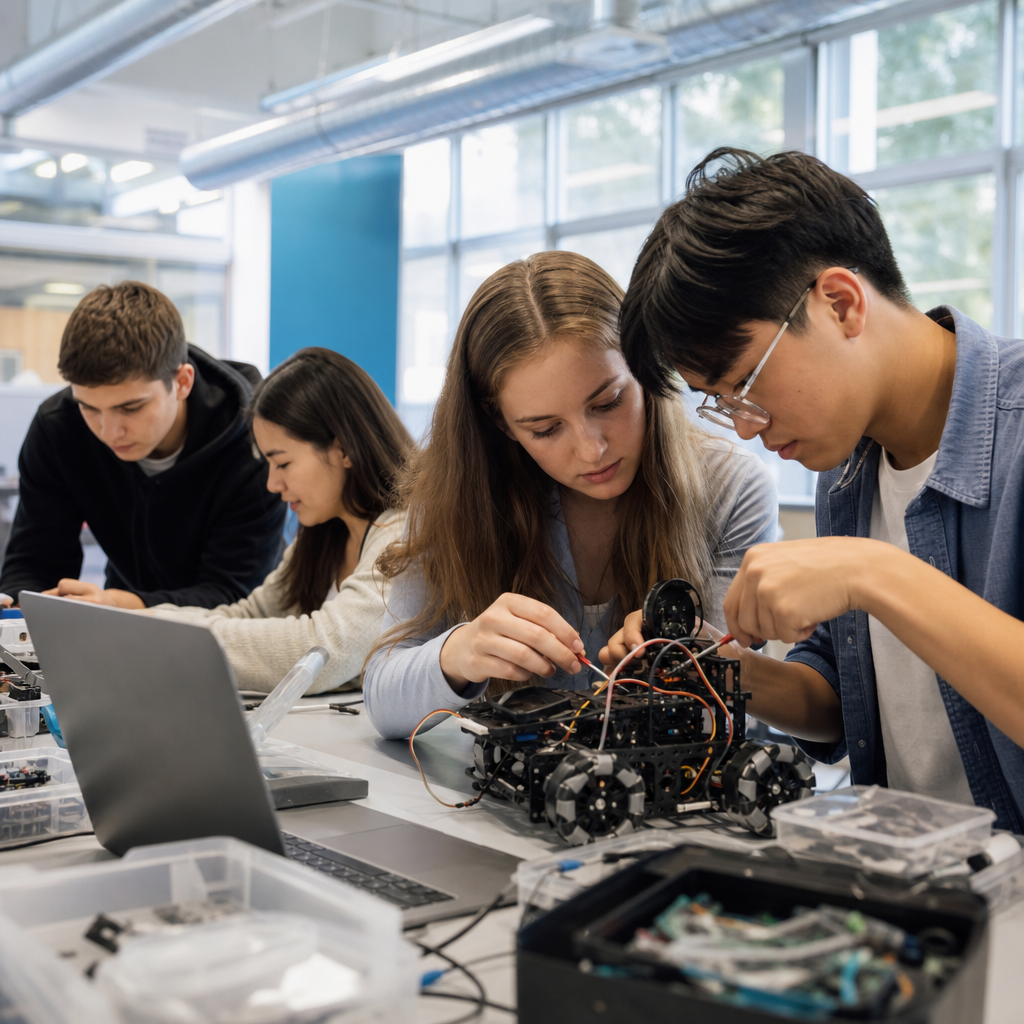
STEM education in Silicon Valley shapes future innovators by connecting classroom learning to the region’s defining industries: software, semiconductors, biotechnology, robotics, and clean energy. STEM stands for science, technology, engineering, and mathematics, but in practice it also includes design thinking, data literacy, entrepreneurship, and collaborative problem solving. As someone who has worked with curriculum teams, after-school programs, and industry mentors in the Bay Area, I have seen that strong STEM pathways do more than raise test scores. They help students learn how to ask better questions, test ideas, recover from failure, and build useful solutions. That matters in Silicon Valley because the local economy rewards applied knowledge, rapid iteration, and interdisciplinary thinking.
This topic also matters because Silicon Valley’s influence extends far beyond Northern California. The tools, platforms, and companies built here shape global communication, healthcare, transportation, and finance. Schools and community programs therefore carry a dual responsibility: preparing local students for opportunity while developing informed citizens who can understand technology’s social impact. Expanding knowledge and skills in this environment means supporting early math foundations, coding fluency, lab science, engineering habits of mind, digital citizenship, and exposure to emerging fields such as artificial intelligence and cybersecurity. For families, educators, and school leaders, this hub offers a practical view of what effective STEM education in Silicon Valley looks like, where it succeeds, and how to strengthen it.
What Makes STEM Education in Silicon Valley Distinct
STEM education in Silicon Valley stands apart because proximity to industry changes what is possible. In many districts, students do not learn about engineering only from textbooks. They visit maker spaces, hear from product managers and chip designers, and use the same platforms professionals use, including Python notebooks, CAD tools, Arduino kits, cloud collaboration suites, and data visualization software. The region’s ecosystem includes public school districts, charter networks, community colleges, universities such as Stanford and San Jose State, libraries, nonprofit programs, and corporate outreach initiatives. When these pieces align, students can move from elementary robotics to high school AP Computer Science Principles, dual-enrollment engineering courses, internships, and startup incubators.
Another defining feature is the emphasis on real-world relevance. A middle school unit on environmental sensors can connect to drought monitoring. A biotechnology lesson can tie into genomics companies operating nearby. A computer science class can discuss algorithmic bias using examples from social media moderation or hiring software. This relevance increases engagement, especially for students who might not initially identify as “tech kids.” It also reflects a core truth I have seen repeatedly: students persist longer when they understand why a skill matters beyond the classroom. Silicon Valley’s strongest programs translate abstract concepts into visible, local applications.
Core Knowledge and Skills Students Need to Build
Expanding knowledge and skills in STEM requires more than adding coding to a schedule. The strongest programs develop a layered foundation. Students need conceptual math fluency, including number sense, algebraic reasoning, statistics, and modeling. They need scientific literacy grounded in observation, experimentation, evidence evaluation, and clear communication of results. They need engineering skills such as prototyping, systems thinking, constraint analysis, and iterative testing. They also need technology fluency: not just using apps, but understanding logic, data structures, automation, networks, and security basics.
Just as important are durable professional skills. In project-based classrooms, students learn to document decisions, present findings, divide responsibilities, and give peer feedback. These habits mirror workplace practice. I have watched teams of ninth graders build simple assistive devices for classmates with mobility needs, and the technical outcome mattered less than the process: interviewing users, defining requirements, revising designs, and explaining tradeoffs. Those are the same steps product teams follow. Communication, resilience, and ethical judgment are not side benefits. In effective STEM education, they are part of the curriculum because innovation fails without them.
| Skill Area | What Students Learn | Silicon Valley Application |
|---|---|---|
| Mathematics | Algebra, statistics, modeling, quantitative reasoning | Data analysis, finance tech, machine learning foundations |
| Science | Experiment design, evidence evaluation, lab methods | Biotech research, environmental monitoring, hardware testing |
| Engineering | Prototyping, constraints, iteration, systems thinking | Product development, robotics, semiconductor design |
| Technology | Programming, data handling, networks, cybersecurity basics | Software development, cloud computing, security operations |
| Professional Skills | Communication, teamwork, documentation, ethics | Cross-functional collaboration in startups and enterprise teams |
How Schools, Enrichment Programs, and Industry Work Together
No single institution can deliver comprehensive STEM preparation alone. Public schools provide reach and structure, but enrichment programs often supply specialized equipment, lower student-to-instructor ratios, and faster curriculum updates. Libraries host coding clubs and fabrication labs. Community colleges create affordable technical pathways in fields such as network administration, advanced manufacturing, and biotechnology lab support. Universities contribute research exposure and teacher training. Industry partners add mentors, site visits, capstone sponsors, and sometimes funding for devices or lab materials. In Silicon Valley, the most effective model is partnership, not isolation.
Examples across the region show how this works. Students might begin with elementary school Lego robotics, join a nonprofit middle school coding academy, take high school engineering through Project Lead The Way, and then complete a summer internship with a local startup or hospital innovation unit. Some districts collaborate with companies on curriculum advisory boards so classroom projects reflect current tools and workflows. Others use programs supported by organizations such as FIRST, Code.org, Girls Who Code, or The Tech Interactive to broaden access. The lesson is clear: a hub approach helps families navigate options, and coordinated pathways reduce the risk that opportunity depends solely on parental networks.
Equity, Access, and the Opportunity Gap
Silicon Valley is wealthy, but STEM opportunity is not evenly distributed. Access gaps appear in early math preparation, broadband reliability, transportation, extracurricular affordability, and awareness of advanced coursework. Students from low-income families, English learner households, and groups historically underrepresented in engineering often face structural barriers long before college applications begin. I have seen schools with excellent teachers struggle because outdated devices, inconsistent home internet, or limited lab space make ambitious coursework harder to sustain. Talent is widespread; access is not.
Closing these gaps requires deliberate design. Schools need universal exposure in the early grades, not invitation-only enrichment that starts with students already ahead. Districts should monitor who enrolls in Algebra I, AP Computer Science, physics, engineering electives, and dual-enrollment courses, then intervene when participation patterns show exclusion. Transportation and fee waivers matter. So do culturally responsive examples that help students see STEM as relevant to family and community needs. Recruiting mentors who reflect student backgrounds improves belonging, and so does teacher preparation focused on inclusive participation structures. Equity in STEM education is not a slogan. It is a set of operational decisions that determine who gets to practice innovation.
Teaching Methods That Actually Build Innovators
The teaching methods that consistently produce strong outcomes in STEM education are well established. Project-based learning works when projects are rigorous, time-bounded, and anchored to explicit standards rather than treated as loosely supervised creativity. Inquiry-based science is effective when students collect evidence, test claims, and revise explanations instead of memorizing isolated facts. Computer science instruction improves when debugging is normalized as part of learning rather than framed as failure. Design challenges become meaningful when they include user needs, budget constraints, and measurable performance criteria.
Assessment should also reflect authentic skill building. Multiple-choice tests can measure some knowledge, but they do not fully capture whether a student can write functional code, analyze noisy data, or defend a prototype choice. Strong programs therefore combine quizzes with lab notebooks, project rubrics, presentations, and performance tasks. In my experience, students make the biggest leaps when teachers explicitly model expert practice: how to decompose a problem, document assumptions, version-control work, or evaluate source credibility. These methods prepare students not just to consume technology, but to create and critique it.
Preparing Students for Emerging Fields and Careers
Silicon Valley STEM education must prepare students for a labor market that changes quickly. Foundational knowledge remains essential, but schools should also introduce emerging fields in age-appropriate ways. Artificial intelligence education should begin with data, pattern recognition, and ethics before moving into model training concepts. Cybersecurity should cover password hygiene, phishing, network basics, encryption, and risk management. Biotechnology can include DNA, cell processes, bioinformatics, and medical device regulation. Clean technology education can connect physics, chemistry, and environmental science to batteries, solar systems, grid management, and sustainable design.
Career preparation also means helping students understand pathways, not just job titles. Not every future innovator will earn a four-year engineering degree immediately. Some will start through community college certificates, apprenticeships, military technical training, or stackable credentials in IT support, networking, or advanced manufacturing. Others will combine liberal arts with technical specialization in product design, policy, or science communication. Schools should explain these routes clearly, using labor market data from sources such as the U.S. Bureau of Labor Statistics and local workforce boards. When students can map skills to roles, motivation rises because the future becomes concrete.
Building a Stronger STEM Hub for Families and Educators
For an educational resources hub, the central goal is clarity. Families need one place that explains STEM education in Silicon Valley, defines the major disciplines, and links them to specific next steps: course planning, enrichment options, competitions, summer programs, financial aid, internships, and career exploration. Educators need practical guidance on curriculum design, assessment, inclusion, and partnership models. School leaders need evidence-based frameworks for scheduling, staffing, device planning, and program evaluation. A strong hub does not duplicate every subtopic. It organizes them so readers can move from broad understanding to targeted action without getting lost.
The key takeaway is simple: STEM education in Silicon Valley succeeds when it expands both knowledge and opportunity. Students need strong foundations in science, technology, engineering, and mathematics; they also need mentors, authentic projects, and equitable access to advanced learning. Communities that connect schools, enrichment providers, colleges, and employers create the deepest talent pipelines and the most inclusive innovation culture. If you are building or improving a STEM pathway, start by mapping your current resources, identifying access gaps, and creating clear next steps for every learner. That is how future innovators are shaped.
Frequently Asked Questions
1. What makes STEM education in Silicon Valley different from STEM programs in other regions?
STEM education in Silicon Valley stands out because it is closely connected to one of the most innovation-driven economies in the world. Students are not just learning science, technology, engineering, and mathematics as separate academic subjects; they are often exposed to how these disciplines work together in real industries such as software development, semiconductor design, biotechnology, robotics, and clean energy. That regional context matters. It means classroom lessons can be linked to visible, local examples of innovation, from startup culture and research labs to advanced manufacturing and medical technology.
Another defining difference is the emphasis on applied learning. In strong Silicon Valley STEM programs, students are frequently asked to solve open-ended problems, build prototypes, analyze data, test ideas, and present their thinking. This approach mirrors how professionals work in technical fields. Rather than memorizing facts alone, students learn how to ask better questions, iterate on solutions, collaborate across disciplines, and adapt when a design or experiment does not go as planned.
Silicon Valley STEM education also tends to include skills that extend beyond the traditional acronym. Design thinking, entrepreneurship, communication, ethical technology use, and data literacy are often woven into projects and coursework. Students may learn coding alongside product design, or engineering principles alongside environmental impact analysis. This broader interpretation helps prepare them not only for college and careers, but also for a future in which innovation depends on both technical expertise and human-centered problem solving.
2. Why is STEM education so important for preparing future innovators?
STEM education is important because it helps students develop the habits of mind that innovation requires. Future innovators need more than technical knowledge. They need curiosity, persistence, analytical thinking, creativity, and the ability to work with others to solve meaningful problems. High-quality STEM learning builds these skills by encouraging students to investigate how systems work, test hypotheses, interpret evidence, and improve solutions over time.
In Silicon Valley especially, innovation happens at the intersection of disciplines. A robotics project might involve mechanical engineering, coding, mathematics, user experience design, and teamwork. A biotechnology challenge may draw on biology, chemistry, data analysis, and ethics. STEM education prepares students for this kind of cross-functional thinking by showing them that real-world problems rarely fit neatly into one subject area. When students learn to connect concepts across fields, they become more adaptable and better equipped to contribute in fast-changing industries.
Equally important, STEM education gives students a sense of agency. When young people build an app, design a sensor, run an experiment, or create a clean energy model, they begin to see themselves as capable problem solvers. That mindset is powerful. It helps students move from simply consuming technology to understanding, questioning, and shaping it. In a region known for transforming ideas into products and services that affect millions of lives, that confidence and capability are foundational to developing the next generation of innovators.
3. How do Silicon Valley schools and programs connect STEM learning to real-world careers?
One of the biggest strengths of STEM education in Silicon Valley is the direct link between learning and career pathways. Schools, after-school programs, nonprofits, community colleges, universities, and industry partners often work together to show students how classroom concepts translate into professional roles. For example, a lesson in coding may connect to software engineering, cybersecurity, or artificial intelligence. A unit on energy systems may lead into conversations about battery technology, solar infrastructure, or sustainability engineering.
These connections are often made through project-based learning, guest speakers, internships, mentorships, career exploration events, and hands-on challenges sponsored by local organizations. Students might hear from engineers, data scientists, biomedical researchers, or startup founders who can explain what they do day to day and what skills matter most. These experiences make STEM careers feel more tangible and accessible, especially for students who may not already have personal networks in technical fields.
Real-world exposure also helps students understand that innovation ecosystems include many roles beyond the most visible ones. In addition to programmers and engineers, there are technicians, lab specialists, product managers, researchers, designers, operations teams, and entrepreneurs. Effective Silicon Valley STEM programs help students see this broader landscape so they can identify pathways that align with their interests and strengths. That practical career relevance is one reason STEM education can be so motivating: students understand not only what they are learning, but why it matters and where it can lead.
4. What skills do students gain from STEM education besides math and science knowledge?
Although math and science foundations are essential, the most effective STEM education develops a much wider skill set. Students learn critical thinking by breaking down complex problems and evaluating possible solutions. They build creativity by designing products, testing new ideas, and finding alternative approaches when the first attempt fails. They strengthen communication by explaining their reasoning, documenting results, and presenting projects to classmates, teachers, mentors, or judges.
Collaboration is another major outcome. Many STEM challenges are team-based, reflecting the reality of modern workplaces where people with different expertise must work together. Students learn how to divide responsibilities, listen to other perspectives, give and receive feedback, and contribute to a shared goal. These interpersonal skills are extremely valuable in Silicon Valley industries, where innovation often depends on collaboration across engineering, design, business, and research functions.
Students also gain resilience and comfort with iteration. In STEM, failure is often part of the learning process rather than a sign to stop. A robot may not move as expected, a code program may produce errors, or an experiment may generate unexpected data. Learning how to troubleshoot, revise, and try again teaches persistence and adaptability. On top of that, many programs build data literacy, ethical reasoning, and entrepreneurial thinking, helping students understand not just how to create technology, but how to evaluate its impact and bring ideas into the world responsibly.
5. How can parents and communities support stronger STEM education in Silicon Valley?
Parents and communities play a major role in making STEM education more meaningful, equitable, and sustained. Support begins with encouragement. When adults show interest in how children solve problems, build things, ask questions, or explore technology, students are more likely to develop confidence and curiosity. Parents do not need to be engineers or scientists to help. Simply asking a child to explain a project, celebrating persistence, or connecting learning to everyday life can reinforce STEM habits of mind.
Community support also matters because access is not always equal. Silicon Valley is known for innovation, but not every student has the same access to high-quality labs, experienced teachers, enrichment programs, devices, transportation, or professional networks. Schools, libraries, nonprofits, local companies, and civic organizations can help close those gaps by funding materials, expanding after-school opportunities, offering mentorship, and creating inclusive programs that reach students from all backgrounds. Equity should be central to any conversation about STEM education in the region, because the future of innovation is strongest when more students can participate fully.
Businesses and industry professionals can contribute by volunteering, advising on curriculum relevance, hosting field experiences, and helping students understand emerging fields. Families and community leaders can advocate for sustained investment in teacher training, project-based learning, career and technical education, and partnerships that connect students to local industries. When schools and communities work together, STEM education becomes more than an academic priority; it becomes a shared effort to prepare young people to think boldly, solve real problems, and shape the future of Silicon Valley and beyond.