Tech-driven agriculture is reshaping how food is grown, measured, and marketed, and nowhere is that shift more visible than in Silicon Valley. In this region, agriculture no longer means only tractors and irrigation lines; it also means sensors, robotics, satellite imagery, controlled environment systems, farm management software, and data science. Courses and workshops in Silicon Valley now teach growers, founders, students, and career changers how to apply these tools in practical settings. As the educational hub for expanding knowledge and skills, this guide explains what these programs cover, who they serve, and how to choose the right learning path.
When people search for tech-driven agriculture courses, they usually want direct answers: what can I learn, where can I study, and will the training lead to real opportunities? From my experience working around agtech founders, extension educators, and greenhouse operators in Northern California, the strongest programs blend agronomy with engineering and business. They teach core concepts such as precision agriculture, hydroponics, automation, crop modeling, and sustainability metrics, then connect those ideas to field trials, prototype development, and compliance. That combination matters because agriculture is a biological system first. Technology only creates value when it improves yield, labor efficiency, water use, traceability, or resilience.
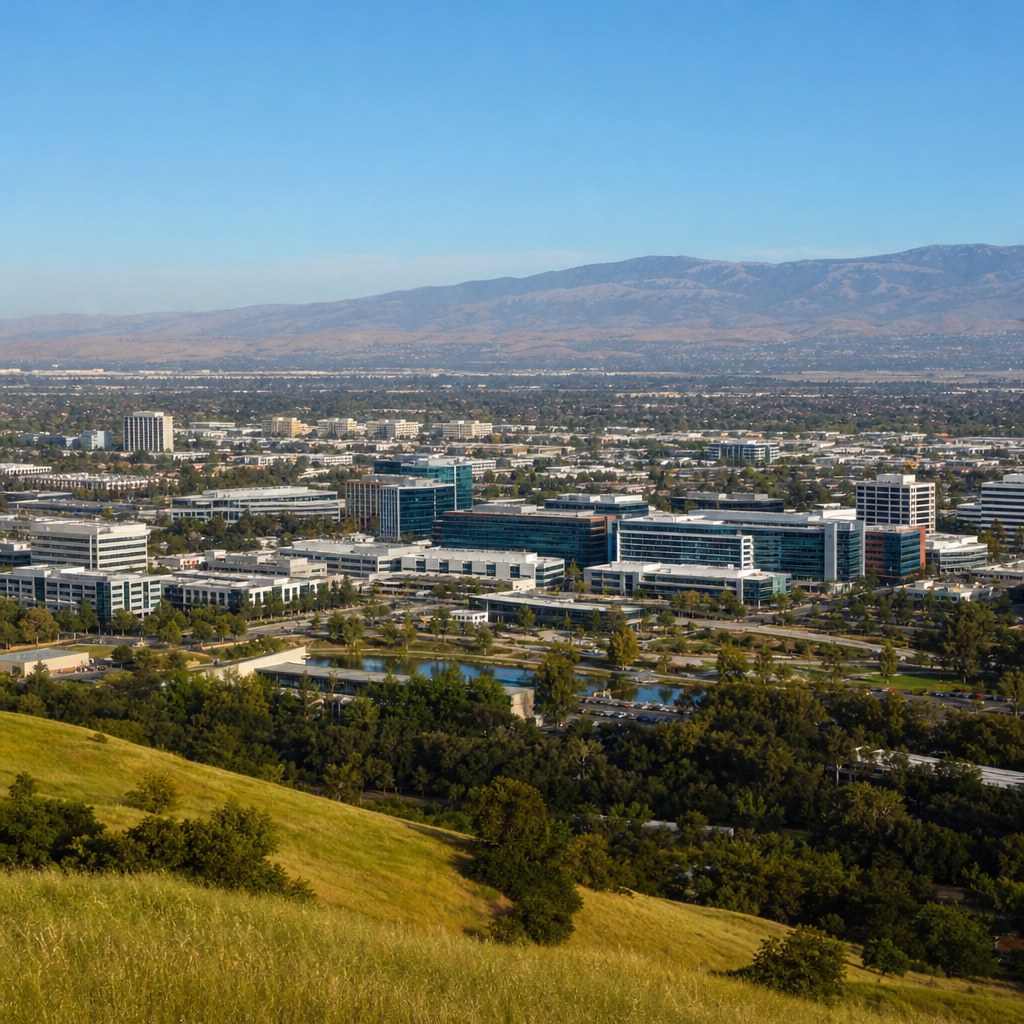
Silicon Valley matters in this conversation because it sits near research universities, venture capital, semiconductor expertise, and specialty crop regions. Learners can move quickly from classroom theory to applied training through incubators, maker spaces, university extension programs, and startup workshops. This article serves as a hub page for the broader Educational Resources cluster, helping readers understand the main categories of learning available and identify which related topics to explore next.
What Tech-Driven Agriculture Education Includes
Tech-driven agriculture education covers the intersection of plant science, environmental control, digital tools, and operations. A strong course does not stop at introducing drones or AI. It explains crop physiology, nutrient management, irrigation scheduling, integrated pest management, greenhouse climate control, and post-harvest handling, then shows how software and hardware improve decisions. For example, a workshop on precision irrigation should teach evapotranspiration, soil moisture readings, variable rate application, and sensor calibration, not just how to open a dashboard.
In Silicon Valley, programs often focus on six recurring themes: precision agriculture, controlled environment agriculture, agricultural robotics, farm data analytics, supply chain traceability, and sustainability reporting. Precision agriculture addresses spatial variability in fields using GPS, GIS, remote sensing, and yield mapping. Controlled environment agriculture includes hydroponics, vertical farming, fertigation, LED lighting, and HVAC optimization. Robotics training may involve machine vision, autonomous navigation, end-effectors for harvest, and safety protocols. Data analytics courses usually cover Python, SQL, dashboards, and basic machine learning for forecasting disease pressure, irrigation needs, or labor planning.
The best instruction makes these themes concrete. A learner might compare NDVI imagery with in-field scouting data, build a nutrient dosing plan for lettuce, or evaluate whether a machine vision system can distinguish ripe strawberries under inconsistent lighting. These exercises matter because agriculture generates noisy data and variable outcomes. Learning how to validate assumptions is more useful than memorizing vendor claims.
Where to Find Courses and Workshops in Silicon Valley
Silicon Valley offers several entry points for agtech education. Universities remain foundational. Stanford contributes through engineering, sustainability, design, and entrepreneurship programs that support climate and food system innovation, even when a class is not labeled agriculture. University of California networks, especially UC Agriculture and Natural Resources and UC Cooperative Extension, provide research-based instruction on irrigation, pest management, soils, and farm business practices. Nearby community colleges increasingly offer greenhouse management, environmental horticulture, GIS, and automation coursework that aligns with agtech jobs.
Private accelerators and incubators also play a major role. In practice, many workshops are short-format intensives led by startup operators, agronomists, hardware engineers, or controlled environment specialists. These sessions may focus on prototyping sensor systems, building financial models for indoor farms, preparing field pilots, or understanding food safety standards such as GAPs, FSMA requirements, and traceability expectations. Because Silicon Valley is startup-heavy, learners often get unusually direct exposure to commercialization challenges, including customer discovery, unit economics, and regulatory constraints.
Corporate training is another pathway. Companies that build irrigation controllers, greenhouse software, imaging systems, or autonomous equipment regularly offer certification programs and customer workshops. These can be valuable when paired with independent agronomic education. Vendor training alone can be too narrow, but it becomes powerful when a learner already understands crop needs and operational tradeoffs.
Who Benefits Most From This Training
These educational resources serve more than aspiring founders. Growers benefit when they need to modernize irrigation, labor tracking, climate control, or food safety processes. Engineers benefit when they want domain knowledge before building products for farms. Students in biology, mechanical engineering, computer science, or environmental studies use workshops to test whether agtech is the right career path. Investors and policy professionals also attend short courses to understand what is technically feasible and what is simply good marketing.
Career changers are a particularly important audience. I have seen software professionals assume agriculture is just another optimization problem, then quickly realize that weather, disease, and plant variability punish oversimplified models. Good courses shorten that learning curve. They teach enough plant and operations knowledge to help newcomers ask better questions, work respectfully with growers, and avoid expensive design mistakes.
For established farm operators, the benefit is usually measured in outcomes rather than credentials. A two-day irrigation workshop that helps a grower reduce overwatering, improve uniformity, and document water use can deliver more practical value than a broad survey course. For startup teams, the opposite may be true: a broader program that covers agronomy, unit economics, and validation methods can prevent months of building a tool that no farm will adopt.
Core Topics the Best Programs Cover
The strongest tech-driven agriculture courses are interdisciplinary by design. They usually include crop science fundamentals, because nutrient uptake, root-zone oxygen, vapor pressure deficit, and disease pressure determine whether technology works. They include environmental monitoring, because sensor placement, calibration drift, and data frequency affect decision quality. They include economics, because a system that improves yield by 3 percent may still fail if labor, energy, or maintenance costs erase the gain.
| Topic | What Learners Study | Practical Outcome |
|---|---|---|
| Precision agriculture | GIS, GPS guidance, remote sensing, variable rate application | Better input targeting and field-level decision making |
| Controlled environment agriculture | Hydroponics, fertigation, lighting, HVAC, crop steering | Higher consistency in greenhouse and indoor production |
| Agricultural robotics | Machine vision, autonomy, end-effectors, safety systems | Improved labor efficiency for repetitive tasks |
| Farm data analytics | Dashboards, SQL, Python, forecasting, data cleaning | More reliable operational and crop insights |
| Compliance and traceability | FSMA, recordkeeping, lot tracking, audit readiness | Stronger food safety and supply chain transparency |
Good programs also address interoperability. Farm operations often use disconnected tools for irrigation, labor, climate, inventory, and accounting. Learners need to understand APIs, data schemas, and system integration basics, because operational value depends on moving data cleanly between platforms. This is one reason workshops that include case studies from actual farms tend to outperform abstract lectures.
Another sign of quality is attention to measurement. Serious instructors discuss key performance indicators such as water-use efficiency, kilograms per square meter, labor minutes per task, defect rate, energy intensity, and forecast accuracy. Without these metrics, learners cannot evaluate whether a technology deployment succeeded.
How to Choose the Right Learning Path
The right course depends on your starting point and your goal. If you are a grower, prioritize applied workshops with field demonstrations, extension-backed research, and implementation templates. Look for instructors who can explain maintenance burdens, calibration routines, and failure modes, not just benefits. If you are an engineer or product manager, choose programs that teach agronomy alongside user research. You need to understand workflow realities on farms, where internet connectivity, dust, moisture, and seasonal labor constraints shape adoption.
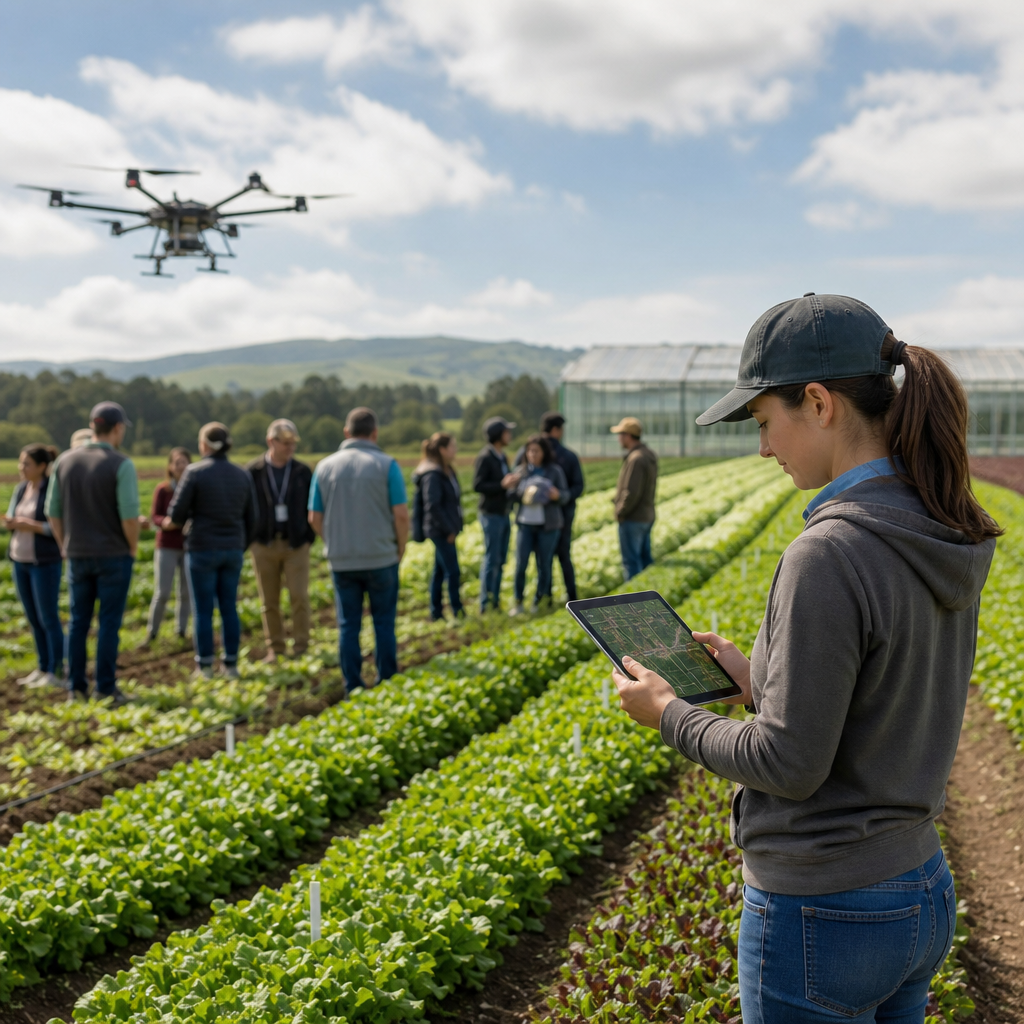
Check whether a program offers hands-on practice. In agtech, theory without operating context is weak preparation. The most useful formats include greenhouse labs, sensor setup exercises, drone data interpretation, fertigation calculations, or customer interviews with growers. Also examine who teaches the course. Strong faculty usually combine research credibility with operating experience. A workshop led jointly by an agronomist, a controls engineer, and a commercial grower is often far more valuable than a presentation from a single software vendor.
Finally, consider stackability. Because this hub supports expanding knowledge and skills, many readers will need more than one learning asset. A sensible path might begin with an introductory controlled environment agriculture course, continue with a workshop on data logging and climate control, then branch into specialized articles on hydroponics, precision irrigation, robotics, or agtech startup development. Build depth progressively, and connect every course back to a specific production, research, or business objective.
Why Silicon Valley Remains a Strong Agtech Learning Hub
Silicon Valley remains a strong location for agricultural education because it combines technical talent with proximity to real production systems across California. Learners can study sensors, cloud platforms, and robotics in one setting, then test those ideas against the realities of berries, leafy greens, vineyards, nurseries, and greenhouse crops nearby. That feedback loop is critical. Agriculture punishes solutions designed in isolation.
The main takeaway is simple: the best tech-driven agriculture courses and workshops teach biology, operations, and technology together. They answer practical questions, use real metrics, and prepare learners to make better decisions on farms and in agtech companies. If you want to expand knowledge and skills under this Educational Resources hub, start with a program that matches your role, then explore the related subtopics that deepen expertise in precision tools, controlled environments, analytics, and implementation. Choose one next course, commit to hands-on learning, and build from there.
Frequently Asked Questions
What topics are typically covered in tech-driven agriculture courses and workshops in Silicon Valley?
Tech-driven agriculture courses and workshops in Silicon Valley usually cover a broad mix of agricultural fundamentals and modern digital tools. Participants often learn how precision agriculture works through the use of sensors, GPS mapping, drones, satellite imagery, and Internet of Things devices that collect real-time information about soil moisture, temperature, nutrient levels, crop health, and irrigation performance. Many programs also introduce controlled environment agriculture, including greenhouse systems, hydroponics, vertical farming, climate automation, lighting strategies, and fertigation management. The goal is not just to show the technology, but to explain how it improves yields, efficiency, sustainability, and decision-making.
In addition, these courses commonly explore robotics, automation, and farm management software. Students may be exposed to autonomous equipment, machine vision for crop monitoring, robotic harvesting concepts, and data dashboards that help growers interpret operational trends. Silicon Valley programs often go a step further by connecting agriculture with software development, entrepreneurship, and analytics. That means learners may also study data science basics, AI applications in crop modeling, supply chain traceability, agtech product development, and go-to-market strategies for new agricultural solutions. This combination makes the training especially useful for growers who want practical tools, founders building agtech companies, and professionals entering a field where agriculture and technology increasingly operate together.
Who should consider enrolling in an agtech course or workshop in Silicon Valley?
These programs are designed for a surprisingly wide audience. Traditional growers and farm managers can benefit because the coursework helps them evaluate and adopt tools that improve labor efficiency, resource use, and crop visibility. Rather than relying only on experience and manual checks, they can learn how to use data to guide irrigation, pest management, climate control, and harvest timing. For people already working in agriculture, Silicon Valley workshops can serve as a bridge between field knowledge and the digital systems that are rapidly becoming part of modern operations.
They are also highly relevant for entrepreneurs, engineers, students, researchers, and career changers. Founders and startup teams often join these programs to better understand the real-world challenges facing farms, greenhouses, and food systems before building a product. Engineers and software professionals can use them to learn the agricultural context behind sensors, automation platforms, and analytics tools, which is essential if they want to create useful and adoptable solutions. Students interested in sustainability, food systems, environmental science, or robotics often use these workshops to explore career paths. Even people coming from outside agriculture may find them valuable because many courses are structured to teach both foundational concepts and applied skills, making the sector more accessible than many newcomers expect.
Do you need a farming or technical background to take part in these courses?
In many cases, no prior farming or advanced technical background is required, although the answer depends on the level and format of the program. Introductory workshops are often designed specifically for mixed audiences, which may include growers, students, startup founders, investors, and professionals from software or engineering. These programs usually begin with the basics, such as crop production systems, agricultural workflows, data collection methods, and the major pain points technology is trying to solve. That makes them approachable for learners who are curious about agtech but have never worked on a farm or in a greenhouse.
More advanced courses may assume some familiarity with agriculture, coding, data analysis, electronics, or business strategy, especially if they focus on building systems or interpreting complex datasets. However, one of the strengths of Silicon Valley training environments is that they often encourage interdisciplinary learning. A grower may not need to know how to write code to understand the value of sensor-based irrigation, and a software developer may not need years of farming experience to begin learning about crop monitoring platforms. The best courses make both sides understandable. They explain agricultural principles clearly while also showing how technical tools are implemented in practice. As a result, beginners can usually get started with confidence, while more experienced participants can still gain meaningful, specialized knowledge.
What practical skills can participants gain from a Silicon Valley agtech workshop?
Participants often leave with skills that can be applied immediately in real agricultural or agtech settings. On the operational side, they may learn how to install and interpret sensor systems, evaluate environmental data, use digital platforms to monitor crop performance, and understand how automation supports irrigation, nutrient delivery, and climate management. Workshops that include hands-on components may also show learners how to work with drones for field imaging, use mapping tools for precision decisions, or compare data streams from multiple devices to identify inefficiencies or plant stress. These are practical capabilities that can help growers and operators make faster, more informed decisions.
Beyond equipment and software, participants also gain strategic skills. They often learn how to assess whether a technology is worth adopting, how to compare vendors, how to estimate return on investment, and how to avoid implementing tools that create more complexity than value. In entrepreneurship-focused settings, learners may practice identifying market gaps, validating customer needs, and translating technical innovation into solutions that solve real agricultural problems. Communication is another important outcome. Because modern agriculture increasingly involves collaboration between growers, engineers, data analysts, and investors, successful professionals need to speak across disciplines. Silicon Valley workshops are especially strong in this area because they tend to connect technical knowledge with business thinking and real-world application.
How do Silicon Valley courses and workshops help prepare people for careers in modern agriculture?
Silicon Valley courses and workshops help prepare people for modern agriculture careers by focusing on the skills and technologies that are actively changing the industry. Employers and agricultural organizations increasingly need people who understand both production realities and digital systems. Training in precision agriculture, controlled environment systems, automation, analytics, and agtech product development can make candidates more competitive for roles in farm operations, greenhouse management, agronomy support, agtech sales, product management, research, sustainability, and food system innovation. Instead of learning agriculture as a purely traditional discipline, participants are exposed to the tools and workflows that many forward-looking organizations now consider essential.
Just as importantly, these programs often provide access to the broader Silicon Valley ecosystem. That can include startup networks, incubators, university labs, demonstration farms, mentors, and industry events. Those connections can be valuable for job seekers, founders, and anyone trying to understand where agriculture is headed next. A well-designed course does more than transfer knowledge; it helps participants see how technology, sustainability, operations, and business fit together in a rapidly evolving field. For someone entering or advancing within modern agriculture, that blend of practical insight, technical fluency, and professional exposure can be a major advantage.