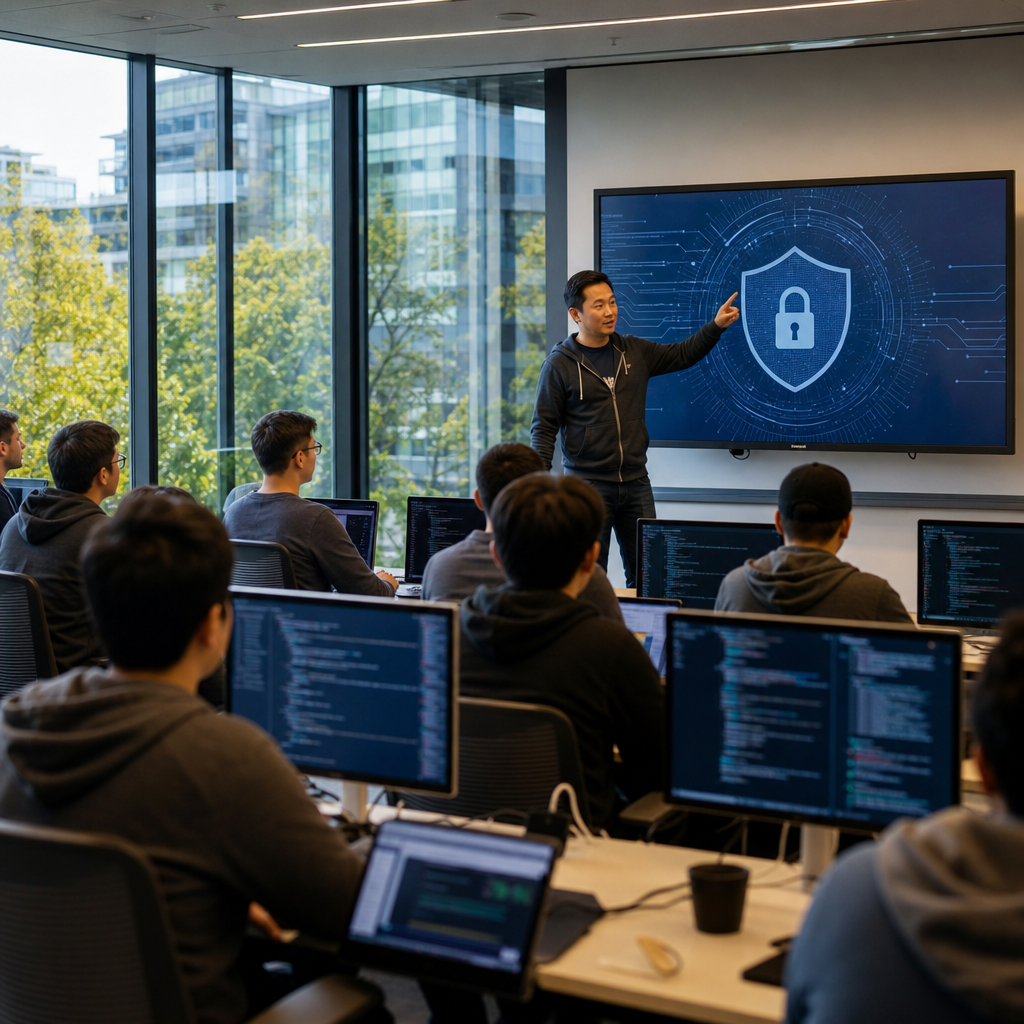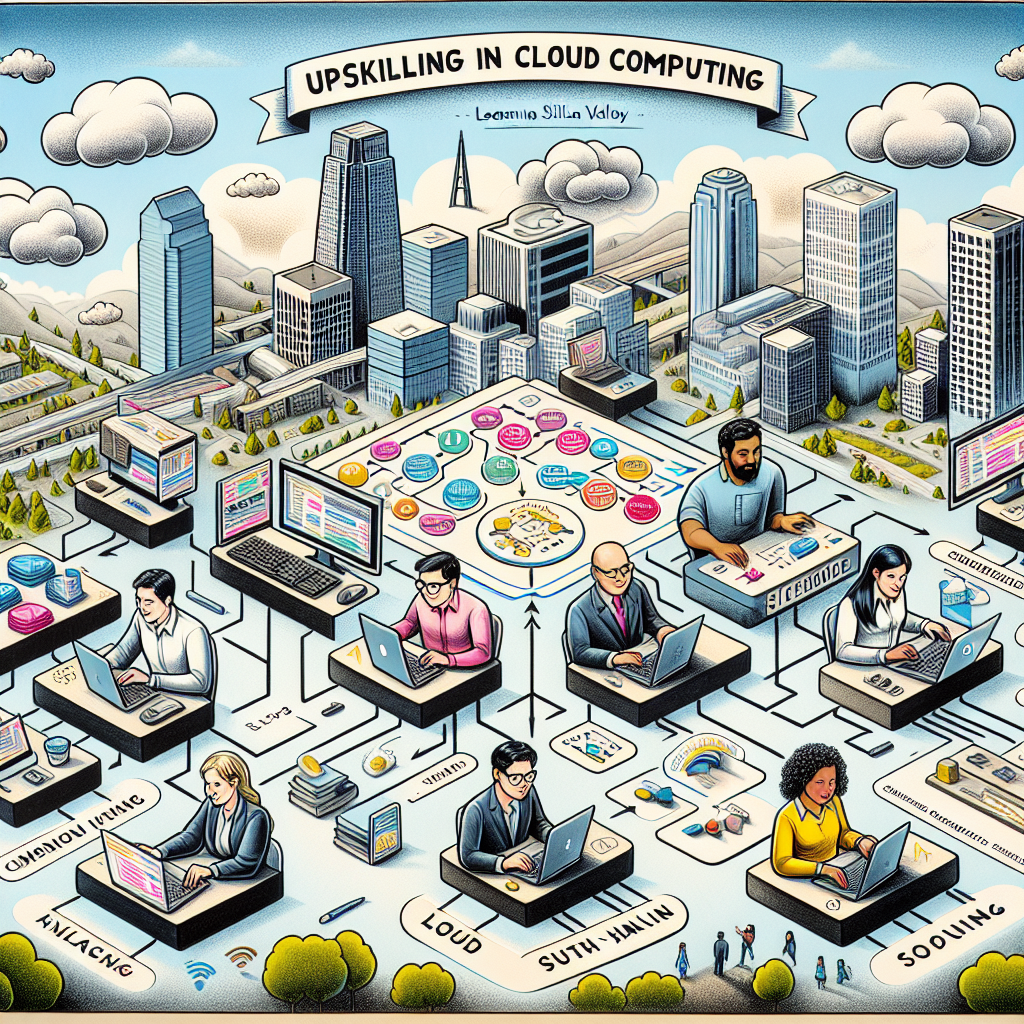
Staying ahead in Silicon Valley requires more than talent or a strong resume; it demands continuous learning and development as an operating habit. In the Valley, “continuous learning” means regularly building new knowledge, technical ability, business judgment, and interpersonal skill in response to fast market shifts. “Development” goes a step further by turning learning into measurable performance through practice, feedback, mentoring, and real work. I have seen teams lose their edge within a year when they relied on what made them successful in the past, and I have also seen early-career professionals accelerate quickly by treating learning as part of their weekly workflow rather than an occasional event.
This matters because Silicon Valley compresses change. New programming frameworks gain adoption in months, not years. Artificial intelligence tools alter job scopes rapidly. Product managers must understand analytics, experimentation, privacy, and go-to-market strategy at the same time. Founders are expected to grasp fundraising, hiring, compliance, and customer discovery. Even established specialties such as software engineering, design, cybersecurity, and sales now overlap more than before. As a result, expanding knowledge and skills is not optional for long-term career resilience. It is the practical foundation for employability, leadership readiness, and better decision-making.
For readers exploring educational resources, this hub article maps the full landscape of expanding knowledge and skills. It explains what to learn, how to learn it, where to find credible resources, and how to convert study into career momentum. It also clarifies a key point many people miss: in Silicon Valley, the most valuable learners are not those who collect the most courses, but those who connect learning to business outcomes. A machine learning engineer who can explain model tradeoffs to legal and product teams is more effective than one who only knows theory. A marketer who can use analytics, automation, and clear messaging will outperform someone who treats each as a separate discipline. Continuous learning works best when it is deliberate, cross-functional, and tied to real problems.
Why Continuous Learning Is a Career Requirement
Silicon Valley rewards adaptability because the region is built around innovation cycles. Cloud computing changed infrastructure roles, mobile reshaped product design, and generative AI is now redefining workflows across engineering, support, operations, and creative work. The World Economic Forum has repeatedly projected that employers expect a large share of workers to require reskilling within a few years, and that trend is especially visible in technology hubs. In practice, that means job descriptions evolve faster than university curricula. Employers increasingly hire for learning agility alongside current skill fit.
I have worked with managers who no longer ask only whether a candidate knows a specific stack. They ask how quickly the person can ramp up on adjacent tools, interpret data, communicate tradeoffs, and handle ambiguity. This shift matters for both individual contributors and leaders. Engineers need systems thinking. Designers need research fluency and experimentation literacy. Operations professionals need automation awareness. Executives need enough technical understanding to allocate resources wisely. Continuous learning closes the gap between today’s competence and tomorrow’s job requirements.
It also reduces career risk. Industry downturns, startup failures, and platform changes can quickly weaken narrow expertise. Broad, current capability creates options: internal mobility, consulting work, leadership opportunities, and smoother transitions into adjacent roles. People who continuously update their skills usually spot trends earlier, build stronger networks through learning communities, and contribute at a higher level during change.
What Skills Matter Most in Silicon Valley
The most useful approach is to think in layers. First are technical and domain skills: coding languages, cloud platforms, data analysis, cybersecurity controls, product analytics, UX research, financial modeling, or revenue operations tools. These remain essential because companies still hire to solve concrete problems. Second are durable professional skills: written communication, executive presentation, stakeholder management, negotiation, and project prioritization. Third are meta-skills that make ongoing growth possible: critical thinking, learning design, adaptability, and self-assessment.
For many professionals, the highest return comes from building T-shaped capability. That means deep expertise in one area paired with broad literacy across related functions. A backend engineer who understands DevOps, security basics, and product tradeoffs becomes easier to trust with larger systems. A recruiter who understands employer branding, compensation structure, and people analytics adds more strategic value. In Valley environments, specialization still matters, but isolation does not.
The strongest learning plans also reflect market demand. For example, data literacy is now useful far beyond analyst roles. Teams across sales, marketing, people operations, and customer success increasingly rely on dashboards, cohort metrics, and experiment results. AI fluency is another expanding layer. Not everyone needs to build models, but many professionals should understand prompt design, model limitations, privacy concerns, and where automation supports or harms quality. Cybersecurity awareness has followed a similar path; it is no longer the responsibility of one isolated department.
Best Ways to Expand Knowledge and Skills
Not all learning methods produce equal results. In my experience, professionals make the fastest progress when they combine structured study with hands-on application. Courses help create a foundation, but projects build retention. Reading sharpens perspective, but feedback corrects blind spots. Mentoring accelerates judgment because it transfers pattern recognition that would otherwise take years to earn. The goal is not to choose one method. The goal is to build a learning system.
Below is a practical comparison of common development paths used by professionals in Silicon Valley.
| Method | Best For | Example | Main Limitation |
|---|---|---|---|
| Online courses | Building fundamentals quickly | Coursera machine learning, LinkedIn Learning leadership tracks | Easy to finish without applying the material |
| Certification programs | Validating specific skills | AWS Certified Solutions Architect, Google Analytics certification | May signal knowledge without deep execution ability |
| Stretch projects | Real performance growth | Leading a product launch retrospective or automating a reporting workflow | Requires manager support and tolerance for mistakes |
| Mentorship | Decision-making and career direction | Biweekly sessions with a senior PM or engineering leader | Quality varies based on mentor commitment |
| Peer communities | Current trends and accountability | Meetups, Slack groups, operator circles, founder communities | Advice can be uneven without careful filtering |
The best educational resources usually blend these methods. A software engineer might take a distributed systems course, then improve a service at work, review the architecture with a staff engineer, and present lessons learned to the team. A marketer might complete GA4 training, rebuild campaign dashboards, and use the results to improve budget allocation. That sequence turns information into evidence of capability.
How to Build a Personal Learning Strategy
A strong learning strategy starts with a gap analysis. Compare your current capabilities with the requirements of your target role, not just your current one. Study job descriptions from respected firms, promotion rubrics, and competency matrices. Companies such as Google, Meta, Atlassian, and HubSpot have influenced how many organizations describe career ladders, and those public frameworks can help you spot missing skills. You can also review performance feedback, project postmortems, and recurring bottlenecks in your work. Those are often more useful than generic course catalogs.
After identifying gaps, narrow your focus. Most people try to learn too many things at once and make shallow progress. A better model is one primary skill, one supporting skill, and one reinforcement habit per quarter. For example, a customer success manager may choose SQL as the primary skill, executive communication as the supporting skill, and weekly dashboard review as the reinforcement habit. A founder may focus on financial modeling, hiring process design, and a recurring reading practice centered on market analysis.
Then define proof of progress. Completion certificates are weak evidence on their own. Better signals include a shipped project, a process improvement, a presentation to leadership, a portfolio artifact, a case study, or a measurable business outcome. When I advise professionals, I ask them to answer one question: what would convince a skeptical hiring manager that this skill is now real? If the answer is clear, the learning plan is usually strong.
Trusted Resources, Communities, and Habits That Compound
Silicon Valley offers unusual access to learning channels, but quality varies. Trusted resources include university extension programs, vendor documentation, standards bodies, reputable trade publications, and well-designed cohort courses. Official documentation from AWS, Microsoft, Google Cloud, and Kubernetes often outperforms summary content because it reflects how tools actually work. For product and growth roles, resources from Reforge, Mind the Product, and the Product School ecosystem can be useful when paired with on-the-job testing. For leadership development, books and talks help, but manager training, coaching, and 360 feedback create stronger behavior change.
Communities matter because they shorten the distance between theory and practice. Industry meetups, alumni groups, hackathons, open-source projects, and operator networks expose you to real implementation details. I have learned as much from post-launch debriefs and founder roundtables as from formal courses because experienced practitioners reveal constraints that polished lessons often leave out. The key is to choose communities that value substance over status.
Finally, compounding habits make continuous learning sustainable. Block time weekly. Keep a running skills backlog. Save notes in a searchable system such as Notion, Obsidian, or Evernote. Teach what you learn through demos, internal documentation, or mentoring juniors. Teaching forces clarity and reveals gaps quickly. Over time, small weekly investments create a professional edge that is difficult for less disciplined peers to match.
Continuous learning and development is the most reliable way to stay ahead in Silicon Valley because it turns change from a threat into an advantage. The professionals who thrive are not those who chase every trend, but those who build relevant skills deliberately, apply them in real work, and keep expanding their range. This hub on expanding knowledge and skills should guide how you evaluate courses, certifications, mentorship, communities, and practical projects. Use it to identify gaps, choose credible educational resources, and create evidence of growth that employers and collaborators can trust.
The central benefit is lasting adaptability. When your skills remain current, you contribute more, navigate transitions with less risk, and open doors to leadership and new opportunities. Start with one role-relevant gap, one concrete learning plan, and one project that proves progress. Then keep going.
Frequently Asked Questions
Why is continuous learning so important for staying competitive in Silicon Valley?
In Silicon Valley, change happens fast enough that yesterday’s expertise can become tomorrow’s baseline. New tools, platforms, business models, regulations, and customer expectations constantly reshape what “valuable” looks like. That means professionals cannot rely only on a degree, a past job title, or even a strong early-career reputation. Continuous learning is important because it keeps your skills aligned with current market demand while also helping you anticipate where your field is moving next. In practical terms, it allows engineers to adapt to new frameworks, product leaders to interpret shifting user behavior, founders to understand changing capital markets, and managers to lead teams through constant reinvention.
Just as important, continuous learning in Silicon Valley is not limited to technical knowledge. The people who stay ahead usually develop across several dimensions at once: technical depth, strategic thinking, communication, collaboration, and decision-making under uncertainty. In a highly competitive environment, the differentiator is often not who knows the most today, but who can learn the fastest, apply lessons the most effectively, and keep improving as conditions change. Organizations and individuals that treat learning as an ongoing operating habit, rather than an occasional event, are far more likely to remain relevant, innovative, and resilient.
What does continuous learning and development actually look like in day-to-day work?
Continuous learning and development is most effective when it is woven into everyday work instead of being treated as something separate from it. In practice, that can include setting aside regular time each week to study industry trends, experiment with new tools, review case studies, or deepen understanding in a high-value area. It also includes active development habits such as asking for feedback after major projects, participating in design reviews, documenting lessons learned, and turning mistakes into repeatable improvements. The goal is not simply to consume more information, but to convert learning into better judgment, stronger execution, and improved results.
On a daily basis, this might look like an engineer testing a new AI workflow on a live internal problem, a product manager interviewing customers to refine assumptions, or a people leader practicing clearer communication in team meetings and then adjusting based on response. Development happens when knowledge is reinforced through real application, reflection, mentoring, and iteration. The professionals who improve fastest are often the ones who create tight feedback loops: learn something, apply it quickly, measure the outcome, and refine their approach. That cycle is what turns growth from a vague ambition into a durable competitive advantage.
How can professionals keep learning when they already have demanding jobs and limited time?
The most effective approach is to stop thinking of learning as a large, separate project that requires perfect conditions. In demanding Silicon Valley roles, that mindset usually leads to postponement. Instead, learning should be designed in smaller, high-impact formats that fit into an existing schedule. That may include 20 to 30 minutes of focused reading each morning, one carefully chosen course per quarter, listening to high-quality industry podcasts during commutes, joining a peer learning group, or using one current work challenge as the testing ground for a new skill. Small but consistent effort usually produces better long-term results than occasional bursts of intense study.
It also helps to prioritize learning that has immediate relevance. If you are leading a product launch, learn more about experimentation, customer research, and go-to-market strategy. If you are managing a growing team, focus on coaching, delegation, and conflict resolution. If your field is being reshaped by automation or AI, make hands-on exposure a priority rather than staying at the level of headlines. Time becomes easier to justify when the connection between learning and performance is obvious. The key is discipline and selectivity: choose a few capabilities that matter most, build them steadily, and make reflection and practice part of the workflow instead of an afterthought.
Which skills matter most for long-term success in Silicon Valley?
While specific technical skills will continue to evolve, several categories of capability consistently matter for long-term success. First is learning agility, or the ability to absorb new information quickly, update your mental models, and apply what you learn in changing environments. Second is technical or domain fluency, because credibility still depends on understanding the systems, products, and markets you work in. Third is business judgment, including the ability to connect decisions to customer value, revenue, cost, risk, and strategic priorities. In Silicon Valley, high performers are rarely rewarded only for being knowledgeable; they are rewarded for making smart, timely decisions that move the business forward.
Equally important are interpersonal and leadership skills. Communication, influence, cross-functional collaboration, feedback, adaptability, and emotional intelligence often determine whether good ideas actually gain traction. As companies scale, complexity increases, and the people who advance are usually those who can align stakeholders, explain tradeoffs clearly, and help others perform better. Finally, resilience matters more than many people expect. Silicon Valley careers often involve rapid pivots, failed experiments, reorganizations, and intense performance expectations. Professionals who can keep learning through uncertainty, recover quickly from setbacks, and continue building capability over time tend to outperform those who rely only on raw talent or early momentum.
How can companies build a culture of continuous learning and development instead of leaving it up to individuals?
Companies build strong learning cultures by making development visible, expected, and supported by systems rather than slogans. That starts with leadership behavior. When managers and executives openly discuss what they are learning, ask thoughtful questions, invite dissent, and treat feedback as normal, they signal that growth is part of performance, not a side activity. Organizations also need practical structures: onboarding that accelerates ramp-up, regular feedback cycles, mentorship programs, internal knowledge-sharing, post-project reviews, stretch assignments, and access to relevant training resources. Employees are much more likely to invest in development when they can see a clear connection between learning, opportunity, and advancement.
Just as importantly, companies should reward applied learning, not just participation. A healthy culture does not measure success by how many courses people complete, but by whether teams improve execution, solve harder problems, and adapt more quickly. That means giving employees room to experiment, reflect, and improve without punishing every imperfect first attempt. It also means training managers to coach effectively, because development usually happens through everyday conversations, not annual reviews. In Silicon Valley, where competitive advantage can disappear quickly, companies that institutionalize learning create teams that are faster, sharper, and more capable of navigating change before it becomes a crisis.