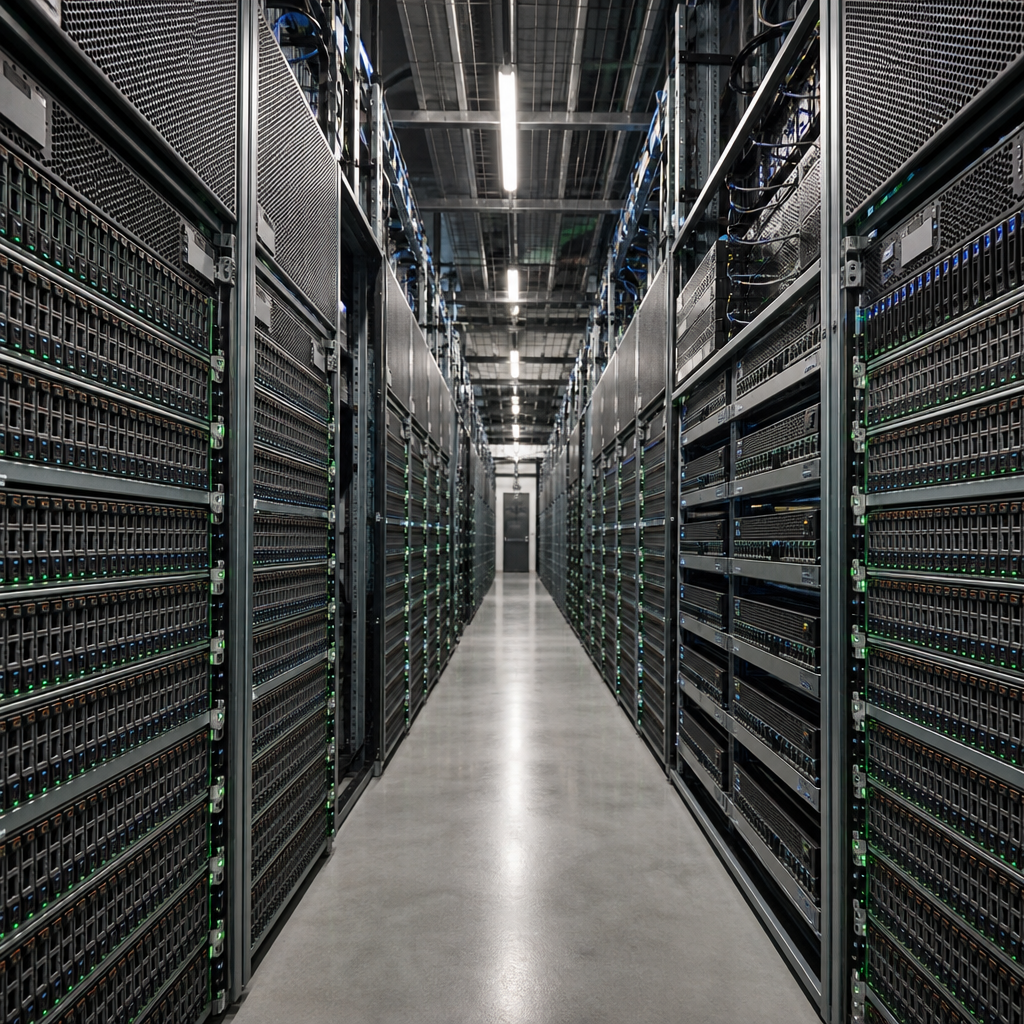
AI storage startups are becoming the quiet backbone of modern machine learning because model training depends as much on moving and serving data efficiently as it does on raw GPU horsepower. In practical terms, AI infrastructure and data centers now include not only servers and accelerators, but also the high-performance storage systems, networking layers, and software stacks that keep massive datasets continuously available to training clusters. When teams talk about throughput, checkpointing, data pipelines, or GPU utilization, they are talking about storage whether they realize it or not. This matters because the economics of AI training are unforgiving: every minute that expensive accelerators wait for data is wasted capital, longer experiment cycles, and slower product development. Startups focused on AI storage have emerged to solve this hidden bottleneck with new architectures designed for parallel access, low latency, and cloud-scale operations. As a hub for AI infrastructure and data centers, this guide explains where storage fits, why legacy systems often fail, which startup approaches are gaining traction, and how buyers should evaluate the market.
Why storage is a first-order AI infrastructure problem
Storage becomes a first-order issue as soon as training jobs move beyond small experiments. A large language model, multimodal system, or enterprise foundation model may pull from billions of files, object chunks, embeddings, logs, and checkpoints across distributed workers. In one environment I helped evaluate, GPU utilization improved simply by redesigning the data path between object storage and training nodes; the processors were powerful enough, but the file system could not feed them consistently. That pattern is common. AI training stresses infrastructure differently from traditional enterprise applications because many nodes read in parallel, shuffling huge datasets repeatedly while writing frequent checkpoints to protect long-running jobs from failure.
Legacy storage was usually optimized for databases, virtual machines, or user file shares. Those workloads reward predictable transactional performance, but AI needs extreme aggregate bandwidth and concurrency. A cluster of NVIDIA H100 or AMD Instinct accelerators can consume data at a rate that exposes every weakness in metadata handling, caching, and network design. If a file system struggles with small-file access or namespace operations, the training loop stalls. If checkpoint writes take too long, recovery times grow and developers reduce save frequency, increasing operational risk. As AI infrastructure scales, storage architecture directly influences training time, cost per run, and reproducibility.
How AI storage startups differ from conventional vendors
AI storage startups are not merely repackaging network attached storage with new branding. The strongest companies redesign the system around the access patterns of model training and inference. That often means disaggregated architectures, parallel file systems, high-speed object interfaces, RDMA-capable networking, and aggressive caching close to compute. Many support POSIX semantics for compatibility while also exposing S3 APIs because modern machine learning pipelines span both file-based and object-based workflows. The goal is simple: keep accelerators busy and developers productive without forcing teams to constantly rewrite data pipelines.
Several design choices separate the category. First, startups often treat metadata performance as strategically important because AI workloads may touch millions of files or shards quickly. Second, they optimize for checkpointing and restart behavior, recognizing that long training runs need resilient snapshots. Third, they embrace software-defined deployment models that run on commodity hardware or in hybrid cloud environments, reducing lock-in. Fourth, they build observability into the platform so operators can trace bottlenecks by job, node, or dataset. In practice, this operational visibility is one of the clearest signs that a storage platform understands AI infrastructure rather than generic enterprise IT.
Core storage architectures powering AI training clusters
Most AI storage platforms today combine several architectural patterns rather than relying on a single medium. High-performance parallel file systems remain central for training because frameworks such as PyTorch, TensorFlow, and distributed data loaders frequently expect shared, low-latency access across many workers. Object storage is still critical for durable, cost-efficient dataset retention, model artifacts, and pipeline integration. Local NVMe tiers provide the speed needed for hot data, while remote persistent layers handle capacity and resilience. The most effective designs orchestrate these tiers so data lands in the right place automatically.
Data centers built for AI often use a staged path: raw data enters durable object storage, preprocessing jobs transform it, curated shards move into a high-speed file system, training jobs cache active slices on NVMe, and checkpoints write back to resilient shared storage. Networking is inseparable from this stack. Ethernet at 100GbE, 200GbE, or 400GbE is common, while InfiniBand still matters in top-end clusters that need low latency and RDMA. GPUDirect Storage, where supported, can reduce CPU overhead by allowing direct data paths between storage and GPUs. Startups that understand these interactions can deliver outsized gains without changing the model itself.
Where startups fit across the AI infrastructure and data center stack
Storage startups sit inside a broader AI infrastructure map that includes power and cooling, accelerator servers, interconnects, orchestration software, data engineering pipelines, and observability tools. Their role is foundational because every layer above depends on reliable, fast access to datasets and model states. A company training computer vision models for autonomous systems needs streaming image data, fast random access to labeled examples, and durable retention of training versions. A biotech firm training protein models needs massive throughput for structured datasets and strict governance over sensitive research assets. In both cases, storage defines what is operationally possible.
This is why the subtopic of AI infrastructure and data centers should be viewed as an integrated system, not a menu of isolated components. A world-class GPU cluster underperforms if storage cannot handle ingest, metadata lookup, and checkpoint spikes. Likewise, a beautifully engineered file system loses value if racks lack power density, if east-west network bandwidth is constrained, or if schedulers place jobs inefficiently. Buyers evaluating this space should connect storage decisions to adjacent topics such as cluster networking, data center design for liquid cooling, workload orchestration with Kubernetes or Slurm, and model pipeline management. The hidden infrastructure only works when the interfaces are designed together.
What leading buyers evaluate before choosing an AI storage platform
Serious buyers do not start with raw capacity. They start with workload shape. Teams should quantify dataset size, average file size, read-write mix, checkpoint frequency, concurrency per job, target throughput, and expected growth. From there, they can test whether a platform sustains performance under realistic pressure rather than idealized benchmarks. I generally advise teams to ask for evidence from production deployments, not just synthetic results using large sequential reads. Many AI workloads fail because of metadata storms, small-file inefficiencies, or noisy multitenant conditions that glossy performance charts conveniently ignore.
| Evaluation area | What to measure | Why it matters for AI training |
|---|---|---|
| Throughput | GB/s delivered to many nodes simultaneously | Determines whether GPUs stay fed during distributed training |
| Metadata performance | File creates, opens, and directory operations at scale | Critical for sharded datasets and small-file workloads |
| Checkpoint speed | Time to write and restore model states | Reduces recovery time and protects long-running jobs |
| Protocol support | POSIX, NFS, SMB, S3, CSI, Kubernetes integration | Allows existing pipelines and tools to work without rewrites |
| Operational visibility | Per-job telemetry, latency traces, hot-spot detection | Speeds troubleshooting and capacity planning |
| Deployment flexibility | On-premises, cloud, hybrid, commodity hardware support | Controls cost, sovereignty, and scaling options |
Security and governance also matter. Enterprise AI increasingly involves regulated data, proprietary corpora, and cross-border compliance concerns. Storage platforms should support encryption at rest and in transit, role-based access controls, immutable snapshots where needed, and audit logging. Buyers should also understand failure domains, rebuild behavior, and support quality. The glamorous part of AI may be the model, but the painful outages usually begin in infrastructure operations.
Market drivers, startup opportunities, and realistic limitations
Several forces are expanding the market for AI storage startups. First, training clusters are getting larger and more expensive, which magnifies the cost of underutilization. Second, enterprises are moving from proofs of concept to repeated production training, where data management discipline matters. Third, sovereign AI initiatives and industry-specific deployments are pushing more infrastructure into private data centers, colocation sites, and hybrid environments. Fourth, multimodal models increase data variety, requiring systems that can serve text, images, video, audio, vectors, and logs without operational chaos. These conditions create room for specialists that can outperform broad incumbents on AI-native requirements.
Still, the category has limits. No storage platform alone can rescue a poorly designed pipeline. If data preprocessing is inefficient, if networking is oversubscribed, or if model code thrashes storage with unnecessary reads, the result will disappoint regardless of vendor claims. Startups also face long enterprise sales cycles and must prove durability in a market where buyers fear platform risk. Some will be acquired by larger infrastructure vendors; others will narrow into features such as caching, data orchestration, or checkpoint optimization rather than full-stack storage. That is normal market evolution, not a sign that the problem is unimportant.
Why this hub matters for anyone tracking AI infrastructure and data centers
AI storage startups deserve attention because they solve one of the most expensive and least visible constraints in machine learning operations. Fast, resilient access to training data and checkpoints is not a secondary concern; it is the condition that makes large-scale model development economically viable. Across the broader AI infrastructure and data centers landscape, storage connects compute, networking, software orchestration, and governance into a working system. That is why this subtopic hub should anchor deeper coverage of cluster networking, GPU server design, cooling strategies, data pipeline engineering, and hybrid deployment models.
The main takeaway is straightforward: if you want to understand where AI performance and cost are really won, look below the model layer. The startups building storage for AI are shaping training speed, infrastructure efficiency, and operational resilience long before a model reaches users. Use this hub as your starting point, then explore the adjacent components that turn raw hardware into a dependable AI platform. The hidden infrastructure is where competitive advantage is built.
Frequently Asked Questions
Why are AI storage startups becoming so important in model training infrastructure?
AI storage startups are gaining attention because modern model training is not limited by compute alone. Even the most advanced GPU clusters can sit underutilized if they cannot access training data fast enough, write checkpoints reliably, or coordinate data movement across distributed jobs. In practice, large-scale training depends on a continuous flow of data from storage to accelerators with minimal bottlenecks, which makes storage architecture a core part of AI performance rather than a background utility.
These startups are focusing on the hidden layers that traditional infrastructure discussions often overlook: parallel file systems, object storage optimization, metadata performance, caching, high-speed networking integration, and software that keeps datasets available across many training nodes at once. As datasets grow into billions of files or petabytes of multimodal data, conventional enterprise storage systems often struggle with the throughput and concurrency patterns required by AI workloads. Storage startups step into that gap by designing systems specifically for large sequential reads, rapid checkpoint writes, low-latency metadata access, and efficient coordination with GPU-heavy environments.
What makes them especially important is that they directly affect cost efficiency. If expensive accelerators are starved for data, organizations are effectively paying premium compute prices for idle time. Better storage can improve accelerator utilization, shorten training windows, and make large experiments more repeatable. That is why AI storage startups are increasingly viewed not as peripheral vendors, but as foundational infrastructure players behind high-performance machine learning.
How does storage performance affect GPU utilization during model training?
Storage performance has a direct impact on how efficiently GPUs can operate because training pipelines rely on a constant stream of data. During distributed training, many GPUs may attempt to read shards of a dataset simultaneously, perform preprocessing, cache intermediate results, and save checkpoints at regular intervals. If the storage layer cannot sustain the required throughput or handle enough parallel requests, those GPUs end up waiting for data instead of performing computation.
This problem often shows up in subtle ways. A team may assume that adding more GPUs will automatically speed up training, but if the underlying storage system cannot scale with the increased demand, performance gains flatten or even degrade. In that situation, the real bottleneck is not compute power but the ability to feed data consistently across the cluster. High-performance AI storage platforms are designed to prevent that by supporting massive concurrent access, reducing metadata overhead, and integrating closely with networking fabrics so data can move quickly between storage nodes and training servers.
Checkpointing is another major factor. Large models need frequent checkpoints to avoid losing progress and to support resuming, debugging, and experimentation. Writing those checkpoints can generate intense bursts of I/O. If the storage system cannot absorb those writes efficiently, training pauses become longer and more disruptive. Strong storage performance reduces these interruptions, keeps GPU pipelines moving, and helps organizations get more value out of every accelerator they deploy.
What infrastructure challenges are AI storage startups solving beyond raw capacity?
Capacity matters, but the bigger challenge in AI environments is delivering the right data to the right compute resources at the right time and at the right speed. AI storage startups are solving a broader set of infrastructure problems that include throughput scaling, file system contention, metadata bottlenecks, replication across environments, checkpoint durability, and compatibility with modern orchestration tools. In other words, they are focused less on simply storing more data and more on making large datasets operationally usable for machine learning teams.
One major challenge is handling mixed workload patterns. Training jobs often generate long sequential reads, while preprocessing and experimentation may trigger many small file accesses. At the same time, multiple users and pipelines may be sharing the same infrastructure. Traditional storage systems can become inefficient under this combination of access patterns, especially when hundreds or thousands of GPUs are involved. AI storage startups often address this by building tiered storage, aggressive caching, intelligent data placement, and software layers that optimize for ML-specific access behavior.
Another challenge is distributed consistency and availability. Enterprises increasingly train models across hybrid environments that span on-premises data centers, colocation facilities, and public cloud platforms. Keeping datasets synchronized, accessible, and performant across those environments is difficult, especially when teams need reproducibility and governance. Many storage-focused startups differentiate themselves by offering data orchestration, global namespaces, policy-based movement, and integrated observability so organizations can see exactly where performance issues are emerging and how data flows are affecting training outcomes.
Why are throughput, checkpointing, and data availability such critical topics in AI infrastructure?
Throughput, checkpointing, and data availability are critical because they shape whether large-scale model training runs smoothly, efficiently, and safely. Throughput determines how fast training nodes can read data and keep accelerators busy. If throughput falls behind demand, expensive hardware waits idle and total training time increases. In environments where training jobs may run for days or weeks, even modest throughput inefficiencies can translate into major cost overruns and slower iteration cycles.
Checkpointing matters because training large models is both expensive and fragile. Teams need to save model state at regular intervals so they can recover from hardware failures, software crashes, preemption events, or experimental mistakes without starting from scratch. However, checkpoints themselves can be massive, and writing them places heavy pressure on storage systems. AI-oriented storage platforms are often engineered to absorb these bursts efficiently, minimizing the pause imposed on training jobs while still preserving reliability and consistency.
Data availability is equally essential because machine learning pipelines depend on uninterrupted access to large datasets, feature stores, labels, embeddings, and intermediate artifacts. If data becomes inaccessible due to storage contention, replication lag, or infrastructure failure, the entire pipeline can stall. High availability in AI infrastructure is not just about uptime in the traditional IT sense; it is about ensuring that distributed training jobs, preprocessing systems, and downstream evaluation workflows can all access the right data with predictable performance. That is why these topics sit at the center of serious discussions about AI infrastructure design.
What should companies evaluate when choosing an AI storage startup or platform?
Companies should evaluate AI storage platforms based on workload fit, scalability, reliability, and operational simplicity rather than marketing claims about speed alone. The first question is whether the platform is designed for the actual demands of model training and data-intensive ML workflows. That includes support for high parallel read throughput, efficient handling of large checkpoint writes, low metadata latency for file-heavy datasets, and compatibility with the frameworks, cluster managers, and cloud environments the team already uses.
Scalability is another key factor. Decision-makers should look closely at how performance changes as datasets grow, user counts increase, and GPU clusters expand. Some systems perform well in small benchmarks but struggle under real-world concurrency. It is important to understand whether the platform can maintain throughput under distributed training conditions, how it handles bursty I/O, and whether it offers features such as caching, tiering, or data locality optimizations that reduce network pressure and improve utilization.
Reliability and observability also deserve close scrutiny. A strong platform should support resilient checkpointing, clear failure recovery mechanisms, robust data protection, and visibility into performance bottlenecks. Teams should be able to identify whether stalls are caused by storage, networking, preprocessing, or scheduling. Finally, operational ease matters more than many buyers initially expect. The best AI storage solution is not just fast; it is manageable, integrates cleanly with existing infrastructure, supports governance and security requirements, and helps engineering teams spend less time fighting I/O issues and more time improving models.