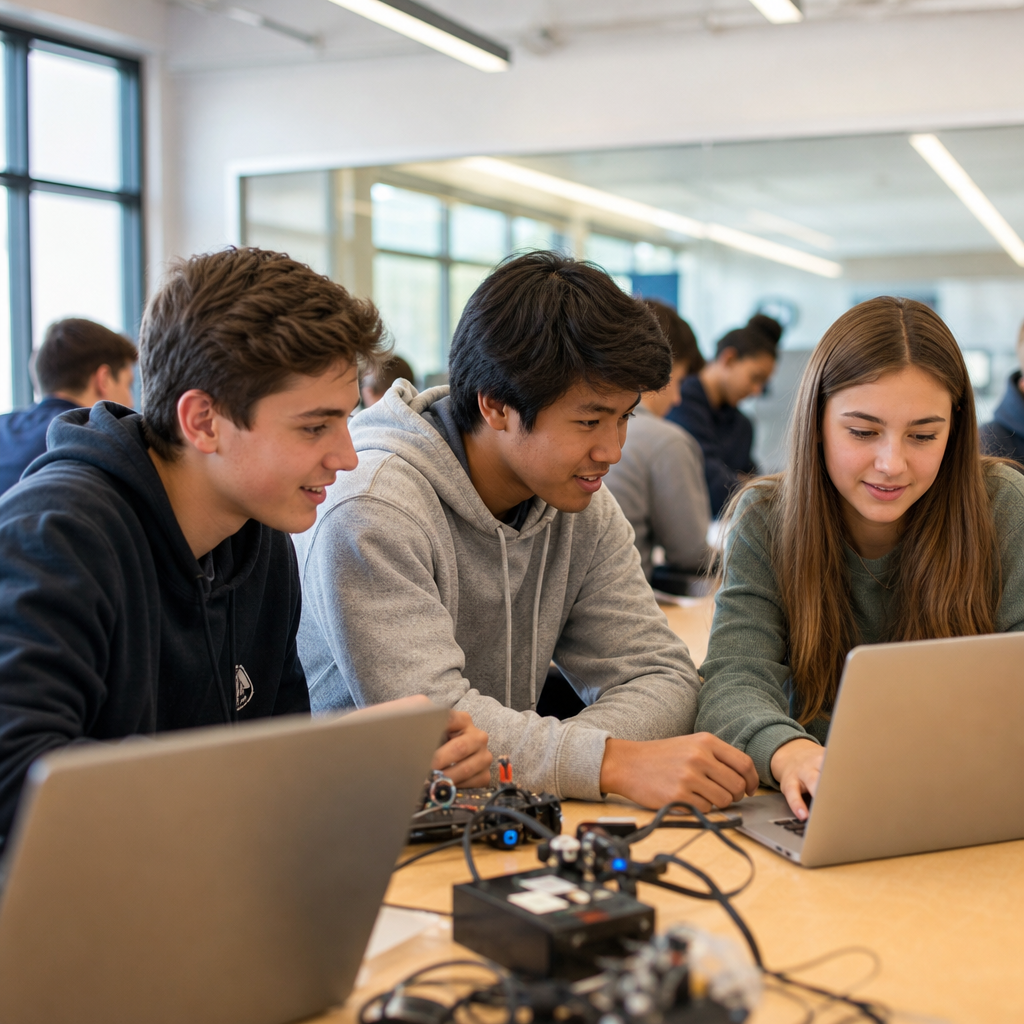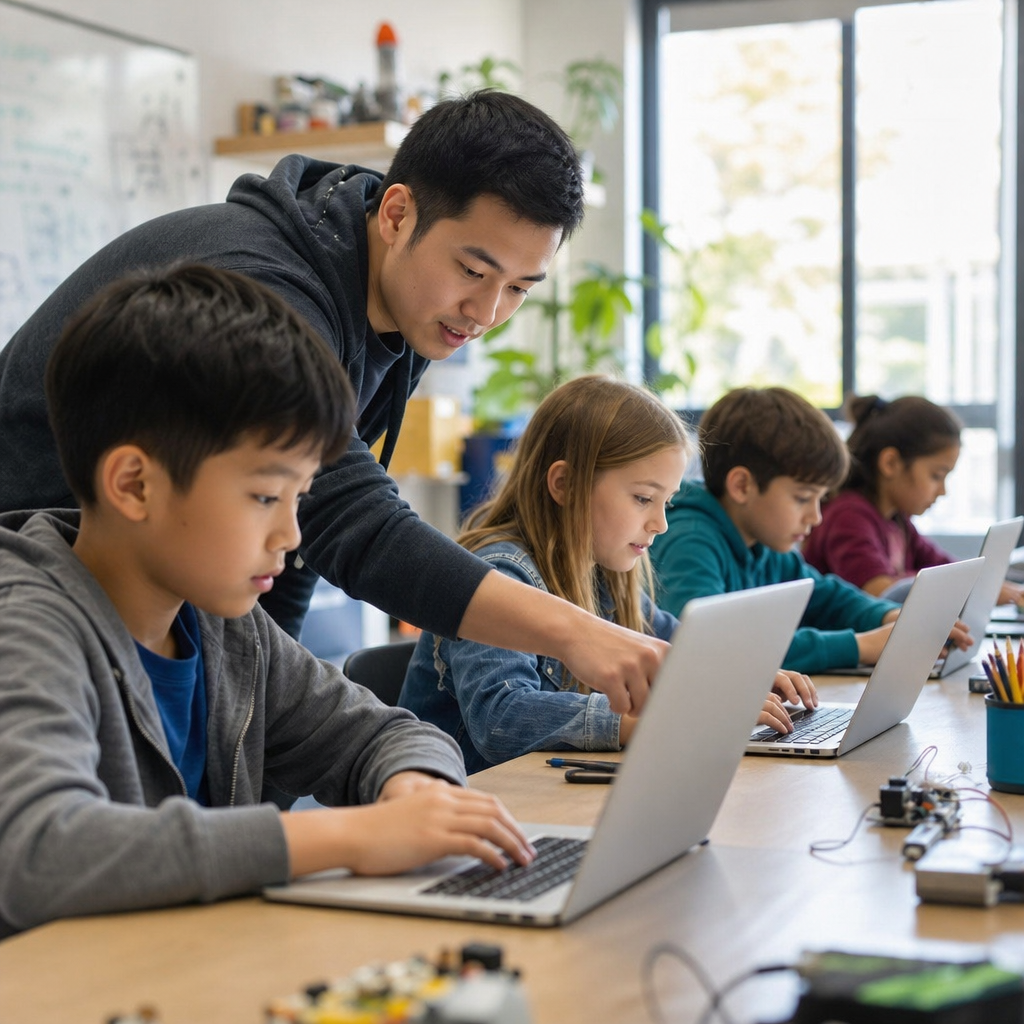
Coding for kids has moved from niche enrichment to a core part of modern learning, and Silicon Valley’s approach to early tech education helps explain why. In this context, coding means more than writing JavaScript or Python. It includes computational thinking, logical sequencing, debugging, design, collaboration, and the confidence to build with technology rather than only consume it. When parents, schools, and community programs talk about early tech education, they are usually describing a broad set of skills that starts with pattern recognition in preschool and can grow into robotics, app development, game design, and data literacy by the teenage years.
I have worked with families comparing coding camps, after-school academies, and school-based computer science programs, and the biggest lesson is that effective early tech education is not about pushing children into a narrow career track. It is about expanding knowledge and skills in ways that transfer across subjects. A child who learns to break a problem into smaller steps often becomes better at math, clearer in writing, and more resilient when facing mistakes. That is one reason districts across the United States have adopted computer science standards influenced by groups such as the Computer Science Teachers Association and frameworks developed with support from Code.org and ISTE.
Silicon Valley’s model matters because it combines technical rigor with a maker mindset. The region’s schools, nonprofits, startup incubators, libraries, and parent networks often treat coding as a creative literacy similar to reading, mathematics, or music. Children are encouraged to prototype early, test ideas quickly, and iterate without fear of failure. This article serves as a hub for expanding knowledge and skills within educational resources, explaining what early coding education includes, how strong programs are structured, which tools are age-appropriate, and what parents and educators should evaluate before investing time and money.
What Silicon Valley Gets Right About Coding for Kids
The strongest programs in Silicon Valley begin with a practical principle: children learn technology best when they make something meaningful. Instead of starting with syntax drills, many programs begin with storytelling in Scratch, simple robotics challenges using LEGO Education SPIKE or VEX GO, or app mockups created in design tools. This mirrors how real product teams work. They start with a user need, create a prototype, test it, and improve it. For children, that process turns abstract ideas into visible results, which increases motivation and retention.
Another defining feature is interdisciplinary learning. In a well-designed elementary coding class, programming is tied to science experiments, math puzzles, art projects, or social studies presentations. I have seen students build interactive maps of ecosystems, animate historical events, and program sensors to measure classroom temperature. These projects teach loops, conditionals, variables, and event handling, but they also deepen subject knowledge. That dual benefit is central to expanding knowledge and skills because coding becomes a tool for understanding the world, not an isolated technical exercise.
Silicon Valley programs also normalize iteration. Children are taught that bugs are expected, not embarrassing. Teachers often model debugging aloud: identify the problem, isolate the cause, test one change, and verify the result. This is a valuable habit beyond computer science. Research from education and developmental psychology consistently shows that students build stronger persistence when mistakes are framed as information. In coding, the feedback loop is immediate, which makes the lesson especially powerful.
Age-Appropriate Pathways From Early Learners to Teens
Good early tech education follows developmental stages. For ages five to seven, the goal is usually sequencing, pattern recognition, and cause-and-effect reasoning. Screen-free coding games, Bee-Bot robots, and block-based interfaces work well because they reduce cognitive load. Children can focus on logic rather than spelling commands. For ages eight to ten, platforms like Scratch, Tynker, and micro:bit introduce events, variables, and simple game mechanics. At this stage, students benefit from short projects they can personalize, such as animating a story or building a reaction timer.
By ages eleven to thirteen, many students are ready for more structured programming concepts. Python is common because its syntax is relatively readable, and it supports projects in data analysis, automation, and game development. Web development with HTML, CSS, and basic JavaScript also becomes useful because students can see immediate visual results. Teen learners can begin exploring AI concepts, cybersecurity basics, or robotics with Arduino, provided the instruction remains scaffolded. The key is not acceleration for its own sake. It is matching complexity to attention span, reading ability, and mathematical readiness.
| Age Range | Primary Learning Goal | Common Tools | Best Project Types |
|---|---|---|---|
| 5–7 | Sequencing and logic | Bee-Bot, ScratchJr, unplugged activities | Story paths, simple robot routes |
| 8–10 | Events, loops, variables | Scratch, Tynker, micro:bit | Animations, mini games, sensors |
| 11–13 | Structured programming | Python, HTML/CSS, JavaScript | Web pages, data projects, text games |
| 14+ | Applied specialization | Python, GitHub, Arduino, Roblox Studio | Apps, portfolios, robotics, AI experiments |
Parents often ask when a child should move from blocks to text-based code. The answer is simple: move when the child can explain their logic clearly and wants more control than the visual tool allows. Switching too early creates frustration. Switching too late can limit growth. A hybrid transition, such as using Blockly with visible generated JavaScript or Python, often works best.
How Strong Programs Build Real Skills, Not Just Screen Time
Not every coding class is equally valuable. Strong programs teach a sequence of concepts, provide guided practice, and require students to create original work. Weak programs often rely on passive video watching, repetitive clicking, or highly scripted projects where every child makes the same result. Real learning appears when a student can transfer a concept from one project to another. For example, a child who understands loops should be able to use them in a dance animation, a math quiz, and a robot movement challenge.
Assessment also matters. In high-quality programs, instructors review both the finished project and the process behind it. They ask students to explain how the code works, identify bugs they fixed, and describe what they would improve next. This mirrors authentic technical work and helps children develop metacognition. Version control may sound advanced, but even simple habits such as naming files clearly, saving iterations, and documenting changes prepare students for later collaboration with tools like GitHub.
Another marker of quality is balance. Effective programs combine coding with digital citizenship, online safety, ergonomics, and healthy device boundaries. Children should understand privacy basics, respectful collaboration, and how recommendation algorithms shape what they see online. Early tech education is not complete if it teaches building tools without discussing responsible use. That broader perspective is especially important as more youth programs introduce generative AI tools for brainstorming, tutoring, and prototyping.
Schools, Parents, and Community Programs Each Play a Different Role
School-based computer science creates baseline access. When coding is part of the curriculum, children who would never attend a private camp still gain exposure to core concepts. District adoption of K–12 computer science pathways has expanded, but implementation varies widely. Some schools offer weekly specials in elementary grades and electives in middle school, while others integrate computing into science and math. The best school programs focus on consistency, teacher training, and equitable access to devices and broadband.
Parents, meanwhile, shape the home environment. They do not need to be engineers to support coding for kids. In practice, the most helpful actions are simple: ask children to explain their projects, encourage persistence when something breaks, choose platforms with clear learning progression, and prioritize interest over prestige. A ten-year-old fascinated by Minecraft modding may learn more from sustained project work than from an expensive class that feels disconnected from their interests.
Community organizations add flexibility and depth. Libraries, museums, Boys & Girls Clubs, YMCA branches, and local maker spaces often offer affordable workshops in robotics, electronics, and game design. These settings can be especially effective for project-based learning because they are less constrained by testing schedules than schools. They also expose students to mentors from industry and higher education. In Silicon Valley, that ecosystem effect is one of the region’s biggest advantages, and other communities can replicate it through partnerships rather than trying to copy the region’s demographics or costs.
What to Look for When Choosing a Coding Program
Parents and educators should evaluate coding programs with the same care they would use for reading support or math tutoring. Start with curriculum transparency. A serious provider can explain what concepts are taught, in what order, and how students progress from beginner to independent creator. Next, examine instructor quality. The strongest teachers are not always the most advanced programmers; they are the ones who can scaffold concepts, manage mixed skill levels, and make debugging feel constructive.
Project ownership is another critical factor. Ask whether students build original work or simply follow templates. Ask how feedback is delivered and whether there is a student portfolio at the end. A real portfolio matters because it captures growth over time and gives learners something concrete to reflect on. Also review class size, device requirements, accessibility supports, and whether the program includes collaboration, presentation, or reflection. Those elements turn isolated coding tasks into broader skill development.
Cost should be weighed honestly. Premium camps can be excellent, but price does not guarantee quality. Many free or lower-cost options are strong, including Code.org courses, Scratch, Khan Academy programming content, and local library workshops. The best choice is usually the one a child will stick with consistently. Frequency and engagement beat occasional prestige experiences.
Why Early Coding Education Expands Knowledge and Skills
The long-term benefit of coding for kids is not limited to producing future software engineers. Early coding education expands knowledge and skills by strengthening logic, communication, creativity, and agency. Children learn that complex systems can be understood, modified, and improved. They begin asking better questions: What is the input? What rule is being applied? Why did this fail? How can I test a different solution? Those habits support learning in every subject and prepare students for a world shaped by software, automation, and data.
For families and schools, the practical takeaway is clear. Start early, but keep it age-appropriate. Choose programs that emphasize projects, debugging, and curiosity over speed. Look for pathways that grow from block-based exploration to real-world applications in web development, robotics, or Python. Most important, treat coding as part of a broader educational resource strategy for expanding knowledge and skills, not as a standalone trend. Review your current options, compare one school, one community, and one home-based resource, and pick the next step your child can begin this month.
Frequently Asked Questions
What does “coding for kids” actually mean in Silicon Valley’s approach to early tech education?
In Silicon Valley, coding for kids is usually understood as something much broader than learning a programming language. It includes computational thinking, which means breaking problems into smaller parts, spotting patterns, creating step-by-step solutions, and testing ideas in a structured way. Children may begin with visual coding tools, robotics kits, game design platforms, or simple app-building exercises long before they ever write formal JavaScript or Python. The focus is not just on syntax. It is on helping kids understand how technology works and how they can shape it.
This approach also places strong value on debugging, persistence, creativity, and collaboration. A child who learns how to fix mistakes in a simple block-based program is developing the same mindset used by professional engineers when solving larger technical problems. Silicon Valley’s educational culture often treats coding as a literacy for the digital age, similar to reading, writing, and math. The goal is to help kids become confident builders who can create solutions, ask better questions, and engage with technology actively rather than passively consuming it.
Why do many parents and schools believe coding should start at an early age?
Many parents and educators support early coding because young children are naturally curious, experimental, and open to learning through play. Early tech education taps into those strengths. When introduced in age-appropriate ways, coding helps children practice logic, sequencing, attention to detail, and problem-solving without making learning feel rigid or abstract. Activities such as programming a character to move through a maze or building a simple robot can make complex concepts feel concrete and engaging.
Another reason early instruction matters is that it builds familiarity and confidence before technology starts to feel intimidating. Children who are exposed to coding concepts early often grow up seeing digital tools as things they can understand and influence. That mindset can carry into schoolwork, future careers, and everyday decision-making. Silicon Valley’s model reflects the belief that early exposure is not about pressuring children into becoming software engineers. It is about giving them a strong foundation in digital fluency, creative thinking, and resilience, all of which are increasingly valuable across nearly every field.
How is Silicon Valley’s approach different from traditional computer classes?
Traditional computer classes have often focused on basic software use, typing, or isolated technical skills. Silicon Valley’s approach tends to be more project-based, interdisciplinary, and innovation-driven. Instead of teaching technology as a standalone subject, it is often integrated into activities that involve storytelling, design, engineering, teamwork, and entrepreneurship. A child might create a simple game, design an app prototype, or build a sensor-based project that connects coding with real-world problem-solving.
This method also tends to encourage iteration rather than perfection. Students are expected to experiment, make mistakes, test ideas, and improve their work over time. That mirrors how real technology products are built. In many Silicon Valley-inspired programs, children are not just learning commands or memorizing steps. They are learning how to think like makers and problem-solvers. This can make early tech education more meaningful because it shows kids that coding is not merely a technical exercise. It is a creative and collaborative process that can be used to invent, communicate, and solve practical challenges.
Do kids need to learn real programming languages like Python or JavaScript right away?
No. Most children do not need to start with text-based programming languages right away, and in many cases it is better if they do not. Silicon Valley’s early education philosophy often begins with age-appropriate platforms that teach core concepts visually and interactively. Block-based programming tools can introduce sequencing, loops, conditions, variables, and logic in a way that is easier for young learners to understand. This allows children to build confidence and grasp the structure of coding before dealing with syntax errors and complex formatting rules.
As kids mature, they can transition into languages like Python or JavaScript more smoothly because they already understand the underlying logic. That progression is one of the strengths of the Silicon Valley model. It prioritizes conceptual understanding over premature technical complexity. The real objective is not to rush children into advanced tools, but to help them develop durable skills such as problem decomposition, debugging, and computational reasoning. Once those habits are in place, learning a formal language becomes much less overwhelming and often much more enjoyable.
What are the long-term benefits of coding education for children, even if they do not work in tech later?
The long-term benefits extend far beyond the technology sector. Coding education can strengthen logical reasoning, structured thinking, patience, adaptability, and the ability to approach difficult tasks methodically. These skills are useful in science, business, design, healthcare, education, and countless other fields. Kids who learn to code also learn how to work through trial and error, interpret feedback, and refine their ideas, which are valuable habits in any professional or academic setting.
There is also an important confidence-building effect. When children learn that they can create a game, automate a task, or build a digital project from scratch, they begin to see themselves as capable problem-solvers. That sense of agency matters in a world shaped by technology. Silicon Valley’s approach emphasizes that early tech education is not only about career preparation. It is about helping children become informed, creative, and empowered participants in a digital society. Whether they eventually become engineers, artists, entrepreneurs, or teachers, the ability to think computationally and engage with technology thoughtfully can serve them for years to come.