
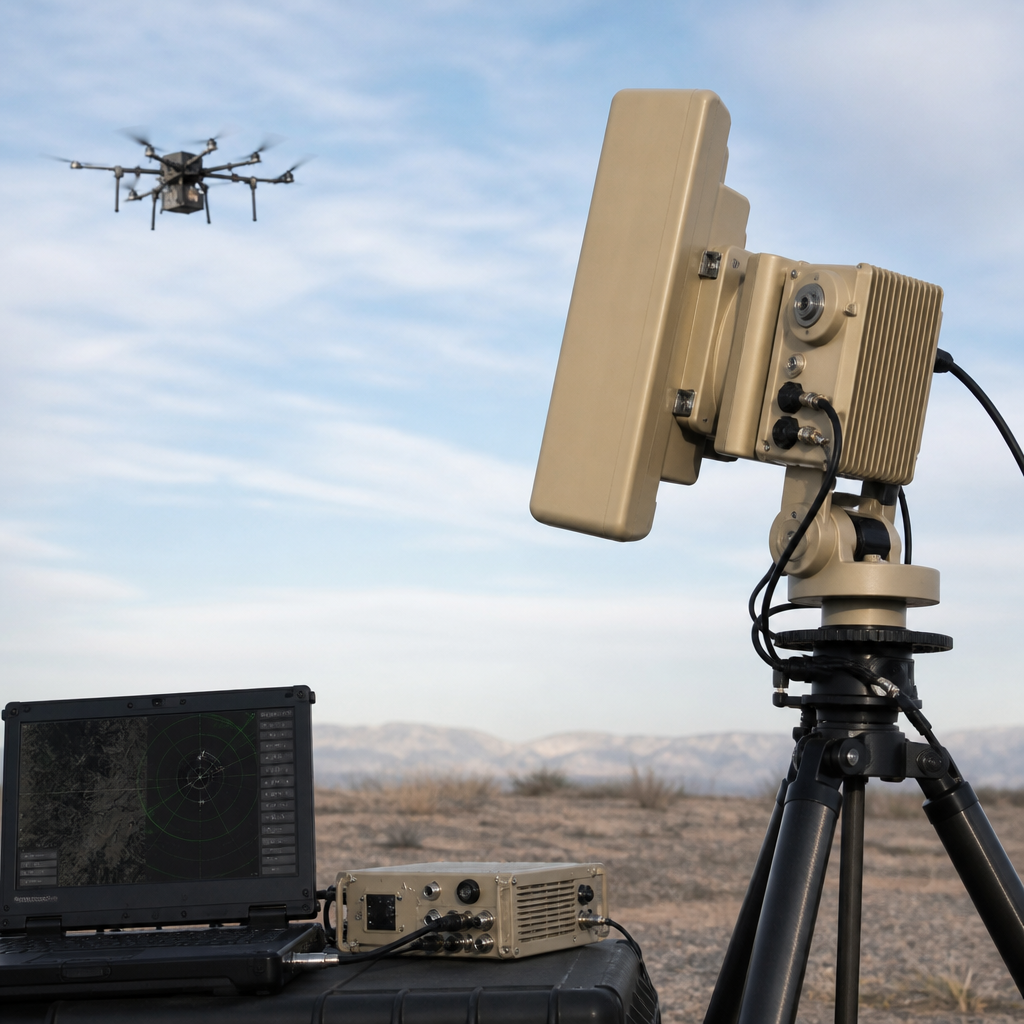
Counter-drone startups have moved from niche defense suppliers to one of the fastest-growing corners of venture-backed deep tech, creating a new Silicon Valley market for autonomous defense. In plain terms, counter-drone technology detects, tracks, identifies, and defeats unmanned aircraft systems that threaten airports, military bases, critical infrastructure, public events, and commercial facilities. The market matters because low-cost drones have changed the economics of conflict and security: a quadcopter that costs hundreds or thousands of dollars can disrupt operations worth millions, gather intelligence, or deliver explosives with alarming precision. I have watched this shift accelerate as founders who once built autonomy stacks for logistics, robotics, and computer vision redirected those skills into defense applications after seeing how rapidly drone warfare evolved in Ukraine, the Red Sea, and across contested borders. What makes this sector different from older defense contracting is speed. Startups iterate sensors, software, and hardware in months rather than procurement cycles measured in years. They also build dual-use systems, meaning the same core platform can serve military customers, airports, utilities, prisons, stadiums, and energy operators. As a hub for space and defense tech, this topic connects autonomous systems, edge AI, radar innovation, electronic warfare, satellite links, secure communications, and venture financing into one strategic category.
The phrase autonomous defense deserves a clear definition. It does not mean fully unsupervised weapons making irreversible decisions without human oversight. In most credible startup deployments, autonomy refers to automated detection, sensor fusion, target classification, threat scoring, cueing, and sometimes interception under tightly defined rules of engagement. A modern counter-drone stack may combine radio frequency sensing, radar, electro-optical and infrared cameras, acoustic sensors, navigation intelligence, and machine learning models that distinguish a hobby drone from a bird, helicopter, or harmless signal clutter. The reason investors, governments, and infrastructure operators care is simple: the threat is frequent, asymmetric, and getting smarter. GPS-denied navigation, swarming behavior, autonomous waypointing, and low radar signatures make manual defense too slow and too expensive. Counter-drone startups sit at the center of a larger space and defense technology wave because they pull talent, capital, and policy attention from adjacent fields including launch, satellite imagery, cybersecurity, secure networking, and robotics. Understanding this market helps explain where defense innovation is heading next.
Why counter-drone startups are growing so quickly
The growth driver is not hype; it is a structural gap between traditional air defense systems and the realities of small uncrewed aircraft. Patriot missiles, short-range air defense batteries, and manned patrols were not designed to stop a swarm of cheap drones flying low, slow, and irregularly around warehouses, refineries, ports, or troop positions. Startups entered because incumbents often offered expensive, fixed, or narrowly specialized systems. Venture-backed teams saw an opening to build modular products that can be mounted on vehicles, rooftops, towers, or ships and updated through software. The spread of commercial off-the-shelf components also lowered barriers. A startup can now assemble advanced radar subsystems, edge processors from NVIDIA, RF components, and high-resolution electro-optics faster than a prime contractor could ten years ago.
Demand expanded as regulators and operators realized detection alone is not enough. Airports need low false positives and clear operator workflows. Militaries need resilience under jamming and mobility near the front line. Utilities want persistent coverage over substations without a massive staffing burden. In my experience, the startups winning early contracts are those that understand the actual operational environment rather than just the technical demo. They design for rain, dust, electromagnetic interference, bad power quality, cluttered urban canyons, and communications dropouts. That practical reliability is what turns a prototype into a deployable defense product.
The core technologies behind autonomous defense systems
Every effective counter-drone company works across a layered kill chain: detect, track, identify, decide, and defeat. Detection usually starts with radar or RF sensing. Radar excels at range and persistent surveillance, especially when the target is not emitting a controllable radio signal. RF sensors are useful for identifying command links, video downlinks, and protocol fingerprints from widely used drone families. Cameras then verify what the sensors found. Thermal imaging is essential at night or in smoke and haze. Acoustic sensors can help in specific settings, though they struggle in windy or noisy industrial environments.
The differentiator is sensor fusion. A startup that merely stacks sensors without integrating them will drown operators in alerts. The best systems correlate radar tracks with RF hits, camera detections, geospatial maps, and prior threat libraries. They use machine learning for classification, but the strong companies avoid overclaiming. Birds, weather, and urban clutter still cause problems, and any serious founder will admit that model performance depends on environment, altitude, and signal conditions. This is why edge computing matters. Processing data on-site reduces latency and preserves function when cloud links fail. It also supports autonomous cueing, where a camera slews automatically to the most likely threat track within seconds.
| Layer | Primary purpose | Common startup approach | Main limitation |
|---|---|---|---|
| Radar | Wide-area detection and tracking | AESA, passive radar, or compact 3D radar | Small targets can blend into clutter |
| RF sensing | Identify control links and emitter signatures | Protocol libraries and direction finding | Less useful against autonomous or silent drones |
| EO/IR cameras | Visual confirmation and classification | Auto-cueing with AI object detection | Weather and line-of-sight constraints |
| Command software | Fuse sensors and guide response | Edge analytics and threat scoring | Bad UX can overwhelm operators |
| Defeat systems | Neutralize or divert the threat | Jamming, spoofing, nets, lasers, interceptors | Legal, safety, and power tradeoffs |
How startups defeat drones in practice
Defeat options divide into electronic and kinetic methods. Electronic warfare techniques include jamming command links, interrupting video transmission, or spoofing navigation signals. These are attractive because they can be scalable and reversible, but they are not universal. Autonomous drones following onboard waypoints may ignore lost links. Navigation spoofing may fail against vision-based navigation or inertial backup. Jamming can also interfere with friendly communications, which matters enormously around airports, cities, and military units already saturated with radios.
Kinetic options include interceptor drones, projectile systems, nets, and directed energy. Interceptor drones have gained attention because they can be relatively low cost and can pursue maneuvering targets. Anduril’s Roadrunner is the most cited example of a reusable autonomous interceptor concept, though many younger companies are building variants for different ranges and payloads. Lasers offer low cost per shot and precise engagement, but they require line of sight, stable tracking, and substantial power and thermal management. Nets and projectile systems can be effective at short range yet are constrained by safety and geometry. The practical lesson is that no single defeat method solves every mission. Layering is standard because environments differ.
The startup landscape, funding model, and buyers
This market includes pure-play counter-drone companies, defense software firms adding air defense modules, and robotics startups extending into interception. Silicon Valley and adjacent hubs now treat defense as investable in a way they often resisted a decade ago. Firms such as Andreessen Horowitz, Founders Fund, Lux Capital, Shield Capital, and General Catalyst have backed defense and dual-use ventures, while traditional government-focused investors remain active. Buyers are equally diverse. The Department of Defense is obvious, but the addressable market also includes DHS components, allied ministries, airports, seaports, oil and gas operators, utilities, corrections systems, and major venue operators.
Revenue models usually start with pilots and low-rate initial production, then expand into software subscriptions, sustainment, training, and sensor upgrades. Procurement remains hard. Startups must navigate export controls, classified requirements, testing ranges, and lengthy integration reviews. In the United States, pathways such as SBIR, Other Transaction Authority agreements, and Defense Innovation Unit engagements can help, but none eliminate the burden of proving reliability. The companies that break through tend to combine fast engineering with serious field support, compliance discipline, and a clear doctrine for human-in-the-loop operation.
Why space and defense tech converge in this market
Counter-drone systems increasingly rely on capabilities that overlap with space technology. Satellite communications can backhaul sensor data from remote sites. Positioning, navigation, and timing resilience matters when GPS is jammed or spoofed. Earth observation and geospatial mapping improve site planning and airspace awareness. Launch and satellite startups also feed the talent pool, especially in autonomy, embedded systems, mission software, and secure communications. In practice, the same engineers who build fault-tolerant spacecraft software often adapt well to edge defense systems because both domains reward reliability, low-latency control, and graceful degradation under failure.
This convergence makes the broader space and defense tech category more coherent than it first appears. A founder building secure mesh networks for satellites may find immediate demand in mobile air defense nodes. A computer vision team trained on orbital imagery may repurpose models for airborne object detection. Investors like these overlaps because they create platform companies rather than one-product vendors. For readers tracking the full subtopic, this is the central pattern: breakthrough defense startups increasingly emerge from shared infrastructure across autonomy, sensing, communications, and resilient computing.
Risks, regulation, and what winners will look like
The biggest risk is assuming technical promise guarantees adoption. It does not. Counter-drone startups face legal limits on jamming, airspace restrictions, export controls under ITAR and EAR, cybersecurity requirements such as NIST alignment, and strict safety expectations around populated areas. False positives can shut down operations. Overaggressive mitigation can create liability. Battlefield success also does not automatically translate to civilian approval, because airport and city environments impose very different standards.
Winners will be the companies that prove three things at once: high-confidence detection, disciplined autonomy, and operational integration. They will show performance with recorded test data, not just slide decks. They will integrate with command-and-control systems, security workflows, and audit logs. They will design for maintainability, not only demo-day spectacle. Counter-drone startups are becoming a defining market in autonomous defense because they solve a real problem at the exact intersection of software speed and national security need. For anyone following tech innovations and startups, this space is no longer peripheral. It is a core lens on where venture-backed defense, advanced robotics, and space-enabled security are heading next. Track the companies, the procurement pathways, and the regulatory changes now, because this hub category will shape the next decade of defense innovation.
Frequently Asked Questions
1. What is driving the rapid growth of counter-drone startups in Silicon Valley and beyond?
The surge in counter-drone startups is being driven by a simple but powerful market shift: small, inexpensive drones now create outsized security risks. A device that may cost only a few hundred or a few thousand dollars can disrupt airports, surveil sensitive facilities, interfere with military operations, smuggle contraband, or threaten crowds at public events. That has fundamentally changed the economics of security and defense. Organizations can no longer think only about traditional aircraft, perimeter fencing, or cyber threats; they also have to account for low-cost unmanned aircraft systems that are easy to acquire and increasingly capable.
That growing threat has created demand for technologies that can detect, track, identify, and neutralize drones quickly and reliably. Startups have stepped in because the problem sits at the intersection of software, sensors, AI, autonomy, robotics, edge computing, and modern defense procurement. In other words, it looks much more like a deep-tech startup opportunity than a legacy defense program. Venture investors are paying attention because counter-drone systems solve urgent, real-world problems for military customers, airports, energy sites, logistics hubs, government agencies, and large private operators. The result is a new category where national security priorities and venture-scale technology businesses increasingly overlap.
Another reason for the momentum is timing. Governments are modernizing defense capabilities, critical infrastructure operators are under pressure to improve resilience, and geopolitical instability has made autonomous defense technologies a strategic priority. At the same time, advances in machine learning, sensor fusion, radio-frequency analysis, computer vision, and compact radar have made counter-drone platforms more effective and more deployable. Startups that once would have been seen as niche suppliers are now addressing a broad market with strong tailwinds, making counter-drone one of the most dynamic segments in autonomous defense.
2. How does counter-drone technology actually work in real-world environments?
Counter-drone technology typically works as a layered system rather than a single device. The first step is detection: the platform has to determine that an unmanned aircraft is present in the area. Companies do this using combinations of radar, radio-frequency sensors, cameras, thermal imaging, acoustic sensors, and other surveillance tools. Because no single sensor performs perfectly in every environment, the strongest systems rely on sensor fusion, where software combines multiple inputs to improve reliability and reduce false alarms.
Once a drone is detected, the next step is tracking and identification. That means following its position, speed, flight path, and sometimes even the location of the operator or controller. Advanced platforms can classify whether the object is actually a drone rather than a bird, weather event, or harmless aircraft. They may also determine the drone type, communication protocol, payload risk, and whether it poses a genuine threat. This is where AI and autonomy are especially valuable, because operators need fast and accurate decisions in complex environments such as urban airspace, active military zones, airports, or crowded public venues.
The final stage is defeat or mitigation. Depending on the legal environment and operational setting, that can include jamming communications, disrupting GPS signals, taking control of the drone, cueing security teams, or in some contexts physically intercepting or disabling the aircraft. The exact approach varies widely because what is acceptable on a military base may be prohibited near civilian infrastructure. The most capable startups focus not just on stopping a drone, but on doing so safely, selectively, and in a way that minimizes collateral disruption. In practice, the best counter-drone systems are less about one dramatic interception and more about continuous airspace awareness, rapid response, and carefully managed escalation.
3. Why are investors treating counter-drone startups as a major deep-tech and defense opportunity?
Investors see counter-drone startups as compelling because they combine urgent demand, large addressable markets, and difficult technical barriers that can create durable competitive advantages. The threat is not speculative; it already affects defense operations, border security, civil aviation, critical infrastructure, and commercial sites. That means startups are not trying to invent a problem in search of a customer. They are entering a market where buyers already know the pain points and are actively looking for solutions.
From a venture perspective, the category is attractive because counter-drone systems often involve proprietary software, integrated hardware, high-performance sensing, and AI-driven autonomy. Those are not easy capabilities to replicate quickly. A startup that develops strong performance in real-world conditions, secures reference customers, and navigates regulatory requirements can build meaningful defensibility. In addition, many of these companies can expand beyond a single product into broader airspace security, autonomous defense, perimeter intelligence, or command-and-control platforms, which increases their long-term strategic value.
There is also a broader shift in how capital views defense technology. For years, some investors avoided defense-adjacent markets, but that attitude has changed as autonomous systems, geopolitical risk, and infrastructure protection have moved to the center of national and commercial priorities. Counter-drone startups sit directly inside that trend. They appeal to investors who want exposure to mission-critical technology with both public-sector and private-sector demand. While the sales cycles can be longer than in enterprise SaaS and procurement can be complex, the strategic importance of the market makes it one of the most closely watched areas in venture-backed autonomous defense.
4. What industries and organizations are most likely to adopt counter-drone systems?
Military and government users are the most obvious adopters, but they are far from the only ones. Defense organizations need counter-drone capabilities to protect bases, logistics corridors, personnel, and high-value assets from reconnaissance drones, loitering threats, and improvised aerial attacks. Law enforcement and homeland security agencies also use these systems to secure major events, government compounds, borders, and sensitive public spaces. In these environments, the ability to distinguish between harmless drone activity and genuine threats is essential.
Civilian infrastructure operators represent another major market. Airports are a prime example because even a small unauthorized drone can disrupt flight operations, create safety risks, and trigger expensive delays. Energy facilities, power plants, substations, ports, rail yards, water systems, telecom towers, and data centers are also increasingly concerned about drone-based surveillance, sabotage, or operational interference. For these organizations, counter-drone technology is becoming part of a broader resilience and physical security strategy rather than a stand-alone defense purchase.
Large commercial venues and enterprises are adopting the technology as well. Stadiums, concert venues, corporate campuses, industrial sites, warehouses, and logistics operators face both safety concerns and privacy risks from unauthorized drones. In some sectors, especially where valuable goods, sensitive intellectual property, or high-profile events are involved, persistent airspace monitoring is becoming as important as ground surveillance. As the technology matures, adoption is likely to spread further, particularly as buyers look for systems that integrate with existing security operations, command centers, and threat intelligence workflows.
5. What are the biggest challenges facing counter-drone startups as the market matures?
One of the biggest challenges is technical complexity in real-world conditions. Detecting a drone in a clean demo environment is very different from doing it consistently in dense urban areas, near airports, across rough terrain, or in contested military settings. Startups have to deal with cluttered radio-frequency environments, difficult weather, fast-moving targets, false positives, and an evolving mix of drone platforms. Customers do not just want a tool that works sometimes; they need systems that perform reliably under pressure and can be trusted in mission-critical situations.
Regulation and legal constraints are another major hurdle. In many jurisdictions, detecting a drone is easier from a legal standpoint than disrupting or disabling one. Techniques such as jamming, spoofing, interception, or kinetic defeat may be tightly controlled or outright restricted outside military contexts. That means startups must design offerings that fit the legal realities of each customer segment and geography. They also need to prove that their solutions can protect people and infrastructure without creating new risks, such as interfering with legitimate communications or aviation systems.
Finally, scaling the business is not straightforward. Counter-drone startups often sell into conservative buyers with long procurement cycles, high testing requirements, and demanding integration needs. They may need certifications, field trials, partnerships with defense primes, and close alignment with government acquisition processes. Competition is increasing as established aerospace and defense firms move into the space, which raises the bar for differentiation. The companies most likely to succeed are those that combine strong engineering with regulatory fluency, operational credibility, and a clear go-to-market strategy. As the market matures, winning will depend not just on detecting and defeating drones, but on delivering trusted, deployable systems that fit seamlessly into the broader security and defense stack.