Artificial intelligence is becoming a core tool for grid operators, utilities, and energy startups confronting a simple constraint: electricity demand is rising faster than the infrastructure built to serve it. “Power grid” refers to the network of generation, transmission, distribution, control systems, and market mechanisms that move electricity from producers to users. In climate and energy tech, the immediate challenge is not only producing more clean power, but delivering it reliably through wires, substations, transformers, and software stacks that are often decades old. Startups in Silicon Valley are attacking that bottleneck with forecasting models, grid optimization platforms, virtual power plants, interconnection analytics, and hardware-aware AI systems designed to squeeze more capacity out of existing assets.
I have worked with teams evaluating energy software vendors, and the pattern is consistent across utility pilots and developer meetings: the pain point is rarely one isolated piece of equipment. It is the compound effect of load growth from data centers, electric vehicles, heat pumps, industrial electrification, and delayed transmission build-outs. The North American Electric Reliability Corporation has repeatedly warned about resource adequacy and transmission stress during extreme weather. Meanwhile, the U.S. Department of Energy has highlighted the multiyear backlog for generator interconnections. That combination matters because a slow, congested grid raises project costs, delays decarbonization, and threatens reliability. For startups, this is a large, urgent market where software can create measurable value faster than steel in the ground.
As a hub for climate and energy tech, this article maps the main startup categories shaping the modern grid, the technologies they use, the business models attracting capital, and the real constraints they face when selling into regulated markets. It also frames the broader ecosystem: grid-enhancing technologies, utility procurement, distributed energy resources, battery orchestration, carbon-aware computing, and transmission planning. If you are tracking tech innovations and startups, this is the page that connects those threads. The central question is practical: where can AI genuinely relieve electricity constraints today, and where are policy, hardware, and permitting still the limiting factors?
Why the Grid Is Constrained Now
Electricity constraints are emerging from simultaneous supply-side and demand-side shifts. On the demand side, electrification is adding new peak loads. A single fast-charging EV site can require several megawatts, comparable to a small industrial customer. Large data centers supporting cloud and AI workloads can demand hundreds of megawatts, sometimes more than a midsize city district. On the supply side, wind, solar, and batteries are growing quickly, but they connect unevenly across regions and often face years-long interconnection studies. Transmission expansion remains slow because siting, environmental review, local opposition, and cost allocation are difficult to resolve. Utilities therefore must operate a more complex system with tighter margins, more volatility, and more assets at risk of congestion or failure.
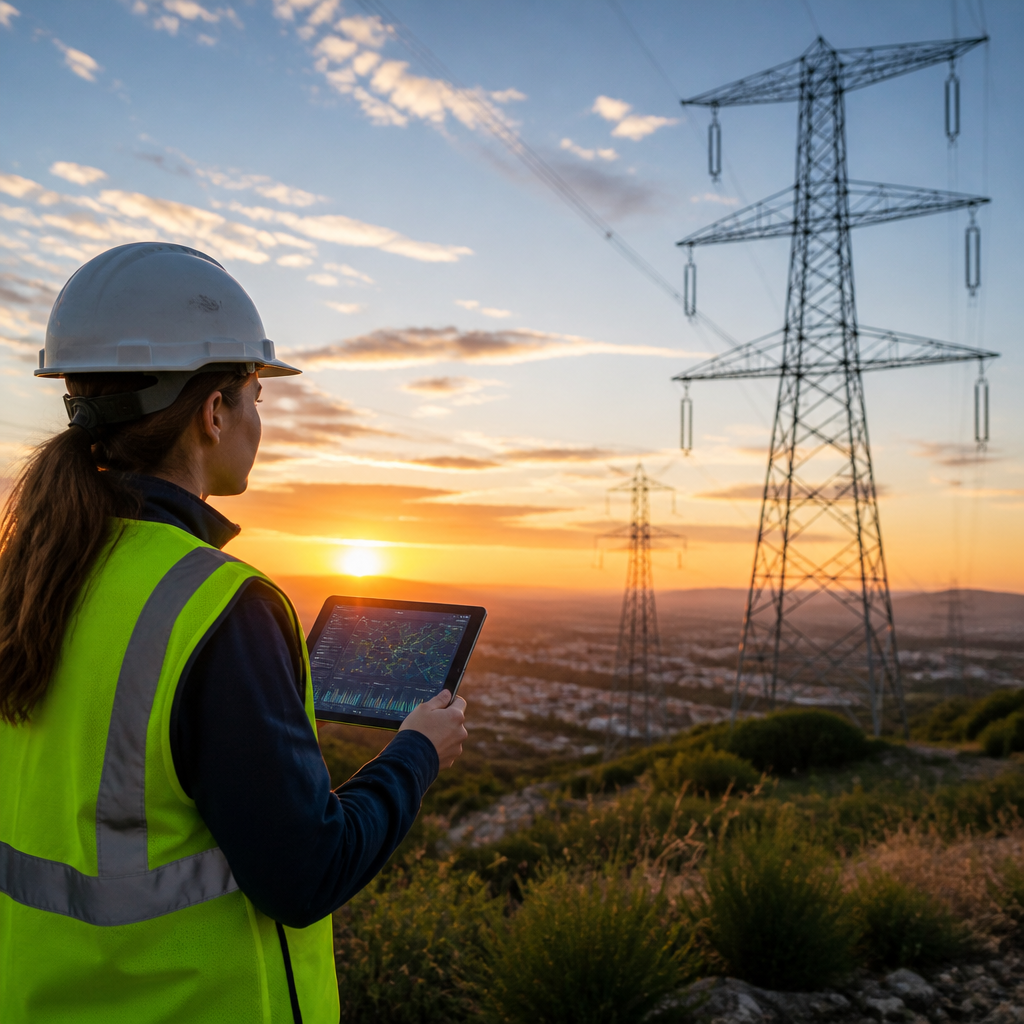
This is where AI fits. In plain terms, AI helps the grid make better decisions with imperfect information. Machine learning models can forecast load, solar output, wind ramps, equipment stress, and price spikes more accurately than legacy statistical methods when enough high-quality data is available. Optimization engines can recommend dispatch changes, battery charging schedules, and demand response signals that reduce peak demand or avoid local bottlenecks. Computer vision can inspect poles, lines, and substations using drones and detect failure risks earlier. None of this removes the need for new transmission, transformers, or generation, but it can improve utilization of the grid already built.
Startup Categories Defining Climate and Energy Tech
Silicon Valley startups tackling electricity constraints generally fall into five categories. First are forecasting and analytics companies that model load, weather, renewable output, and congestion. Second are virtual power plant platforms that aggregate distributed batteries, EV chargers, thermostats, and flexible loads into dispatchable capacity. Third are grid operations companies that provide software for outage prediction, dynamic line ratings, topology optimization, and non-wires alternatives. Fourth are developer tools focused on interconnection, siting, permitting, and power market participation. Fifth are hardware-software firms building sensors, power electronics, or transformer intelligence with AI embedded at the edge.
Each category attacks a different layer of the bottleneck. A startup selling demand flexibility to commercial buildings may lower peak load on a stressed feeder. A transmission analytics company may help utilities unlock extra ampacity on existing lines by using real-time weather and conductor temperature data rather than conservative static ratings. A battery orchestration platform may bid aggregated storage into capacity, ancillary services, or demand response markets. An interconnection intelligence company may help renewable developers screen projects earlier, avoiding queue positions that are unlikely to clear economically. These are not abstract use cases; they translate directly into deferred capital spending, fewer curtailments, faster project timelines, and lower reliability risk.
| Startup approach | Grid problem addressed | Typical customer | Near-term value |
|---|---|---|---|
| Load and renewable forecasting | Planning errors and imbalance costs | Utilities, retailers, grid operators | Better dispatch and procurement |
| Virtual power plants | Peak demand and local capacity shortages | Utilities, aggregators, homeowners | Peak shaving and resilience |
| Dynamic line ratings | Transmission congestion | Transmission owners, ISOs | More capacity from existing lines |
| Interconnection analytics | Project delays and queue attrition | Developers, investors, IPPs | Faster site selection decisions |
| Asset monitoring and inspection | Equipment failure and wildfire risk | Utilities, co-ops | Lower outage risk and O&M costs |
How AI Improves Grid Operations in Practice
The most credible applications are narrow, measurable, and tied to operations. Load forecasting is a strong example. Utilities have long forecasted demand, but newer models ingest interval meter data, weather, occupancy patterns, DER adoption rates, and local economic activity to predict not just system load but feeder-level peaks. That matters because distribution constraints are highly localized. In one territory, a cluster of new EV chargers can overload a transformer while the broader region still appears well supplied. AI helps planners identify those micro-congestion risks sooner, which supports targeted upgrades or managed charging programs instead of blanket infrastructure spending.
Another practical use case is dynamic line rating. Traditional transmission ratings assume conservative weather conditions, yet line capacity changes with ambient temperature, wind speed, and solar heating. Startups now combine sensors, physics-based models, and machine learning to estimate safe real-time capacity. Utilities and grid operators can then move more power over existing corridors when conditions allow. The benefit is significant because transmission projects often take a decade or more, while dynamic ratings can be deployed much faster. The limitation is equally clear: operators must trust the data, integrate it into control rooms, and meet reliability requirements under standards enforced by FERC, NERC, and regional entities.
Virtual power plants offer another high-value path. By coordinating residential batteries, smart thermostats, water heaters, EV chargers, and commercial loads, software can create a flexible resource that behaves like a small peaker plant without new fossil infrastructure. Tesla, Sunrun, AutoGrid, and other market participants have demonstrated versions of this model, and startups continue to refine dispatch algorithms, customer acquisition, and market bidding. The business case depends on local tariffs and market rules, but the system value is straightforward: flexibility can reduce peaks, support reliability events, and absorb variable renewable generation. For constrained grids, that flexibility is often cheaper and faster than conventional upgrades.
Where Startups Meet Friction: Regulation, Procurement, and Data
Energy is attractive to founders because the problem is enormous, but it is not a typical software market. Utility sales cycles are long, procurement is risk averse, and cybersecurity review is rigorous. Even when a startup proves technical performance in a pilot, scaling can stall because integration with legacy systems is complex. Supervisory control and data acquisition environments, advanced distribution management systems, outage management systems, and meter data platforms all have different data structures and security constraints. Startups that underestimate this integration burden usually struggle, no matter how elegant the model looks in a demo.
Data quality is another hard edge. AI for the power grid depends on granular, timely, and trustworthy data from sensors, meters, weather feeds, market systems, and asset registries. In practice, utilities often have missing labels, inconsistent naming conventions, sparse feeder telemetry, and equipment records spread across separate databases. A model trained on one service territory may not generalize well to another because climate, topology, customer mix, and regulation differ. The startups gaining traction are usually the ones pairing machine learning with power systems expertise, physics-informed modeling, and careful change management rather than promising a black-box miracle.
Regulatory economics also shapes outcomes. In many jurisdictions, utilities earn returns on capital investments, not always on software that defers those investments. That incentive can slow adoption of non-wires alternatives even when they are cheaper systemwide. Market design matters too. Aggregators need clear rules to participate in capacity, demand response, and ancillary service programs. Interconnection reform, FERC transmission planning rules, and state-level distributed energy policies can dramatically change startup prospects. Investors who understand this know that climate and energy tech is not only a technology story; it is a market design and public policy story as well.
The Next Wave: Grid-Connected Intelligence Across the Energy Stack
The next wave of startups will likely blur the lines between energy software, industrial automation, and compute infrastructure. Data centers are becoming active participants in grid planning, with operators exploring on-site generation, long-duration storage, flexible load management, and carbon-aware scheduling. Building platforms are integrating HVAC controls, occupancy analytics, and utility tariffs to turn commercial real estate into a responsive energy asset. EV fleet operators are using telematics and charging orchestration to minimize demand charges and provide grid services. These are all grid businesses now, not side applications.
For readers following tech innovations and startups, the durable thesis in climate and energy tech is clear: the most valuable companies will not merely predict the grid’s problems; they will help operators act on those predictions safely, within market rules, and at scale. AI can relieve electricity constraints by improving forecasting, coordination, utilization, and responsiveness across generation, wires, storage, and load. But the winning products will be grounded in operational reality, interoperability, and regulatory literacy. If you are building, investing, or researching in this space, use this hub as your starting point, then go deeper into virtual power plants, transmission technology, utility software, battery optimization, and interconnection reform to find where the next defensible opportunities are forming.
Frequently Asked Questions
What does “AI for the power grid” actually mean in practice?
In practice, AI for the power grid means using machine learning, forecasting models, optimization software, and automated control tools to help utilities, grid operators, and energy companies run a far more complex electricity system. The modern grid is no longer a simple one-way network where large power plants generate electricity and customers consume it on a predictable schedule. It now includes variable renewable energy, distributed solar, batteries, electric vehicles, data centers, flexible loads, and aging infrastructure that was not originally designed for this level of complexity. AI helps make sense of all of that.
At a practical level, AI is used to forecast electricity demand, predict renewable generation output, identify equipment that may fail, detect congestion on transmission and distribution lines, optimize battery dispatch, and improve the timing of maintenance. It can also help utilities determine which assets need upgrades first, where demand response programs will have the most impact, and how to better balance reliability, cost, and emissions. Some startups focus on software that analyzes sensor data from substations and transformers, while others build platforms that help operators model scenarios in real time and respond faster to changing grid conditions.
The key point is that AI is not replacing the physical grid. It is being used to operate existing infrastructure more intelligently and to prioritize where new investment should go. As electricity demand rises from electrification, industrial growth, and AI computing itself, the value of these tools grows because they can extract more capacity, resilience, and efficiency from a system under stress.
Why is the electricity grid becoming such a major constraint for clean energy growth and economic expansion?
The grid is becoming a major constraint because electricity demand is increasing faster than the infrastructure needed to deliver power can be planned, permitted, financed, and built. For years, many regions experienced relatively flat electricity demand, which meant grid expansion did not move with urgency. That environment has changed. Electrification of transportation, heating, and industry is increasing load, while new sources of demand such as data centers, semiconductor manufacturing, and large-scale computing are putting additional pressure on local and regional systems.
At the same time, the energy transition is changing where and how power is produced. Many renewable resources are located far from the cities and industrial centers where electricity is consumed. That creates a need for more transmission capacity, smarter distribution networks, and better system coordination. Interconnection queues for new generation and storage projects have become crowded in many markets, often delaying projects for years. Utilities and regulators are also dealing with aging infrastructure, extreme weather risk, wildfire mitigation requirements, and the challenge of maintaining reliability during the transition.
This is why the constraint is not simply about generating more clean electricity. It is equally about moving that electricity through wires, substations, transformers, markets, and control systems that are already heavily utilized. If the grid cannot absorb and deliver new supply, clean energy projects stall, customer costs rise, and economic development slows. AI is attractive in this environment because it can help uncover unused capacity, improve planning decisions, and support more dynamic grid operations without waiting solely on long construction timelines.
How are Silicon Valley startups using AI to address grid bottlenecks and reliability challenges?
Silicon Valley startups are approaching grid constraints from several angles, but most are focused on making the system more visible, predictable, and flexible. One major category is forecasting. Startups are building AI models that forecast electricity demand, rooftop solar production, wind generation, weather impacts, and localized congestion with greater precision. Better forecasting helps operators commit resources more efficiently, reduce reserve requirements, and avoid reliability problems before they escalate.
Another major area is grid optimization. Companies are developing software that helps utilities and system operators decide how to route power, dispatch batteries, manage flexible loads, and reduce congestion at lower cost. Some platforms create digital twins of grid assets or entire networks so planners can test upgrades, simulate contingencies, and understand where bottlenecks are most likely to emerge. Others focus on interconnection studies, helping developers and utilities evaluate proposed energy projects more quickly and consistently.
There is also a growing group of startups focused on asset intelligence and predictive maintenance. These firms use AI to analyze data from sensors, meters, drones, satellite imagery, and utility records to identify equipment at risk of failure. That can reduce outages, improve worker safety, and allow maintenance budgets to be spent where they matter most. In parallel, some startups target customer-side flexibility by aggregating smart thermostats, EV chargers, batteries, and commercial building loads into virtual power plants that can support the grid during peak periods.
Taken together, these solutions do not eliminate the need for new transmission lines, transformers, substations, and generation. What they can do is help the industry use existing infrastructure more effectively, reduce operational blind spots, shorten planning cycles, and improve confidence in where capital should be deployed. That combination is especially valuable when demand is rising and delays are expensive.
Can AI really increase grid capacity, or is that overstating what software can do?
It would be an overstatement to say software alone can solve a physical infrastructure shortage, but it is absolutely fair to say AI can increase the usable capacity and efficiency of the existing grid. In many cases, grid constraints are not just caused by hard physical limits. They are also shaped by uncertainty, conservative operating assumptions, fragmented data, and slow decision-making. AI can reduce those inefficiencies.
For example, more accurate load and weather forecasting can help operators make better use of available transmission capacity. Dynamic line rating tools can estimate the true carrying capacity of transmission lines based on real conditions rather than static assumptions. Predictive analytics can identify overloaded equipment earlier, allowing utilities to intervene before outages occur. AI-assisted planning tools can improve the speed and quality of interconnection studies, reducing delays for new solar, wind, and storage projects. Demand flexibility platforms can shift consumption away from stressed hours, which effectively creates breathing room on the system.
That said, AI has limits. If a region fundamentally lacks enough transmission, generation, or distribution infrastructure, software cannot manufacture steel, transformers, or right-of-way approvals. AI is best understood as a force multiplier. It helps the industry get more out of existing assets, operate with greater precision, and identify the highest-value infrastructure upgrades. The biggest gains will come when AI and physical investment work together rather than being framed as alternatives.
What should utilities, investors, and policymakers look for when evaluating AI startups in the grid sector?
They should start by asking whether the startup is solving a real grid pain point rather than applying AI in a generic way. The strongest companies usually focus on specific operational or planning problems such as congestion management, interconnection delays, outage prediction, vegetation risk, transformer health, distributed energy coordination, or demand forecasting. In the grid sector, domain expertise matters just as much as technical sophistication because utility workflows, regulatory requirements, reliability standards, and market rules are highly specialized.
It is also important to evaluate data quality and system integration. Grid AI is only as useful as the data feeding it and the ability of the software to fit into existing utility and operator environments. Buyers should look for evidence that a startup can work with messy, incomplete, and siloed data, not just ideal datasets. They should also assess explainability, cybersecurity, model governance, and the ease with which operators can trust and act on the software’s recommendations. In critical infrastructure, a black-box tool with unclear outputs is often a tough sell.
From an investment and policy perspective, durability matters. The best startups are not merely offering dashboards; they are delivering measurable outcomes such as reduced curtailment, faster interconnection review, fewer outages, lower peak demand, better asset utilization, or more accurate planning forecasts. Policymakers and regulators should consider how market rules and procurement structures can support these technologies without compromising reliability or public accountability. Utilities, meanwhile, should prioritize vendors that understand long sales cycles, compliance obligations, and the importance of proving value through pilots that can scale into systemwide adoption.
Ultimately, the most promising AI startups in the power grid space are those that bridge software innovation with operational credibility. This is a sector where flashy claims matter less than demonstrated performance, interoperability, and the ability to help the grid deliver more power, more reliably, under growing strain.