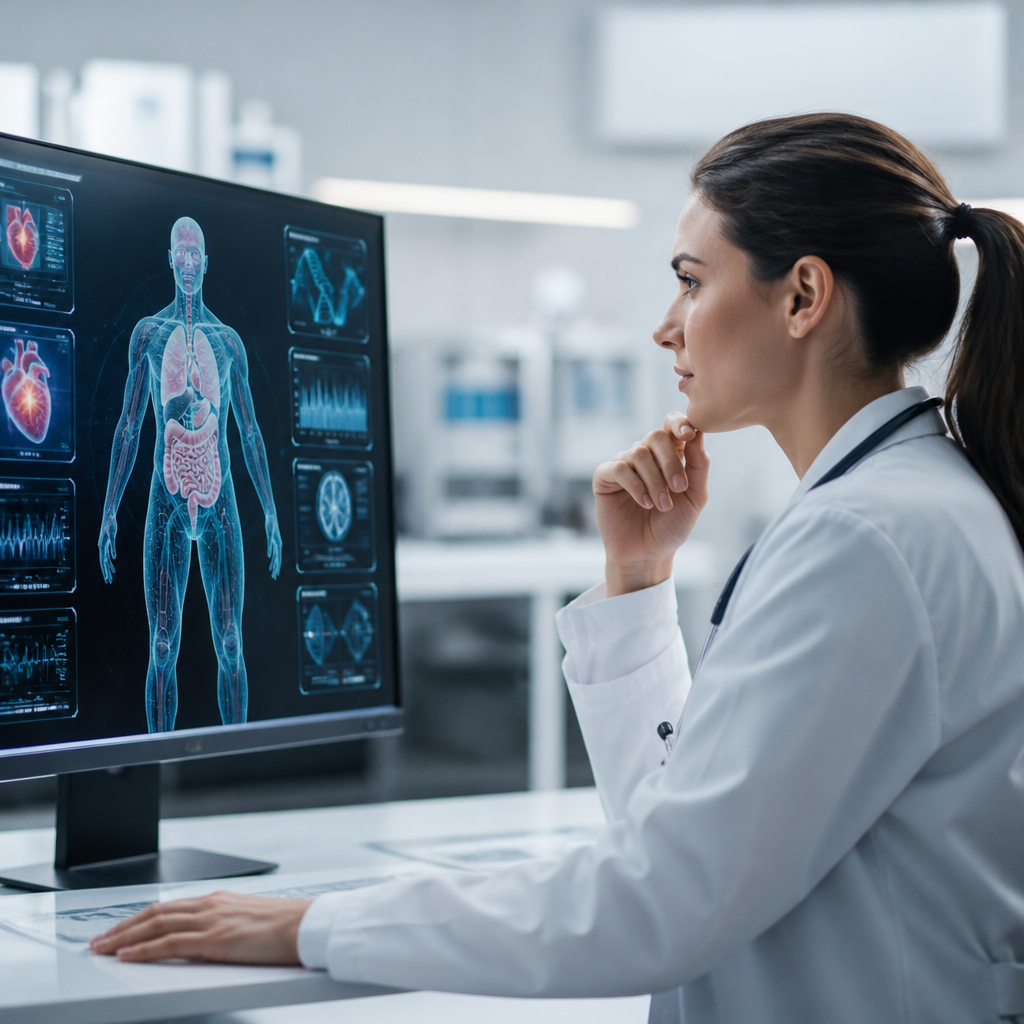
Digital twins for health aim to create a dynamic virtual model of an individual patient that mirrors biology, disease progression, and likely responses to treatment. In industry, a digital twin is already used to simulate a jet engine or factory line before making expensive changes. In medicine, the idea is more ambitious: combine clinical records, imaging, lab values, genomics, wearable data, and treatment history into a computational representation that clinicians and researchers can query. The central question is whether artificial intelligence can model an individual patient with enough fidelity to improve care, not just describe populations.
This matters because modern healthcare still makes many decisions using averages. Clinical trials tell us what works for groups, yet two patients with the same diagnosis can respond very differently because of genetics, comorbidities, environment, adherence, and timing. Precision medicine tries to narrow that gap, and digital twins push it further by simulating “what happens if” scenarios for one person. I have seen health tech teams use patient-specific models to flag sepsis risk earlier, optimize insulin dosing, and test oncology treatment pathways before the next appointment. The concept is powerful, but the phrase is often used loosely, so it helps to define levels of sophistication clearly.
At the simplest level, a health digital twin is a continuously updated patient model built from multiple data sources. Some twins are primarily statistical, using machine learning to estimate risk or predict an outcome. Others are mechanistic, using physiology-based equations such as cardiovascular flow models or glucose-insulin dynamics. The most promising systems are hybrid models that blend both approaches: machine learning captures complex patterns in high-dimensional data, while mechanistic components improve interpretability and keep predictions biologically plausible. For biotech and health tech founders, hospital leaders, and clinicians, understanding these architectures is essential because they shape product design, regulatory strategy, and clinical usefulness.
What a patient digital twin includes
A credible patient digital twin is not a single algorithm. It is a data pipeline, model stack, validation process, and clinical workflow wrapped into one system. Inputs usually include structured electronic health record data such as diagnoses, medications, procedures, vitals, and lab results; unstructured notes processed with natural language tools; imaging from MRI, CT, ultrasound, or digital pathology; molecular data such as genomics, transcriptomics, or proteomics; and longitudinal streams from wearables or remote monitoring devices. Time matters because the model must distinguish a chronic baseline from an acute change. A blood pressure reading during pain, for example, should not be treated the same as a home average collected over months.
How those inputs are standardized determines whether the twin can scale. Most production-grade systems rely on interoperability standards such as HL7 FHIR for clinical data exchange and DICOM for imaging. Terminology normalization using SNOMED CT, LOINC, and RxNorm reduces ambiguity across sites. In my experience, teams that skip this layer build impressive prototypes that fail in deployment because one hospital codes heart failure differently or records oxygen support in free text. A useful twin also needs identity resolution, timestamp alignment, missing-data handling, and quality checks that detect impossible values before they distort predictions.
The output should answer a real clinical question. It might estimate deterioration risk over the next six hours, predict tumor response to a drug, simulate post-surgical recovery, or recommend a monitoring interval for a heart failure patient. If the twin only generates abstract scores without changing decisions, it remains a research demo rather than a clinical product.
Where AI can model an individual patient today
AI can already model parts of an individual patient with meaningful accuracy in constrained settings. In intensive care, recurrent neural networks and transformer-based models have been trained on longitudinal vitals, medication administrations, ventilator settings, and labs to estimate decompensation risk. In diabetes, closed-loop insulin systems effectively maintain a lightweight digital twin by continuously updating glucose predictions based on sensor readings, meals, insulin on board, and recent trends. In cardiology, image-based AI can reconstruct cardiac anatomy and function from echocardiograms or MRI, while electrophysiology models can simulate arrhythmia pathways for ablation planning.
Oncology offers another clear example. A patient-specific twin may combine radiology, pathology, mutation status, prior lines of therapy, and circulating tumor DNA trends to estimate the probability of response to targeted therapy or immunotherapy. Pharmaceutical companies are also using virtual populations and patient-level simulations to design trials, refine inclusion criteria, and test dosing schedules before enrolling participants. For rare diseases, where conventional evidence is thin, these approaches can be especially valuable because every data point matters.
Still, today’s best systems are usually narrow rather than universal. They model a disease pathway, organ system, or treatment decision, not the entire patient in all contexts. That is not a weakness; it is good engineering. Clinical value appears fastest when teams target one decision with measurable outcomes, then expand gradually.
Core modeling approaches and their tradeoffs
Three technical approaches dominate health digital twins: rules and equations, machine learning, and hybrid modeling. Mechanistic models encode known physiology. For example, compartment models describe how a drug is absorbed, distributed, metabolized, and excreted; cardiovascular models simulate blood flow and pressure; glucose-insulin models estimate glycemic response. Their strength is interpretability and alignment with biology. Their weakness is that human physiology is messy, and simplifying assumptions can break when patients have multiple interacting conditions.
Pure machine learning excels when there is abundant data and the target outcome is well defined. Gradient boosting, survival models, deep learning on images, and multimodal transformers can uncover patterns no clinician could manually detect. Yet these models may be brittle under distribution shift, such as when a hospital changes lab instruments, treatment protocols, or patient demographics. They can also learn shortcuts from documentation habits rather than disease biology.
| Approach | Best use case | Main strength | Main limitation |
|---|---|---|---|
| Mechanistic | Physiology-rich problems like dosing or hemodynamics | Interpretable and biologically grounded | May oversimplify complex patients |
| Machine learning | Prediction from large multimodal datasets | Captures nonlinear patterns at scale | Can drift and be hard to explain |
| Hybrid | Patient-specific simulation with clinical constraints | Balances accuracy with plausibility | Harder to build and validate |
Hybrid models are increasingly the practical winner. They constrain AI with biological priors, then personalize parameters using patient data. That combination often improves robustness, especially in settings where outcomes are rare, labels are imperfect, or clinicians need explanations before acting.
Clinical validation, regulation, and safety
The biggest barrier is not model training; it is proving the twin improves care safely. Internal validation on historical data is necessary but insufficient. Teams need temporal validation across later cohorts, external validation across institutions, calibration testing, subgroup analysis, and prospective studies showing the model changes decisions or outcomes. For software that informs diagnosis or treatment, regulatory expectations matter. In the United States, the Food and Drug Administration evaluates certain software as a medical device, and adaptive AI systems face added scrutiny because behavior can change after deployment.
Bias is another nonnegotiable issue. If the source data underrepresent certain populations, the twin may misestimate risk or recommend less effective care. I have seen excellent-looking models lose calibration for patients with limited prior records, nonstandard care pathways, or social barriers that are not well captured in the chart. Governance must include performance monitoring, retraining controls, audit trails, and a clear human override. Clinicians should know what data the model used, how current it is, and when confidence is low.
Privacy and security are equally central. A high-fidelity twin aggregates some of the most sensitive data a person has. Encryption, access controls, de-identification for research use, and vendor risk management are basic requirements. Patients and providers will not trust a system that treats consent and data stewardship as an afterthought.
Why this subtopic matters across biotech and health tech
Digital twins sit at the center of biotech and health tech because they connect nearly every major innovation area. In diagnostics, they fuse imaging, biomarkers, and history into earlier, more personalized detection. In therapeutics, they support target discovery, companion diagnostics, dose optimization, and virtual trial design. In medical devices, they enable closed-loop control and remote monitoring. In hospital operations, they can forecast deterioration, length of stay, and resource needs. For startups, this hub touches interoperability, clinical AI, computational biology, wearable platforms, robotics, reimbursement, and real-world evidence.
The commercial opportunity is substantial, but success depends on disciplined problem selection. The most durable companies start with a narrow workflow pain point, integrate cleanly into care delivery, generate evidence, and build trust with clinicians. If you are exploring biotech and health tech, follow the adjacent topics that make digital twins viable: data infrastructure, multimodal AI, synthetic control arms, digital biomarkers, clinical decision support, and validation frameworks. The future is not a perfect virtual human generated instantly from one scan. It is a steadily improving patient model that becomes more useful with every trusted data point.
Can AI model an individual patient? Yes, within defined boundaries, and those boundaries are expanding. The strongest systems today model specific organs, diseases, or treatment decisions using multimodal data, careful validation, and clinical integration. They do not replace physicians, and they do not eliminate uncertainty. What they can do is reduce guesswork, personalize decisions, and test options before exposing a patient to risk.
For readers tracking tech innovations and startups, digital twins are one of the most important ideas in biotech and health tech because they turn scattered health data into actionable simulations. The practical takeaway is simple: judge any platform by the clinical question it answers, the evidence behind it, the standards it uses, and how safely it performs in the real world. Explore the related topics in this hub to see which companies, tools, and research approaches are turning patient-specific modeling into usable healthcare products today.
Frequently Asked Questions
What is a digital twin in healthcare, and how is it different from a standard medical record?
A digital twin in healthcare is a dynamic, computational model of an individual patient that is designed to reflect how that person’s body, disease processes, and likely treatment responses may change over time. Unlike a standard electronic health record, which mainly stores information such as diagnoses, medications, imaging reports, lab results, and clinical notes, a digital twin aims to actively integrate and interpret those data streams. It is not just a repository of what has happened; it is a living model that can be updated as new information arrives and used to simulate what may happen next.
In practice, that means a digital twin could bring together clinical records, medical imaging, genomic information, biomarker trends, wearable device data, treatment history, and even lifestyle factors into a single computational framework. The goal is to create a virtual representation that mirrors the patient closely enough to support decision-making. Clinicians or researchers could potentially use it to ask questions such as how a tumor may respond to one therapy versus another, whether a patient is likely to deteriorate under a certain treatment plan, or how a chronic condition may progress under different interventions. That is a major shift from traditional records, which are excellent for documentation but limited in their ability to model future outcomes at an individual level.
How could AI use a digital twin to model an individual patient?
AI can help build and update a digital twin by identifying patterns across many types of health data and translating those patterns into patient-specific predictions. For example, machine learning models can analyze imaging scans to detect subtle disease features, process longitudinal lab values to estimate progression, interpret wearable signals such as heart rate or sleep trends, and combine those findings with clinical history, medication use, and genetics. The result is not a single algorithm but usually a layered system of models that together estimate the patient’s current state and forecast possible future states.
What makes this powerful is personalization. Traditional clinical models often rely on population averages, but a digital twin attempts to narrow predictions to the level of one person. AI can estimate how likely that individual is to respond to a drug, experience a side effect, recover after surgery, or worsen without intervention. In more advanced scenarios, the twin could be “queried” with hypothetical changes, such as adjusting a medication dose or selecting a different treatment sequence, to simulate likely outcomes before making a real-world decision. This does not mean AI fully reproduces all of human biology, which remains extraordinarily complex. Rather, it means AI can create increasingly useful approximations that support clinicians with data-driven insight tailored to the specific patient in front of them.
What are the biggest potential benefits of digital twins for patients and clinicians?
The biggest promise of digital twins is more precise, proactive, and individualized care. For patients, that could mean treatments chosen not just because they work on average, but because they appear most likely to work for that particular person based on a detailed model of their biology and disease trajectory. In cancer care, for instance, a digital twin could help compare likely responses to multiple therapies. In cardiology, it might estimate how a patient’s heart function could change under different medications or procedures. In chronic disease management, it could identify early warning signs of decline before symptoms become severe enough to trigger hospitalization.
For clinicians, digital twins may improve decision support by turning fragmented health data into a more coherent picture. Instead of manually synthesizing separate reports, images, and trend lines, they could use a model that continuously integrates new inputs and highlights probable risks, treatment opportunities, and likely next steps. Researchers may also benefit by using digital twins to test hypotheses, stratify patients more precisely, and design smarter clinical trials. Health systems could eventually use them to reduce unnecessary interventions, avoid trial-and-error prescribing, and allocate resources earlier to patients at highest risk. While many of these applications are still emerging, the central advantage is clear: a well-designed digital twin could help shift medicine from reactive treatment toward more predictive and personalized care.
What are the main challenges and limitations of using digital twins in medicine?
The concept is compelling, but the challenges are substantial. Human biology is vastly more complex and variable than a jet engine or factory line, which is why medical digital twins are much harder to build accurately. Patients do not produce neat, uniform data. Records may be incomplete, imaging may come from different systems, wearable data can be noisy, and key influences such as diet, stress, environment, and adherence to treatment are often difficult to measure consistently. AI models also depend heavily on the quality and diversity of the data used to train them. If those data are biased, limited, or unrepresentative, the digital twin may perform poorly for certain populations.
There are also serious questions around validation, interpretability, privacy, and clinical accountability. A digital twin that recommends or predicts something in healthcare must be rigorously tested to ensure it is safe, accurate, and clinically useful. Clinicians need to understand when to trust the model, when to question it, and how its predictions were generated. Patients and health systems need confidence that sensitive health data are being protected appropriately. In addition, medicine rarely offers certainty, so even an advanced digital twin would still provide probabilities rather than perfect answers. That means these tools are best viewed as decision-support systems, not replacements for clinical judgment. Their usefulness will depend on careful design, transparent evaluation, and thoughtful integration into real-world care.
Are digital twins for health available now, or is this still mostly a future concept?
Digital twins in healthcare exist today in early and partial forms, but the fully comprehensive version often described in theory is still a developing goal. Right now, many health AI systems already model specific parts of a patient rather than the whole person. For example, there are tools that simulate cardiovascular function, predict sepsis risk, estimate tumor response, track glucose dynamics, or monitor changes in neurological disease. These applications can be considered narrow or domain-specific twins because they capture aspects of patient state and change over time, even if they do not yet represent the full biological complexity of an individual.
The broader vision is to connect those pieces into a more unified, continuously updated model that spans multiple systems and data sources. That will likely happen gradually, with progress first appearing in high-data areas such as oncology, cardiology, critical care, and chronic disease management. As computing improves and more health data become interoperable, digital twins may become increasingly practical for both research and clinical use. Even so, widespread adoption will depend on evidence that they improve outcomes, fit clinical workflows, protect privacy, and justify their cost. So the honest answer is that digital twins for health are neither pure science fiction nor fully mature mainstream tools. They are an active frontier where real capabilities are emerging, but the most ambitious version of patient-specific AI modeling is still being built.