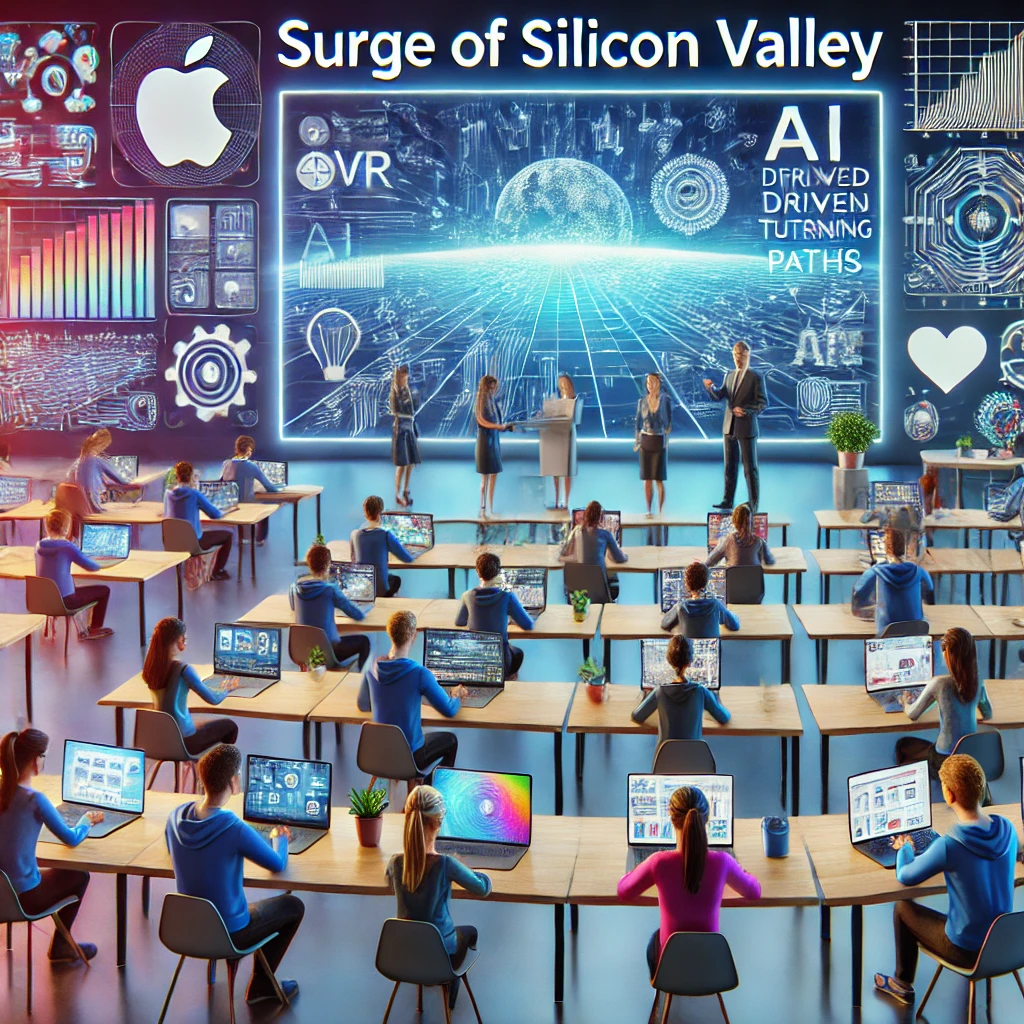
The integration of technology within educational frameworks has always seemed inevitable. In recent years, however, a significant and accelerated shift in this integration has emerged, with Silicon Valley spearheading the development of tech-aided edification. School curriculums are being revolutionized. Conventional teaching has become less about the linear, static methodologies of the past and more about dynamic, interactive learning experiences. At the heart of this transformative wave lies the ever-evolving ambition of Silicon Valley’s brightest minds to merge technology and education reform. As digital natives take increasingly prominent roles in society, adapting the manner in which education is both delivered and absorbed becomes paramount. The question on everyone’s lips is whether the ongoing effort to embed tech deeply into education will ultimately produce optimal results for future generations. This growing field poses challenges and opportunities that have the potential to redefine what education means, presenting an exciting new frontier for both educators and students alike. The next big thing in Silicon Valley may very well be the final piece of the education puzzle, enabling a seismic shift toward innovative, effective learning. This article explores the various aspects of technology’s role in education reform, delves into the implications, and highlights the challenges and prospects.
Education Technology Innovations
Silicon Valley has long been a breeding ground for innovation, with technology companies continually pushing boundaries to create life-changing solutions. In education, the focus rests on breaking the tedious traditional structure to make learning more engaging, accessible, and personalized. From sophisticated AI-driven platforms to immersive virtual reality environments, education technology innovation arises across multiple domains. A notable example is the incorporation of artificial intelligence into the classroom. AI-driven tools like smart learning platforms are tailored to meet individual student needs, suggesting course materials based on learning pace and ensuring students receive the right level of challenge needed for growth. Moreover, AI assists teachers in automating mundane tasks such as grading, thereby providing a precious resource—time—to focus on guiding and mentoring students.
Virtual and augmented reality (VR/AR) also present unique opportunities to revolutionize education. These technologies can create immersive learning experiences, where concepts come alive via engaging and interactive content. Through virtual excursions, students can explore places otherwise unreachable, understanding complex topics within a virtual scientific lab, or experiencing historical events firsthand. This transcendence beyond traditional classroom limitations enables greater engagement and comprehension, crucial factors in effective learning.
In addition, adaptive learning technologies focus on crafting personalized educational paths. Platforms like Knewton and DreamBox Learning utilize data analytics and machine learning to understand student behaviors, cater to diverse learning needs, and adjust content delivery dynamically. This personalized approach not only supports struggling learners but also offers enrichment opportunities to advanced students, thus creating an inclusive learning environment.
Accessibility & Global Reach
Another promising aspect of tech integration in education is its capacity to break down geographic and socioeconomic barriers. Accessible digital resources provide equitable learning opportunities to students around the globe, irrespective of location or economic status. Online courses from prestigious institutions offer learners the chance to attain quality education miles away from esteemed campuses. Initiatives like Khan Academy and Coursera epitomize this democratization of education, providing free and affordable courses worldwide. Educators in remote and underserved regions are now empowered to deliver robust educational experiences through access to online curricula and professional resources. Hence, technology holds the promise of leveling the educational playing field by ensuring that regional disparity no longer dictates educational quality.
Furthermore, digital platforms enable peer learning and collaboration on an international scale, weaving a rich tapestry of diverse perspectives and cultural exchanges that enrich student understanding. Online forums, discussion boards, and collaborative projects break the barriers of distance, allowing students to work together, share ideas, and learn reciprocally, regardless of where they reside globally.
Challenges in Integration
While the vision of a tech-enabled educational landscape is alluring, it’s imperative to scrutinize the challenges that lie ahead. Digital divide remains a prominent concern, as not all students have reliable access to high-speed internet or devices. This gap can exacerbate existing inequities, with marginalized communities potentially being left behind. Addressing this divide is paramount to ensuring tech integration does not deepen societal cleavages but rather serves as an equalizer. Additionally, security concerns around student data privacy demand stringent measures. The digital nature of modern educational tools means extensive collection of sensitive information. Stringent protocols must be in place to safeguard against misuse, ensuring student data is protected against cyber threats.
The development of a supportive infrastructure is another consideration, given the lack of proper training for teachers in utilizing new technologies. Educators must be equipped with both the tools and expertise to effectively integrate technology into their teaching methods. Professional development programs and resources, such as workshops and continuous training, are essential to equip educators with the necessary skills to thrive in tech-driven classrooms.
Lastly, the specter of educational content quality looms large. The proliferation of tech education tools and platforms does not inherently guarantee improved instruction. Rigorous assessments are essential to authenticate the efficacy of digital curriculum, ensuring content is not only accessible but also holds substantive educational value. Balancing technology’s convenience with educational effectiveness is crucial to not compromising educational integrity for technology’s sake.
Path to Futuristic Learning
As Silicon Valley continues to blend technology with education, the broader educational framework is poised for transformative growth. Futuristic learning envisions seamless integration of cutting-edge tech to foster skills crucial for modern-day environments. A key element within this paradigm encompasses fostering critical thinking and problem-solving capabilities. Through interactive simulations and game-based learning, students develop cognitive skills, engage in scientific inquiry, and practice skills within safe and controlled environments.
Additionally, emboldening students with digital literacy is imperative, preparing them for the workplace that demands tech-savviness. Through exposure to programming environments, and understanding AI, students are equipped for careers in tech-centric industries, supporting career readiness and resilience. Moreover, bridging the gap between the real world and academia, tech-infused curricula ensure that the skills acquired align with industry demands. Project-based learning and real-world problem-solving foster collaboration and promote adaptability, empowering students to tackle challenges they will face in professional life.
Moreover, personalized learning through AI analytics spells a new dawn in academic pursuit, with predictive analytics paving paths for informed career choices and support along educational journeys. The continuous innovation within Silicon Valley promises groundbreaking transformations, driving the narrative of a future where students achieve a holistic understanding of various domains.
Conclusion
The fusion of technology with education reform represents an exciting frontier with the potential to redefine knowledge acquisition and accessibility. The ongoing advancements cultivated in Silicon Valley signal transformative solutions, ushering new pedagogies that break traditional constraints. Although this path is fraught with challenges, particularly concerning equitable access and safeguarding educational integrity, the possibilities beckon profound shifts in learning environments worldwide. As educators, innovators, and policymakers collectively strive toward harnessing technology’s potential, the goal remains to prepare students for an increasingly dynamic world. Successful integration demands concerted efforts, collaborative innovations, and an enduring commitment to address disparities and elevate educational standards. Technology in education represents more than convenience—it determines the quality and reach of learning experiences. Seeking a balanced approach respecting both the empowering elements of tech and the enduring principles of traditional education remains crucial. Pursuing this synergy could very well define Silicon Valley’s next big contribution to societal evolution, potentially shaping generations to come.
Frequently Asked Questions
1. What prompted Silicon Valley to focus on tech in education reform?
Silicon Valley has long been a global epicenter for technological innovation, so it makes sense that their attention would eventually turn to education, another sector ripe for transformation. The integration of technology into educational frameworks seemed inevitable as society increasingly relies on digital solutions in everyday life. What’s different now is the pace and scope of this integration. Stakeholders in education and tech observed that the traditional teaching methods—largely unchanged for decades—were not fully engaging students in a world where technology increasingly plays a central role. This recognition, coupled with the potential to personalize learning and the availability of cutting-edge technology, has driven Silicon Valley to reimagine how education can be delivered. Today’s educators and tech developers strive to create more dynamic and interactive learning experiences that not only capture students’ attention but also cater to their diverse learning needs and styles.
2. How is technology changing the way teachers teach and students learn?
Technology is reshaping the educational landscape in numerous ways. Teachers, once the sage on the stage dispensing knowledge, now often act more like guides on the side, facilitating student-driven exploration. Learning has become more personalized, with tech tools allowing educators to tailor lessons to the individual needs and pace of each student. Interactive platforms and digital resources make learning more engaging, providing students with multimedia content—like videos, simulations, and virtual reality experiences—that can make complex concepts more approachable. Furthermore, technology is breaking down barriers; students can collaborate with peers from all around the globe, giving them a broader perspective and preparing them for a connected, digitized world. Overall, teaching and learning are becoming more flexible and adaptive, moving away from rote memorization towards critical thinking and problem-solving skills.
3. What kind of technologies are being integrated into modern educational setups?
The arsenal of educational technology is diverse and constantly expanding. At the forefront are interactive platforms such as Google Classroom and Microsoft Teams, which streamline classroom management and foster communication between students and teachers. Additionally, learning management systems (LMS) like Canvas and Blackboard help organize content and track student progress. Artificial Intelligence (AI) is another major player, with applications that help identify learning gaps and offer personalized pathways to mastery. Virtual and Augmented Reality (VR and AR) provide immersive experiences, which are particularly beneficial for subjects like science, geography, and history, where visualization can greatly enhance understanding. Moreover, gamification—using game elements in learning—motivates and engages students, making education enjoyable while promoting skills like strategic thinking. Robotics and coding kits have also made their way into classrooms, empowering students to learn by doing and encouraging creativity and innovation.
4. What are the challenges of integrating technology into education?
While tech in education offers many possibilities, its integration is not without challenges. One of the most pressing issues is the digital divide; not all students have equal access to the necessary technology and internet connectivity. This can exacerbate educational inequities, especially in underfunded schools or rural areas. There is also a concern about over-reliance on technology, where students might miss out on developing interpersonal skills that come from face-to-face interactions. Data privacy is another critical issue, as educational platforms often require the collection of student information, raising concerns about how data is stored and used. Additionally, teachers must be adequately trained to use new technology effectively, which requires time, resources, and ongoing professional development. Despite these challenges, the potential benefits of integrating technology into education make addressing these barriers a priority.
5. How is the role of teachers evolving with the adoption of technology in education?
Technology in education is redefining the role of teachers from being the sole source of information to becoming facilitators of learning. Teachers are increasingly using tech tools to enhance their instructional strategies, which allows them to differentiate instruction based on student needs and preferences. Their role is becoming more focused on guiding students to assess credibility, think critically, and apply knowledge, rather than passively absorbing information. Teachers are also playing a pivotal role in designing learning experiences that leverage technology to ignite curiosity and creativity. With these shifts, teachers are required to continually update their skills to stay abreast of new technologies and pedagogical methods. Professional development and collaborative learning communities are crucial in supporting teachers through this transformation, empowering them to harness the full potential of technology for inspired, innovative teaching.