Biotech education in Silicon Valley sits at the intersection of life science, engineering, entrepreneurship, and workforce development, making it one of the most dynamic educational ecosystems in the United States. In this context, biotech education means more than biology classes or lab electives. It includes university degree programs, community college certificates, industry-sponsored training, incubator workshops, bioinformatics bootcamps, regulatory affairs education, and the practical skills needed to move a discovery from bench to market. I have worked with students, startup teams, and training partners across the region, and the pattern is consistent: people succeed fastest when education connects directly to real tools, real mentors, and real industry problems. That matters because Silicon Valley is no longer defined only by software. The region now hosts genomics companies, digital health startups, medical device firms, synthetic biology platforms, and biomanufacturing initiatives that need talent with interdisciplinary fluency.
As a hub under Educational Resources, this guide on empowering through education explains how learners, career changers, founders, parents, and employers can navigate the biotech education landscape. It also answers the questions searchers usually ask first: What should you study for a biotech career? Which institutions are strongest in Silicon Valley? Do short programs work, or is a graduate degree required? How can someone without a traditional science background enter the field? The short answer is that there is no single path. Biotech rewards layered learning. A student might begin with molecular biology, add Python for data analysis, gain Good Laboratory Practice training, complete an internship, and later specialize in quality systems, computational biology, or clinical operations. Silicon Valley is especially strong because its educational pathways are linked to nearby employers, research centers, venture networks, and startup accelerators, creating opportunities that are practical, not abstract.
What biotech education includes in Silicon Valley
Biotech education in Silicon Valley covers foundational science, technical laboratory skills, digital competencies, and commercial literacy. The strongest programs teach genetics, cell biology, biochemistry, statistics, and experimental design alongside skills employers actually screen for, such as PCR, flow cytometry, microscopy, cell culture, assay development, data visualization, version control, and scientific communication. In the last five years, I have seen employers place increasing value on hybrid training. A research associate who understands both wet-lab workflows and basic scripting is often more useful than a narrowly trained specialist. The same is true for professionals in regulatory affairs or manufacturing who can interpret data, document deviations clearly, and work across software-driven quality systems.
Silicon Valley also broadens biotech education beyond pure research. Learners can study entrepreneurship, intellectual property, reimbursement, clinical trial operations, cybersecurity for health data, and ethics in artificial intelligence. That breadth reflects the region itself. A genomics startup may rely on cloud infrastructure, machine learning, HIPAA-aware data handling, and Food and Drug Administration pathways at the same time. Education therefore has to prepare people for convergence. For readers using this page as a hub, the key idea is simple: empowering through education means building scientific depth and career flexibility together. Programs that ignore either side leave graduates less prepared for the realities of modern biotech work.
Leading institutions and learning pathways
Stanford University remains the most visible anchor, with strengths in bioengineering, biomedical data science, genetics, and translational medicine. Its ecosystem matters as much as its coursework. Students benefit from proximity to the School of Medicine, hospital research, startup founders, and investor networks. Santa Clara University contributes through engineering, data science, and applied ethics, especially for students interested in medtech and responsible innovation. San Jose State University plays a different but equally important role by connecting affordable public education to local industry, producing graduates in biological sciences, chemistry, and engineering who often enter laboratory, manufacturing, and quality roles.
Community colleges are central to biotech workforce education, especially for learners seeking lower-cost entry points or upskilling while working. Foothill College and De Anza College have long supported transfer preparation and technical training in the broader life science pipeline. Mission College and other regional institutions increasingly align curriculum with industry needs, including laboratory safety, instrumentation, and data handling. These programs matter because not every biotech role requires a doctorate. Many companies hire technicians, manufacturing associates, quality coordinators, and clinical operations staff with associate degrees, certificates, or targeted practical experience. In workforce planning discussions, this middle layer is often overlooked, yet it is essential to scaling labs and production environments.
Alternative pathways have also matured. Learners now use Coursera, edX, MIT OpenCourseWare, Benchling Academy resources, and software documentation from tools like RStudio, GitHub, and TensorFlow to fill technical gaps. Short programs can be effective when they solve a specific problem. For example, a biology graduate who completes a structured bioinformatics sequence in Python, RNA-seq analysis, and reproducible workflows can become competitive for computational support roles far faster than by pursuing another broad degree. The best choice depends on the target role, budget, time horizon, and prior preparation.
Skills employers actually value
Employers in Silicon Valley biotech consistently look for evidence of execution, not just coursework. They want to know whether a candidate can run a protocol reliably, analyze results correctly, troubleshoot when controls fail, and document work to a professional standard. In laboratory hiring, that often means familiarity with standard operating procedures, calibration practices, contamination control, and statistical reasoning. In computational roles, it means clean code, reproducibility, data integrity, and an ability to explain models to nontechnical stakeholders. In regulated environments, it means disciplined documentation and awareness of quality frameworks such as Good Laboratory Practice, Good Clinical Practice, and current Good Manufacturing Practice.
| Role target | Education focus | High-value skills | Typical proof of readiness |
|---|---|---|---|
| Research associate | Molecular biology, biochemistry | PCR, cell culture, assay execution, data analysis | Lab course portfolio, internship, SOP-based project |
| Bioinformatics analyst | Genomics, statistics, programming | Python, R, pipelines, visualization, reproducibility | GitHub projects, public datasets, capstone analysis |
| Quality or regulatory specialist | Quality systems, documentation, compliance | CAPA support, document control, risk assessment | Certificate work, audited records, internship |
| Biomanufacturing technician | Process science, instrumentation, safety | Aseptic technique, batch records, deviation reporting | Hands-on training, simulation labs, supervisor references |
Communication is another differentiator. I have watched candidates with solid technical backgrounds lose opportunities because they could not summarize an experiment, defend a method choice, or write a concise report. Education that includes presentations, cross-functional projects, and scientific writing produces stronger outcomes. Silicon Valley companies move quickly, and teams are often small. People who can bridge research, operations, software, and business functions become disproportionately valuable. That is why empowering through education should never be reduced to credential collection. The real objective is practical fluency.
How students and career changers can build a credible path
The most effective biotech education plans begin with a role, not a vague interest in science. If the goal is assay development, prioritize experimental design, controls, and lab repetition. If the goal is digital health product management, combine biology literacy with product thinking, analytics, and regulatory awareness. If the goal is clinical operations, study trial design, data management, and compliance documentation. From there, build in layers. I usually advise learners to choose one scientific foundation, one technical differentiator, and one proof-of-work asset. For example, genetics plus Python plus a reproducible public project is a credible starting package.
Internships, research assistant positions, and startup projects accelerate learning because they expose students to ambiguity. In class, a protocol usually works as expected. In industry, samples arrive late, instruments drift, vendors change reagents, and timelines compress. Experiential learning teaches judgment. Students should also learn how to read job descriptions as curriculum guides. If ten postings mention ELISA, LIMS, data cleaning, or CAPA, those terms are not jargon to ignore; they are signals about where education should be directed. LinkedIn, Handshake, university career centers, and regional life science associations can help map these signals.
Career changers should not assume they must start over. Software engineers can move into bioinformatics, health data infrastructure, or laboratory automation. Nurses and allied health professionals can transition into clinical research, medical affairs, or digital therapeutics. Manufacturing professionals from semiconductors sometimes adapt well to bioprocess environments because they already understand process discipline and controlled documentation. The bridge is targeted education that translates prior experience into biotech language. This hub exists to support that translation and connect readers to deeper resources across Educational Resources.
Challenges, equity, and the future of biotech learning
Silicon Valley offers exceptional opportunity, but access is uneven. Tuition is high, housing costs are extreme, and unpaid research experiences can exclude talented learners. That is why affordable certificates, paid internships, employer-sponsored training, and transfer pathways are so important. Education only empowers when people can realistically participate. Programs that lend equipment, provide evening schedules, embed advising, and partner with local employers tend to produce better outcomes for first-generation students and working adults. Remote learning has also improved access to theory-heavy content, though hands-on wet-lab training still requires physical facilities and supervision.
Looking ahead, biotech education will become more interdisciplinary, more data-intensive, and more continuous. Advances in CRISPR, single-cell sequencing, spatial biology, organoids, and AI-assisted drug discovery are changing what entry-level and midcareer professionals need to know. At the same time, regulated documentation, quality systems, and ethics remain nonnegotiable. The future belongs to programs that update quickly without sacrificing fundamentals. For readers exploring biotech education in Silicon Valley, the key takeaway is clear: choose learning pathways tied to real roles, seek hands-on evidence of skill, and use the region’s dense network of schools, labs, startups, and mentors to compound your growth. Start by identifying your target role, then use this hub to explore the next resource, course, or program that moves you forward.
Frequently Asked Questions
What makes biotech education in Silicon Valley different from biotech education in other regions?
Biotech education in Silicon Valley stands out because it is deeply shaped by the region’s unique mix of scientific research, engineering culture, startup activity, and venture-backed innovation. In many places, biotechnology education is centered mainly on traditional life science coursework, laboratory methods, and academic research pathways. In Silicon Valley, those foundations are still important, but they are often combined with computational biology, data science, product development, regulatory strategy, and entrepreneurship. Students are not just learning how biology works in theory; they are being trained to think about how discoveries move from the lab into scalable products, clinical applications, manufacturing systems, and new companies.
Another defining feature is the density of nearby institutions and employers. Universities, community colleges, hospital systems, research institutes, incubators, and biotech companies all operate within the same broader ecosystem. That proximity creates more opportunities for internships, cross-disciplinary collaboration, guest lectures from industry professionals, and exposure to real-world workflows. A student might study molecular biology in the classroom, learn automation tools in a technical lab, attend a startup workshop in an incubator, and then complete an internship at a diagnostics or therapeutics company. This kind of educational layering is a major advantage of the Silicon Valley environment.
Silicon Valley biotech education also tends to reflect rapid industry change. Programs are more likely to incorporate areas such as bioinformatics, machine learning for biology, synthetic biology, digital health, genomic analysis, and regulatory readiness for emerging technologies. Because companies in the region often work at the frontier of research and commercialization, educational offerings are frequently updated to match evolving workforce needs. As a result, learners benefit from an ecosystem that emphasizes both scientific depth and practical adaptability, which is essential in a field where tools, standards, and business models change quickly.
What types of biotech education programs are available in Silicon Valley?
Silicon Valley offers a wide spectrum of biotech education options, which is one reason the region appeals to such a broad range of learners. At the university level, students can pursue undergraduate and graduate degrees in biotechnology, biology, biomedical engineering, chemical engineering, bioengineering, public health, computer science, and related disciplines. These programs often provide strong theoretical foundations in genetics, cell biology, biochemistry, and systems biology, while also introducing students to translational research, computational methods, and innovation-driven problem solving.
Community colleges and workforce training providers play an equally important role. Many learners are not looking for a four-year or advanced degree right away; they may want a certificate, a lab skills program, or a pathway into entry-level biotech roles. In Silicon Valley, community colleges frequently offer technician training, biomanufacturing coursework, laboratory safety education, quality systems instruction, and certificate programs designed to help students move directly into the workforce. These programs can be especially valuable for career changers, recent high school graduates, and working adults who need flexible, affordable entry points into the industry.
Beyond formal academic institutions, the region is known for industry-sponsored training, incubator workshops, accelerator programs, bioinformatics bootcamps, and short-format professional education. These can focus on specialized topics such as clinical operations, regulatory affairs, good manufacturing practices, assay development, data analysis, or startup formation in the life sciences. Some programs are designed for scientists who want to move into business or operations roles, while others help engineers and software professionals transition into biotech-adjacent positions. This range of options means biotech education in Silicon Valley is not limited to one stage of life or one type of learner; it supports students, early-career professionals, and experienced workers who need reskilling or upskilling.
How important are hands-on training and industry connections in Silicon Valley biotech education?
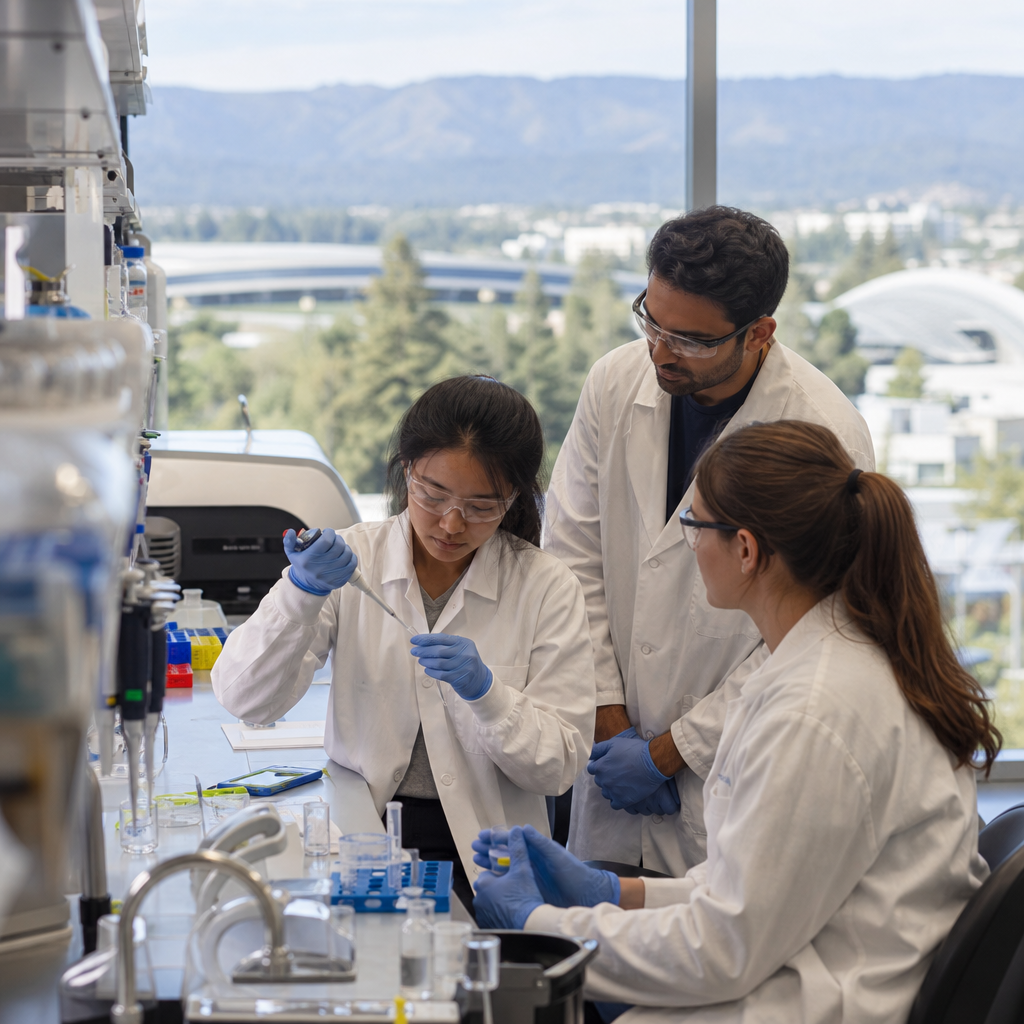
Hands-on training and industry connections are absolutely central to biotech education in Silicon Valley. Biotechnology is an applied field, and employers consistently value candidates who can demonstrate practical competence, not just classroom knowledge. That includes familiarity with laboratory techniques, instrumentation, documentation standards, quality control, data interpretation, and collaborative problem solving. Whether a learner plans to work in research, diagnostics, therapeutics, manufacturing, or bioinformatics, direct exposure to real tools and workflows makes a significant difference in career readiness.
In Silicon Valley, this practical emphasis is strengthened by the region’s close ties between education providers and industry. Programs often incorporate internships, co-ops, capstone projects, employer partnerships, site visits, and guest instruction from people actively working in biotech. These experiences help students understand how scientific concepts translate into workplace expectations. For example, it is one thing to learn experimental design in a textbook and another to perform work under time constraints, quality standards, and regulatory expectations. Students who engage in applied training often develop a more realistic understanding of how biotech organizations operate and what different roles actually require.
Industry connections also matter because they can shape long-term career outcomes. Networking in biotech is not only about finding a first job; it is also about gaining mentorship, understanding sector trends, and identifying where one’s skills fit best. Silicon Valley’s educational ecosystem gives learners unusual access to founders, researchers, investors, manufacturing specialists, clinical professionals, and regulatory experts. That exposure can help students make smarter decisions about specialization, whether they want to pursue wet-lab research, computational biology, operations, product development, or another path. In a competitive field, hands-on experience combined with meaningful industry access often becomes one of the strongest differentiators a candidate can have.
What skills are most valuable for students pursuing biotech education in Silicon Valley?
The most valuable skills in Silicon Valley biotech education combine scientific literacy with technical agility and professional versatility. Strong foundations in biology, chemistry, genetics, and laboratory practice remain essential, especially for students interested in research, diagnostics, therapeutics, or biomanufacturing. At the same time, many employers in the region increasingly expect learners to understand how biology intersects with data, engineering, and product development. That means skills in statistics, coding, bioinformatics, automation, and data visualization can significantly strengthen a student’s profile, even in roles that are not purely computational.
Equally important are regulatory and operational competencies. Biotechnology is heavily influenced by compliance, documentation, reproducibility, quality systems, and safety standards. Students who understand good laboratory practices, good manufacturing practices, validation concepts, clinical development basics, or regulatory frameworks are often better prepared for industry environments. This is especially true in Silicon Valley, where many companies are moving quickly from research to commercialization and need employees who can work responsibly within structured processes. Educational programs that include these topics can give learners a more complete picture of what success in biotech actually requires.
Soft skills are also critical and are sometimes underestimated. Communication, teamwork, adaptability, and problem-solving are indispensable in an interdisciplinary ecosystem where scientists, engineers, software developers, business teams, and regulatory specialists work together. In Silicon Valley, students often benefit from learning how to present technical ideas clearly, collaborate across disciplines, and think entrepreneurially about unmet needs and scalable solutions. The most successful biotech professionals in the region are rarely defined by one skill alone; they succeed because they can combine scientific understanding, technical competence, and cross-functional communication in fast-moving environments.
Is Silicon Valley a good place for career changers and nontraditional students to enter biotech?
Yes, Silicon Valley can be an excellent place for career changers and nontraditional students to enter biotech, largely because the educational landscape is unusually diverse and responsive to workforce needs. Not everyone entering biotechnology follows a traditional path from a biology degree into a lab role. Many people come from software, engineering, healthcare, manufacturing, business, or even unrelated industries and are looking for structured ways to transition. In Silicon Valley, there are more opportunities than in many other regions to build that bridge through certificate programs, bootcamps, professional workshops, technical training, and employer-aligned education.
This is especially important because biotech itself is no longer a narrowly defined field. Modern companies need research associates, lab technicians, data analysts, automation specialists, clinical operations staff, quality professionals, regulatory coordinators, manufacturing associates, and product-focused team members. That variety creates multiple entry points. A nontraditional student may not need to start with an advanced degree; they may begin with a targeted credential in laboratory techniques, bioprocessing, computational biology, or regulatory affairs and then build experience step by step. Community colleges, continuing education divisions, and specialized training providers often make this process more accessible through flexible schedules, shorter program formats, and practical curricula.
That said, success still depends on strategy. Career changers benefit most when they clearly identify which segment of biotech they want to enter, assess transferable skills honestly, and choose educational programs that include applied training and employer relevance. Silicon Valley offers many opportunities, but it is also competitive, so learners should look for programs with strong placement support, industry partnerships, and curriculum tied to current job requirements. For motivated nontraditional students, the region can provide not only education, but also exposure to a broad professional network and a realistic pathway into one of the country’s most innovative biotech ecosystems.